


Why Ireland and the UK are easy to confuse on wind funding
Published: 2026-08-09 14:10:36
Updated: 2026-08-13 07:05:11
The Republic of Ireland, Northern Ireland and Great Britain have different public bodies, planning systems, network operators and funding routes.
Wind turbine grants Ireland: the direct answer
If you are searching for wind turbine grants in Ireland, first check the exact jurisdiction. The Republic of Ireland, Northern Ireland and Great Britain have different public bodies, planning systems, network operators and funding routes. There is no UK-wide domestic small-wind grant that should be assumed to apply everywhere.
Grant availability also changes. Last reviewed for accuracy: this article gives a practical checking route rather than fixed grant amounts, because scheme status, eligible technologies and funding levels can change. Always verify current rules with the official administrator before ordering equipment, signing a contract or paying a deposit.
For most homes and small businesses, the grant is not the first decision. A small wind turbine only makes sense if the site has clean wind, a realistic planning route, a workable grid connection and a useful destination for the electricity. Funding can improve a viable project, but it rarely rescues a poor site. For UK households considering the technology, it helps to understand the basics of residential wind power before chasing funding.
Why Ireland and the UK are easy to confuse on wind funding
The word “Ireland” is often used loosely in search results, but it matters legally and practically. The Republic of Ireland is a separate jurisdiction with its own energy bodies and grant schemes. Northern Ireland is part of the UK, but it has separate planning arrangements and electricity network processes from Great Britain.
That distinction affects almost every part of a wind turbine project. Eligibility can depend on address, property type, applicant type, ownership structure, installer requirements, planning status, grid connection and whether the project is domestic, agricultural, commercial or community-owned.
A page about Irish renewable support may be irrelevant to a UK property, and an older UK article may not apply in Northern Ireland. Treat any generic claim about “wind turbine grants Ireland” as a prompt to investigate, not as proof that funding is available.
Current official places to check first
For the Republic of Ireland, start with official Irish sources such as the Sustainable Energy Authority of Ireland and Citizens Information. These are the safest places to check whether any current scheme includes small wind, who can apply, what technologies are eligible and whether installer or equipment conditions apply.
For Northern Ireland, check NI Direct, the relevant local council planning department and NIE Networks. Northern Ireland is not simply a copy of England, Scotland or Wales for planning and grid connection, so a UK-wide summary may miss important local requirements.
For Great Britain, the relevant checks usually include your local planning authority, your Distribution Network Operator, UK Government or devolved government energy pages, Ofgem information where export payments are relevant, Home Energy Scotland for Scotland-specific support, and local authority funding pages where area-based schemes exist.
Wales
Check the local planning authority, the relevant DNO, Welsh and UK public funding sources, and any local authority schemes.England
Check the local planning authority, the relevant DNO, current UK Government guidance and local authority schemes.Scotland
Check the local planning authority, the relevant DNO, Home Energy Scotland and any current rural, island, community or local authority routes.Northern Ireland
Check NI Direct, your local council planning department and NIE Networks before relying on any grant claim.Republic of Ireland
Check SEAI and Citizens Information for current energy support, eligibility and technology scope.
Do not assume that a scheme covering solar PV, heat pumps or insulation also covers small wind. Wind turbines are more site-sensitive and are often treated differently.
Are there UK grants for small wind turbines?
There is no single UK-wide domestic grant that homeowners should assume will pay for a small wind turbine. Support for small-scale generation has changed over time, and many current funding routes are more likely to be aimed at public bodies, farms, rural businesses, community energy projects, innovation schemes or location-specific programmes than ordinary household installations.
Some projects may still find support through local, rural, business or community funding routes, but eligibility must be checked against the live scheme documents. A scheme may exclude wind, require work to be approved before installation, restrict eligible installers, apply only in certain areas or treat export arrangements as part of the assessment.
Before spending time on applications, check whether the scheme is real, open and relevant to your address and project type. Make sure your contract explains what happens if funding is refused, delayed or lower than expected.
Timing rules
Confirm whether you must apply before ordering, paying a deposit or starting work.Scheme status
Confirm whether the scheme is currently open and who administers it.Applicant type
Confirm whether households, farms, businesses, landlords, public bodies or community groups are eligible.Location rules
Check whether the scheme applies to your exact jurisdiction and postcode.Technology scope
Check that wind turbines at your proposed scale are explicitly eligible.Installer conditions
Ask whether approved installers, product lists or certification requirements apply.
If any of these answers are unclear, pause before committing. For wind projects, the cost of choosing the wrong turbine, tower height, planning route or connection approach can be more significant than missing a short application window.
Northern Ireland, Republic of Ireland and Great Britain compared
The biggest mistake is treating “Ireland” as one funding market. A turbine in County Antrim, County Cork, the Highlands or rural Wales may look similar physically, but the grant checks, planning route and network connection process can be different. The comparison below is non-numerical because grant levels and eligibility can change. It shows what to check first, not whether funding is currently available in every area.
| Project location | Main official checks | Planning and grid route | What to check before quotes |
|---|---|---|---|
| Republic of Ireland | SEAI, Citizens Information and relevant local authority sources | Irish planning rules and Irish network connection requirements | Whether current Irish schemes include small wind, the applicant type, installer conditions and permission requirements |
| Northern Ireland | NI Direct, local council planning department and NIE Networks | Northern Ireland planning system and NIE Networks connection process | Whether wind is eligible, whether planning consent is needed and whether the network can accept export |
| England | Local planning authority, relevant DNO, UK Government guidance, Ofgem export information and local authority schemes | English planning rules and DNO generation connection process | Planning constraints, export limits, installer requirements and whether any local funding applies |
| Scotland | Local planning authority, relevant DNO, Home Energy Scotland and local or community funding sources | Scottish planning rules and DNO generation connection process | Rural, island or community routes, grid capacity, maintenance access and planning sensitivity |
| Wales | Local planning authority, relevant DNO, Welsh and UK public funding sources and local authority schemes | Welsh planning rules and DNO generation connection process | Local constraints, network capacity, current funding eligibility and long-term maintenance practicality |
Overview
This is why quotes must be site-specific. A turbine size, tower height and export arrangement that works on an exposed farm may be unsuitable for a suburban plot or a turbulent smallholding near trees and buildings.
What makes a wind turbine project fundable?
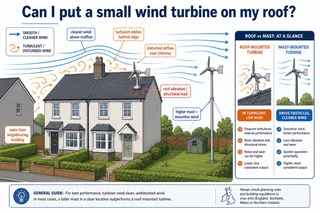
Funders and installers are usually interested in whether the project is deliverable, not simply whether wind power is renewable. For small wind, the site often matters more than the turbine model. Turbulence from buildings, trees, ridgelines and nearby obstructions can reduce generation and increase mechanical stress.
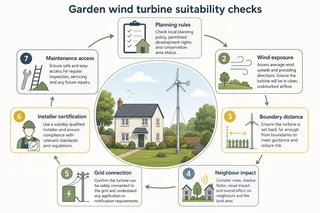
A credible project normally has a clear turbine location, good exposure, enough separation from neighbours, realistic access for installation and servicing, a lawful planning route and an electrical connection that can be agreed. The owner also needs a sensible plan for using or exporting the electricity.
A project is more likely to survive technical and funding scrutiny when the following points are already understood.
Wind resource
The site should have clean, consistent wind at turbine height, not just occasional gusts at ground level.Planning route
The owner should know whether permission, prior approval or specialist advice is likely to be needed.Electricity use
The project should show how generated electricity will be used on site or exported.Grid connection
The network operator may need to assess export capacity, protection settings and local network impact.Maintenance access
The turbine, tower and electrical equipment must remain accessible for inspection and repair.Ownership and responsibility
The applicant should understand who owns the equipment, who maintains it and who receives any export benefit.
A grant application built around vague output claims and an unresolved site rarely inspires confidence. A site-specific feasibility pack is usually more useful than a generic brochure.
Planning and grid connection can decide the project
Planning is often the first serious hurdle for small wind. Turbines are visible structures and may raise issues around landscape, noise, shadow, aviation, ecology, heritage settings, neighbour amenity and designated areas. The route depends on location, turbine size, tower height and local policy, so early contact with the local planning authority or a competent specialist is sensible.
Grid connection is the other practical gate. A wind turbine is a generator, so it must connect safely to the local electricity network. In Great Britain, this means dealing with the relevant Distribution Network Operator. In Northern Ireland, NIE Networks is the key network body. In the Republic of Ireland, the Irish network connection process applies.
These checks matter for grants because many schemes will not support a speculative project with unresolved permission or connection risks. Even where support exists, delays in planning or grid approval can change the design, installation date and financial case.
Small wind versus solar, batteries and heat pumps
For many UK homes, solar PV is easier to justify than small wind because roofs are common, planning is often simpler, maintenance is lower and performance is more predictable when the roof is suitable. Wind can still suit exposed farms, rural businesses, estates, off-grid or weak-grid sites, and some community projects, but it is much more sensitive to local conditions. If wind looks marginal, it may be worth taking time to compare home solar options instead.
Batteries can improve a well-designed renewable system, but they do not fix a poor wind site. If a turbine generates when the property cannot use the electricity, a battery may increase self-consumption, but battery size, inverter choice, export settings and backup expectations need proper design.
Heat pumps also affect the decision. A property with higher winter electricity demand may be able to use more renewable generation on site, and wind can be seasonally helpful in exposed areas. The right answer still depends on actual demand, heating design, electrical capacity, wind exposure and budget. Some sites may justify a hybrid approach, but only when both technologies make sense individually. Before assuming a turbine is the missing piece, check whether the site can realistically combine solar and wind without creating planning, maintenance or export problems.
How to check whether a grant claim is real
Grant searches often lead to outdated pages, copied summaries and schemes that have closed or changed. Treat phrases such as “free wind turbine” or “guaranteed grant” with caution. A genuine scheme should have an official administrator, written eligibility criteria, clear application rules, deadlines, technology scope and conditions.
Do not sign a contract solely because funding is mentioned in a sales conversation. Ask for the scheme name, administrator, current eligibility wording and the contract terms that apply if funding is not awarded.
A careful check should cover both the funding and the technical project.
Current status
The scheme should be open, with current dates or clear application windows.Project timing
The rules should explain whether approval must be granted before ordering or installation.Official source
The scheme should be listed by a recognised public body, local authority, network body or named administrator.Eligible applicant
The rules should match your status as a homeowner, landlord, farm, business, public body or community organisation.Eligible technology
The rules should specifically include the proposed type and scale of wind turbine.Written contract terms
The installer contract should state what happens if the grant is refused, delayed or reduced.
If the grant cannot be verified from official information, do not treat it as part of the budget. Build the project case first, then consider any funding as a possible improvement rather than a guarantee.
Common mistakes when searching for wind turbine grants
The most common mistake is starting with the grant instead of the site. A garden or smallholding may feel windy at ground level, but nearby buildings, trees and slopes can create turbulence. Turbulent wind can mean lower output, more wear and a weaker financial case. For domestic plots, the basic question is often whether you can sensibly place a wind turbine in the garden at all.
Another mistake is comparing turbines only by rated power in kW. Rated output is measured under specific wind conditions and does not tell you annual generation in kWh at your site. The better question is how much electricity the turbine is likely to produce over a year, when it will produce it and how much you can use.
Ongoing maintenance is also easy to underestimate. Wind turbines have moving parts, towers, bearings, blades, inverters and safety equipment exposed to weather. Any financial assessment should allow for servicing, access, inspection, downtime and eventual component replacement. Export limits and network connection requirements also need checking before the project is treated as viable.
These mistakes are avoidable if the project is assessed in the same order a competent installer or funder would use: site, permission, connection, generation estimate, use of electricity, maintenance, then funding.
Practical next steps for households, farms and businesses
Start by confirming the property location and the relevant jurisdiction. If the site is in Northern Ireland, use Northern Ireland planning and network information. If it is in the Republic of Ireland, use Irish official sources. If it is in Great Britain, check the relevant local authority and DNO route for your region.
Then prepare a simple feasibility pack before chasing funding. Include site photographs, approximate turbine location, nearby obstructions, annual electricity use, any existing solar or battery system, whether the property has single-phase or three-phase supply if known, and whether export is expected.
A sensible early process is to shortlist suitable technologies, check planning and grid constraints, ask for a site-specific generation estimate, then investigate current funding that matches the project. If the site is marginal for wind, solar PV, battery storage, insulation or heating upgrades may be more practical routes to lower bills and reduced carbon emissions. Larger sites should also compare whether commercial wind projects are technically realistic before relying on grant funding.
Plan, Compare & Buy Renewable Energy Solutions
AI does the thinking.
You get the perfect solar match.
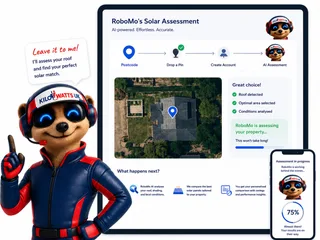
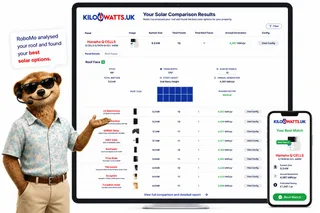
Use RoboMo™ to assess your property, compare available technologies and connect with trusted UK installers, suppliers and manufacturers.
Simply enter your postcode, drop a pin on your roof, create your free account and let RoboMo™ analyse your property to find the best solar panels for your home.

You don't have to think
RoboMo™'s AI analyses your roof and does all the hard work.

Accurate & tailored
AI-powered assessment based on your roof, location, and conditions.

Best options, maximum savings
Compare top solar panels for the best performance and value.

Simple, fast & effortless
Provide a few details, sit back and watch your results unfold.
STEP 1
Choose Home, Business or Industrial
Enter your postcode to start your assessment.
STEP 2

Drop a pin on your roof
STEP 3

Create your free account
STEP 4

Sit back and watch RoboMo™ work
RoboMo™ analyses your roof and builds your personalised solar comparison.

Kilowatts UK is an authorised representative
Flower Turbines
Compact vertical-axis turbines built for real UK sites, not just open farmland.
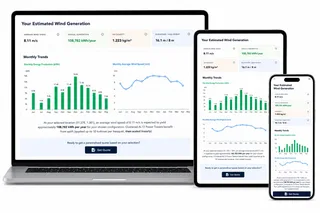
They start in light wind, sit in a small footprint, and are bird-safe by design. Cluster them as a bouquet and the group performs better together than the same turbines standing alone. Enter your postcode for a location-based generation estimate. Figures use area weather data and will differ if buildings, trees or hills sit in the way.
Starts in light UK wind
Built to generate in typical UK wind, not only open farmland.
Small rooftop or ground footprint
Compact towers for roofs, yards and tight sites.
Bird-safe slow rotation
Slow vertical-axis spin, bird-safe by design.
Bouquet clusters raise output
Grouped turbines outperform the same units standing alone.

Step 1
Enter your postcode
Start designing your wind energy system in seconds.
STEP 2

Choose a location
STEP 3

Place your cluster
Tap the map where you want the turbine cluster to go.
STEP 4

Instant generation forecasts
Compare different turbine layouts and see annual generation forecasts instantly.
STEP 5

No commitment required
Explore different configurations before deciding whether to request a quotation.
Related articles
Mo's Mission Nominations
FAQ
Need Help? RoboMo's Got Answers
Are there grants for domestic wind turbines in Ireland?
Grant availability depends on whether the property is in the Republic of Ireland or Northern Ireland. The Republic of Ireland has its own public bodies and schemes, while Northern Ireland follows separate UK arrangements for planning and electricity networks. Check the current official scheme rules before ordering equipment or paying a deposit.
Is there a UK-wide grant for small home wind turbines?
There is no single UK-wide domestic grant that homeowners should assume will pay for a small wind turbine. Some support may exist through local, rural, business or community schemes, but eligibility changes and wind may be excluded. Always check the live scheme documents for your exact address and project type.
Where should I check for wind turbine funding in Northern Ireland?
For Northern Ireland, start with NI Direct, your local council planning department and NIE Networks. Planning and grid connection processes are not the same as in Great Britain or the Republic of Ireland. Any funding claim should be checked against current official guidance before you commit to a quote.
Can I use an Irish grant for a property in England, Scotland or Wales?
Usually not, unless the scheme rules specifically say it applies to your location. The Republic of Ireland, Northern Ireland and Great Britain have different administrators, planning systems and network connection processes. A grant mentioned on an Irish website may be irrelevant to a property in Great Britain.
What should I check before applying for a wind turbine grant?
Check whether the scheme is open, who administers it and whether small wind is explicitly eligible. Confirm the applicant type, postcode rules, installer requirements and whether you must apply before ordering or starting work. Also check planning and grid connection risks, as these can affect whether the project is deliverable.
Do I need planning permission for a small wind turbine?
Planning rules depend on location, turbine size, tower height, site constraints and local policy. Wind turbines can raise issues such as landscape impact, noise, neighbours, ecology and heritage settings. Speak to the relevant local planning authority or a competent adviser before relying on a grant or quote.
Why might a wind turbine not be suitable even if a grant is available?
Small wind needs clean, consistent wind at turbine height, not just occasional gusts. Trees, buildings and nearby obstructions can reduce output and increase wear. A grant can help a viable project, but it will not make a poor site perform well.
How can I tell if a wind turbine grant claim is genuine?
Ask for the scheme name, official administrator and current eligibility wording. Be cautious of claims such as “free wind turbine” or “guaranteed grant” without written rules from a recognised source. Your contract should explain what happens if funding is refused, delayed or lower than expected.