


Micro Wind Turbine Permitted Development Rights in the UK
Published: 2025-09-15 20:50:15
Updated: 2026-10-06 04:16:04
But before you start installing a turbine in your garden or on your roof, it's important to understand the rules around planning permission.
Key points to consider
Micro Wind Turbine Permitted Development Rights in the UK: What You Need to Know
For many households in the UK, adding a micro wind turbine can be a smart way to cut energy bills and reduce reliance on the grid. But before you start installing a turbine in your garden or on your roof, it’s important to understand the rules around planning permission. In some cases, you may be able to install a small turbine without needing full planning approval, thanks to what’s known as Permitted Development Rights (PDRs).
What Are Permitted Development Rights? Permitted Development Rights allow certain types of building work and changes to be carried out without needing a formal planning application. They were introduced to simplify small-scale home improvements - like adding a garden shed, solar panels, or in some cases, a wind turbine. However, micro wind turbines come with specific restrictions under these rules, and not all homes will qualify. If you are comparing wider home upgrades, it is also worth checking the separate rules for planning permission for solar panels. Key Conditions for Micro Wind Turbines Under PDR A wind turbine can sometimes be installed as “permitted development” if it meets strict conditions. The main ones are:
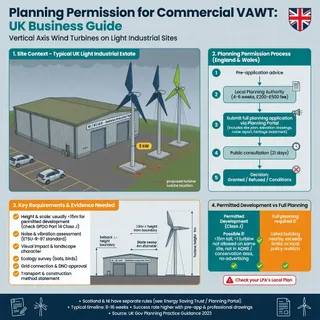
- Single turbine limit - You can usually only install one micro wind turbine per property under PDR. A second turbine may require full planning permission.
- Detached houses only - Turbines on flats or maisonettes are excluded.
- Standards and certification - The turbine must meet Microgeneration Certification Scheme (MCS) standards and be installed by an MCS-accredited installer. You can also read more about MCS certification in the context of UK renewable installations.
- Designated land restrictions - PDR does not apply in conservation areas, Areas of Outstanding Natural Beauty (AONB), National Parks, or World Heritage Sites.
- Height limits - There are limits on how tall a turbine can be, including both the tower and the blade tip. Typically, the maximum height is around 11.1 metres for a free-standing turbine, but this can vary by local authority.
- Distance from boundaries - Turbines must be sited a certain distance from the property boundary (often the total height of the turbine).
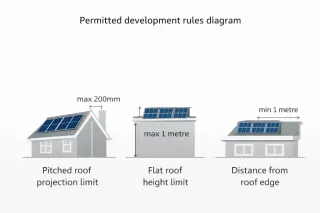
Roof-Mounted vs Free-Standing Turbines Some households also look at whether wind and solar can complement each other, especially where roof space, wind exposure, and household energy use all need to be considered together. When Do You Need Full Planning Permission? If your proposed turbine does not meet the above conditions, for example, if you live in a conservation area or want more than one turbine, you’ll need to apply for planning permission from your local planning authority. The easiest way to confirm is by using the Planning Portal, the official UK government resource for planning rules. Even if your project looks like it fits within PDR, it’s always wise to check with your local council before committing. Councils can have different interpretations of the rules, and in some cases PDR can be withdrawn through what’s known as an “Article 4 direction.” Installing a micro wind turbine in the UK can sometimes be done without full planning permission, but only if your project meets strict Permitted Development Rights conditions. These cover factors like height, location, noise, and certification. If in doubt, always check with your local council and work with a certified installer. That way, you’ll avoid costly mistakes and ensure your turbine is legal, safe, and able to qualify for export payments. Let Kilowatts.uk Handle It for You 🚀 Understanding planning law can be confusing, and no one wants to waste money on an installation that isn’t compliant. That’s where we come in. At Kilowatts.uk, we can: 👉 Ready to explore whether a micro wind turbine is possible for your home? Book a free home energy survey today and let’s find the right renewable solution for you. Noise limits - The turbine must meet strict noise limits as defined in planning guidance. Roof-mounted turbines have even tighter restrictions. The building must already comply with height rules, and the turbine cannot increase the overall height by more than a set amount (usually 3m). Free-standing turbines (mounted on a tower in the garden or on land) are more common, but must still comply with distance, height, and noise requirements. Check MCS accreditation - Both the turbine and the installer should be MCS-certified if you want to benefit from the Smart Export Guarantee (SEG) payments. Confirm local rules - Use the Planning Portal or contact your local council to confirm whether PDR applies in your case. Get noise and structural assessments - These are often required for free-standing turbines. Factor in neighbours - Even if permitted, turbines can cause disputes if they are noisy or visually intrusive. Check if your property qualifies under Permitted Development Rights Liaise with your local planning authority if required Recommend or connect you with MCS-certified installers Guide you through options for wind, solar, and home battery storage systems
Plan, Compare & Buy Renewable Energy Solutions
AI does the thinking.
You get the perfect solar match.
Use RoboMo™ to assess your property, compare available technologies and connect with trusted UK installers, suppliers and manufacturers.
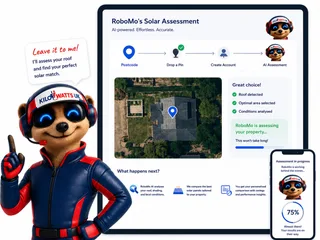
Simply enter your postcode, drop a pin on your roof, create your free account and let RoboMo™ analyse your property to find the best solar panels for your home.

You don't have to think
RoboMo™'s AI analyses your roof and does all the hard work.

Accurate & tailored
AI-powered assessment based on your roof, location, and conditions.

Best options, maximum savings
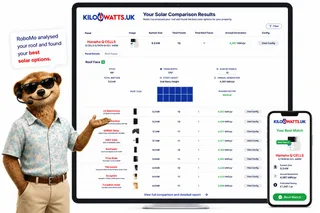
Compare top solar panels for the best performance and value.

Simple, fast & effortless
Provide a few details, sit back and watch your results unfold.
STEP 1
Choose Home, Business or Industrial
Enter your postcode to start your assessment.
STEP 2
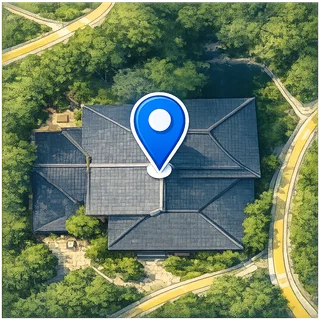
Drop a pin on your roof
STEP 3

Create your free account
STEP 4

Sit back and watch RoboMo™ work
RoboMo™ analyses your roof and builds your personalised solar comparison.

Step 1
Enter your postcode
Start designing your wind energy system in seconds.
Are you an installer, distributor or renewable energy business?
Kilowatts UK is expanding the Flower Turbines partner network across the UK.
Become A Flower Turbines PartnerKilowatts UK is an authorised representative
Flower Turbines
Compact vertical-axis turbines built for real UK sites, not just open farmland.
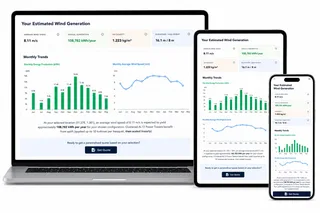
They start in light wind, sit in a small footprint, and are bird-safe by design. Cluster them as a bouquet and the group performs better together than the same turbines standing alone. Enter your postcode for a location-based generation estimate. Figures use area weather data and will differ if buildings, trees or hills sit in the way.
Starts in light UK wind
Built to generate in typical UK wind, not only open farmland.
Small rooftop or ground footprint
Compact towers for roofs, yards and tight sites.
Bird-safe slow rotation
Slow vertical-axis spin, bird-safe by design.
Bouquet clusters raise output
Grouped turbines outperform the same units standing alone.
STEP 2

Choose a location
STEP 3
Place your cluster
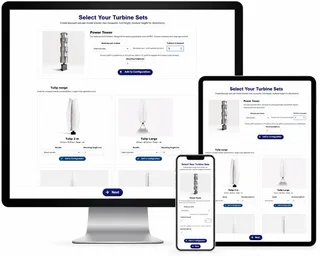
Tap the map where you want the turbine cluster to go.
STEP 4

Instant generation forecasts
Compare different turbine layouts and see annual generation forecasts instantly.
STEP 5

No commitment required
Explore different configurations before deciding whether to request a quotation.
Related articles
Mo's Mission Nominations
FAQ
Need Help? RoboMo's Got Answers
Do I need planning permission to install a micro wind turbine at home?
Not always. Some micro wind turbines can be installed under Permitted Development Rights (PDR), but only if they meet strict conditions such as height limits, distance from property boundaries, and noise restrictions. If your property is in a conservation area or you want more than one turbine, you will need full planning permission.
Can I put a wind turbine on the roof of my house?
Yes, but roof-mounted turbines face tighter restrictions. The turbine cannot increase the overall height of the building by more than around 3 metres, and the property itself must already comply with local height rules. In many cases, free-standing turbines in a garden or on land are easier to approve.
Why does my turbine need to be MCS-certified?
MCS certification ensures your wind turbine meets UK quality and safety standards. Without MCS, your system will not qualify for Smart Export Guarantee (SEG) payments, which means you will not be paid for exporting surplus electricity to the grid.
How can I confirm if my property qualifies under Permitted Development Rights?
The quickest way is to use the official [Planning Portal](https://www.planningportal.co.uk/) or contact your local council. They can confirm whether PDR applies to your property and whether you need a formal planning application.