


Home Battery Lifespan: Separating Fact from Hype in the UK
Published: 2026-07-25 17:01:48
Updated: 2026-08-01 07:18:25
Discover the average lifespan of home batteries in the UK, factors affecting their performance and how to extend their life.
Understanding home battery lifespan in the UK
Most home batteries in the UK should be viewed as long-life electrical equipment, not fit-and-forget appliances that last forever. A realistic expectation is around 8 to 12 years of useful service in normal domestic use, although the outcome depends on battery chemistry, installation quality, cycling pattern, temperature, inverter settings, software support and how quickly faults are spotted.
That range is not a promise for every system. Some batteries may remain useful beyond their warranty period, while others may become uneconomic to keep if capacity has fallen, parts are unavailable, monitoring has stopped working or the system no longer matches the household’s electricity use. Warranty length, useful life and physical survival are related, but they are not the same thing.
For UK homeowners, the biggest variables are often practical ones: whether the battery is paired with solar panels, how much electricity the home uses in the evening, where the battery is installed, and whether it is being cycled gently or heavily. If you are new to the subject, it helps to understand the basics of home battery storage before comparing specific products.
What “lifespan” really means for a home battery
Battery lifespan is not a single expiry date. It usually means the period over which the battery remains safe, reliable and useful enough to justify keeping in service. Over time, a battery normally loses some usable capacity, so a unit that once covered most of the evening demand may gradually cover less.
This degradation is expected and does not automatically mean the battery has failed. A system can still be worthwhile after some capacity loss if it continues to store surplus solar power, reduce peak-rate imports, support a time-of-use tariff strategy or provide the limited backup function the owner expected.
There are three lifespan ideas that are often confused:
Cycle life
The ageing linked to repeated charging and discharging.Useful life
The period during which the battery still delivers enough usable capacity, reliability and supportability for the home.Calendar life
The ageing that happens simply because the battery exists, even if it is not charged and discharged heavily.
A homeowner comparing battery options should ask how the warranty defines capacity retention, what operating conditions must be met, and whether the system’s settings can be adjusted to suit the property. A headline lifespan claim is less important than whether the battery is designed around how the home actually uses electricity.
Why warranty length is not the same as working life
A warranty is a manufacturer’s promise under defined conditions, not a guarantee that the battery will stop working on a specific date. Many home batteries may continue operating after the warranty ends, but the value of that extra life depends on remaining capacity, reliability, software support and whether replacement parts are available.
Warranty documents can also be more restrictive than the headline brochure suggests. Some warranties are limited by time, some by energy throughput, some by cycle count, and some by a combination of these. The wording may also require approved inverter combinations, correct installation location, active monitoring, registered commissioning and compliance with the manufacturer’s installation manual.
Before accepting a quote, ask to see the warranty terms in writing, not just a summary. Useful documents include: Warranty certificate: The formal document showing the battery model, warranty length, registration requirements and who provides support. Capacity-retention terms: The wording that explains how much usable capacity should remain at a stated point, and how that capacity is measured. Cycle or throughput limits: Any limits on the total energy charged and discharged before the warranty reduces or expires. Approved equipment list: The manufacturer’s approved inverter, gateway, control and monitoring combinations. Installation conditions: The permitted indoor or outdoor locations, temperature range, ventilation requirements, clearances and weather protection. Monitoring requirements: Any obligation to keep communications active, install updates or allow remote diagnostics. This is where buyer caution matters. A long-sounding warranty is less reassuring if the exclusions are broad, the system is installed outside the manual, or the homeowner has no clear route for technical support. Claim route — The process if there is a fault, including what happens if the original installer stops trading.
The main factors that affect home battery life
The strongest influences on home battery lifespan are depth of discharge, frequency of cycling, temperature, installation environment, product quality, inverter compatibility and commissioning settings. A battery that is repeatedly charged and discharged aggressively may age faster than one used more moderately, although exact performance depends on the product and its controls. UK weather can be kinder than very hot climates, but that does not make location irrelevant. Cold, damp, condensation, poor ventilation and unsuitable outdoor exposure can all create reliability problems. A garage, utility room, loft, outbuilding or external wall position should be assessed against the manufacturer’s installation manual rather than chosen only because it is convenient.
| Factor | Why it matters | What to check early |
|---|---|---|
| Battery usage pattern | Heavy cycling can accelerate degradation if the system is not designed for it | Daily electricity demand, solar generation and tariff strategy |
| Installation location | Temperature, ventilation and moisture affect long-term reliability | Indoor or outdoor suitability, clearances and manufacturer guidance |
| Inverter compatibility | Poorly matched controls can reduce performance or create avoidable stress | Approved inverter combinations and commissioning settings |
| Depth of discharge | Using the full battery range constantly may affect long-term capacity | Reserve settings and usable capacity assumptions |
| Monitoring and maintenance | Faults can go unnoticed if the system is not checked | App alerts, installer support and periodic review |
| Household changes | New EVs, heat pumps or occupancy changes can alter battery workload | Future electrical loads and space for expansion |
How solar panels and tariffs change cycling
A battery paired with solar panels is often cycled differently from a battery used mainly for time-of-use tariffs. With solar, the battery may charge during the day from surplus generation and discharge in the evening. In winter, it may cycle less from solar because generation is lower and household demand is often higher.
A tariff-led battery strategy can be more demanding. Some households charge the battery from the grid during a cheaper period and discharge it later when electricity is more expensive. That can improve the financial case in some homes, but it may also mean more regular cycling than a solar-only approach. The right answer depends on the battery’s warranty terms, tariff rules, household demand and whether the control system can manage charging sensibly.
The design should reflect the whole year, not just a sunny summer day. Undersized batteries may be cycled hard and still fail to cover evening demand, while oversized batteries may sit partly unused for long periods. Neither outcome is automatically wrong, but both affect value and expectations. If solar is part of the wider plan, it is sensible to compare solar options alongside the battery specification.
A practical example of two different lifespans
Two households can install the same battery model and get different long-term results. The difference is not magic; it comes from how often the battery cycles, how deeply it discharges, how well it is installed and whether the system remains within the manufacturer’s operating conditions. The example below is illustrative rather than a prediction for a specific product. The point is to show why lifespan claims should always be considered alongside household behaviour and system design.
| Scenario | Typical use pattern | Likely effect on battery life |
|---|---|---|
| Lightly cycled solar household | The home uses some solar directly during the day, stores moderate surplus for evening use, and cycles the battery less in winter | The battery may experience gentler cycling, so calendar ageing and installation conditions may matter as much as cycle count |
| Heavily cycled tariff household | The battery charges from the grid most nights on a cheaper rate and discharges deeply most evenings, with solar used where available | The battery may reach cycle or throughput limits sooner if the warranty includes them, so settings and warranty wording become especially important |
| Poorly matched installation | The battery is placed in a marginal location, uses non-approved equipment or has weak monitoring | Lifespan may be reduced by faults, temperature stress, moisture, poor control or difficulty making a warranty claim |
UK safety, standards and installer competence
Home batteries are electrical energy storage systems and should be treated as safety-critical equipment. The installer should follow the manufacturer’s installation manual, relevant electrical regulations, and recognised UK guidance rather than improvising around an awkward location or mixing unsupported equipment.
Important UK reference points include the IET Code of Practice for Electrical Energy Storage Systems, BS 7671 wiring requirements, manufacturer installation instructions, and current battery fire-safety guidance such as PAS 63100 where applicable. Where a system is being sold or certified through an MCS route, the installer should also work to the relevant MCS requirements and provide the correct handover information.
Key safety and compliance points include:
Suitable location
The battery should be installed where the manufacturer permits it, with appropriate protection from moisture, heat, impact and unauthorised access.Electrical sign-off
The work should be designed, installed, tested and certified by competent people under the relevant electrical rules.Approved combinations
The battery, inverter, gateway, meter and monitoring platform should be compatible and accepted by the manufacturer.Fire and emergency access
The installation should consider safe access, isolation, labelling and the manufacturer’s emergency guidance.Ventilation and clearances
Required clearances, airflow and access space should be maintained rather than sacrificed to make the unit fit.DNO and export considerations
Grid-connected solar and battery systems may need the installer to handle Distribution Network Operator notification or application processes, depending on the arrangement.
Homeowners should be wary of non-approved battery and inverter combinations, second-hand batteries with unclear history, or installations that ignore the manufacturer’s location requirements. A cheaper system can become expensive if it loses warranty cover, is difficult to insure, or needs remedial electrical work later.
Authoritative reference points to use when comparing claims
Battery lifespan claims are often simplified in marketing. Sensible buyers should compare them with independent guidance, manufacturer documents and the installer’s written design assumptions. This is especially important because battery storage sits between consumer finance, electrical safety and long-term household energy planning.
Useful reference points include the Energy Saving Trust’s consumer information on home energy technologies, MCS standards and scheme requirements where relevant, the IET Code of Practice for Electrical Energy Storage Systems, PAS 63100 guidance for domestic and small-scale battery installations where applicable, and the manufacturer’s own warranty and installation documents.
Use these sources to check: Lifespan assumptions: Whether the quoted 8 to 12 year expectation is presented as an estimate, not a guarantee. Warranty wording: Whether capacity retention, cycle limits, throughput limits and exclusions are clear. Safety requirements: Whether the proposed location follows recognised UK guidance and the manufacturer’s manual. Installer competence: Whether the installer can explain design, commissioning, handover, monitoring and aftercare. Grid connection process: Whether the installer will handle the appropriate DNO notification or application route for the system design. The most trustworthy quotes are usually specific. They explain the household’s current usage, expected solar generation, battery size, operating mode, likely limitations and support route. Vague claims about total energy independence, guaranteed savings or unusually long life should be treated carefully unless backed by written assumptions.
Common myths about home battery lifespan
One common myth is that a home battery suddenly becomes useless after its warranty ends. In practice, many batteries degrade gradually. The more realistic question is whether the remaining capacity still suits the home’s needs and whether the system remains reliable and supported.
Another myth is that a battery is only worthwhile for off-grid homes. Most UK domestic batteries are used in grid-connected properties, often with solar panels, to store energy for later use. The grid remains important because it provides backup when the battery is empty, solar generation is low or household demand exceeds what the battery can supply.
It is also worth challenging the idea that bigger is always better. A larger battery may make sense for some homes, but it can be unnecessary if there is not enough surplus solar generation, evening demand or tariff benefit to use it well. Good sizing means matching the battery to the property, not simply choosing the largest unit that fits the budget. For a value-focused view, compare the likely use case with a realistic battery payback calculation.
How to help a home battery last longer
The best way to protect battery lifespan is to start with a sensible design. A well-sized battery, installed in a suitable location and commissioned correctly, is less likely to suffer avoidable stress than a system added as an afterthought.
Ongoing use matters too. Homeowners do not need to manage every charge cycle manually, but they should understand the basic settings, keep monitoring active and respond to unusual behaviour. If the app suddenly shows unexpected discharge patterns, repeated warnings, loss of communications or lower performance than usual, it is better to investigate early.
Practical steps include:
- Choose a battery size that matches realistic household demand.
- Install the battery in a location suitable for temperature, ventilation and access.
- Use approved inverter and control equipment.
- Keep monitoring alerts enabled and review performance periodically.
- Avoid ignoring fault codes, unusual noises, smells, heat or repeated shutdowns.
- Reassess settings if you add solar panels, an EV charger or a heat pump.
Small decisions at the design stage often have long-term consequences. Cable routes, access for maintenance, weather exposure, clearances and internet connectivity may not look exciting, but they can affect reliability and support. If you already have panels, the design should also account for the practicalities of adding a battery to the existing system. Keep handover documents, warranty records and commissioning certificates safe. Follow the manufacturer’s instructions before changing operating modes or tariff settings.
When a home battery may not be the right choice
A battery is not automatically suitable for every UK home. If electricity use is already low, if there is little or no surplus solar generation, or if the property has limited suitable installation space, the benefit may be modest. The battery may still work technically, but the case for installing one becomes weaker.
Older roofs, planned renovations and uncertain future occupancy can also change the decision. If solar panels are likely to be moved, the consumer unit needs work, or the home’s energy demand will change significantly, it may be better to design the wider electrical upgrade first rather than rushing into a battery.
A battery may be less suitable where: The household has very low evening electricity demand. There is no clear plan for charging the battery economically. The only available location is damp, poorly ventilated or outside manufacturer guidance. The existing electrical system needs unresolved remedial work. The homeowner expects full backup without checking what the system can actually support. The proposed system relies on unsupported equipment combinations. The honest answer is that battery storage is a design decision, not just a product purchase. Suitability depends on the property, usage pattern, solar generation, budget, expectations and future plans. If backup is a key reason for buying, check what a battery can and cannot do during a power cut before treating it as a whole-home resilience solution. Warranty documents are unavailable or unclear.
What to ask before buying a home battery
A good pre-installation conversation should cover more than capacity and price. The installer should be able to explain how the battery will be used through the year, what assumptions have been made, and what could reduce the system’s useful life.
Ask for the reasoning behind the specification. If the proposed battery size is based only on a generic package rather than household consumption, solar output and future loads, the system may not be well matched. It is also sensible to ask how the system would behave during winter, when solar generation is lower and grid imports may be higher.
Useful questions include:
Safety
Which installation guidance, manufacturer clearances and electrical certification will apply.Sizing
How has the proposed battery capacity been matched to my real usage.Location
Why is this installation position suitable for the battery.Warranty
What capacity retention, cycle limits, throughput limits and operating conditions are covered.Monitoring
How will I know if performance drops or a fault develops.Compatibility
Which inverter and controls are being used and why.
The best answers are usually specific to the home. Vague promises about very long life, complete independence from the grid or guaranteed savings should be treated cautiously unless they are backed by a clear design and realistic assumptions. For a property-specific starting point, you can book a free survey before choosing a system. DNO process — Will any grid connection notification or application be handled for me. Future changes — What happens if I later add an EV charger, more solar or a heat pump. Support route — Who do I contact if there is a fault, and what happens if the installer is no longer available.
Bottom line on home battery lifespan
For most UK households, a realistic expectation for home battery lifespan is around 8 to 12 years of useful service, with warranties often shorter than the longest possible working life. The exact result depends on battery quality, system design, installation location, cycling pattern, inverter compatibility, monitoring and whether the installation remains within the manufacturer’s requirements.
The safest way to avoid hype is to judge the battery as part of a whole-home energy design. A properly specified system should make clear how it will charge and discharge, what capacity may be retained over time, which warranty limits apply, what safety guidance is being followed and what level of backup or bill reduction is realistic.
If you are comparing options, ask for the warranty documents, approved equipment list, installation assumptions and monitoring plan before you commit. A battery chosen for your actual home, rather than for the biggest capacity or boldest lifespan claim, is far more likely to remain useful throughout its working life.
Plan, Compare & Buy Renewable Energy Solutions
AI does the thinking.
You get the perfect solar match.
Use RoboMo™ to assess your property, compare available technologies and connect with trusted UK installers, suppliers and manufacturers.
Simply enter your postcode, drop a pin on your roof, create your free account and let RoboMo™ analyse your property to find the best solar panels for your home.

You don't have to think
RoboMo™'s AI analyses your roof and does all the hard work.

Accurate & tailored
AI-powered assessment based on your roof, location, and conditions.

Best options, maximum savings
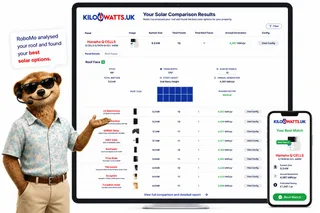
Compare top solar panels for the best performance and value.

Simple, fast & effortless
Provide a few details, sit back and watch your results unfold.
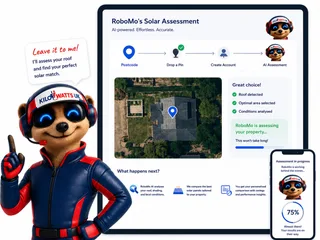
STEP 1
Choose Home, Business or Industrial
Enter your postcode to start your assessment.
STEP 2

Drop a pin on your roof
STEP 3

Create your free account
STEP 4

Sit back and watch RoboMo™ work
RoboMo™ analyses your roof and builds your personalised solar comparison.

Kilowatts UK is an authorised representative
Flower Turbines
Compact vertical-axis turbines built for real UK sites, not just open farmland.
They start in light wind, sit in a small footprint, and are bird-safe by design. Cluster them as a bouquet and the group performs better together than the same turbines standing alone. Enter your postcode for a location-based generation estimate. Figures use area weather data and will differ if buildings, trees or hills sit in the way.
Starts in light UK wind
Built to generate in typical UK wind, not only open farmland.
Small rooftop or ground footprint
Compact towers for roofs, yards and tight sites.
Bird-safe slow rotation
Slow vertical-axis spin, bird-safe by design.
Bouquet clusters raise output
Grouped turbines outperform the same units standing alone.
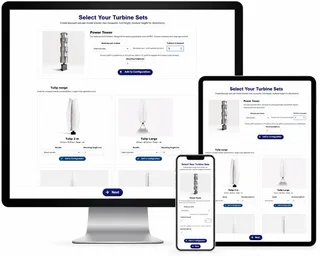
Step 1
Enter your postcode
Start designing your wind energy system in seconds.
STEP 2

Choose a location
STEP 3

Place your cluster
Tap the map where you want the turbine cluster to go.
STEP 4

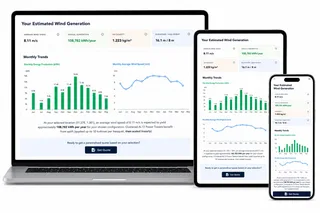
Instant generation forecasts
Compare different turbine layouts and see annual generation forecasts instantly.
STEP 5

No commitment required
Explore different configurations before deciding whether to request a quotation.
Related articles
Mo's Mission Nominations
FAQ
Need Help? RoboMo's Got Answers
How Long Do Home Batteries Last in the UK?
A well-maintained lithium-ion battery can retain up to 80% of its original capacity after five years, with a slower rate of degradation after the 10-year mark.
What Factors Affect the Lifespan of Home Batteries in the UK?
Temperature, depth of discharge, and charging cycles are key factors that impact the lifespan of home batteries. Extreme temperatures (above 30°C or below -10°C) can reduce battery life, while failing to recharge your battery regularly can lead to premature degradation.
How Often Should I Replace My Home Battery?
The frequency of replacement depends on the type of battery and usage patterns. On average, lithium-ion batteries need to be replaced every 10-15 years, while lead-acid batteries typically last around 5-7 years. Note: The original FAQ has been condensed and reorganized for improved clarity and structure.