


Why Roof Shading Gets Worse In Winter (UK Solar Guide)
Published: 2026-09-18 19:12:43
Updated: 2026-10-06 12:23:47
A chimney shadow that misses your panels in June can cross them at noon in December. Here's why UK solar shade surveys must use winter sun angles.
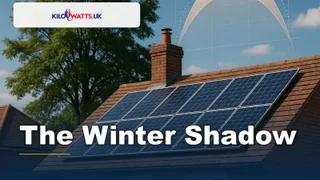
The Shadow That Grows In Winter: Why Solar Shading Is Seasonal
If you have ever stood outside on a bright June afternoon, looked at your roof, and concluded that the chimney shadow safely misses the panels, you were right — in June. The short answer to the question most people are really asking is this: shading on a UK roof is not a fixed property of the building, it is a seasonal one. The midwinter sun sits far lower in the sky than the midsummer sun, and a low sun stretches every shadow. The same chimney stack, the same bare tree, the same neighbour's gable can throw a shadow several times longer at noon in December than at noon in June. An array that is completely clear in summer can be partly shaded in the middle of a winter day — which is exactly when you can least afford to lose output. This article explains how that happens, why one shaded panel can drag down an entire series string, why optimisers or microinverters change the maths, and why a shade survey carried out in bright summer light can miss the problem completely. It is the written companion to the Solar, Clearly episode "The Shadow That Grows In Winter", and it stands on its own if you cannot watch the video.
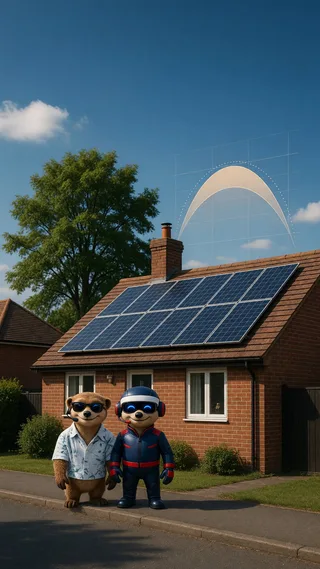
"Mo: That chimney's shadow never reaches the panels? RoboMo: In June. December's lower sun stretches it across the array."
Why the same chimney throws a longer shadow in December
Shadow length is a function of sun height. When the sun is high overhead, an object casts a short, stubby shadow close to its base. When the sun is low, the same object throws its shadow a long way across the ground — or, on a roof, a long way across the tiles. In the UK the sun's arc across the sky changes dramatically through the year: high and long in midsummer, low and short in midwinter. That means the geometry of your roof does not change, but the geometry of the light does.
In practical terms, a chimney stack standing above and to the south-west of an array might cast a midsummer shadow that sweeps quickly across the tiles below the panels without ever touching a module. Follow that same stack through autumn into December and the shadow stretches upward and across, moving more slowly, and begins to clip the lowest row of panels around the middle of the day. Add a mature tree — even a bare-branched one, because bare branches still scatter and block a surprising amount of light — and the shaded area can reach across a meaningful slice of the array at noon.
This is the single most useful thing to understand about shading in Britain: the worst-case day is not the day you happened to look.
Why one shaded panel can hold back the whole string
The intuitive assumption is that if two panels out of twelve are shaded, you lose the output of two panels. With traditional string wiring, that is not how it works. Panels wired in series behave like links in a chain: current flows through each module in turn, so the performance of the string is constrained by its weakest member. A module sitting in shade produces less current, and in doing so it limits what the healthy modules either side of it can contribute. The loss is disproportionate to the shaded area.
This is why module-level electronics exist. Power optimisers, fitted behind each panel, allow each module to work at its own best operating point and pass what it can to the string without dragging the others down. Microinverters go further and convert at panel level, so each panel is effectively independent. Neither device creates light where there is none — a shaded panel still produces less — but they isolate the loss instead of letting it propagate.
The design decision therefore depends on the shade picture. On a genuinely clear roof, a simple string arrangement is efficient and has fewer components. On a roof with a chimney, a dormer, a flue, an aerial or a neighbouring gable that interferes seasonally, module-level electronics usually earn their place — and the honest way to decide is by measuring the shade, not by guessing.
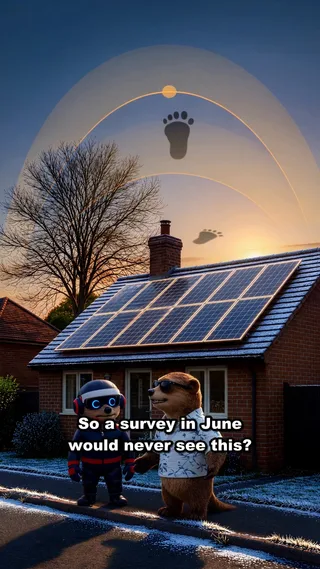
Why a survey done in June can miss the problem entirely
uncomfortable consequence. If somebody stands on your roof on a bright day in June, looks around, and reports that the array will be unshaded, that report is accurate about June and silent about December. Nothing dishonest needs to have happened. The shadow genuinely was not there.
A proper shade assessment does not rely on what the roof looks like on the day of the visit. It evaluates the horizon around the array — the chimney, the trees, the adjacent buildings, the hills if you have them — and calculates how those obstructions intersect the sun's path at different times of year. The design case is the winter sun angle, the lowest arc of the year, because that is when shadows are longest and when household demand is typically highest. If the design works in December, the summer looks after itself. This is also why a good survey should tell you which rows or which panels are affected, and at roughly what times of day, rather than giving a single blanket verdict on the roof.
What shading does not mean: the array outside the shadow keeps working
It is worth resisting the opposite over-correction. Seasonal shading is a design consideration, not a disqualification. In the episode's midwinter beat, the shadow reaches across part of the array at noon and the generation curve sits low — but it never falls to zero. The panels outside the shadow carry on producing, and with module-level electronics the shaded rows contribute what they can rather than dragging everything with them.
Two further British realities are worth keeping in view. First, UK homes still generate useful solar power on overcast days: panels respond to diffuse light, not only direct beams, which is why a grey Tuesday is not a blank one. Second, and often surprising to people, solar panels are more electrically efficient in cold conditions than in hot ones. Photovoltaic output falls as cell temperature rises, so a crisp, bright, frosty day can be an unexpectedly good day per unit of sunlight — the limiting factor in December is the short day and the low sun, not the cold.
The point of understanding shade is not to talk yourself out of solar. It is to get the layout, the string design and the expectations right before anything is fixed to the roof.
Common seasonal shade sources on British roofs
Most UK shading comes from a short and predictable list, and almost all of it behaves differently in winter:
- Chimney stacks. The classic culprit, especially on semi-detached and terraced homes where the stack sits centrally or to one side of the main pitch. - Deciduous trees. Foliage thins in winter, which helps, but the branch structure still intercepts light and the shadow reaches much further because the sun is low. - Evergreen trees and hedges. These are the harder case: full density combined with winter shadow length. - Neighbouring roofs, gables and extensions. A building to the south that clears your array in summer may clip it at midwinter noon. - Dormers, roof lights and party walls. Small obstructions close to the panels can matter more than large ones far away. - Flues, soil vents, aerials and satellite dishes. Thin, easy to overlook, and capable of producing a moving stripe across a module.
Mapping these against the winter sun path is the whole job. Anything to the south, south-east or south-west deserves attention; anything tall and close deserves a lot of it.
A practical checklist before you commission a solar design
You can do a surprising amount of useful thinking yourself before anyone visits:
- Identify true south from your roof, then look along the south-east to south-west sweep — that is where obstructions matter most. - List every tall object within reach of the roof line: chimney, trees, neighbouring gables, poles, flues. - Note the height difference. A tall object close to the array, or a stack rising well above the ridge, will cast the longest winter shadows onto the panels. - Check the roof at the middle of a winter day if you can. Midday in December is the honest test. If you are reading this in summer, photograph the roof now and again in December. - Ask the surveyor directly: "At what sun angle was shading assessed?" The answer should reference the winter low arc, not the day of the visit. - Ask which panels are affected and when, not just whether the roof is shaded. - Ask how the design responds — string layout, optimisers or microinverters — and why that choice was made for your specific obstructions. - Ask what happens if a tree grows, or if a neighbour extends. Future-proofing a string layout costs less than rewiring one. If a quote does not engage with any of this, it is a price, not a design.
Follow-up questions people usually ask next
Does winter shading mean I should skip solar? No. It means the layout and electronics should be chosen with the winter case in mind. Plenty of shaded-in-December roofs make perfectly sensible arrays.
Are optimisers always worth it? Not always. They add components and cost. On a genuinely clear roof they may add little; on a seasonally shaded one they usually change the picture materially. The deciding factor is the shade assessment, not a blanket policy.
Should I cut the tree down? Sometimes pruning helps, sometimes it is not yours to cut, and sometimes the tree is protected. Treat vegetation management as one option among several, alongside panel placement and string design. Does a slight shadow really matter that much? On a traditional series string, yes — more than the shaded area suggests, because the weakest module constrains the rest. With module-level electronics the loss is contained. Can I just move the panels away from the chimney? Often, yes. Shifting rows up the pitch or across the roof can clear the worst of the winter shadow, at the cost of fitting fewer modules. That trade-off should be shown to you, not decided quietly. Does frost or snow on the panels matter? Snow cover stops generation while it sits, but it clears; cold itself is an ally, because cooler cells are more efficient than hot ones.
Video transcript
Mo: That chimney's shadow never reaches the panels? RoboMo: In June. December's lower sun stretches it across the array.
Mo: So only those bottom panels lose out? RoboMo: In a series string the shaded module limits the rest. Optimisers or microinverters isolate it.
Mo: So a survey in June would never see this? RoboMo: Correct. Shade is assessed at December's sun angle, the lowest arc of the year. Mo: That chimney's shadow never reaches the panels? RoboMo: In June. December's lower sun stretches it across the array. / Mo: So only those bottom panels lose out? RoboMo: In a series string the shaded module limits the rest. Optimisers or microinverters isolate it. / Mo: So a survey in June would never see this? RoboMo: Correct. Shade is assessed at December's sun angle, the lowest arc of the year.
Wrapping up
Shading is the part of solar design that rewards patience and punishes assumption. The roof does not change, but the light does, and the honest test of any array is not how it looks on a bright June afternoon — it is how it performs around noon on the shortest days of the year. Understand that, and three practical decisions follow naturally: where the panels sit, how they are wired, and whether module-level electronics belong in the design. Get those right and a partly shaded roof can still be a good roof. Get them wrong and you can spend years wondering why the numbers never quite matched the promise. Knowledge beats marketing here, as it usually does: ask what sun angle your shade was assessed at, and judge the answer, not the adjectives.
Next step
If you would like to know how the winter sun actually falls on your roof, a proper shade assessment is the place to start — measured at December's sun angle, with the affected rows identified rather than glossed over. You can read how we approach residential solar design, compare the options side by side, or book a survey when you are ready. No pressure either way; the useful part is the information.
Plan, Compare & Buy Renewable Energy Solutions
AI does the thinking.
You get the perfect solar match.
Use RoboMo™ to assess your property, compare available technologies and connect with trusted UK installers, suppliers and manufacturers.
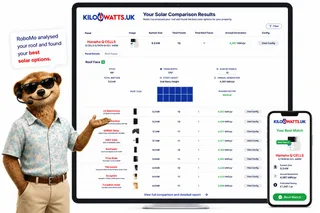
Simply enter your postcode, drop a pin on your roof, create your free account and let RoboMo™ analyse your property to find the best solar panels for your home.

You don't have to think
RoboMo™'s AI analyses your roof and does all the hard work.

Accurate & tailored
AI-powered assessment based on your roof, location, and conditions.

Best options, maximum savings
Compare top solar panels for the best performance and value.

Simple, fast & effortless
Provide a few details, sit back and watch your results unfold.
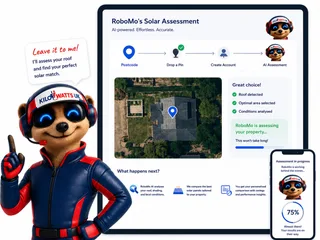
STEP 1
Choose Home, Business or Industrial
Enter your postcode to start your assessment.
STEP 2
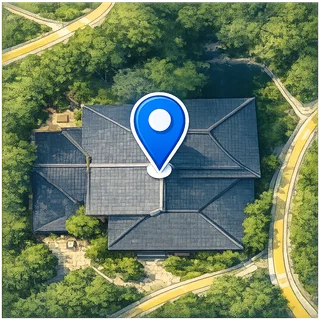
Drop a pin on your roof
STEP 3

Create your free account
STEP 4

Sit back and watch RoboMo™ work
RoboMo™ analyses your roof and builds your personalised solar comparison.
Step 1
Enter your postcode
Start designing your wind energy system in seconds.
Are you an installer, distributor or renewable energy business?
Kilowatts UK is expanding the Flower Turbines partner network across the UK.
Become A Flower Turbines PartnerKilowatts UK is an authorised representative
Flower Turbines
Compact vertical-axis turbines built for real UK sites, not just open farmland.
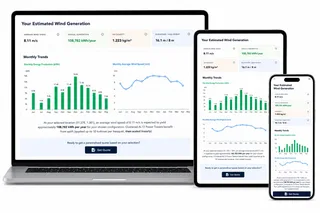
They start in light wind, sit in a small footprint, and are bird-safe by design. Cluster them as a bouquet and the group performs better together than the same turbines standing alone. Enter your postcode for a location-based generation estimate. Figures use area weather data and will differ if buildings, trees or hills sit in the way.
Starts in light UK wind
Built to generate in typical UK wind, not only open farmland.
Small rooftop or ground footprint
Compact towers for roofs, yards and tight sites.
Bird-safe slow rotation
Slow vertical-axis spin, bird-safe by design.
Bouquet clusters raise output
Grouped turbines outperform the same units standing alone.

STEP 2

Choose a location
STEP 3
Place your cluster
Tap the map where you want the turbine cluster to go.
STEP 4

Instant generation forecasts
Compare different turbine layouts and see annual generation forecasts instantly.
STEP 5

No commitment required
Explore different configurations before deciding whether to request a quotation.
FAQ
Need Help? RoboMo's Got Answers
Why does roof shading get worse in winter?
In winter the sun sits much lower in the sky across the UK. A lower sun makes shadows from chimneys, trees and neighbouring buildings stretch much further across a roof. A roof that looks clear in June can therefore be partly shaded in December.
Can a summer solar survey miss winter shading?
Yes, if it only relies on what is visible on the day. A proper shade assessment should consider the winter sun path, not just the roof conditions during the visit. Ask which panels may be affected and at what times of year.
Does one shaded solar panel affect the whole system?
It can, especially with a traditional series string. The shaded panel may limit the current through the rest of that string, so the loss can be larger than the shaded area suggests. The exact effect depends on the system design and how the panels are wired.
Do optimisers or microinverters solve winter shading?
They do not create sunlight, so a shaded panel will still produce less. What they can do is reduce the impact on the rest of the array by allowing panels to operate more independently. They are most useful where shading affects only some panels at certain times.
What are the most common causes of winter shading on UK roofs?
Chimneys, nearby trees, dormers, flues, aerials and neighbouring roofs are common causes. Objects to the south, south-east or south-west of the array usually matter most because that is where the winter sun travels. Tall objects close to the roof can be especially important.
Does winter shading mean solar panels are not worth installing?
Not necessarily. Seasonal shading is a design issue, not an automatic reason to avoid solar. A good design may use a different panel layout, string arrangement, optimisers or microinverters to reduce the impact.
Should I move panels away from a chimney shadow?
Often it is worth considering. Moving panels up or across the roof can sometimes avoid the worst winter shading, although it may reduce the number of panels that fit. The installer should explain the trade-off clearly rather than treating the layout as fixed.
Do solar panels still work in winter if it is cloudy or cold?
Yes, solar panels can still generate from diffuse daylight on cloudy days. Cold weather itself is not the problem; panels can operate efficiently in cool conditions. Winter output is mainly limited by shorter days, the lower sun and any shading or snow cover.