


uk heating grant: eligibility and how to apply
Published: 2026-07-19 09:34:09
Updated: 2026-08-01 07:30:20
Being over 55 may help where a scheme considers vulnerability, health, low income or local council rules.
Is there a UK heating grant for over 55s in 2026.
There is no standard UK-wide “over 55 heating grant” in 2026. Being over 55 may help where a scheme considers vulnerability, health, low income or local council rules, but age on its own is usually not enough to qualify for a free boiler, heat pump or insulation.
Most UK heating grants look at a combination of:
- Household income and benefits.
- Pension Credit or State Pension age status.
- EPC rating and how inefficient the home is.
- Health conditions made worse by cold homes.
- Existing heating system and fuel type.
- Property type, tenure and permissions.
In practice, the strongest route for many older households is not “I am over 55”, but “I receive Pension Credit”, “my home has a poor EPC rating”, “I am on a low income”, “my health is affected by a cold home”, or “my council is running a local warm homes scheme”. The main mistake is searching only for an “over 55 grant” and missing the real schemes that may apply. The right route depends on whether you need a boiler repair or replacement, insulation, low-carbon heating, heating controls, or help with energy bills rather than a new heating system. Where you live in England, Scotland, Wales or Northern Ireland. There is no automatic free heating grant at age 55. Pension Credit is often more important than age. Poor EPC ratings usually improve eligibility. Local council flexible rules can matter. Private tenants normally need landlord permission. Some schemes help with bills, while others fund installation work.
Why over 55 is not usually the deciding rule.
A person aged 55 to State Pension age is normally assessed like any other adult applicant. Grant schemes usually look for evidence that the household needs support and that the property can be improved under the scheme rules.
Age becomes more relevant when it connects to another eligibility factor. For example, someone over State Pension age who receives Pension Credit may have a stronger route into energy efficiency support than someone aged 56 with a good income and an EPC C property. A long-term health condition affected by cold, damp or high energy costs can also matter, especially where councils use flexible eligibility rules.
From real home-energy enquiries, the pattern is consistent: grant providers rarely approve funding just because someone is over 55. They check whether the household, the building and the proposed measure match the funding rules. That means two people of the same age can receive very different outcomes depending on income, benefits, EPC rating, tenure and local funding availability. A simple way to think about it is this:
Main heating grant routes to check in 2026.
The main UK routes vary by nation, and scheme names, funding rounds and closing dates can change. ECO4 and the Great British Insulation Scheme were scheduled to run until 31 March 2026, so anyone applying later in 2026 should check whether those schemes have been extended, replaced or closed to new applications before relying on them.
The most relevant routes to check are:
Boiler Upgrade Scheme
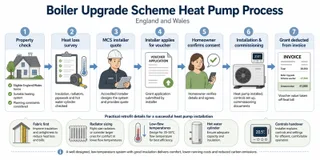
This applies in England and Wales and supports eligible low-carbon heating installations. It is not age-based or means-tested. The installer applies for the grant and deducts it from the quote. For more detail, see this guide to the BUS Grant for heat pumps.Warm Homes Local Grant
This England route is delivered through local authorities and supports energy efficiency and low-carbon heating for eligible low-income households in privately owned homes. You can also read more about the wider Warm Homes Plan.ECO4 or successor schemes
These apply in Great Britain and are aimed at low-income or vulnerable households in inefficient homes. They can support insulation, heating upgrades, first-time central heating and other energy efficiency measures where the property and household qualify.ECO4 Flex or local flexible eligibility
Councils can refer some households that do not receive standard qualifying benefits. Older residents, people with health conditions and low-income households may be considered, but each council sets its own statement of intent and availability can vary.Great British Insulation Scheme or successor schemes
This focuses mainly on insulation rather than full heating replacement. It is not specifically for over-55s and usually depends on property condition, EPC rating, council tax band or benefits.Warmer Homes Scotland and Home Energy Scotland support
Scotland has separate advice, grant and loan routes for eligible households, including support for heating, insulation and renewable heating.
Bill support is separate from installation grants. Winter Fuel Payment, Warm Home Discount and Cold Weather Payment can help eligible households with energy costs, but they do not normally pay for a new boiler, heat pump or insulation project. If you are over 55, it is worth checking both types of help: installation grants that improve the home, and bill support that reduces short-term energy pressure. Nest Wales — This Welsh Government scheme provides advice and, for eligible households, free home energy efficiency improvements. Northern Ireland schemes — Northern Ireland has separate energy efficiency and heating support, and availability can depend on current funding rounds and local rules.
What you may be able to get help with.
Heating grant support is not always a simple boiler swap. Many schemes now take a whole-house approach. That means the survey may look at heat loss, insulation, ventilation and controls before deciding whether a new heating system is the right measure.
Possible funded or partly funded measures can include:
Loft insulation. Cavity wall insulation. Solid wall insulation. Roof or room-in-roof insulation. Heating controls. First-time central heating. If solar PV is being considered alongside heating upgrades, you can compare solar options before committing to a design. The key point is that the measure must fit both the funding rules and the home. For example, a heat pump may be a good option for one property but unsuitable for another without radiator changes, insulation improvements or cylinder space. Likewise, insulation can reduce bills and improve comfort, but it should not be installed without checking damp and ventilation risks. Boiler Upgrade Scheme support is different from income-based grant support. It can help with eligible heat pumps and biomass boilers, but it does not usually cover the whole project cost. The grant is normally deducted from the installer’s quote rather than paid to you as cash. Boiler-related work where the scheme allows it. Air source or ground source heat pumps. Biomass boilers in limited eligible cases. Radiator upgrades. Hot water cylinder work. Ventilation improvements. Solar PV under some local schemes.
Eligibility factors that matter most.
For most applicants, eligibility is not based on one rule. A household may be eligible on income but fail because the property is unsuitable. Another household may live in an EPC E home but not qualify because income, benefits, tenure or local scheme rules do not match.
The main factors are:
Tenure
Owner-occupiers usually have the widest options. Private tenants may qualify, but landlord consent is normally required. Leasehold flats can need freeholder or management company approval.EPC rating
Many schemes focus on homes rated D, E, F or G because they are less energy efficient. Homes rated A, B or C are less likely to qualify for some insulation grants.Local delivery
Council participation, funding availability and installer capacity can affect whether a technically eligible household can proceed.Existing heating
Off-gas homes, inefficient systems, broken boilers and direct electric heating can affect what is offered. A modern working boiler is less likely to attract grant support.Benefits and income
Pension Credit, Universal Credit, Housing Benefit, Income Support and other qualifying benefits can open routes into support. Income thresholds and benefit rules vary by scheme.Health vulnerability
Respiratory illness, cardiovascular illness, reduced mobility and other conditions affected by cold homes can support some flexible eligibility applications.
A good assessment should also consider practical building issues. These do not need to be confusing. In plain English, the survey should check whether the home is suitable, whether the work could create damp or ventilation problems, and whether the new heating system would actually keep the home warm at a reasonable cost. For heating upgrades, this can include radiator size, pipework, hot water cylinder space, electrical supply and controls. For insulation, it can include damp, ventilation, wall condition, roof access and whether the property is exposed to wind-driven rain.
How to apply for a heating grant in 2026.
Start with your UK nation, because England, Scotland, Wales and Northern Ireland do not all use the same schemes. Then check whether your home has a valid EPC and what rating it has. If the EPC is missing or out of date, an installer, council scheme or assessor may advise whether a new one is needed.
A practical application route looks like this:
Check your EPC rating. List your benefits, Pension Credit status and household income. Identify your property tenure: owner-occupied, privately rented, social rented or leasehold. Check your local council website for flexible eligibility or warm homes schemes. Contact a scheme provider, local authority route or accredited installer. Ask what scheme is being used and what evidence is required. Before contacting a scheme provider or installer, gather evidence. This makes the eligibility check easier and reduces delays after the survey. After the initial check, you may be offered a home survey. For insulation and whole-house retrofit, the survey should look at heat loss, ventilation, damp risk and the practical condition of the property. For a heat pump, a competent design should include a room-by-room heat loss calculation and a check of radiators, hot water cylinder space and electrical requirements. If you want an independent starting point, you can book a free home energy survey. Do not start work before funding is confirmed in writing. Retrospective grants are usually not available for work that has already been completed. Wait for a written eligibility check and survey. Do not start work until funding approval is confirmed in writing. Proof of identity. Proof of address. Proof of ownership or tenancy. Landlord or freeholder consent where needed. Recent benefit award letters. Pension Credit evidence where relevant. Household income evidence. EPC certificate if available. Recent energy bills. Photos of the existing heating system. Boiler make, model and age if known. Medical evidence for health-based routes.
What happens after the survey.
A good survey is not just a quick look at the boiler. The assessor or installer should check what measures are technically suitable, whether the property meets scheme rules, and whether any household contribution is required.
Some grants cover the full eligible cost. Others reduce the upfront cost only. You should always ask for a written breakdown showing:
- The scheme name.
- The measures being installed.
- The total quoted cost.
- The grant value.
- Any customer contribution.
- What is included and excluded.
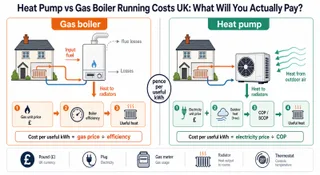
For boiler work, gas installations must be carried out by a Gas Safe registered engineer. The final cost can be affected by flue position, condensate drainage, controls, pipe sizing, system cleaning and whether radiators or hot water components need attention. For heat pumps, the design matters more than the headline grant. Heat pumps usually work best with lower flow temperatures, so radiator sizing, insulation, hot water cylinder space and control settings all affect comfort and running costs. Existing microbore pipework, limited cylinder space or weak electrical supply can make the installation more complex. If this route is suitable, compare the specification carefully before arranging a heat pump installation. For insulation, damp and ventilation must be handled carefully. Cavity wall insulation is not suitable for every wall or exposure condition. Loft insulation should not block eaves ventilation. Solid wall insulation can be disruptive and may need moisture checks, scaffolding and careful detailing around windows, reveals and junctions. A trustworthy installer or scheme provider should be willing to explain these points clearly. If the explanation is rushed, vague or focused only on signing paperwork, pause before proceeding. Warranties and workmanship cover. Who is responsible for permissions. What documents you receive after installation.
Likely costs and contributions before grants.
Grant outcomes vary, but it helps to understand the scale of work before assuming everything will be free. The figures below are broad market context only. Actual costs depend on property size, specification, location, access, existing system condition and current installer pricing.
A straightforward gas combi boiler replacement often costs about £2,500 to £4,500 before any support. More complex boiler replacements can cost £4,500 to £6,000 or more where extra pipework, controls, system cleaning or flue work is needed.
Air source heat pump installations often cost about £8,000 to £18,000 before grants. Ground source heat pump installations often cost about £18,000 to £35,000 before grants, largely because of groundworks. Biomass boiler installations often cost about £12,000 to £25,000 before grants and are generally more relevant to rural off-gas properties. Insulation costs also vary widely. Loft insulation often costs about £800 to £1,500, cavity wall insulation about £1,500 to £3,000, internal wall insulation about £7,000 to £15,000, and external wall insulation about £8,000 to £20,000 or more. Heating controls may cost about £150 to £600, while radiator upgrades and cylinder changes can add anything from a few hundred pounds to several thousand pounds depending on the home. These figures are not grant promises. Grant-funded work is priced and approved through scheme rules. The installer should show clearly whether there is a customer contribution and what is included. If a company advertises “free heating grants for everyone over 55”, ask which official scheme is being used and why you qualify. A genuine route should be explainable in writing.
When a grant may not be suitable.
A grant is not automatically the right route for every home. Some schemes restrict the measures they can fund, and the cheapest eligible option is not always the best long-term design for the property.
You may be less likely to qualify if:
Your household has a higher income. You do not receive qualifying benefits. There is no accepted vulnerability route. Your property is already EPC A, B or C. The existing heating system is modern and working. Your council is not currently participating in a relevant route. A recently built home may also be excluded from some support, including many Boiler Upgrade Scheme situations unless it is an eligible self-build. Private rented homes can be eligible under some routes, but the landlord normally has to agree. In some schemes, the landlord may need to contribute. Landlords can review wider energy upgrade support before deciding what work is practical. Leasehold flats, listed buildings and conservation area properties may need extra permissions before external insulation, flues or visible heat pump equipment can proceed. This does not always prevent work, but it can slow the process and affect which measures are possible. A heat pump may not be suitable without radiator changes, cylinder space, insulation improvements or electrical work. Similarly, insulation should not be rushed into a home with unresolved damp, leaks or poor ventilation. The best grant outcome is not simply the biggest subsidy. It is the measure that is properly designed, safely installed and likely to reduce heat loss, improve comfort or lower carbon emissions without creating new problems. The property is technically unsuitable for the proposed measure.
Common mistakes and warning signs.
The phrase “over 55 heating grant” is often used in adverts and cold calls, but it can be misleading. It may refer to a real scheme where age is one factor, or it may simply be a sales lead rather than an approved grant route.
Common mistakes include:
Assuming everyone over 55 gets a free boiler. Believing the grant will be paid into your bank account. Starting work before written approval is confirmed. Ignoring landlord or freeholder consent. Accepting a heat pump quote without a heat loss calculation. Installing insulation without damp and ventilation checks. Warning signs include vague scheme names, pressure to sign immediately, refusal to provide written costs, promises that sound too broad, or claims that your age alone guarantees a free heating system. Ask for the paperwork you will receive at the end, including warranties, commissioning documents, compliance certificates and operating instructions. Poorly designed heating systems can increase running costs, and poorly installed insulation can create condensation or mould problems. For gas work, check Gas Safe registration. For heat pumps and low-carbon installations, check relevant certification and grant scheme requirements. For council-led schemes, confirm the route with the local authority if you are unsure. Solar PV rules and incentives can also differ from heating schemes, so check current solar grant routes before assuming support applies. Trusting cold callers who create urgency. Signing before seeing any household contribution in writing. Not checking installer accreditation or scheme paperwork. Not asking what happens if extra work is found during installation.
Practical next steps.
If you are over 55 and looking for heating help in 2026, do not stop at age-based searches. Check whether you receive Pension Credit or another qualifying benefit, find your EPC rating, identify your UK nation, and ask your council whether flexible eligibility or local warm homes funding is available.
You should also decide what problem you are trying to solve. A broken boiler, high bills, a cold solid-wall home and an off-gas property needing low-carbon heating may all lead to different support routes. In many homes, the best answer is insulation plus controls before, or alongside, a heating upgrade.
A sensible order is: Find your EPC rating. Check Pension Credit and benefit eligibility. Check your council’s local energy efficiency schemes. Gather income, benefit and property documents. Arrange a survey before agreeing to work. Compare the written grant offer, contribution and specification. Use a written survey and quote to compare what is actually included, what is funded, what you must pay, and what the installer will provide after completion. If the property is rented, get consent early. If the home is listed, leasehold or in a conservation area, check permissions before committing. The main takeaway is simple: there is no automatic UK heating grant for everyone over 55, but many over-55 households can still qualify through benefits, low income, poor EPC rating, health vulnerability, local authority rules or low-carbon heating schemes. Confirm permissions if the property is rented, leasehold, listed or in a conservation area. Keep all completion documents after installation.
Plan, Compare & Buy Renewable Energy Solutions
AI does the thinking.
You get the perfect solar match.
Use RoboMo™ to assess your property, compare available technologies and connect with trusted UK installers, suppliers and manufacturers.
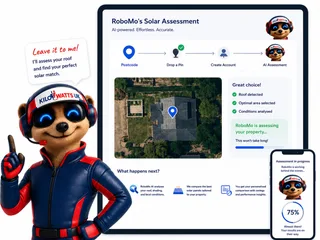
Simply enter your postcode, drop a pin on your roof, create your free account and let RoboMo™ analyse your property to find the best solar panels for your home.

You don't have to think
RoboMo™'s AI analyses your roof and does all the hard work.

Accurate & tailored
AI-powered assessment based on your roof, location, and conditions.

Best options, maximum savings
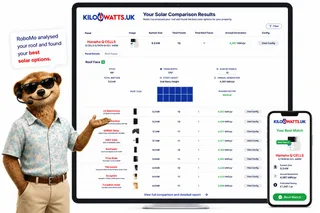
Compare top solar panels for the best performance and value.

Simple, fast & effortless
Provide a few details, sit back and watch your results unfold.
STEP 1
Choose Home, Business or Industrial
Enter your postcode to start your assessment.
STEP 2

Drop a pin on your roof
STEP 3

Create your free account
STEP 4

Sit back and watch RoboMo™ work
RoboMo™ analyses your roof and builds your personalised solar comparison.

Kilowatts UK is an authorised representative
Flower Turbines
Compact vertical-axis turbines built for real UK sites, not just open farmland.
They start in light wind, sit in a small footprint, and are bird-safe by design. Cluster them as a bouquet and the group performs better together than the same turbines standing alone. Enter your postcode for a location-based generation estimate. Figures use area weather data and will differ if buildings, trees or hills sit in the way.
Starts in light UK wind
Built to generate in typical UK wind, not only open farmland.
Small rooftop or ground footprint
Compact towers for roofs, yards and tight sites.
Bird-safe slow rotation
Slow vertical-axis spin, bird-safe by design.
Bouquet clusters raise output
Grouped turbines outperform the same units standing alone.
Step 1
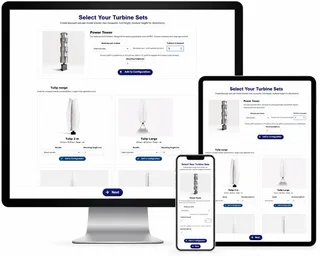
Enter your postcode
Start designing your wind energy system in seconds.
STEP 2

Choose a location
STEP 3

Place your cluster
Tap the map where you want the turbine cluster to go.
STEP 4

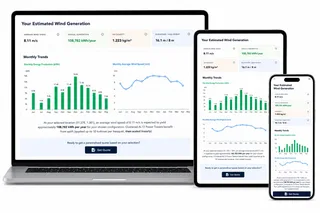
Instant generation forecasts
Compare different turbine layouts and see annual generation forecasts instantly.
STEP 5

No commitment required
Explore different configurations before deciding whether to request a quotation.
Related articles


Mo's Mission Nominations
FAQ
Need Help? RoboMo's Got Answers
Is there a UK heating grant for over 55s in 2026?
There is no standard UK-wide heating grant that automatically applies just because someone is over 55. Most heating and insulation grants in 2026 are based on income, benefits, Pension Credit, EPC rating, health vulnerability, property type, tenure and local authority rules. Being over 55 may help if it supports a vulnerability or low-income application, but age alone is usually not enough to qualify for a free boiler, heat pump or insulation.
Can I get a free boiler if I am over 55?
You are unlikely to get a free boiler based only on being over 55. Boiler support, where available, usually depends on the scheme rules, your household income or benefits, the condition of your current heating system, your EPC rating and whether your home is suitable for the funded work. If a company says everyone over 55 can get a free boiler, ask which official scheme is being used and request written eligibility confirmation before signing anything.
Does Pension Credit help with heating grant eligibility?
Yes, Pension Credit can be one of the strongest routes into energy efficiency and heating support because many schemes prioritise low-income pensioner households. If you receive Pension Credit and your home has a poor EPC rating or inefficient heating, you may have a better chance of qualifying for support than someone who is only over 55 but has a higher income and an efficient home. You should also check whether you are eligible for Pension Credit if you are over State Pension age and on a low income.
What heating and insulation schemes should over-55 households check in 2026?
The main routes to check include ECO4 or any successor scheme, ECO4 Flex or local flexible eligibility, the Great British Insulation Scheme or any replacement, the Boiler Upgrade Scheme in England and Wales, Warm Homes Local Grant in England, Warmer Homes Scotland, Nest Wales and separate Northern Ireland schemes. Availability can change during 2026, especially where schemes have funding deadlines or local delivery limits, so it is important to confirm the current rules before applying.
What can a heating grant help pay for?
Depending on the scheme, support may help with loft insulation, cavity wall insulation, solid wall insulation, room-in-roof insulation, heating controls, first-time central heating, boiler-related work, heat pumps, radiator upgrades, hot water cylinder work, ventilation improvements and sometimes solar PV through local schemes. Not every measure is available under every grant, and the final offer depends on the property survey, funding rules and whether the work is technically suitable.
Is the Boiler Upgrade Scheme based on age or income?
No, the Boiler Upgrade Scheme is not based on being over 55 and is not means-tested. It supports eligible low-carbon heating installations, such as heat pumps and some biomass boilers, in England and Wales. The installer applies for the grant and deducts it from the quote, so it is normally a contribution towards the project rather than a cash payment to the homeowner or a guarantee that the whole installation will be free.
Do private tenants over 55 qualify for heating grants?
Private tenants may qualify for some schemes, but landlord consent is normally required before any work can start. Some schemes may also require the landlord to make a contribution or meet property standards. Tenants should not agree to installation work without written landlord approval, and landlords should check the grant conditions, EPC implications, warranties and any future responsibilities before proceeding.
Why does the EPC rating matter for heating grants?
The EPC rating shows how energy efficient a property is, and many grant schemes focus on homes rated D, E, F or G because they are more likely to be cold, costly to heat or in need of improvement. A home rated A, B or C is less likely to qualify for some insulation or fuel poverty schemes, although it may still be eligible for other types of support depending on the rules. If your EPC is missing or out of date, a scheme provider, council or installer may advise whether a new assessment is needed.
Can health conditions improve eligibility for heating support?
Health conditions can help in some applications, especially where cold, damp or high energy costs make the condition worse. Respiratory illness, cardiovascular illness, reduced mobility and other cold-related vulnerabilities may support a local flexible eligibility route. The exact rules vary by council and scheme, and you may need medical evidence or a referral to show why your home’s heating or insulation is affecting your health.
Will a grant cover the full cost of the work?
Some grants may cover the full eligible cost, but others only reduce the upfront cost and require a customer contribution. The amount depends on the scheme, the property, the measure, the survey result and funding availability. Before agreeing to proceed, ask for a written breakdown showing the scheme name, total cost, grant value, any contribution you must pay, what is included, what is excluded, warranties and completion documents.
Should I start work before my grant is approved?
No. You should not start heating, insulation or renewable energy work until the grant or funding support has been confirmed in writing. Retrospective grants are usually not available for work that has already been completed, and starting early can make you ineligible. Always wait for the written eligibility decision, survey outcome and funding approval before signing an installation contract or allowing work to begin.
What documents might I need when applying?
You may need proof of identity, proof of address, proof of ownership or tenancy, benefit award letters, Pension Credit evidence, household income evidence, an EPC certificate, recent energy bills, photos or details of your existing heating system and landlord or freeholder consent where relevant. If applying through a health vulnerability route, you may also need medical evidence or confirmation from an appropriate professional.
What happens during a heating grant survey?
A survey should check whether your household and property meet the scheme rules and whether the proposed work is technically suitable. For heating upgrades, this may include checking heat loss, radiators, pipework, controls, hot water cylinder space, flues, electrical supply and the condition of the existing system. For insulation, the survey should consider damp, ventilation, wall condition, roof access and whether the proposed measure could create condensation or moisture problems.
Are heat pumps suitable for every over-55 household?
No, heat pumps are not suitable for every property without design checks. A good heat pump assessment should include a room-by-room heat loss calculation and checks on radiator size, insulation, hot water cylinder space, controls and electrical supply. Some homes may need insulation, radiator upgrades or other work before a heat pump can run efficiently and keep the home comfortable.
What are warning signs of a misleading heating grant offer?
Warning signs include claims that everyone over 55 automatically qualifies, pressure to sign immediately, vague scheme names, refusal to provide written costs, promises of cash payments, no proper survey, no explanation of customer contributions and no clear installer accreditation. A genuine grant route should be explainable in writing, with the scheme name, eligibility basis, survey process, installation details and completion paperwork clearly set out.
What should I do first if I am over 55 and need heating help?
Start by checking your EPC rating, Pension Credit position, benefits, household income and local council energy efficiency schemes. Then decide whether your main problem is a broken boiler, high bills, poor insulation, an off-gas heating system or a cold and damp home. Once you know the issue, contact your council, an approved scheme provider or an accredited installer and ask for written confirmation of eligibility, survey requirements and any possible contribution before agreeing to work.