


Commercial solar servicing in brief
Published: 2026-09-02 09:39:35
Updated: 2026-09-05 01:09:29
Commercial solar servicing is planned and reactive maintenance for a business solar PV system after installation.
commercial solar servicing - UK business guide
Learn commercial solar servicing with UK-specific guidance, including costs, savings, rules, and what to do next.
Commercial solar servicing in brief
Commercial solar servicing is planned and reactive maintenance for a business solar PV system after installation. For a UK business, it should check safety, generation, inverters, isolators, cabling, monitoring, roof access risks and documentation. It goes well beyond panel cleaning, and poor output should not be blamed on dirt without evidence.
A good service helps answer three practical questions: is the system safe, is it producing what it reasonably should, and is any fault worth repairing compared with cleaning, recommissioning, redesign or replacement? The answer depends on system size, roof condition, access, inverter age, monitoring quality, site environment, documentation and whether electrical or export arrangements have changed since installation.
A small office array may only need a simple maintenance routine. A warehouse, school, factory, farm building, landlord-owned property or multi-site portfolio may need stronger reporting, planned access, permits and coordination around business operations.
What should be included in a commercial solar PV service?
A proper commercial PV service should look at the whole asset, rather than just the modules. Panels are visible and often blamed first, but many commercial faults sit in inverters, DC cabling, connectors, isolators, meters, monitoring equipment or the interface with the building’s electrical system.
Before attending site, a competent provider will normally ask for the system size in kWp, inverter make and model, monitoring access, previous fault history, commissioning records, roof access details and any known building work. That preparation affects whether the visit is a visual service, a test-and-report visit, fault-finding exercise, cleaning assessment or wider operations and maintenance review.
On site, the scope should be clear enough that the business understands what is included and what is not. Some visits are mainly visual and operational; others include electrical testing, thermographic inspection where appropriate, monitoring review and a formal written report.
A one-line note saying “system checked” is not enough for a commercial asset. A useful report should allow a facilities manager, landlord, insurer, finance team or future contractor to understand what was done and why a recommendation was made.
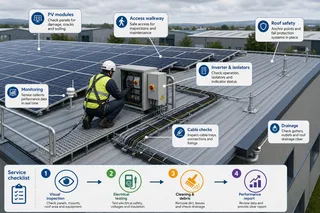
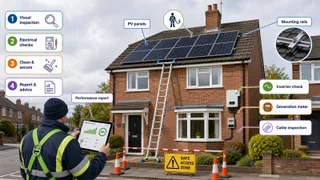
Typical commercial PV service checklist
A service checklist is useful because it prevents the visit becoming a quick look at the panels followed by a generic recommendation. The exact scope still depends on the system, access and budget, but the business should know whether it is buying a basic inspection or a deeper test-and-report service.
Electrical testing should only be carried out by people with the right competence, equipment and safe working method. Some checks may be impractical during poor weather, unsafe roof conditions, inaccessible equipment or where isolation would disrupt critical operations.
Where a recognised inspection and testing framework is required, the business should discuss this before the visit. BS EN 62446-1 is commonly referenced for PV system documentation, commissioning tests and inspection principles, but the applicable scope should be confirmed for the actual asset and purpose of the report. Where the wider building installation also needs review, a separate commercial electrical inspection may be appropriate. The starting point is system records. These include the commissioning pack, as-built drawings, string layout, inverter settings, warranties, DNO correspondence, meter details and previous service reports. Poor records make every later inspection slower and less certain. Module and mounting checks should cover cracked glass, delamination, hot-spot indicators, heavy soiling, bird fouling, shading changes, loose or missing fixings, rail alignment, clamp position, corrosion, movement, roof interface condition and any obvious effect on roof drainage. Cable management, isolators and enclosures need close attention. Common checks include UV exposure, unsupported cables, sharp edges, animal damage, water traps, connector condition, route identification, labelling, accessibility, overheating signs, water ingress, mechanical damage and correct identification. Inverters, monitoring and metering should be checked against available data. That may include alarms, fan condition, cooling clearance, firmware or settings notes where relevant, event history, comparative generation, data gaps, communication faults, meter plausibility, export records where available and whether alarms are being received by the right people.
The checklist should be tailored rather than copied blindly. A ground-mounted system, a multi-inverter warehouse, a school roof, a farm building and a landlord-owned office block can all require different levels of evidence.
How often should commercial solar panels be serviced?
Annual servicing is common for many commercial solar PV systems, but it should not be treated as a universal rule. Higher-risk sites may need more frequent inspection, while a well-monitored, easily accessible, low-risk system may have a lighter planned maintenance schedule supported by regular data review. The right interval depends on the consequences of failure as much as the likelihood of failure. A rooftop system supplying a small office has different operational importance from a large factory installation where generation supports daytime loads, tenant billing, carbon reporting or energy procurement decisions. Monitoring frequency is separate from physical servicing. A dashboard can show a generation drop, an inverter alarm or a data outage, but it may not reveal loose cable containment, damaged labels, roof deterioration around mounting points or access hazards.
Overview
A sensible maintenance plan usually combines routine inspection, regular data review and a clear process for responding to alarms. Waiting for a yearly visit can be too slow if an inverter has been offline for weeks.
Servicing, monitoring, cleaning and repairs are different jobs
Commercial solar servicing is often confused with cleaning, but they solve different problems. Cleaning deals with dirt, droppings, moss, pollen, salt or other soiling on the module surface. Servicing checks whether the asset is safe, connected, producing and properly documented.
Monitoring is also different. It can show that output has fallen, an inverter has stopped reporting or export is lower than expected, but it does not automatically diagnose the cause. A communication fault, meter issue or misconfigured current transformer can make a healthy system look unhealthy, while basic monitoring may hide a string fault if total generation still looks plausible.
Reactive repair is the next step when inspection or monitoring points to a fault. That could involve replacing a failed inverter, repairing damaged cabling, renewing an isolator, restoring monitoring communications, investigating water ingress or tracing string underperformance.
Rainfall in the UK can remove some loose dirt, but it does not make commercial solar panels maintenance-free. Bird fouling, shallow roof pitches, nearby trees, coastal salt, agricultural dust and industrial pollution can all leave deposits that rain alone may not clear.
UK safety, access and compliance issues businesses should not overlook
Commercial roofs introduce constraints that are easy to underestimate from ground level. Fragile roof sheets, asbestos-containing materials, rooflights, loading bays, tenant operations, plant rooms, restricted access routes and weather exposure can all affect how a service is planned.
Working at height must be treated seriously. The Work at Height Regulations are relevant where technicians need roof access, and the Electricity at Work Regulations are relevant to electrical maintenance. HSE guidance on roof work and work at height is a sensible reference point when assessing whether a provider’s access plan is credible.
Servicing may also reveal that the original installation records are incomplete or out of date. Missing string layouts, unclear labelling, inaccessible isolators or unavailable monitoring logins can make future fault finding slower, less reliable and more expensive.
Insurance requirements vary, so businesses should not assume that a quick visual check will satisfy a policy condition. If an insurer, landlord or funder needs evidence, the report should show what was inspected, what was not inspected and what actions remain outstanding.
DNO, inverter and export changes need extra care
Routine like-for-like servicing is different from changing how the solar PV system connects to the site or exports power. If remedial work changes inverter capacity, export control, protection settings, metering arrangements or system design, the business may need further technical review and potentially DNO involvement depending on the change.
UK grid connection arrangements are often discussed through G98 and G99 processes, with resources published through the Energy Networks Association and distribution network operators. The correct route depends on the system and the proposed change, so a service provider should not treat inverter replacement, export settings or protection settings casually.
This is one reason documentation matters. DNO correspondence, commissioning records, inverter settings, meter information and as-built drawings can prevent a repair from becoming guesswork. Where those records are missing, the first stage may be to reconstruct the system information before specifying remedial work. Businesses should also distinguish between kW, kWp and kWh when discussing performance. The array size is normally expressed in kWp, inverter power in kW, and generated energy in kWh. Confusing those terms can lead to poor decisions about whether the system is underperforming, oversized, export-limited or simply behaving as expected for the season.
Why generation can fall without the panels being dirty
A drop in generation is a symptom, not a diagnosis. Dirt is one possible cause, but a competent maintenance provider will usually look at inverter data, string performance, alarms, shading changes, metering, export patterns and recent site activity before recommending a remedy.
A broad UK modelling assumption for a good, unshaded commercial PV system may sit around 800 to 1,000 kWh per kWp per year, depending on location, orientation and pitch, but that is not a guarantee. Actual output can be affected by shading, poor orientation, inverter faults, soiling, grid interruptions, equipment degradation, export limitation and monitoring errors.
Seasonality also matters. Low winter production may be normal, while a sudden fall on one inverter, one string or one part of the roof is more likely to indicate a fault. The most useful comparison is the system’s performance against expected output for similar conditions and against other comparable inverters or strings on the same site.
Good fault finding starts by comparing evidence, not by guessing. Dates of alarms, weather conditions, roof works, inverter logs and meter readings are often more useful than a single monthly generation figure.
What affects commercial solar servicing costs?
There is no reliable single UK price for commercial solar servicing because the scope varies too widely. A basic visual inspection on a small, accessible roof is not comparable with a full test-and-report visit for a large warehouse, farm, school or multi-building site with several inverters and complex access requirements.
The quote is usually shaped by system size, number of inverters, roof access, travel, reporting detail, monitoring setup, testing scope, response time expectations and whether repairs are included. Access can be a major factor because safe roof work may require planning, permits, specialist equipment or coordination around operations.
The cheapest quote is not always the lowest-cost outcome. A vague visit that misses string faults, unsafe isolators or monitoring errors can leave the business paying for lost generation or repeated callouts. Equally, over-servicing a straightforward low-risk system is poor value.
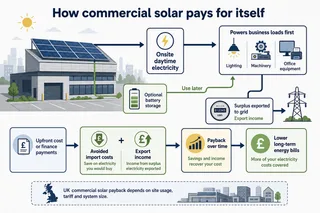
Savings should be treated carefully. Servicing can protect generation and reduce avoidable downtime, but it does not create a fixed return in every case. The financial benefit depends on what faults are found, the value of electricity used on site or exported, downtime avoided, repair costs and whether the system was underperforming before the visit. For wider payback context, compare the servicing findings with the business’s commercial solar ROI assumptions.
When servicing is not enough
Sometimes servicing shows that the system is safe but commercially weak. The array may be too small for current electricity demand, poorly orientated, heavily shaded, installed on a roof nearing replacement, or built around ageing equipment that is becoming uneconomic to repair.
In those cases, the useful output of a service is more than a defect list. It should help the business decide whether to repair, recommission, redesign, extend or replace the system. A landlord buying a building with old PV may need a different decision from an owner-occupier trying to reduce daytime grid imports across a factory site.
The existing layout should not automatically be copied if replacement is being considered. A redesign may account for changed electricity demand, new roof coverings, commercial battery storage, EV charging, revised export arrangements or modern monitoring expectations.
The decision should be made from evidence. A service report that clearly separates urgent safety items, performance issues and long-term asset risks is far more useful than a generic recommendation to replace everything.
What to ask before appointing a servicing provider
A good provider should be able to explain the proposed scope before attending site. That means what will be inspected, what will be tested, what access is needed, what records they require, whether cleaning is included and what the final report will contain.
Businesses should be wary of anyone offering only a generic panel clean without asking about inverter alarms, monitoring access, system size, roof type or fault history. Cleaning has its place, but it is not a substitute for electrical inspection, performance analysis or safe roof assessment.
Before agreeing a visit, gather the commissioning pack, inverter details, monitoring login, previous service reports, DNO records if available, electricity bills, export statements if relevant and any recent roof-work information. The more complete the starting information, the easier it is to separate genuine faults from missing data. Ask how the provider will handle working at height, fragile areas, rooflights, permits and business operations below. Also ask for evidence of appropriate insurance for the work being undertaken. The final report should include photographs, test results where applicable, fault priorities and clear remedial actions rather than a one-line attendance note. It should also distinguish urgent safety items from optional improvements.
Repairs are often quoted separately once the defect, parts, access and isolation requirements are understood. Confirm this early, especially where business interruption, tenant access or export arrangements could affect the work. A credible provider will also be clear about limitations. If part of the roof is unsafe to access, if weather prevents meaningful testing, or if records are missing, the report should say so rather than pretending the whole system has been fully assessed.
Practical next steps for UK businesses
Start with evidence rather than assumptions. If generation has fallen, download monitoring data, note the dates of alarms, check whether one inverter or the whole system is affected, and record any recent roof work, storms, bird activity or changes around the building.
For a system that appears healthy, set up a servicing rhythm based on site risk, asset size and reporting needs. For a system with poor documentation, the first visit may need to focus on rebuilding records and identifying safety or access issues before deeper performance work is possible.
Commercial solar servicing is most valuable when it leads to a clear decision. That may be continued monitoring, targeted cleaning, minor remedials, inverter replacement, roof-related work, redesign or a new installation comparison. The aim is not simply to tick a maintenance box, but to keep the PV asset safe, understandable and commercially useful.
Plan, Compare & Buy Renewable Energy Solutions
AI does the thinking.
You get the perfect solar match.
Use RoboMo™ to assess your property, compare available technologies and connect with trusted UK installers, suppliers and manufacturers.
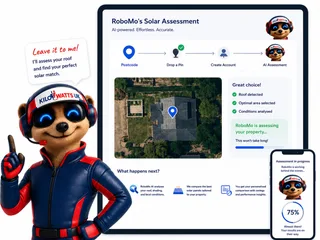
Simply enter your postcode, drop a pin on your roof, create your free account and let RoboMo™ analyse your property to find the best solar panels for your home.

You don't have to think
RoboMo™'s AI analyses your roof and does all the hard work.

Accurate & tailored
AI-powered assessment based on your roof, location, and conditions.

Best options, maximum savings
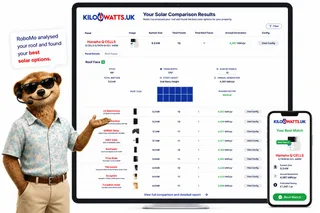
Compare top solar panels for the best performance and value.

Simple, fast & effortless
Provide a few details, sit back and watch your results unfold.
STEP 1
Choose Home, Business or Industrial
Enter your postcode to start your assessment.
STEP 2
Drop a pin on your roof
STEP 3

Create your free account
STEP 4

Sit back and watch RoboMo™ work
RoboMo™ analyses your roof and builds your personalised solar comparison.

Step 1
Enter your postcode
Start designing your wind energy system in seconds.
Are you an installer, distributor or renewable energy business?
Kilowatts UK is expanding the Flower Turbines partner network across the UK.
Become A Flower Turbines PartnerKilowatts UK is an authorised representative
Flower Turbines
Compact vertical-axis turbines built for real UK sites, not just open farmland.
They start in light wind, sit in a small footprint, and are bird-safe by design. Cluster them as a bouquet and the group performs better together than the same turbines standing alone. Enter your postcode for a location-based generation estimate. Figures use area weather data and will differ if buildings, trees or hills sit in the way.
Starts in light UK wind
Built to generate in typical UK wind, not only open farmland.
Small rooftop or ground footprint
Compact towers for roofs, yards and tight sites.
Bird-safe slow rotation
Slow vertical-axis spin, bird-safe by design.
Bouquet clusters raise output
Grouped turbines outperform the same units standing alone.
STEP 2

Choose a location
STEP 3

Place your cluster
Tap the map where you want the turbine cluster to go.
STEP 4

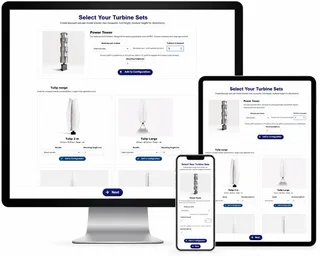
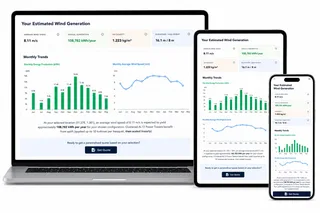
Instant generation forecasts
Compare different turbine layouts and see annual generation forecasts instantly.
STEP 5

No commitment required
Explore different configurations before deciding whether to request a quotation.
Related articles
FAQ
Need Help? RoboMo's Got Answers
How often should a commercial solar PV system be serviced in the UK?
Many commercial systems are serviced annually, but the right interval depends on system size, roof risk, equipment age, site environment and how important the generation is to the business. Regular monitoring should sit alongside physical servicing, as an inverter or communications fault can otherwise go unnoticed for weeks. Higher-risk or hard-working sites may need more frequent checks.
What should a commercial solar service include?
A useful service should check more than the panels. It should review visible module condition, mounting, cabling, isolators, inverters, monitoring, meters, labelling, roof access risks and available system records. Where agreed in advance, it may also include electrical testing, thermographic inspection and a written defect report with photos and priorities.
Is solar panel cleaning the same as servicing?
No. Cleaning removes dirt, bird fouling, salt, pollen or other deposits from the module surface, while servicing checks safety, operation, performance and documentation. Poor generation should not be blamed on dirt without evidence, because faults can also sit in inverters, cabling, meters, monitoring or export equipment.
What information should a business provide before a solar servicing visit?
Useful information includes the system size, inverter make and model, monitoring access, commissioning records, as-built drawings, previous service reports and any known faults. The provider will also need roof access details, site rules, permit requirements and any restrictions around working hours. Good preparation helps avoid a wasted visit.
Can monitoring replace a physical solar PV service?
Monitoring is valuable, but it does not replace inspection. It can show alarms, data gaps or a drop in generation, but it may not reveal damaged cable containment, loose fixings, missing labels, water ingress or roof access hazards. A sensible maintenance plan combines monitoring, planned inspection and a process for acting on faults.
Who should carry out commercial solar servicing?
Commercial PV servicing should be carried out by a competent provider with suitable electrical knowledge, safe working methods and experience of rooftop or commercial systems. Electrical testing should only be done by people with the right equipment and competence for the task. The provider should be clear about what is included, what is excluded and what cannot be safely accessed.
When might DNO or export arrangements matter during servicing?
Routine inspection and like-for-like maintenance may not change the grid connection, but alterations can be different. If work changes inverter capacity, export control, protection settings, metering or the system design, the business should check whether further technical review or DNO involvement is needed. The correct route depends on the specific system and proposed change.
What should a commercial solar service report contain?
A good report should state what was inspected, what tests were carried out, what was not accessible and what defects were found. It should include photos, relevant readings where applicable, risk priority and recommended next steps. This helps facilities managers, landlords, insurers and future contractors understand the condition of the asset.