


How to Compare Commercial Solar Installers, Contractors
Published: 2026-09-28 06:00:22
Updated: 2026-09-28 03:51:26
Compare UK commercial solar installers, contractors and quotes on the same site facts, scope, DNO checks and warranties, not the lowest headline price.
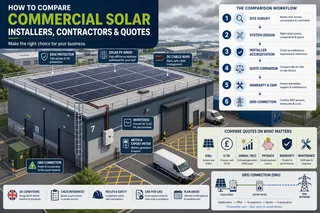
How to Compare Commercial Solar Installers, Contractors and Quotes
Find out commercial solar installers in the UK, including costs, what affects price, and how to choose an installer.
How should a business compare commercial solar installers?
A business should compare commercial solar installers by checking whether every quote is based on the same site facts, scope and assumptions. Do not choose on the lowest headline price alone. A fair comparison looks at roof suitability, electricity use, DNO connection requirements, design responsibility, exclusions, safety arrangements, warranties, monitoring, maintenance and the contract terms behind the offer.
Commercial solar contractors should be able to explain how the proposed system size, expected generation and savings assumptions relate to your actual site. A warehouse with steady daytime demand, a school with term-time use and a factory with process loads can all need different designs, even where the roof area looks similar.
Ask every installer to price the same brief, using the same electricity data and the same assumptions about roof works, access, DNO engagement, export, monitoring and aftercare. If a proposal is vague on those points, it is not yet a like-for-like commercial solar quote.
What a credible commercial solar quote should include
A commercial solar quote should be more than a panel count and a total price. It should show how the installer has assessed the building, the electrical supply, the business’s usage pattern, installation access and likely operational disruption.
An early desktop estimate can be useful for screening options, but it should not be treated as final. Once roof surveys, structural checks, electrical design and grid considerations are complete, the scope may change. That is normal, provided the installer is clear about which items are confirmed, provisional or excluded.
A good proposal will usually explain the installed capacity in kWp, expected generation in kWh, expected on-site use, expected export and the assumptions behind those figures. These are not interchangeable. A large PV system may generate plenty of electricity, but the financial case depends heavily on how much your site can use during daylight hours, so it helps to sense-check commercial solar costs against the assumptions in each quote.
Why headline price is a weak way to choose
The cheapest commercial solar contractor is not always the best value, because two quotes with the same kWp size can cover very different work. One may include access equipment, structural review, DNO liaison, export limitation, monitoring and commissioning documents. Another may leave those items provisional or excluded. Cost only becomes meaningful once the scope is normalised. Before comparing price per kWp or projected return, ask whether each installer has allowed for the same mounting method, inverter approach, cable route, shutdown arrangements, access plan, commissioning process and aftercare. A lower price per kWp can be misleading. One contractor may quote a neat desktop design and exclude roof access, structural calculations and export limitation until after order. Another may appear more expensive because it has allowed for edge protection, a roof survey, DNO paperwork, monitoring access and a proper O&M pack. The second proposal may be the better commercial comparison because it reduces the number of unknowns.
How to check whether the installer understands your site
A good installer will ask for practical information before presenting a serious proposal. For a business, that usually means electricity bills, half-hourly data where available, site plans, roof information, photographs, access constraints and details of operating hours.
They should also ask what may change. If you are adding EV chargers, heat pumps, new machinery, refrigeration or extended shifts, the best solar design may differ from one based only on last year’s consumption. Equally, if a roof is due for refurbishment, the solar decision should be coordinated with that work rather than bolted on afterwards.
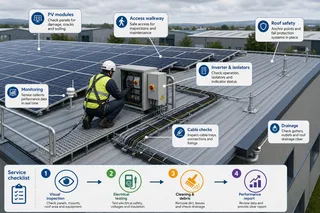
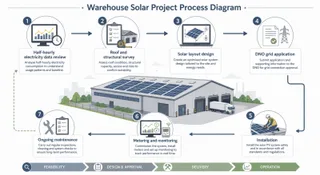
The installer’s survey process is often revealing. A contractor who checks roof build-up, electrical distribution, safe access, cable routes and shutdown windows is usually building a more reliable scope than one quoting only from satellite imagery and a recent bill.
Accreditations, competence and evidence to request
Due diligence is not only about logos on a proposal. Ask for evidence that the contractor has the right commercial PV experience, electrical competence, insurance, safety systems and documentation process for your site.
Recognised schemes and bodies can be relevant, but they should be understood properly. MCS may matter in some contexts, particularly where a project or funder requires it, but not every commercial solar decision turns on MCS alone. Electrical competence, commercial roof experience, connection knowledge and documentation quality are just as important when assessing a contractor’s suitability.
For UK projects, the installer should be able to discuss DNO and ENA connection processes, the relevant electrical design approach, and safe construction planning. They should also be comfortable with the expectations around HSE working at height, RAMS and CDM responsibilities where the project falls within construction work duties.
Roof, structure and access can change the quote materially
Commercial solar is often limited less by panel choice and more by the building itself. Roof covering, age, structural capacity, drainage, skylights, plant, shading, parapets and safe access all influence whether a design is practical and how much installation work is required.
On pitched roofs, fixing method and roof condition matter. On flat roofs, ballast, wind loading, membrane protection and drainage paths need careful attention. On older industrial roofs, asbestos risk or fragile roof areas can add survey requirements and access restrictions before anyone can price the work confidently.
Businesses sometimes discover late that roof warranties, landlord consent or insurer requirements affect the project. These are not automatic reasons to abandon solar, but they should be raised early so the quote reflects the real approvals and responsibilities involved. Where the site is sensitive, listed, constrained or unusual, ask how the installer will handle planning permission before the final scope is agreed.
Grid connection, export and DNO checks should not be an afterthought
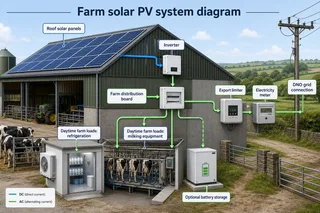
Commercial PV systems often need DNO engagement before connection, especially where the system is large enough to export meaningful power or where the local network has constraints. Your installer should explain the likely connection route and avoid presenting export assumptions as guaranteed before the relevant checks are complete.
In the UK, smaller generation connections may follow different processes from larger or more complex schemes, and many commercial projects involve G99 rather than the simplest domestic-style route. The exact process depends on the proposed system, inverter arrangement, export limit and local network conditions, so the installer should confirm the route for your site rather than rely on a generic answer.
Export limitation equipment can sometimes help align a design with network constraints, but it also affects how the system operates. If the financial case assumes high self-consumption, occasional export limitation may not matter much. If the proposal relies heavily on export income, grid and tariff assumptions deserve closer scrutiny.
Compare savings assumptions, not just generation forecasts
A commercial solar proposal should separate annual generation from bill savings. Generation is the amount of electricity the system is expected to produce, while savings depend on how much of that electricity replaces imported grid power at the times your business needs it.
This distinction is especially important for businesses with irregular hours, seasonal trading or high evening demand. A system that looks excellent on annual kWh output may be less attractive if much of its production is exported at a lower value than imported electricity. Conversely, an east-west roof may produce less peak output than a south-facing roof but could suit a longer working day.
Ask installers to show the assumptions behind self-consumption, export and tariff modelling. If they have not reviewed actual usage data, the savings estimate should be treated as indicative rather than dependable for investment decisions.
Finance, lease and PPA offers need contract-level comparison
Some businesses buy solar outright, while others consider asset finance, lease structures or power purchase agreement-style arrangements. None is automatically best. The right choice depends on cash flow, tax advice, ownership plans, contract appetite and how long the business expects to occupy the site, so compare commercial solar finance options before treating any quote as directly equivalent.
A no-upfront-cost offer can be attractive, but it should be compared across the full contract term rather than on first-year savings alone. The important questions are who owns the system, who maintains it, how electricity is priced, what happens if the building is sold or vacated, and how roof works are handled during the agreement.
Your accountant, solicitor or finance adviser may need to review the proposal, especially where the system affects leases, property charges, insurance, long-term purchasing commitments or landlord consents. A good installer or funder should be comfortable with that scrutiny.
What to ask before appointing a commercial solar contractor
Before appointing a contractor, ask questions that expose responsibility, assumptions and exclusions. A professional installer should be able to answer clearly without turning every unknown into a hidden future cost.
The aim is not to make the process adversarial. It is to avoid comparing a detailed, survey-led proposal with a cheaper quote that has quietly left out the difficult parts of the job.
Start with technical responsibility. Ask who is responsible for the structural assessment, whether it is included in the quoted price, and what electricity data has been used to model self-consumption and savings. Check who handles the DNO application, export limitation design and connection documentation. Then test the delivery plan. The contractor should explain access equipment, edge protection, permits, shutdown arrangements, RAMS, programme information and site coordination before work starts. If subcontractors are used, the proposal should state who remains responsible for quality, safety and defects. Finally, confirm the handover. Ask which commissioning records, warranties, monitoring access and O&M manuals will be provided, and which items are provisional, excluded or dependent on survey findings.
When commercial solar may not be suitable
Commercial solar can be a strong investment for the right site, but it is not suitable for every building or business. The case is weaker where the roof is near the end of its life, heavily shaded, structurally constrained, subject to uncertain occupancy or unable to use much daytime electricity.
Tenanted properties can still work, but landlord consent, lease length, roof responsibility and reinstatement obligations need checking early. A tenant with a short remaining lease may struggle to justify a long-term asset unless the agreement is structured carefully and the landlord is supportive.
Battery storage is also not automatically required. It can help some businesses increase self-consumption or manage demand patterns, but it adds cost, complexity and another layer of modelling. The installer should justify storage against your load profile rather than include it as a default add-on.
A practical way to shortlist installers
The simplest way to compare commercial solar installers is to create a common brief and ask each firm to respond against it. Provide the same bills, half-hourly data, site information, roof details and operating assumptions, then ask for the same breakdown of scope and exclusions.
Shortlist the installers who ask sensible questions, document assumptions and explain risk clearly. Be cautious where a quote arrives quickly but does not address roof condition, grid connection, access, shutdowns or the difference between generation and usable savings.
When you have comparable proposals, weigh technical confidence alongside commercial value. The preferred contractor should offer a design that fits the site, a scope that reflects real installation conditions and a contract you understand before committing.
The bottom line for business solar quotes
A good commercial solar comparison is not a race to the lowest price. It is a check that each installer has understood the building, electricity use, grid position, operational constraints, safety duties and long-term responsibilities.
Before signing, make sure the quote explains what is included, what is provisional and what could change after survey, structural review or DNO response. That gives your business a much better chance of choosing a commercial solar installation that performs as expected and avoids avoidable surprises.
Plan, Compare & Buy Renewable Energy Solutions
AI does the thinking.
You get the perfect solar match.
Use RoboMo™ to assess your property, compare available technologies and connect with trusted UK installers, suppliers and manufacturers.
Simply enter your postcode, drop a pin on your roof, create your free account and let RoboMo™ analyse your property to find the best solar panels for your home.

You don't have to think
RoboMo™'s AI analyses your roof and does all the hard work.

Accurate & tailored
AI-powered assessment based on your roof, location, and conditions.

Best options, maximum savings
Compare top solar panels for the best performance and value.

Simple, fast & effortless
Provide a few details, sit back and watch your results unfold.
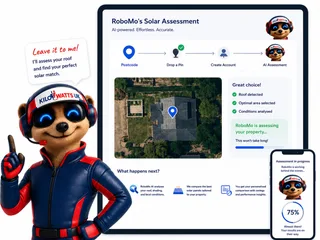
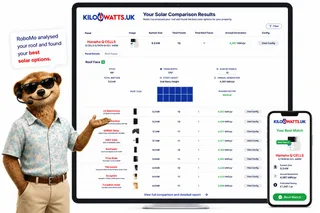
STEP 1
Choose Home, Business or Industrial
Enter your postcode to start your assessment.
STEP 2

Drop a pin on your roof
STEP 3

Create your free account
STEP 4

Sit back and watch RoboMo™ work
RoboMo™ analyses your roof and builds your personalised solar comparison.

Step 1
Enter your postcode
Start designing your wind energy system in seconds.
Are you an installer, distributor or renewable energy business?
Kilowatts UK is expanding the Flower Turbines partner network across the UK.
Become A Flower Turbines PartnerAuthorised UK representative
Flower Turbines
Compact vertical-axis turbines built for real UK sites, not just open farmland.
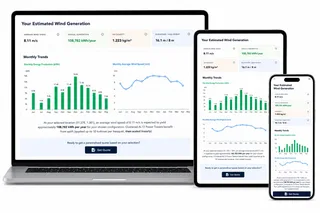
They start in light wind, sit in a small footprint, and are bird-safe by design. Cluster them as a bouquet and the group performs better together than the same turbines standing alone. Enter your postcode for a location-based generation estimate. Figures use area weather data and will differ if buildings, trees or hills sit in the way.
Starts in light UK wind
Built to generate in typical UK wind, not only open farmland.
Small rooftop or ground footprint
Compact towers for roofs, yards and tight sites.
Bird-safe slow rotation
Slow vertical-axis spin, bird-safe by design.
Bouquet clusters raise output
Grouped turbines outperform the same units standing alone.
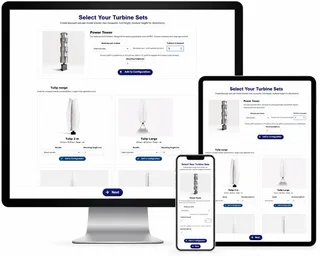
STEP 2

Choose a location
STEP 3

Build your layout
STEP 4

Instant generation forecasts
Compare different turbine layouts and see annual generation forecasts instantly.
STEP 5

No commitment required
Explore different configurations before deciding whether to request a quotation.
Related articles
FAQ
Need Help? RoboMo's Got Answers
How do I compare commercial solar quotes fairly?
Ask each installer to quote against the same brief, electricity data and site assumptions. Check what is included, excluded or provisional for roof surveys, access equipment, structural checks, DNO work, monitoring and handover documents. A lower headline price is only meaningful if the scope is genuinely like for like.
What should a commercial solar quote include?
A good quote should state the proposed system size in kWp, expected generation in kWh, assumed self-consumption, likely export and the basis for the savings forecast. It should also explain the roof, electrical, access and grid assumptions behind the design. Payment terms, warranties, maintenance responsibilities and exclusions should be easy to identify.
Should I choose the cheapest commercial solar installer?
Not without checking the scope carefully. The cheapest quote may exclude surveys, access equipment, DNO liaison, monitoring or commissioning documents that another installer has included. Compare value, risk and responsibility as well as price.
What evidence should I ask a solar installer for?
Ask for relevant commercial PV experience, insurance details, electrical competence and examples of similar projects. You can also request information on subcontractors, health and safety arrangements, commissioning records and the proposed handover pack. If MCS is relevant to your project, finance or export arrangements, ask for evidence rather than assuming it applies automatically.
Why do DNO checks matter for commercial solar?
The local Distribution Network Operator may need to assess the connection before a commercial PV system is installed or allowed to export. The correct route depends on system size, inverter arrangement, export limits and local network conditions. A credible installer should explain the likely process and avoid treating export assumptions as guaranteed before checks are complete.
How can I tell whether the savings forecast is realistic?
Look for a clear split between annual generation and expected bill savings. Savings depend on how much solar electricity your site uses during daylight hours, not just how much the panels produce. Half-hourly electricity data, operating hours, seasonal demand and future loads can all make the forecast more reliable.
Can roof condition affect a commercial solar quote?
Yes, roof type, age, structure, access, skylights, plant, shading and drainage can all change the design and installation cost. Flat roofs may need ballast, wind loading and membrane protection checks, while pitched or older industrial roofs may raise fixing, asbestos or fragile roof concerns. These issues should be identified before treating a quote as final.
How should I compare solar finance, lease or PPA offers?
Compare the contract terms, not just the advertised savings. Check ownership, payment profile, maintenance responsibility, tariff assumptions, buyout options, roof access rights and what happens if you move premises. It is sensible to take independent financial or legal advice before committing to a long-term arrangement.