


Underground Hydrogen Models May Be Missing What Happens Inside Tiny Water-Filled Rock Pores
Published: 2026-11-23 18:43:22
Updated: 2026-11-23 10:44:18
See how 4D X-rays revealed sudden gas mixing and slow exchange through water in rock pores, and why both matter for hydrogen purity in UK storage projects.
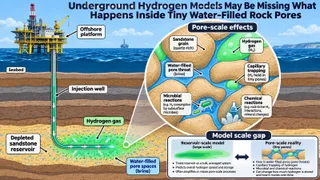
Underground hydrogen storage models may miss how gases mix in rock pores
In underground hydrogen storage, gases can mix in bursts. When water clears a narrow opening in the rock, neighbouring gas pockets can reconnect and mix rapidly. While the pockets remain separate, dissolved gas can still move between them through the water. A CSIRO-led sandstone experiment used nitrogen to represent injected hydrogen and krypton to represent residual natural gas. For UK projects considering depleted gas fields, the findings raise a practical question about how much methane could come back with the hydrogen at different stages of withdrawal. For background on hydrogen production upstream of storage, see our guide to hydrogen from seawater.
What the 4D X-ray scans showed inside sandstone
The researchers injected nitrogen into a sandstone core that already contained krypton and water. The core was 6 mm across, and each three-dimensional scan took 40 seconds. Repeating the scans added the fourth dimension, time, so the team could track how gas composition changed as water moved through the pores.
Some gas pockets stayed separate until water cleared a narrow opening between pores. When the pockets reconnected, their gas composition changed abruptly, and the gases continued to mix by diffusion. Where water kept pockets apart, their composition changed more gradually as dissolved gas moved through the water. Which process dominated depended on where the water and gas sat in the pores.
Why reservoir models can misjudge the mixing rate
Reservoir models usually calculate flow and mixing across volumes containing many pores. A model that assumes smooth mixing can miss both the sudden changes when gas pockets reconnect and the slower exchange through water between isolated pockets. Tests with hydrogen and methane under field-relevant conditions are still needed to establish when each process occurs and how it affects the purity of withdrawn hydrogen. Rock structure, brine composition, pressure and the way a site is cycled can all affect the result.
For a candidate UK depleted gas field, project teams could use core and well data to select samples from more permeable and tighter parts of the reservoir. In the lab, they could test representative brine and gas mixtures at the site’s pressure and temperature, then measure the gas composition during withdrawal over repeated injection, storage and withdrawal cycles. If a field pilot is available, samples taken at different stages of withdrawal over several cycles could show whether the model predicts when methane concentrations rise or fall. The British Geological Survey places depleted gas fields within the UK’s wider hydrogen storage options.
What mixing means for hydrogen purity, recovery and cost
Purity is the fraction of hydrogen in a gas stream. Recovery is the share of the injected hydrogen brought back to the surface. Withdrawal rate is how much gas the site produces per unit of time. A site can recover a large share of its injected hydrogen and still need to remove methane to meet a buyer’s specification. A leakage assessment checks whether gas escapes the storage formation.
Estimating typical UK purity, recovery, withdrawal rates or treatment costs requires evidence beyond the sandstone experiment. For feasibility work, compare the expected wellhead composition throughout withdrawal with the buyer’s purity, pressure and delivery requirements. An average for the whole cycle can hide periods when the gas needs more treatment or when less gas can be delivered to specification. Estimates of saleable output and cost should account for changes in wellhead composition, the volume of gas the treatment plant can handle and the compression needed.
Once teams have estimated the electricity demand for gas treatment and compression, they can assess on-site solar options and consider whether batteries for peak demand make sense for the site’s load profile.
How depleted gas fields compare with UK salt caverns
The UK has experience storing industrial hydrogen in engineered salt caverns. A depleted gas field stores gas across interconnected pores, where injected hydrogen can encounter residual methane and formation water. A salt cavern holds gas in an engineered cavity. The sandstone results apply most directly to gas mixing in porous reservoirs.
What UK underground hydrogen storage projects need to establish
Industrial buyers using hydrogen as a fuel or feedstock need to know how much gas a site can deliver at the required purity, pressure and rate, and when it can deliver it. For an example of hydrogen use as a fuel, see our guide to hydrogen in industrial engines.
For a proposed depleted gas field, project teams can test whether gas pockets reconnect and how quickly dissolved gas moves between pockets that stay separate. Those tests can help check forecasts of withdrawn gas composition, size the treatment plant and estimate how much hydrogen the project can commit to delivering over repeated cycles.
Solar comparison
Compare solar for your property
Enter your postcode to assess your roof, compare solar options and get quotes from UK installers.
- Free postcode start
- Home, business and industrial
- RoboMo™ maps your roof
See which panels fit your roof
Choose home, business or industrial, then enter your postcode. RoboMo maps the roof and ranks panel brands by fit.
1. Postcode Start the assessment for your property.
2. Pin the roof Mark the array on the map.
3. Compare RoboMo™ builds your options.

Battery ROI tool
See what a battery saves on your bill
Enter the day rate, off-peak rate and export rate. The calculator ranks batteries in the Kilowatts shop over 10 years. Home batteries also suit offices and small commercial sites.
Reading
Sources and further reading

See what Lingen’s 34 MW hydrogen gas turbine trial could reveal about net grid export, round-trip efficiency and backup power for the UK grid.
Read article
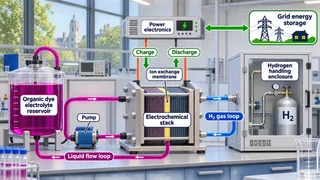
See how Imperial’s hydrogen–organic flow battery uses a dissolved compound to store energy and what UK grid pilots still need to prove about efficiency.
Read article
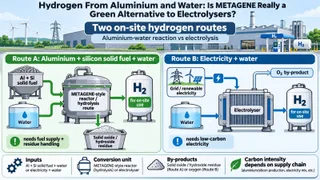
See what METAGENE's funding covers and what UK sites need to know about costs and emissions before comparing aluminium-based hydrogen with electrolysis.
Read article
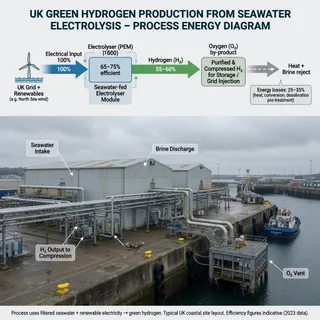
A seawater hydrogen system announced on 5 October 2026 does not push raw seawater through the cell. Waste heat pulls purified water out first.
Read article




Mo's Solar Mission
Mo's Mission Nominations
Garlinge Primary School and Nursery
Garlinge Primary School and Nursery is a foundation primary school on Westfield Road in Margate, Kent, for children aged 3 to 11. It is m...
St Luke's Church of England Primary SchoolSt Luke's Church of England Primary School is a voluntary controlled Church of England primary school on Jubilee Road in Formby, Merseysi...
Comberbach Nursery and Primary SchoolComberbach Nursery and Primary School is a primary academy on Mather Drive in the village of Comberbach, near Northwich in Cheshire, for...
Locations
Solar installation near you
Write for Kilowatts.uk
Got a trade and something worth saying?
Write it here under your own name. Sign in, put a profile up, and start a guide. Pay only if you want more links from your articles out to your own site.
Register
Create a Kilowatts.uk account, or sign in if you already have one.
Author profile
Put your name, photo and experience on a public author page.
Start creating
Write a guide or a blog. Free authors can put one followed link to their own site in articles each month.
FAQ
Need Help? RoboMo's Got Answers
What did the sandstone experiment reveal about underground hydrogen storage?
X-ray scans showed that gases could mix quickly when water moved out of a narrow opening and reconnected two gas pockets. When water kept the pockets separate, dissolved gas could still move between them more slowly. This helps explain why models that assume a steady rate of mixing may miss sudden changes in gas composition.
Did the researchers test hydrogen and methane?
The researchers used nitrogen to represent injected hydrogen and krypton to represent residual natural gas. Tests with hydrogen and methane under realistic reservoir conditions are needed to find out how strongly these effects would influence the gas that comes back to the surface.
Why might methane levels change as stored hydrogen is withdrawn?
A depleted gas field can still contain methane, which may mix with injected hydrogen in the rock. The amount of methane in the withdrawn gas could change as gas pockets reconnect and gas moves through water. Sampling at different stages of withdrawal can show whether a cycle average hides periods when extra treatment is needed.
What is the difference between hydrogen purity and recovery?
Purity is the proportion of hydrogen in the gas stream. Recovery is the proportion of the injected hydrogen that is brought back to the surface. A site can recover much of its hydrogen and still need to remove methane to meet a buyer’s purity requirements.
Does mixing inside the rock mean hydrogen is leaking?
Gas pockets can mix while both remain inside the storage formation. Leakage is assessed separately by checking whether gas escapes the formation.
How does a depleted gas field differ from a salt cavern for hydrogen storage?
A depleted gas field stores hydrogen in interconnected pores in the rock, where it can encounter residual methane and formation water. A salt cavern holds hydrogen in an engineered cavity in rock salt. The sandstone findings apply most directly to storage in porous rock.
What should industrial hydrogen buyers check before agreeing a supply contract?
Ask how much hydrogen the site expects to deliver at your required purity, pressure and flow rate, and when it can deliver it. Check how those figures are expected to change during withdrawal and across repeated storage cycles. Ask whether gas treatment and compression have enough capacity to maintain the agreed supply when the gas composition changes.
Live help
Need help right now?
Talk to RoboMo™ and get instant answers.