


Best answer for most UK homes.
Published: 2026-09-10 18:49:55
Updated: 2026-09-11 00:43:40
For many UK homes, that means a smart charger with dependable scheduling, clear override controls, load management where needed.
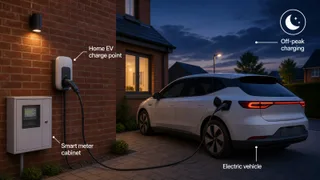
what is the best home ev charger for integrating with smart energy tariffs?
Find out what is the best home ev charger for integrating with smart energy tariffs?
Best answer for most UK homes.
The best home EV charger for integrating with smart energy tariffs is the charger, car and tariff combination that your chosen electricity supplier currently supports and that your installer can commission reliably at your property. For many UK homes, that means a smart charger with dependable scheduling, clear override controls, load management where needed, and verified compatibility with either the tariff platform or the vehicle.
There is no single best charger for every smart tariff. Some tariffs control the charger. Some control the car. Some only need a fixed off-peak schedule. Homes with solar panels or a battery may need a charger that measures import, export and household load accurately, not just a charger that can start at midnight.
The safest buying sequence is simple. Choose the likely tariff first, confirm whether the supplier controls the car or the charger, then select hardware that still behaves sensibly if Wi-Fi drops, the app is unavailable, or you need an immediate charge before an unexpected journey. If you are still deciding what type of home setup you need, our guide to installing an EV charger covers the main practical checks.
Current UK tariff examples and why compatibility must be checked.
UK EV tariffs and compatibility lists change regularly, so any product recommendation needs a date stamp and a live check before purchase. At the time of writing, UK households commonly compare tariffs and platforms such as Intelligent Octopus Go, Octopus Go, OVO Charge Anytime, E.ON Next Drive, British Gas Electric Driver and EDF EV-focused tariffs, but the control method, eligibility and supported devices can change.
Some tariffs work by integrating with the vehicle’s connected services. Others integrate directly with selected chargers. Simpler fixed off-peak tariffs may not need deep integration at all, because the car or charger can follow a scheduled charging window. That difference matters more than the charger’s appearance, cable length or app design.
Before ordering, check the electricity supplier’s current compatibility page, the charger manufacturer’s tariff support notes, and the vehicle manufacturer’s connected-services requirements. Do not rely only on installer memory, online reviews or a compatibility claim made months earlier.
A charger can be a good smart charger and still be the wrong charger for a particular smart tariff. Treat compatibility as a live project check, not a permanent product feature.
Charger-led, vehicle-led or schedule-led control.
Smart tariff integration usually follows one of three routes. The energy supplier may control the charger, the energy supplier may control the vehicle, or the homeowner may use a reliable schedule aligned to a fixed cheaper period. Solar-aware charging is a related fourth case because the charger is following spare generation as well as tariff timing. This is where many poor buying decisions start. A homeowner may buy a popular charger, only to discover that their preferred tariff is vehicle-led and depends on the car instead. Another may choose a charger with solar features, then find the tariff they want only supports a different control route.
Overview
This table is more useful than a simple brand ranking because the best option changes with the tariff route. The right charger for a solar-heavy home is not always the right charger for a supplier-controlled dynamic tariff. For the wider control layer around chargers, solar, batteries and flexible tariffs, it helps to understand smart energy management as a whole-home system.
Practical shortlist by household situation.
A useful shortlist should start with the job the charger has to do. Product names are less important than the control route, metering design and support status, but it is still reasonable to investigate familiar UK options such as Ohme, myenergi zappi, Indra, Hypervolt, Pod Point, Easee and Wallbox where they match the use case and current supplier compatibility. For a broader buying checklist, use our guide to choosing a home charger. That is not a universal endorsement of any one model. Charger generations, supplier partnerships, firmware and tariff eligibility can change, so treat these as examples to investigate rather than a fixed league table. The better question is which type of charger is most likely to suit your home.
Overview
For a fixed off-peak tariff, the best charger may simply be the one that schedules reliably and is installed well. For a highly automated smart tariff, the best charger is the one the supplier currently supports. For a solar home, the best charger may be the one that reads the home’s energy flows most accurately.
What smart charge point compliance does and does not tell you.
In Great Britain, domestic private charge points sold for home and workplace use must meet smart charge point regulations. These rules are intended to support smart functionality, security-related requirements and features such as managed charging behaviour, but they do not mean every compliant charger works with every EV tariff.
This distinction is important. Compliance tells you the charger meets a baseline regulatory requirement. Tariff integration tells you that the charger, vehicle or software platform can communicate with a specific supplier’s service in the way that tariff requires. Those are separate checks.
A competent installer should also consider electrical safety, earthing, protection and the manufacturer’s installation instructions. Some modern chargers include open PEN fault protection, while other designs may need a different approach depending on the earthing arrangement and site conditions. Do not assume that a feature advertised on a product page removes the need for proper electrical assessment.
Features that matter when comparing EV chargers for tariffs.
The first feature to check is whether the charger supports how you actually buy electricity. For a fixed overnight tariff, reliable scheduled charging may be enough. For a flexible tariff that automatically chooses charging slots, the supplier’s integration route is much more important.
Manual override is the next practical feature. Smart charging is only helpful if it does not trap you when plans change. If you arrive home with a low battery and need to leave again soon, the charger or app should allow immediate charging without permanently breaking the usual schedule.
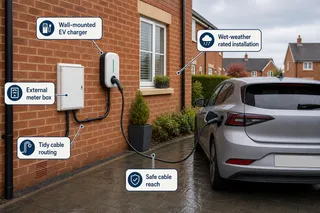
Connectivity deserves more attention than it usually receives. A charger at the front drive, side passage or detached garage may sit on the edge of the home Wi-Fi signal. If the unit misses remote commands, tariff schedules or firmware updates, the expected tariff benefit can quickly become a daily irritation. Cable length and parking position also matter before the mounting point is chosen.
A plainer charger that follows your tariff reliably is usually better than a feature-heavy unit that is awkward to control, poorly connected or unsupported by your supplier.
How solar panels and home batteries change the answer.
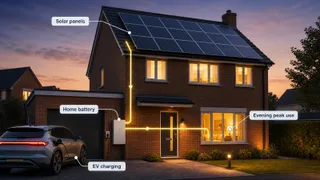
Solar PV changes the decision because the goal may no longer be only to charge during the cheapest overnight period. You may also want the EV to absorb spare daytime generation, avoid unnecessary import, or work around the needs of a home battery. If you are new to storage, start with how home batteries work before deciding how the charger should interact with one.
That requires accurate measurement. Solar-aware charging often depends on CT clamps or equivalent metering to understand whether the home is importing, exporting or using generation internally. If those measurements are wrong, the charger may start when it should wait, stop when it could charge, or import from the grid when the homeowner expected solar-only charging.
A home battery adds another layer. Without careful settings, an EV charger may draw from the battery when the owner wanted that stored energy for evening household use. In other homes, the battery and EV may both charge during the same cheap window, which can be useful if the supply can support it and the tariff arrangement makes sense.
For solar and battery homes, the charger is part of a wider energy system. The best result comes from designing the charger, inverter, battery settings and tariff together rather than treating the EV charger as a standalone accessory. If solar PV is part of that plan, it is worth taking time to compare home solar options before finalising the EV charging design.
Installation checks that affect the final recommendation.
Most UK domestic EV chargers are AC charge points installed on single-phase homes, often specified around the familiar 7 kW class where the property, circuit and vehicle allow. The actual charging result depends on the car’s onboard charger, battery size, mileage, available charging window and any configured limit.
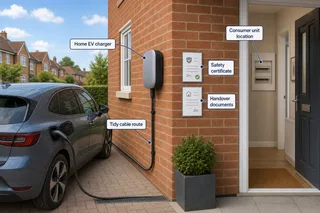
Before recommending a charger, a competent installer should assess the consumer unit, earthing arrangement, cable route, parking position, supply capacity and whether dynamic load management is needed. A long cable run, limited consumer unit space, awkward groundworks or the need for additional protective equipment can all affect the final design. For budget planning, compare the practical factors behind EV charger installation costs before treating any quote as like-for-like.
DNO notification or approval may be required depending on the installation and local network circumstances. Homeowners do not need to become grid connection specialists, but they should expect the installer to explain the process, submit the correct information where required and confirm whether the charger can be commissioned at the intended output. Our guide to home charger permissions explains the checks homeowners commonly ask about before installation.
What to expect from a good installer handover.
The handover is where many smart charging problems can be prevented. It is not enough for the charger to power up and appear in an app. The installer should show that the system is configured for the homeowner’s real use, including schedules, load management, account ownership and any solar or battery interaction.
A good handover also reduces dependence on the original installer for simple everyday tasks. The homeowner should know how to start an immediate charge, pause a session, return to normal smart mode, update app access and recognise when the charger is offline. They should also receive relevant certificates, user instructions and warranty information.
If the installer cannot explain how the charger will interact with your tariff, vehicle and property supply, pause before accepting the quote. The software setup is now part of the installation quality, not an optional extra.
Tethered or untethered for smart tariffs.
Tethered versus untethered does not normally determine smart tariff compatibility. A tethered charger has the cable attached, which is convenient for regular home charging. An untethered charger can look neater and lets you use a separate cable, but it adds one more step every time you plug in.
For smart tariff use, the more important point is whether the car is plugged in for long enough to let the tariff do its work. A highly automated tariff is less useful if the car is only connected briefly, if the driver regularly needs immediate charging, or if the cable arrangement makes plugging in inconvenient.
Cable length and mounting position can therefore affect tariff performance indirectly. If the charger is easy to reach and quick to use, the car is more likely to remain connected overnight and available for smart scheduling.
Common mistakes when choosing a tariff-ready charger.
The most common mistake is assuming that every smart charger works with every smart tariff. A charger can meet smart charge point requirements and still be unsupported by a supplier’s automated EV tariff platform.
Another mistake is comparing the EV rate without looking at the whole household bill. A cheaper overnight rate may be useful, but the overall outcome depends on daytime unit rates, standing charges, household consumption, export arrangements, how often the car is plugged in, and whether the EV can consistently charge during the cheaper periods.
Internet reliability is also underestimated. A charger on weak Wi-Fi may work during commissioning and then fail to receive commands later. If the parking area is far from the router, connectivity should be part of the installation design, not something to fix after the charger is on the wall.
These mistakes are avoidable if the decision starts with tariff, vehicle, property and routine rather than a product photo.
Source notes and checks to use before buying.
For a more reliable decision, use primary sources rather than only reviews or installer preferences. The most useful sources are the electricity supplier’s live tariff and compatibility pages, the charger manufacturer’s installation and support documents, the vehicle manufacturer’s connected-services guidance, and UK government guidance on smart charge point regulations. DNO guidance is also relevant because the charger connects to the local electricity network. The installer should understand the relevant notification or approval route and should not leave the homeowner guessing about whether the network process has been completed. Manufacturer documentation matters because features such as load management, solar measurement, open PEN protection, communications options and offline behaviour are model-specific. Two chargers from the same brand may not behave identically if they are different generations or use different accessories. Do these checks as close as possible to ordering. A forum post, old compatibility table or neighbour’s installation may no longer reflect the current tariff rules or supported hardware.
How to choose the best charger for your home.
Start with the tariff you are most likely to use, then identify whether it is charger-led, vehicle-led or simply schedule-based. After that, compare chargers against your property conditions, including parking position, Wi-Fi, consumer unit capacity, solar plans, home battery settings and the need for load management.
If you already own the EV, check vehicle compatibility early. If you have not chosen the car yet, avoid buying a charger based on assumptions about future integrations. If you plan to add solar PV or a battery, tell the installer before the charger is specified because the metering layout and charger choice may change.
The best pre-quote questions are practical. Ask who controls the charging schedule, how immediate charging works, what happens if the internet drops, whether the supplier supports the exact charger or vehicle, how load management is installed, and how solar or battery settings will be tested. If you want help matching the charger to the wider home energy setup, you can book a free home energy survey. A good quote should make the control route clear. If the proposal simply says “smart charger” without explaining tariff integration, ask for more detail before proceeding.
So, which charger is best for smart energy tariffs?
For a straightforward fixed off-peak EV tariff, the best home charger is usually a reliable compliant smart unit with dependable scheduling, easy override and a good installation. For a supplier-controlled smart tariff, the best option is the charger or vehicle combination on the supplier’s current compatibility list.
For homes with solar panels, the best charger is often a solar-aware model with accurate import and export measurement. For homes with a battery, the best choice is the charger that can be configured so the EV, battery and tariff do not work against each other.
The final recommendation should be made from the property backwards: tariff, vehicle, electricity supply, parking position, internet connection, solar or battery plans, and daily driving routine. A charger that fits those conditions will integrate with smart energy tariffs better than a highly rated model chosen without checking the whole system.
Plan, Compare & Buy Renewable Energy Solutions
AI does the thinking.
You get the perfect solar match.
Use RoboMo™ to assess your property, compare available technologies and connect with trusted UK installers, suppliers and manufacturers.
Simply enter your postcode, drop a pin on your roof, create your free account and let RoboMo™ analyse your property to find the best solar panels for your home.

You don't have to think
RoboMo™'s AI analyses your roof and does all the hard work.

Accurate & tailored
AI-powered assessment based on your roof, location, and conditions.

Best options, maximum savings
Compare top solar panels for the best performance and value.

Simple, fast & effortless
Provide a few details, sit back and watch your results unfold.
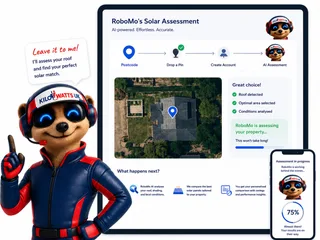
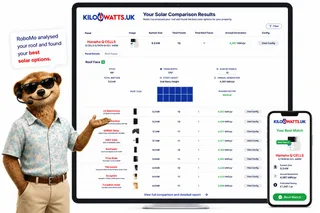
STEP 1
Choose Home, Business or Industrial
Enter your postcode to start your assessment.
STEP 2

Drop a pin on your roof
STEP 3

Create your free account
STEP 4

Sit back and watch RoboMo™ work
RoboMo™ analyses your roof and builds your personalised solar comparison.

Step 1
Enter your postcode
Start designing your wind energy system in seconds.
Are you an installer, distributor or renewable energy business?
Kilowatts UK is expanding the Flower Turbines partner network across the UK.
Become A Flower Turbines PartnerKilowatts UK is an authorised representative
Flower Turbines
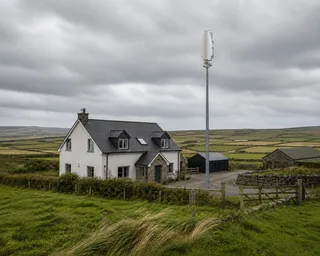
Compact vertical-axis turbines built for real UK sites, not just open farmland.
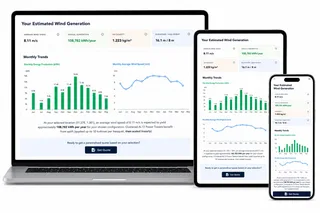
They start in light wind, sit in a small footprint, and are bird-safe by design. Cluster them as a bouquet and the group performs better together than the same turbines standing alone. Enter your postcode for a location-based generation estimate. Figures use area weather data and will differ if buildings, trees or hills sit in the way.
Starts in light UK wind
Built to generate in typical UK wind, not only open farmland.
Small rooftop or ground footprint
Compact towers for roofs, yards and tight sites.
Bird-safe slow rotation
Slow vertical-axis spin, bird-safe by design.
Bouquet clusters raise output
Grouped turbines outperform the same units standing alone.
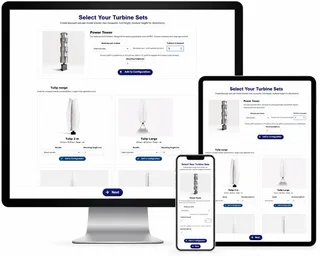
STEP 2

Choose a location
STEP 3

Place your cluster
Tap the map where you want the turbine cluster to go.
STEP 4

Instant generation forecasts
Compare different turbine layouts and see annual generation forecasts instantly.
STEP 5

No commitment required
Explore different configurations before deciding whether to request a quotation.
Related articles
FAQ
Need Help? RoboMo's Got Answers
What is the best home EV charger for a smart energy tariff?
The best charger is the one that is currently compatible with your chosen tariff, vehicle and home setup. Some tariffs control the charger, some control the car, and some only need a reliable off-peak schedule. Check live compatibility with the supplier and manufacturer before you buy.
Do I need a specific charger for Intelligent Octopus, OVO Charge Anytime or another EV tariff?
Possibly, but it depends on the tariff’s current rules. Some smart tariffs integrate with selected chargers, while others integrate with the vehicle’s connected services instead. Always check the exact charger model, car model and tariff compatibility list before installation.
Is a smart charge point regulations-compliant charger enough for tariff integration?
No. Smart charge point compliance is a baseline requirement for domestic private chargers sold in Great Britain, but it does not mean the charger works with every EV tariff. Tariff integration is a separate compatibility check between the supplier, charger, vehicle and software platform.
Can I use a fixed off-peak EV tariff without advanced charger integration?
Often, yes. If the tariff has a predictable cheaper period, a dependable charger or vehicle schedule may be enough. You should still test the timer, manual override and behaviour after a power cut or internet outage.
What charger features matter most for smart tariff use?
Live tariff compatibility, reliable scheduling and a clear manual override are usually the most important features. Good connectivity also matters, especially if the charger is far from the router or in a detached garage. Load management may be important if the property’s electrical capacity is limited.
What is the best EV charger if I have solar panels?
For a solar home, look for a charger that can measure import, export and household load accurately, not just follow a timer. Solar-aware charging depends on correct CT clamp or metering placement. The charger should be set up so it uses spare generation as intended without causing unwanted grid import.
How does a home battery affect the choice of EV charger?
A home battery means the charger, battery inverter and tariff settings need to be planned together. Without careful setup, the EV may drain the home battery when you wanted that energy for the house. The EV and battery may also compete for the same cheap charging window, so load and scheduling should be checked.