


New DNO Registration Law for Solar, Batteries and Heat Pumps: What UK Installers Need to Know
Published: 2026-11-24 07:39:58
Updated: 2026-11-23 23:40:42
See what the Energy Independence Bill would change for DNO registration in Great Britain and which rules apply to solar, batteries.
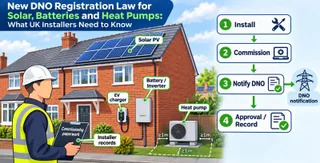
Is the DNO registration law for installers in force?
The proposed DNO registration law for installers is still at Bill stage. The Energy Independence Bill would give ministers powers to require installers in Great Britain to register specified equipment with the local electricity distributor and to enforce that duty. The government lists solar PV, domestic batteries, heat pumps and EV charge points as examples. Secondary legislation would set the scope and details. For current jobs, follow the existing connection and notification process for the equipment and site. Government factsheet on the installer obligation
As at 24 November 2026, the Bill had received its Commons first reading on 4 November and was awaiting a date for second reading. The registration provisions use the Electricity Act 1989 framework for Great Britain. For jobs in Northern Ireland, check the local connection arrangements separately. UK Parliament’s Bill tracker · Energy Independence Bill as introduced
What would installers have to register?
A distribution network operator (DNO) runs the local electricity network. Under the proposal, registration would give the distributor a record of specified equipment connected at each property. The Bill would allow regulations to set out which installations qualify, who must report them, what information they must provide and how and when to submit it. The Bill also allows for exceptions. Energy Independence Bill as introduced, clause 149
The government calls this *asset visibility*. When several nearby EV charge points and heat pumps run at the same time, local demand can rise. A cluster of solar installations can increase midday export. Knowing where that equipment is connected helps distributors forecast where cables or substations may need more capacity. Flexibility services, such as shifting EV charging to a different time, would involve separate arrangements. Government factsheet on asset visibility · Energy Independence Bill as introduced, clause 149
Clause 150 would allow regulations to introduce monetary penalties. If the regulations introduce penalties, they must specify the maximum. The implementing rules will determine when the duty starts, when submissions are due, how replacements are treated and who is responsible when the business taking the order subcontracts the installation. Energy Independence Bill as introduced, clauses 149–151
Which DNO connection process should installers use today?
Confirm the connection route before committing to equipment or a commissioning date. For grid-connected solar and batteries, check what generation and storage are already connected, the proposed inverter’s AC rating, the number of supply phases and any existing export limit. For a heat pump installation or EV charge point, work out the site’s maximum demand with the new load and check the service cut-out details, including the main fuse rating. ENA distributed generation guide · ENA connection process for heat pumps and EV charge points
Overview
One G98 criterion is a maximum of 16 A per phase, roughly 3.68 kW per phase at 230 V. When adding a battery to existing solar, check how the existing solar inverter and the new battery inverter count towards that limit. Battery capacity in kWh tells you how much energy the battery can store. To determine the generation connection route, check the inverter’s AC rating and the overall connection design. Discuss any proposed export limit with the DNO as part of that assessment. ENA Engineering Recommendation G98 · ENA distributed generation guide
What should installers put in the quote and handover?
State who will handle the DNO paperwork, which connection route the quote assumes and whether the timetable depends on prior approval or supply work. For a business, factory or farm, review the existing connection agreement and site demand before using a domestic workflow as a guide. ENA Connect Direct handles many domestic submissions. Check which connection route and submission channel apply to each site. ENA Connect Direct · ENA distributed generation guide
At handover, give the customer the equipment model details, relevant ratings and commissioning date. Include the submission reference, any separate DNO approval or acknowledgement, and any agreed export limit. The next installer can use those records if the customer adds a battery, replaces an inverter or increases charging capacity. Whether one submission can cover both the existing connection process and the future registration duty depends on the implementing rules. Energy Independence Bill as introduced, clause 149
What should customers ask before accepting a quote?
Ask who will submit the network paperwork, whether the DNO needs to approve the connection before work can go ahead and what records you will receive at handover. If you are getting a quote for an upgrade, share any existing approval or export-limit paperwork. It can affect the design and installation timetable. Check these details when you compare quotes for home solar.
Use the Kilowatts.uk solar installer directory to compare providers. Ask each installer to confirm the DNO connection route and who will handle the paperwork in writing.
Solar comparison
Compare solar for your property
Enter your postcode to assess your roof, compare solar options and get quotes from UK installers.
- Free postcode start
- Home, business and industrial
- RoboMo™ maps your roof
See which panels fit your roof
Choose home, business or industrial, then enter your postcode. RoboMo maps the roof and ranks panel brands by fit.
1. Postcode Start the assessment for your property.
2. Pin the roof Mark the array on the map.
3. Compare RoboMo™ builds your options.

Battery ROI tool
See what a battery saves on your bill
Enter the day rate, off-peak rate and export rate. The calculator ranks batteries in the Kilowatts shop over 10 years. Home batteries also suit offices and small commercial sites.
Reading
Sources and further reading

The UK is breaking the link between gas and electricity prices. Discover what this means for heat pumps, solar panels, battery storage, and your energy bills.
Read article
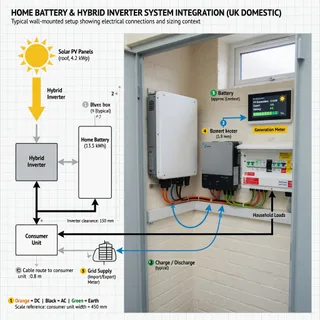
What battery do I need depends on usable kilowatt-hours you can shift, inverter power, and whether the charge window and connection can fill it.
Read article
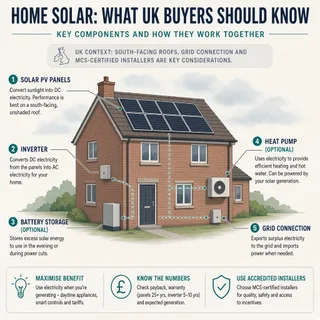
UK home solar needs a usable roof, daytime use and a network that can take the inverter. A reported loan is not a grant, nor a battery or heat pump.
Read article

Solar and a battery can push imported units to almost nothing, but a UK bill still carries a daily standing charge. Here's why, and how to compare tariffs properly.
Read article


Mo's Solar Mission
Mo's Mission Nominations
Garlinge Primary School and Nursery
Garlinge Primary School and Nursery is a foundation primary school on Westfield Road in Margate, Kent, for children aged 3 to 11. It is m...
St Luke's Church of England Primary SchoolSt Luke's Church of England Primary School is a voluntary controlled Church of England primary school on Jubilee Road in Formby, Merseysi...
Comberbach Nursery and Primary SchoolComberbach Nursery and Primary School is a primary academy on Mather Drive in the village of Comberbach, near Northwich in Cheshire, for...
Locations
Solar installation near you
Write for Kilowatts.uk
Got a trade and something worth saying?
Write it here under your own name. Sign in, put a profile up, and start a guide. Pay only if you want more links from your articles out to your own site.
Register
Create a Kilowatts.uk account, or sign in if you already have one.
Author profile
Put your name, photo and experience on a public author page.
Start creating
Write a guide or a blog. Free authors can put one followed link to their own site in articles each month.
FAQ
Need Help? RoboMo's Got Answers
Is the new DNO registration law in force?
As at 24 November 2026, the installer registration duty was still a proposal in the Energy Independence Bill. If the Bill becomes law, regulations would set out which installations are covered and when the duty starts. For work going ahead now, ask your installer which existing connection and notification rules apply.
What is a DNO, and why does it need to know about my installation?
Your distribution network operator, or DNO, runs the local electricity network. Knowing where solar panels and batteries are connected helps it plan for electricity exported to the grid. Information about heat pumps and EV chargers helps it plan for increases in local demand.
Can my solar panels or battery be installed before the DNO gives approval?
Eligible systems can use the G98 process, which allows your installer to notify the DNO after commissioning. If G99 applies, ask your installer what approval is needed before connecting. The route depends on factors including inverter ratings, the number of supply phases and any existing solar or battery equipment.
Will my heat pump or EV charger need DNO approval before connection?
Some installations can be connected and then notified to the DNO. Others need an application before connection. Your installer should check the property's maximum electricity demand with the new equipment running, the main fuse rating and the supply arrangements.
Do I need another DNO check if I add a battery to my existing solar panels?
Ask your installer to reassess the connection before you order the battery. The existing solar inverter and any new battery inverter can affect which connection process applies. Share any previous DNO approval and agreed export limit so the installer can check whether they cover the proposed setup.
Who handles the DNO paperwork, and what should I get at handover?
Ask the installer to confirm in writing who will submit the paperwork and whether approval or supply work could affect the installation date. At handover, ask for the equipment models, ratings and commissioning date. Keep the submission reference, any DNO approval or acknowledgement and any agreed export limit for future upgrades.
Does the proposed registration duty apply in Northern Ireland?
The proposed duty uses the electricity legislation framework for Great Britain, covering England, Scotland and Wales. If you live in Northern Ireland, ask your installer to confirm which local connection and notification arrangements apply before you accept a quote.
Live help
Need help right now?
Talk to RoboMo™ and get instant answers.