


CETO's Submerged Wave Machine Is Finally Going to Sea - What the 80kW Trial Must Prove
Published: 2026-11-24 13:29:25
Updated: 2026-11-24 05:30:22
See what the first CETO buoy deployment tested and why the 80 kW wave energy trial’s grid export and servicing data matter for UK wave power.
Overview
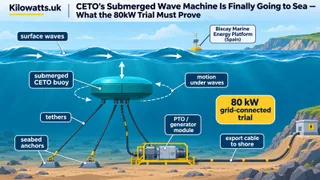
Create a landscape editorial cutaway of the planned grid-connected CETO demonstrator at the Biscay Marine Energy Platform off Spain’s Basque coast. Show waves passing over a fully submerged buoy, with small arrows indicating its movement. Label the buoy, power take-off, tethers, seabed anchors and subsea export cable. Use a wider inset to show the cable route towards shore. Keep the layout schematic and omit dimensions, logos and watermarks. Caption the illustration “Planned grid-connected configuration of the 80 kW CETO ACHIEVE demonstrator at BiMEP.”
CETO’s submerged buoy is at sea. What must the 80 kW trial prove?
Carnegie Clean Energy confirmed on 16 November 2026 that crews had towed the CETO ACHIEVE buoy from Bilbao and installed it on moorings at the Biscay Marine Energy Platform (BiMEP) off Spain’s Basque coast. The first stage tested offshore handling and installation. Carnegie aims to deploy the full 80 kW wave energy converter and connect it to the grid in spring 2027. The trial needs to show how much electricity CETO exports in different sea conditions, how often it can operate and how long servicing takes. Carnegie’s Stage 1 announcement and ACHIEVE programme update.
How the submerged CETO buoy generates electricity
CETO uses a buoy held below the surface by tethers connected to the seabed. Passing waves move the buoy, pulling on the tethers. The power take-off converts that motion into electricity. In the planned grid-connected configuration, a subsea cable carries the electricity ashore. Carnegie’s ACHIEVE technical objectives.
The controls adjust how the power take-off responds as waves change. A setting that captures more energy can also increase loads on the tethers and machinery. Engineers can judge that trade-off by comparing electrical output and mechanical loads in similar sea conditions. Carnegie’s control and performance objectives. On land, smart energy controls can help buildings respond to changes in electricity generation and demand.
What the first offshore deployment tested
The buoy was built in three sections for road transport, assembled at the quayside in Bilbao and towed to BiMEP. Stage 1 let the crew rehearse port preparations, the tow and the mooring connection before deploying the full system. When Carnegie confirmed installation, it said the return tow would depend on suitable weather. Carnegie’s fabrication and deployment plan and Stage 1 offshore update.
Crews can swap the power take-off modules at the quayside using port lifting equipment. The full job requires a suitable vessel and safe conditions to disconnect the buoy, tow it back and reinstall it after the repair. Recording time spent waiting for weather or a vessel alongside time spent on the repair would help explain lost generation and operating costs. Carnegie’s maintainability objectives.
What the 80 kW rating tells us about output and cost
The 80 kW rating describes the demonstrator’s power. The energy it delivers over time is measured in kilowatt-hours (kWh). A spell of strong generation shows what the unit can deliver in those conditions. To estimate annual output, engineers need to know how often those conditions occur and how many hours the unit loses to faults, maintenance and shutdowns. Carnegie’s energy production objectives. The same distinction between rated power and energy generated applies to annual solar panel output.
Capacity factor is the energy a machine generates over a given period divided by the energy it would generate at rated power throughout that period. Carnegie forecasts a 30–50% capacity factor for larger commercial units at selected sites, including sites in Scotland. Estimating commercial output, service life and costs in the UK will require operating data and site-specific designs. Carnegie’s commercial performance forecasts.
A trial report could pair metered grid export with wave height, period and direction measured over the same intervals. That would help distinguish low output in calm seas from production lost to faults, maintenance or protective shutdowns in rough weather. Records of restart times after storms and how often the unit needs a vessel would help developers estimate how much electricity a project could sell and what it would cost to keep running.
What the CETO trial means for the UK
Wave Energy Scotland is a partner in EuropeWave, which supports the ACHIEVE project. Orkney’s Billia Croo test site shows what comparable testing in UK waters can involve. The European Marine Energy Centre (EMEC) provides offshore test berths cabled to a shore substation and uses buoys to monitor local wave conditions. EuropeWave project partners, EMEC’s Billia Croo test site and EMEC’s wave monitoring.
A suitable UK site needs waves the machine can use and regular weather windows for crews to reach it. Seabed conditions affect anchor design. The cable route and available grid connection determine how the project can bring power ashore and export it. A nearby port helps if it has a suitable berth, lifting equipment and vessels available when conditions allow work. BiMEP results can inform those decisions. Estimates of UK generation and maintenance costs also need local data before developers can assess where wave power could fit in the wider UK renewables mix.
Can UK homes or businesses use CETO?
CETO is currently unavailable as a premises-scale system for UK homes, farms or businesses. The ACHIEVE demonstrator needs an offshore berth, seabed anchors, vessel access and a subsea connection. Coastal organisations considering wave power can look to the trial for evidence of sustained grid export, availability through rough weather and servicing times.
If you’re assessing generation for a UK home now, compare solar PV options using your usable roof area, shading and when you use electricity. Ask installers to show how they estimated annual generation and how much of it you could use on site. Those figures help you compare quotes, particularly if you use most of your electricity outside daylight hours.
Solar comparison
Compare solar for your property
Enter your postcode to assess your roof, compare solar options and get quotes from UK installers.
- Free postcode start
- Home, business and industrial
- RoboMo™ maps your roof
See which panels fit your roof
Choose home, business or industrial, then enter your postcode. RoboMo maps the roof and ranks panel brands by fit.
1. Postcode Start the assessment for your property.
2. Pin the roof Mark the array on the map.
3. Compare RoboMo™ builds your options.

Battery ROI tool
See what a battery saves on your bill
Enter the day rate, off-peak rate and export rate. The calculator ranks batteries in the Kilowatts shop over 10 years. Home batteries also suit offices and small commercial sites.
Reading
Sources and further reading
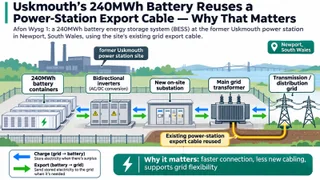
Practical UK guide on Uskmouth's 240MWh Battery Reuses a Power-Station Export Cable - Why That Matters.
Read article
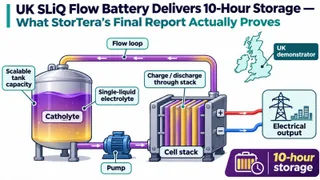
StorTera’s UK SLiQ flow battery trial reports a 10-hour discharge. See which power and efficiency figures buyers still need before sizing a system.
Read article
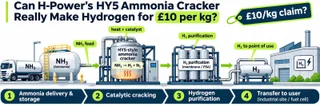
See what H-Power’s HY5 ammonia cracker offer covers and how minimum volumes and compression affect the £10/kg hydrogen price for UK industrial sites.
Read article
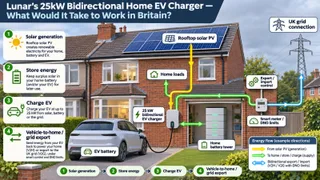
Could Lunar’s 25 kW bidirectional EV charger work at your UK home? See how your car, electricity supply and export limits could affect what it can do.
Read article



Mo's Solar Mission
Mo's Mission Nominations
Garlinge Primary School and Nursery
Garlinge Primary School and Nursery is a foundation primary school on Westfield Road in Margate, Kent, for children aged 3 to 11. It is m...
St Luke's Church of England Primary SchoolSt Luke's Church of England Primary School is a voluntary controlled Church of England primary school on Jubilee Road in Formby, Merseysi...
Comberbach Nursery and Primary SchoolComberbach Nursery and Primary School is a primary academy on Mather Drive in the village of Comberbach, near Northwich in Cheshire, for...
Locations
Solar installation near you
Write for Kilowatts.uk
Got a trade and something worth saying?
Write it here under your own name. Sign in, put a profile up, and start a guide. Pay only if you want more links from your articles out to your own site.
Register
Create a Kilowatts.uk account, or sign in if you already have one.
Author profile
Put your name, photo and experience on a public author page.
Start creating
Write a guide or a blog. Free authors can put one followed link to their own site in articles each month.
FAQ
Need Help? RoboMo's Got Answers
Is CETO already supplying electricity to the grid?
The first offshore stage at BiMEP off Spain’s Basque coast tested towing, handling and mooring the buoy. Carnegie is targeting spring 2027 for deployment of the full 80 kW system and connection to the grid.
How does the submerged CETO buoy generate electricity?
Passing waves move the submerged buoy, pulling on tethers anchored to the seabed. The power take-off converts that motion into electricity. In the planned grid-connected setup, a subsea cable will carry the electricity ashore.
How much electricity could an 80 kW CETO unit generate?
At its rated power of 80 kW, the demonstrator would generate 80 kWh in one hour. Annual generation depends on how often the waves support useful output and how much time the machine spends shut down. The rating alone cannot tell you how many UK homes it could supply over a year.
What does the CETO sea trial need to prove?
The trial needs to show how much electricity CETO can export in different sea conditions and how often it can operate. Matching metered export to wave measurements and operating logs would help explain whether low output came from calm seas, faults or protective shutdowns. Restart times after storms and time spent waiting for a vessel or suitable weather would help estimate lost generation.
What could the Spanish trial tell us about wave power costs in the UK?
The trial can show how often crews need to service the machine and how long it takes to get it generating again. A UK cost estimate would also need local data on waves, seabed conditions, vessel and port access, and the route to the grid. Those factors affect both how much electricity a project can sell and what it costs to run.
Can I buy a CETO unit for a UK home, farm or business?
CETO is currently unavailable as a premises-scale system for UK homes, farms or businesses. The demonstrator needs an offshore berth, seabed anchors, vessel access and a subsea cable. If you’re comparing home solar quotes, ask each installer how much the system could generate in a year and how much of that electricity you’re likely to use at home.
Live help
Need help right now?
Talk to RoboMo™ and get instant answers.