


Kilowatts UK: Fenix 7 Solar vs Fenix 7 Sapphire Solar
Published: 2026-09-12 14:26:55
Updated: 2026-09-13 14:55:43
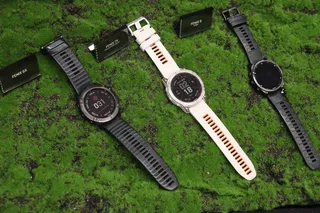
As a UK SEO editor for Kilowatts UK, I've compiled a comprehensive comparison of the Garmin Fenix 7 Solar and Fenix 7 Sapphire Solar wearables.
Is solar worth it on the Garmin Fenix 7, or pay
Fenix 7 Solar vs Sapphire Solar: see the real battery gain, storage gap, and whether sapphire is worth the extra cost before you buy.
Overview
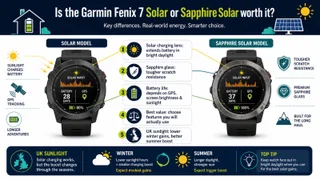
Solar vs sapphire solar on the Fenix 7 is not a choice between two batteries. It is a choice between a solar-charging lens and a scratch-resistant sapphire lens, and most buyers end up paying for durability, not sunlight. The battery figures quoted across comparison sites are also inconsistent, so treat any single number with caution.
What is the actual difference between solar and sapphire solar on the Fenix 7?
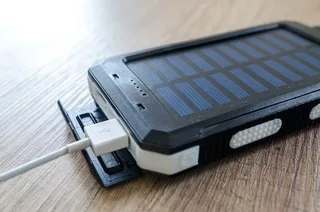
Solar refers to the Power Glass lens that trickle-charges the watch from light. Sapphire solar combines that same solar lens with a sapphire crystal cover. If you want the broader principle behind converting daylight into electricity, start with how solar works.
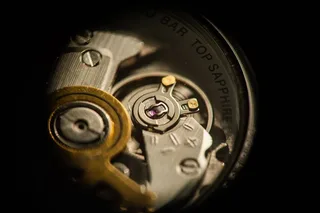
The Fenix 7 Sapphire Solar has a sapphire glass display, while the standard Fenix 7 Solar does not, according to Versus. The Fenix 7 Solar has branded damage-resistant glass instead. Sapphire models also bring more storage and a more accurate GPS than the standard model, according to a Reddit discussion.
Some Fenix 7X units are inscribed "sapphire solar" and others "sapphire dual power" on the back, which confuses buyers, according to Garmin forums. The core difference between the two named options is therefore the lens cover, not the charging technology.
How much extra battery life does solar actually give you?
It depends, but the realistic gain is modest. Real-world solar charging in Arizona saved roughly 10 to 20 percent of GPS battery drain, equating to an extra day or two between charges, according to a Facebook group discussion.
One user reported around 12 to 15 days of battery life without going outside for solar rays, according to Versus. Both the Fenix 7 Solar and Fenix 7 Sapphire Solar are listed at 22 days of battery life and 289 hours with GPS on, according to Versus.
Third-party comparison figures conflict sharply. One listing shows 40 hours in training mode for the Solar versus 10 hours for the Sapphire Solar, and the test conditions behind those numbers are not stated. Treat solar as a top-up, not a replacement for charging. That same caution applies at home, where real output depends on location, season and system design, not just headline wattage or marketing claims about solar panel generation.
Is the sapphire glass worth the extra cost over standard solar?
Yes, if you value scratch resistance and storage more than the price gap. There is a 0 difference between the Fenix 7 Standard and the Fenix 7 Sapphire Solar, according to a Reddit discussion.
For that money you get sapphire scratch resistance, more storage and better GPS accuracy. The Fenix 7 Solar has 16GB of internal storage versus 32GB on the Sapphire Solar, according to Versus. The Sapphire Solar is also lighter at 73 g versus 79 g for the Solar.
If you wear the watch daily and knock it against doorframes, sapphire is the part you will notice. If you mostly care about charge intervals, it is not the deciding factor. For larger purchases, the same logic applies: compare the component that actually changes performance, warranty or usability, not just the word "solar" on the box, and check home solar options before committing.
Does the Fenix 7 Solar or Sapphire Solar have better features?
It depends on which spec sheet you trust. The Fenix 7 Solar lists call control, a smart alarm and a camera remote function that the Sapphire Solar does not, according to Versus.
The Fenix 7 Solar supports GLONASS, GPS and Galileo, while the Sapphire Solar is listed with GPS and Galileo only. Neither model has wireless charging.
These spec-sheet gaps are worth checking against the current model year before you buy, as listings vary by retailer. Some of these differences may reflect data-entry errors rather than real hardware differences.
What is the difference between "sapphire solar" and "sapphire dual power"?
It is not confirmed. Both inscriptions appear on Fenix 7X units, and the difference is not explained by Garmin in the sources reviewed, according to Garmin forums.
A forum user reported that "dual power" branded models are Japanese imports and that one could be obtained for £250 less. The same user reported the imported model had other languages available but had a problem pairing with their phone.
It is not confirmed in the sources whether the two inscriptions reflect different hardware or only different case text. If you are buying in the UK, confirm the inscription and the region before you pay.
Will an imported "dual power" Fenix 7 be serviced in the UK?
It depends, and the official Garmin warranty and service position on imported models is not covered in the sources reviewed. Confirm it with the retailer before buying.
A forum user reported pairing problems on a Japanese-sourced Dual Power unit, according to Garmin forums. Reported faults on UK Sapphire Solar units include touchscreen TSC version flipping between 3.04 and 0.00 alongside battery drain, and a heart rate monitor reading an average and high of 200 at parkrun.
It is not established whether those faults are widespread or isolated. If you would rather avoid import ambiguity entirely, Kilowatts.uk publishes a vetted UK solar experts directory and offers a free home energy survey built around UK partners, a useful reference point if you are weighing up UK-supplied versus imported hardware.
Which Fenix 7 should you actually buy in 2026?
Buy the Sapphire Solar if scratch resistance, storage and GPS accuracy matter more to you than the price gap, according to a Reddit discussion.
Buy the standard Solar if you want the lower price and the extra listed features such as call control and the smart alarm, according to Versus. Do not buy either purely for solar charging. The realistic gain is a day or two, not unlimited runtime, according to Facebook and Versus.
Avoid imported "dual power" units unless the seller confirms UK servicing and language setup in writing, according to Garmin forums. Check current pricing and model-year specs yourself, as the comparison sources carry no publication dates. If your interest is moving from wearable solar to household energy, first test the bigger question of whether solar is worth it for your property and usage.
Key Takeaways
The following points summarise the key takeaways:
- Solar on the Fenix 7 is a top-up feature, adding roughly one to two days between charges rather than removing charging entirely.
- Sapphire solar means the same solar lens plus a sapphire crystal, which is the main thing the extra spend buys.
- The Fenix 7 Sapphire Solar has 32GB of storage versus 16GB on the Fenix 7 Solar.
- The Fenix 7 Solar is listed with call control, a smart alarm and a camera remote that the Sapphire Solar lacks.
- Both models are listed at 22 days of battery life and 289 hours with GPS on.
- "Sapphire dual power" and "sapphire solar" inscriptions both appear on Fenix 7X units, and the hardware difference is unconfirmed.
- A forum user reported a Japanese "dual power" unit at £250 less but with phone pairing problems.
References
The following points summarise the key takeaways:
Plan, Compare & Buy Renewable Energy Solutions
AI does the thinking.
You get the perfect solar match.
Use RoboMo™ to assess your property, compare available technologies and connect with trusted UK installers, suppliers and manufacturers.
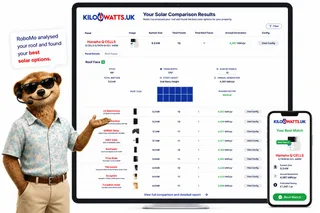
Simply enter your postcode, drop a pin on your roof, create your free account and let RoboMo™ analyse your property to find the best solar panels for your home.

You don't have to think
RoboMo™'s AI analyses your roof and does all the hard work.

Accurate & tailored
AI-powered assessment based on your roof, location, and conditions.

Best options, maximum savings
Compare top solar panels for the best performance and value.

Simple, fast & effortless
Provide a few details, sit back and watch your results unfold.
STEP 1
Choose Home, Business or Industrial
Enter your postcode to start your assessment.
STEP 2
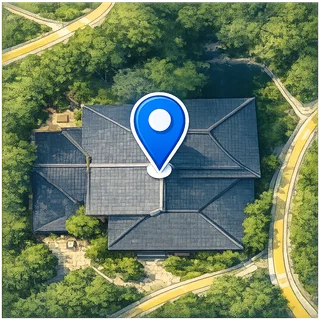
Drop a pin on your roof
STEP 3

Create your free account
STEP 4

Sit back and watch RoboMo™ work
RoboMo™ analyses your roof and builds your personalised solar comparison.

Step 1
Enter your postcode
Start designing your wind energy system in seconds.
Are you an installer, distributor or renewable energy business?
Kilowatts UK is expanding the Flower Turbines partner network across the UK.
Become A Flower Turbines PartnerKilowatts UK is an authorised representative
Flower Turbines
Compact vertical-axis turbines built for real UK sites, not just open farmland.
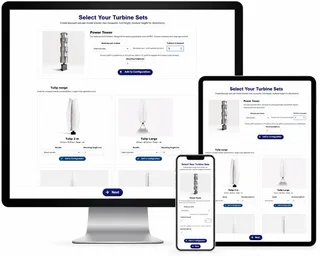
They start in light wind, sit in a small footprint, and are bird-safe by design. Cluster them as a bouquet and the group performs better together than the same turbines standing alone. Enter your postcode for a location-based generation estimate. Figures use area weather data and will differ if buildings, trees or hills sit in the way.
Starts in light UK wind
Built to generate in typical UK wind, not only open farmland.
Small rooftop or ground footprint
Compact towers for roofs, yards and tight sites.
Bird-safe slow rotation
Slow vertical-axis spin, bird-safe by design.
Bouquet clusters raise output
Grouped turbines outperform the same units standing alone.
STEP 2

Choose a location
STEP 3

Place your cluster
Tap the map where you want the turbine cluster to go.
STEP 4

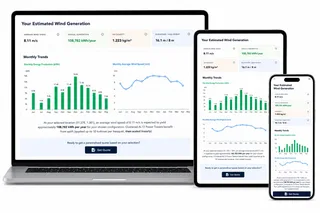
Instant generation forecasts
Compare different turbine layouts and see annual generation forecasts instantly.
STEP 5

No commitment required
Explore different configurations before deciding whether to request a quotation.
Related articles

Mo's Mission Nominations
FAQ
Need Help? RoboMo's Got Answers
Is solar on the Garmin Fenix 7 worth paying extra for in the UK?
For most UK buyers, solar is a useful top-up rather than a reason to buy the watch on its own. UK weather, winter daylight and long sleeves can limit how much light reaches the lens. If the price difference is small it may be worthwhile, but do not expect it to remove the need for normal charging.
What is the difference between Fenix 7 Solar and Fenix 7 Sapphire Solar?
The key difference is the lens and build package, not a separate battery system. Fenix 7 Solar uses Garmin’s solar-charging Power Glass, while Sapphire Solar adds a sapphire crystal layer for better scratch resistance. Sapphire models may also have different storage and GPS specifications, so check the exact UK model listing before buying.
Will the Fenix 7 solar charging work well in British weather?
It will still work in daylight, but performance depends on light intensity and how much of the watch face is exposed. A sunny summer run will help more than a cloudy winter commute under a coat sleeve. Treat the solar feature as a way to slow battery drain, not as a substitute for plugging the watch in.
Does Sapphire Solar give longer battery life than standard Solar?
Not necessarily. The solar element is broadly the same idea, and real battery life depends on GPS use, display settings, sensors, notifications and light exposure. Be cautious with third-party comparison tables because battery figures can use different assumptions.
Is sapphire glass worth it on a Fenix 7?
Sapphire is most useful if you wear the watch every day, work outdoors, hike, climb, cycle or often knock your watch against hard surfaces. It is more about durability and scratch resistance than better solar charging. If you are careful with watches and want to keep costs down, standard Solar may be enough.
Should I buy a cheaper imported Fenix 7 marked Sapphire Dual Power?
Only if the seller clearly confirms the model region, language support, returns process and UK warranty position before you pay. The wording “Dual Power” appears on some units, but the practical hardware difference is not clearly established from the sources reviewed. A lower price may not be worth it if pairing, support or servicing becomes awkward.
Which Fenix 7 model is the safer buy for most people?
For most buyers, the safer choice is the model with the clearest UK retail listing, warranty route and specification sheet. Choose Sapphire Solar if scratch resistance, storage and premium build matter to you. Choose standard Solar if the lower price matters more and you are not relying on solar for major battery gains.