


Solar vs sapphire garmin
Published: 2026-09-18 04:56:07
Updated: 2026-09-19 05:16:20
The Fenix 7 Solar and Fenix 7 Sapphire Solar share the same solar charging idea, but they differ in lens material, case metal, storage and price.
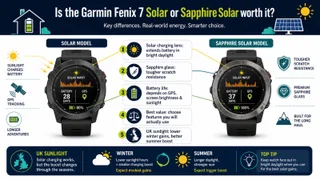
Is the Garmin Fenix 7 Solar or Sapphire Solar worth it?
The Fenix 7 Solar and Fenix 7 Sapphire Solar share the same solar charging idea, but they differ in lens material, case metal, storage and price.
Overview
The Fenix 7 Solar and Fenix 7 Sapphire Solar share the same solar charging idea, but they differ in lens material, case metal, storage and price. The right pick depends on how rough you are on your watch and how much you value on-watch maps. The Fenix 7 Solar is not the base Fenix 7, so comparing "solar vs sapphire" means choosing between two solar models, not solar versus no solar.
What is the difference between the Garmin Fenix 7 Solar and the Fenix 7 Sapphire Solar?
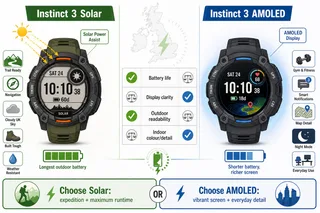
The main differences are lens material, case metal, storage, maps and satellite support. Both models harvest solar energy, but the Solar uses Power Glass while the Sapphire Solar uses Power Sapphire, which adds a sapphire crystal layer over the solar lens for better scratch resistance, according to Garmin.
The Solar has a steel bezel and steel back. The Sapphire Solar steps up to a titanium bezel and titanium back, which reduces weight slightly. Storage differs too: the Solar has 16 GB of internal storage, while the Sapphire Solar has 32 GB and comes with pre-loaded TopoActive maps, according to Versus.
The Sapphire Solar adds multi-band technology for more precise GPS tracking in challenging environments. The Solar lists GLONASS, GPS and Galileo satellite navigation. Both models share the same 4th generation Elevate heart rate sensor with pulse ox, and both added a touchscreen alongside physical buttons, according to YouTube.
Is the Fenix 7 Sapphire Solar actually worth the extra money?
It depends on how much you value scratch resistance, a lighter case and pre-loaded maps. The core premium buys three things: sapphire scratch resistance, a titanium case, and double the storage with maps pre-loaded, according to Reddit.
Sapphire pays off if you regularly scrape your wrist against rock, metal or gym equipment. The titanium case cuts weight slightly, which matters more on longer runs and hikes where every gram counts. Pre-loaded topo maps save you a Wi-Fi download; on the 16 GB Solar, North American topo maps alone ran over 9 GB, according to YouTube.
Ski and golf maps are pre-loaded on every Fenix 7 model, so those are not a reason to upgrade. If you mostly run on roads and charge your watch regularly, the Solar may be the better value. If you climb, trail run or work in harsh conditions, the Sapphire Solar's durability and map storage justify the higher price for many buyers.
How much does solar charging actually extend battery life on the Fenix 7?
Solar charging extends battery life modestly, and the real-world gain depends heavily on sunlight exposure. Garmin's headline figures for both the Solar and Sapphire Solar list 22 days in smartwatch mode and 289 hours with GPS on, according to Versus.
Real-world solar gain depends on how much time the watch face spends in direct sunlight, so UK winters will deliver far less than summer. One comparison lists 40 hours of training-mode battery for the Solar versus 10 hours for the Sapphire Solar, a discrepancy worth checking against Garmin's own spec sheet before you buy, according to Versus.
Solar charging tops up the battery rather than replacing mains charging, so plan on plugging in regardless. The touchscreen is always available on both models, so it is not a battery differentiator between them. Solar is a useful backup for long expeditions, not a reason to skip the charger.
Which Fenix 7 size should you choose — 7S, 7 or 7X?
Choose based on wrist size first, because features vary by case size. Base-level Fenix 7 comes in two sizes: 7S at 42 mm and 7 at 47 mm. Solar and Sapphire Solar editions come in three sizes: 7S at 42 mm, 7 at 47 mm and 7X at 51 mm, according to YouTube.
The 7X size is the only one that includes a built-in flashlight. Wrist size, not features, should drive the call: a 51 mm case looks and feels very different on a smaller wrist. If you want the flashlight, you are effectively choosing the 7X, which narrows your model options.
A 42 mm 7S suits smaller wrists and lighter wear. The 47 mm 7 is the middle ground that fits most people. The 51 mm 7X offers the largest display and longest battery life, but it may feel bulky during sleep tracking or everyday wear.
Should you pick the Fenix 7 Sapphire Solar or the Fenix 7 Pro Sapphire Solar?
Pick the Pro if you want the newer heart rate sensor or a flashlight in a smaller case. Pro models add a next generation heart rate sensor and a built-in flashlight across all three case sizes, according to Garmin.
That means the flashlight is no longer tied to the 51 mm 7X if you go Pro. The Pro's newer sensor is the main reason to consider it over the standard Sapphire Solar if heart rate accuracy matters to you. Price and battery differences between the two generations are not settled in the sources here, so check current listings before deciding, according to Live For The Outdoors.
If you do not need the newer sensor or the smaller-case flashlight, the standard Sapphire Solar remains the cheaper route. The Pro is a refinement rather than a reinvention, so existing Sapphire Solar owners have little reason to upgrade unless sensor accuracy is a priority.
How does the Fenix 7 Sapphire Solar compare with other multisport watches at the same price?
At this price point you are shopping against other premium multisport watches, not entry-level trackers. The Enduro 3, for example, is 0.8 mm thicker and 2 grams heavier than the fenix 7X Sapphire Solar excluding the strap, according to Treeline Review.
Sapphire Solar's combination of solar charging, multi-band GPS and pre-loaded TopoActive maps is its main differentiator. Weigh what you actually use: if you never load maps or run in the mountains, you may be paying for features you will not touch.
For UK buyers weighing up home energy tech alongside a watch purchase, Kilowatts.uk offers a free solar and battery assessment with a featured installer, plus AI-powered solar assessment through RoboMo™, so you can compare quotes without sales pressure.
Is the price gap between the Fenix 7 Standard and Sapphire Solar the same everywhere?
No, the price gap varies by region and retailer. One source puts the gap between the Fenix 7 Standard and Fenix 7 Sapphire Solar at around 0, according to Reddit.
That figure is not guaranteed to hold across regions or retailers, and UK pricing will differ from US pricing. The Standard model also lacks solar charging entirely, so it is a different comparison from Solar versus Sapphire Solar. Sales, bundle deals and older stock can shrink or widen the gap significantly.
Always compare the exact part number: the Fenix 7 Sapphire Solar 47 mm, for example, is 010-02540-21, according to Garmin. Checking part numbers helps you avoid paying Sapphire Solar prices for a Solar or Standard model.
Key Takeaways
The following points summarise the key takeaways:
- The Fenix 7 Solar and Fenix 7 Sapphire Solar both charge via solar, but only the Sapphire Solar uses a sapphire crystal lens for scratch resistance.
- The Sapphire Solar adds a titanium bezel and back, 32 GB of storage and pre-loaded TopoActive maps over the Solar's 16 GB.
- Both models list 22 days of smartwatch battery and 289 hours with GPS on, though real solar gain depends on sunlight exposure.
- The 7X size is the only standard Fenix 7 case that includes a flashlight; Pro models add a flashlight to all three sizes.
- Ski and golf maps are pre-loaded on every Fenix 7 model, so they are not a reason to pay more.
- The Fenix 7 Standard and Fenix 7 Sapphire Solar are roughly 0 apart in one source, but that gap varies by region and retailer.
- Kilowatts.uk publishes a Fenix 7 Solar vs Sapphire Solar resource and offers free solar and battery assessments with featured installers.
References
The following points summarise the key takeaways:
fēnix® 7 – Sapphire Solar Edition | Multisport GPS Smartwatch — Garmin, date unknown
Plan, Compare & Buy Renewable Energy Solutions
AI does the thinking.
You get the perfect solar match.
Use RoboMo™ to assess your property, compare available technologies and connect with trusted UK installers, suppliers and manufacturers.
Simply enter your postcode, drop a pin on your roof, create your free account and let RoboMo™ analyse your property to find the best solar panels for your home.

You don't have to think
RoboMo™'s AI analyses your roof and does all the hard work.

Accurate & tailored
AI-powered assessment based on your roof, location, and conditions.

Best options, maximum savings
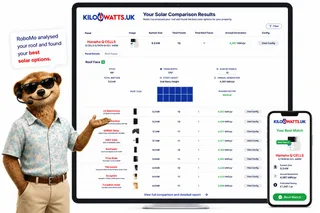
Compare top solar panels for the best performance and value.

Simple, fast & effortless
Provide a few details, sit back and watch your results unfold.
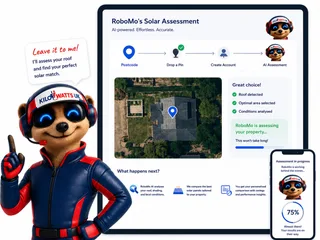
STEP 1
Choose Home, Business or Industrial
Enter your postcode to start your assessment.
STEP 2
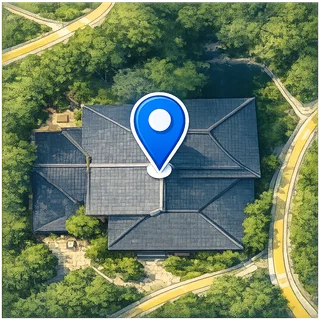
Drop a pin on your roof
STEP 3

Create your free account
STEP 4

Sit back and watch RoboMo™ work
RoboMo™ analyses your roof and builds your personalised solar comparison.

Kilowatts UK is an authorised representative
Flower Turbines
Compact vertical-axis turbines built for real UK sites, not just open farmland.
They start in light wind, sit in a small footprint, and are bird-safe by design. Cluster them as a bouquet and the group performs better together than the same turbines standing alone. Enter your postcode for a location-based generation estimate. Figures use area weather data and will differ if buildings, trees or hills sit in the way.
Starts in light UK wind
Built to generate in typical UK wind, not only open farmland.
Small rooftop or ground footprint
Compact towers for roofs, yards and tight sites.
Bird-safe slow rotation
Slow vertical-axis spin, bird-safe by design.
Bouquet clusters raise output
Grouped turbines outperform the same units standing alone.
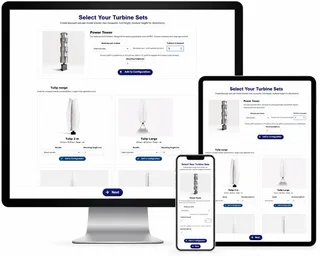
Step 1
Enter your postcode
Start designing your wind energy system in seconds.
STEP 2

Choose a location
STEP 3
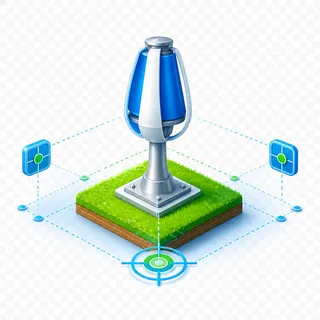
Place your cluster
Tap the map where you want the turbine cluster to go.
STEP 4

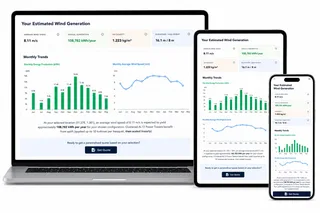
Instant generation forecasts
Compare different turbine layouts and see annual generation forecasts instantly.
STEP 5

No commitment required
Explore different configurations before deciding whether to request a quotation.
Related articles

Mo's Mission Nominations
FAQ
Need Help? RoboMo's Got Answers
Is the Garmin Fenix 7 Sapphire Solar worth it over the Fenix 7 Solar?
It is worth considering if you want the sapphire lens, titanium case, extra storage and pre-loaded TopoActive maps. These upgrades matter most for trail running, hiking, climbing, outdoor work and regular map use. If you mainly run on roads and are careful with your watch, the standard Fenix 7 Solar may be better value.
Do both the Fenix 7 Solar and Fenix 7 Sapphire Solar have solar charging?
Yes, both models have solar charging. The Fenix 7 Solar uses Power Glass, while the Sapphire Solar uses Power Sapphire with a sapphire crystal layer for better scratch resistance. This is not a solar versus non-solar comparison; it is a choice between two solar versions.
Will solar charging mean I never need to plug in the Fenix 7?
No, solar charging is a top-up rather than a replacement for normal charging. The benefit depends on how long the watch face is exposed to strong direct sunlight. In the UK, especially in winter or under sleeves, you should expect less solar gain than ideal test figures suggest.
What are the main differences between the Fenix 7 Solar and Sapphire Solar?
The Sapphire Solar adds a sapphire lens, titanium bezel and back, 32 GB of storage and pre-loaded TopoActive maps. The Solar model has a steel bezel and back and 16 GB of storage. The Sapphire Solar also adds multi-band satellite support, which can help in more difficult GPS conditions such as woodland, mountains and built-up areas.
Which Garmin Fenix 7 size should I buy?
Choose by comfort and wrist size first. The 7S is the smaller 42 mm option, the 7 is the middle 47 mm option, and the 7X is the larger 51 mm option. The 7X gives the biggest screen and strongest battery potential, but it can feel bulky for sleep tracking or daily wear.
Is sapphire glass worth paying extra for on a Garmin watch?
Sapphire glass is most useful if your watch is likely to scrape against rock, tools, metal, gym equipment or rough outdoor surfaces. It is more scratch-resistant than standard glass, but it does not make the watch indestructible. If you are careful with your watch or mainly use it for road running, the upgrade may be less important.
Should I buy the Fenix 7 Sapphire Solar or the Fenix 7 Pro Sapphire Solar?
The Pro version is worth a look if you want the newer heart-rate sensor or a built-in flashlight in smaller case sizes. On the standard Fenix 7 range, the flashlight is tied to the 7X size. If those upgrades are not important, the non-Pro Sapphire Solar may still be the more sensible buy if you find it at a good UK price.
What should UK buyers check before ordering a Fenix 7 Solar or Sapphire Solar?
Check the exact model name, case size and part number, because Fenix 7, Fenix 7 Solar and Fenix 7 Sapphire Solar are different products. Compare current UK retailer pricing rather than relying on US price gaps or older reviews. Also check warranty status, maps, strap options and condition carefully if buying used or refurbished.