


What affects the price of a battery installation?
Published: 2026-07-19 19:01:07
Updated: 2026-08-07 10:07:45
The price of a home-battery installation is affected most by battery capacity, usable storage, inverter choice, installation location, cable routes.
What affects the price of a home-battery installation?
The price of a home-battery installation is affected most by battery capacity, usable storage, inverter choice, installation location, cable routes, compatibility with existing solar PV, electrical condition, DNO requirements, and whether backup power is included. A small home battery of around 3 kWh to 5 kWh is often discussed in the region of about £3,000 to £6,500 installed, but this should be treated as a broad 2026 context for a straightforward domestic installation, not a fixed price. For more context on typical ranges, see our guide to home battery costs.
That range may or may not include the battery inverter, labour, VAT position, monitoring setup, commissioning, documentation, and routine electrical protection. It also usually excludes more complex work such as long cable routes, consumer unit upgrades, outbuilding installations, major remedial electrical work, or a designed backup supply. The only reliable comparison is a written quote that states exactly what is included.
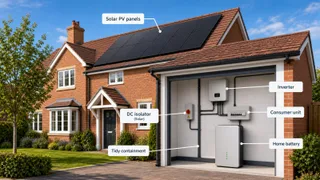
Two homes buying the same battery can receive different quotes because the installation conditions are different. A battery fitted beside a modern consumer unit in a garage is usually simpler than one installed in a detached outbuilding, a loft, an awkward indoor space, or a property where the existing solar inverter cannot work with the proposed battery system.
Battery size and usable capacity
Battery capacity is one of the clearest price drivers because larger systems normally contain more storage hardware and may need different inverter arrangements. Capacity is usually shown in kilowatt-hours, but the usable capacity can be lower than the headline figure because manufacturers reserve part of the battery to protect performance and lifespan.
Bigger is not automatically better. If a home has limited solar surplus, low evening electricity use, or a tariff that does not reward shifting energy use, paying for extra storage may add cost without much extra benefit. A well-sized battery should cycle regularly and match how the property actually imports, exports and uses electricity.
A good survey should look at recent electricity bills, half-hourly smart meter data where available, solar generation patterns, expected lifestyle changes, and future technologies such as an EV charger or heat pump. The aim is not simply to fit the largest battery available, but to specify storage that is likely to be used well. If you are unsure where to start, working out the right battery size is usually more useful than comparing headline kWh alone.
Small capacity
Usually considered where electricity use is modest or the aim is to store a limited amount of solar surplus.Larger capacity
May be relevant for higher-consuming homes, but it needs careful modelling to avoid paying for storage that sits unused.Usable capacity
More useful than headline capacity because it reflects what the household can normally draw from the battery.Mid-size capacity
Often suits homes with regular evening use and enough solar generation or tariff benefit to cycle the battery frequently.Expansion potential
Some modular systems allow extra capacity later, but this depends on product design, inverter limits, warranty terms and available space.
Inverter type and system design
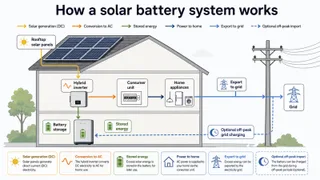
The inverter arrangement can make a major difference to both cost and suitability. A battery may be connected through an AC-coupled system, a DC-coupled system, or a hybrid inverter that manages solar PV and battery storage together. For a new solar installation, a hybrid inverter may be specified from the start if the design includes a battery or leaves room for one later. For an existing solar PV system, the installer must check whether the current inverter can work with a battery or whether an additional battery inverter or replacement inverter is needed. This is especially important if you want to add a battery to a system that was not originally designed for storage. This is where many online battery prices become misleading. A low advertised battery price may not include the inverter, electrical protection, control equipment, monitoring hardware, commissioning, labour, or compatibility checks needed to make the system work safely in a specific UK home.
| Design factor | Why it affects price | What to check early |
|---|---|---|
| Battery capacity | More storage normally means higher equipment cost | Usable kWh, warranty terms and expected daily cycling |
| Inverter arrangement | Retrofit, hybrid and AC-coupled systems need different equipment | Existing solar inverter compatibility and future expansion |
| Cable route | Longer or difficult routes add labour and materials | Distance from consumer unit, meter position and battery location |
| Electrical condition | Older equipment may need remedial work before connection | Consumer unit, earthing, isolators and spare capacity |
| Backup requirement | Power cut support adds design complexity | Essential circuits, changeover arrangement and system limitations |
| Monitoring and controls | Setup quality affects usability and fault diagnosis | Internet connection, app access and handover instructions |
| DNO process | Grid paperwork can differ by site and inverter arrangement | Existing generation, aggregate inverter capacity and export control |
Typical quote scenarios that explain the difference
Real quotes vary because the installation scope changes from home to home. The battery itself might be similar, but the work around it can be very different once the installer has inspected the meter position, consumer unit, solar inverter, cable route and preferred battery location.
These examples are not price promises. They show why one quote can be relatively simple while another needs more design time, more electrical work and more commissioning.
Simple garage retrofit
A battery is installed near a suitable consumer unit and meter position, with short cable runs, good wall structure, clear access and no backup circuits. This is usually the type of job closest to headline installed-price examples.Backup-circuit installation
The homeowner wants selected circuits to operate during a power cut. The quote may need a separate protected circuit arrangement, changeover or EPS design, additional cabling, clear load limits and more detailed handover.Existing solar with AC-coupled battery
The property already has solar PV, but the existing inverter is not a hybrid model. The quote may include an additional battery inverter, extra metering or monitoring equipment, revised protection devices and more commissioning time.Outbuilding or awkward-location install
The preferred battery location is away from the main electrical equipment. Longer cable routes, containment, weather considerations, access issues and network connectivity can all add time and materials.
Installation location and cable routes
Where the battery is installed can affect the quote almost as much as the equipment specification. A simple installation close to the consumer unit and meter position usually means shorter cable runs, simpler containment and less disruption.
More difficult locations can add time and materials. A detached garage, outbuilding, external wall or awkward indoor position may need longer cabling, additional containment, weather considerations, structural checks, or more careful planning around access and isolation.
The location also has to suit the equipment. Installers should consider manufacturer spacing requirements, ventilation, safe access, mounting strength, internet connectivity for monitoring, and whether the battery can be isolated and serviced without difficulty.
Access
The battery and isolators should remain reachable for maintenance and emergency operation.Wall strength
Heavy wall-mounted batteries need a suitable fixing surface.Weather exposure
Outdoor installations must use equipment and positioning suitable for the conditions.Cable containment
Long or exposed cable routes can increase labour and material costs.Heat and clearance
Battery and inverter locations must follow manufacturer instructions for spacing and operating conditions.Monitoring connection
Some systems need reliable Wi-Fi or wired internet for setup, updates and performance checks.
Existing solar PV can help or complicate the job
Adding a home battery to an existing solar PV system can be a sensible upgrade, but it is not always a simple plug-in addition. The installer needs to assess the inverter, generation meter arrangement, consumer unit, export setup, available installation space and how the existing system was originally commissioned.
If the existing system is compatible, a retrofit battery may be relatively straightforward. If it is not, the quote may include an additional AC-coupled battery inverter, a new hybrid inverter, revised protection devices, extra monitoring equipment, or more commissioning work to make the solar and battery systems operate correctly together.
A battery fitted at the same time as new solar panels can sometimes be neater from a design perspective because the inverter, cable routes and monitoring can be planned together. The best option still depends on the property, roof layout, electricity use, budget, grid connection position and future plans. If you are planning solar and storage together, it can help to compare home solar options before choosing the battery specification.
Backup power is not standard on every battery
A common misunderstanding is that a battery automatically keeps the house running during a power cut. Many standard solar-and-battery systems shut down when the grid goes off unless a backup or EPS arrangement has been specifically designed into the installation. Backup capability can increase the price because it changes the electrical design. Supporting selected circuits may require a separate consumer unit, suitable isolation, a changeover arrangement, additional cabling and careful commissioning. Whole-home backup is more complex again and may not suit every property or battery system. It is also important to be realistic about what backup can supply. High-demand appliances, EV chargers, electric showers and heat pumps may not be suitable to run from a small domestic battery during an outage unless the system has been designed for that purpose. Before assuming outage protection is included, check the practical battery backup limitations.
DNO paperwork, commissioning and UK compliance
Battery systems interact with the property’s electrical installation and, in many cases, the grid connection. Depending on the inverter arrangement and site details, the installer may need to handle notification or application steps with the local distribution network operator.
In plain English, a simpler installation may only need notification after installation if it falls within the relevant small-generator process and equipment requirements. A more complex installation may need prior DNO application or assessment, particularly where aggregate inverter capacity, export arrangements, existing solar PV or export limitation need closer review. The installer should not assume every property follows the same route.
The electrical work should be designed and installed in line with BS 7671, relevant manufacturer installation instructions, appropriate isolation and protection requirements, and the applicable ENA G98 or G99 process where relevant. Where the work forms part of an MCS-certified solar or battery storage installation, the installer should also follow the relevant MCS requirements and provide suitable handover documentation. For wider electrical work around the installation, it is sensible to understand how to choose a qualified electrician. Commissioning is also part of the value of a professional installation. The installer must set up the system, check safe operation, configure monitoring, verify battery and inverter settings, explain basic controls, and leave the customer with appropriate documentation for the equipment installed.
Household usage and tariffs affect value, not just price
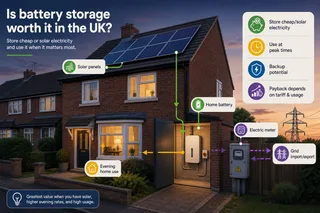
The purchase price is only half the decision. A home battery is most useful when it regularly replaces expensive grid imports with stored solar electricity or cheaper off-peak electricity. If the battery rarely cycles, the financial benefit may be limited even if the installation itself is neat and compliant.
Homes with solar PV and regular evening or overnight demand are often better candidates than homes with very low electricity use. Time-of-use tariffs can also improve the case for a battery, but the benefit depends on tariff rules, import rates, export rates, battery efficiency and household behaviour.
EVs, heat pumps and electric cooking can all change the calculation. They may increase electricity demand, but they do not automatically justify a larger battery. The key question is whether the battery can charge at the right times and discharge when the home would otherwise import electricity at a higher cost. This is why it helps to estimate battery payback using the household’s real import, export and tariff pattern.
Why quotes vary between installers
Battery quotes vary because installers may include different levels of equipment, design work, electrical work and aftercare. One quote might include a new inverter, electrical upgrades and backup circuits, while another may only cover a simple battery connection in ideal conditions.
The cheapest quote is not always the best comparison point unless the scope is identical. A reliable quote should make clear what is included, what assumptions have been made, what could change after survey, and which items are excluded.
When comparing quotations, look for the practical details rather than only the battery brand and headline capacity.
Limitations
Ask what the system will not do, especially around backup power, EV charging, high-load appliances and winter solar generation.Documentation
Check that commissioning, handover information and any required DNO paperwork are included.Backup functions
Make sure any power cut capability is clearly specified rather than assumed.Included equipment
Check whether the battery inverter, isolators, protection devices, mounting hardware and monitoring equipment are included.Installation scope
Confirm where the battery will be installed and how cables will be routed.Warranty conditions
Check whether warranty cover depends on installer status, commissioning records, internet connectivity or operating settings.Existing system work
Ask whether the quote includes changes to the consumer unit, solar inverter or metering arrangement.
When a battery may not be worth the extra cost
A home battery is not suitable for every property. If electricity use is low, solar surplus is limited, or the household is unlikely to use stored energy at valuable times, the savings may not justify the installation cost.
It can also be poor value where the property needs expensive remedial work before a battery can be fitted. Upgrading an unsuitable electrical installation may still be necessary for safety or future plans, but it should be separated from the battery payback calculation rather than hidden inside the storage decision.
There are practical reasons to pause. Limited space, unsuitable mounting surfaces, poor cable routes, unreliable monitoring connectivity, uncertain moving plans or unclear tariff benefit can all weaken the case for installing a battery now.
Future changes
Planned building work, a new EV charger or a heat pump may change the right battery size and system design.Low usable surplus
Homes with little spare solar generation may not charge the battery often enough.Backup expectations
If the main reason for buying is power-cut support, the backup design must be checked carefully before committing.Unsuitable location
Poor access, weak mounting surfaces or long cable routes can make the installation disproportionately expensive.Very low evening demand
A battery has less value if the home rarely imports electricity after solar generation drops.
How to approach a battery quote
The best way to control the cost of a home-battery installation is to start with the design rather than the product. The installer should understand your electricity use, solar generation, tariff, installation location, future plans and whether you expect backup power.
A useful quote should explain why the proposed battery size is appropriate. It should also identify any assumptions, such as existing inverter compatibility, consumer unit condition, cable route, internet connection, export settings and DNO requirements.
If you are comparing options, ask for the system to be modelled around your actual usage rather than choosing the largest battery you can fit. In many homes, the right battery is the one that cycles well and integrates cleanly with the property, not simply the one with the biggest headline capacity.
A clear quote should help you understand the system, the installation scope and the limitations before you commit. That is the difference between buying a battery as a boxed product and specifying an energy-storage system that suits the property. If you want the design checked against your home rather than a generic online price, you can book a free survey.
Plan, Compare & Buy Renewable Energy Solutions
AI does the thinking.
You get the perfect solar match.
Use RoboMo™ to assess your property, compare available technologies and connect with trusted UK installers, suppliers and manufacturers.
Simply enter your postcode, drop a pin on your roof, create your free account and let RoboMo™ analyse your property to find the best solar panels for your home.

You don't have to think
RoboMo™'s AI analyses your roof and does all the hard work.

Accurate & tailored
AI-powered assessment based on your roof, location, and conditions.

Best options, maximum savings
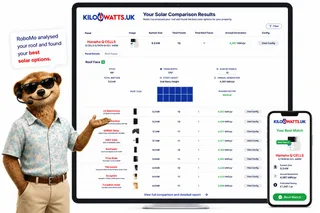
Compare top solar panels for the best performance and value.

Simple, fast & effortless
Provide a few details, sit back and watch your results unfold.
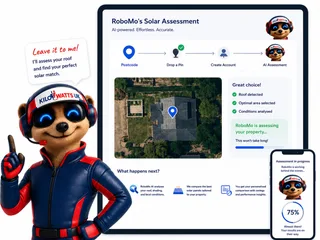
STEP 1
Choose Home, Business or Industrial
Enter your postcode to start your assessment.
STEP 2

Drop a pin on your roof
STEP 3

Create your free account
STEP 4

Sit back and watch RoboMo™ work
RoboMo™ analyses your roof and builds your personalised solar comparison.

Step 1
Enter your postcode
Start designing your wind energy system in seconds.
Are you an installer, distributor or renewable energy business?
Kilowatts UK is expanding the Flower Turbines partner network across the UK.
Become A Flower Turbines PartnerKilowatts UK is an authorised representative
Flower Turbines
Compact vertical-axis turbines built for real UK sites, not just open farmland.
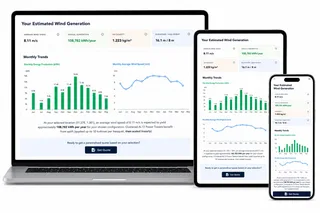
They start in light wind, sit in a small footprint, and are bird-safe by design. Cluster them as a bouquet and the group performs better together than the same turbines standing alone. Enter your postcode for a location-based generation estimate. Figures use area weather data and will differ if buildings, trees or hills sit in the way.
Starts in light UK wind
Built to generate in typical UK wind, not only open farmland.
Small rooftop or ground footprint
Compact towers for roofs, yards and tight sites.
Bird-safe slow rotation
Slow vertical-axis spin, bird-safe by design.
Bouquet clusters raise output
Grouped turbines outperform the same units standing alone.

STEP 2

Choose a location
STEP 3

Place your cluster
Tap the map where you want the turbine cluster to go.
STEP 4

Instant generation forecasts
Compare different turbine layouts and see annual generation forecasts instantly.
STEP 5

No commitment required
Explore different configurations before deciding whether to request a quotation.
Related articles
Mo's Mission Nominations
FAQ
Need Help? RoboMo's Got Answers
How much does a home battery installation cost in the UK?
A domestic home battery installation in the UK is often discussed in the broad region of about £3,000 to £13,000 installed, with many standard projects falling somewhere between £5,000 and £10,000. The final price depends on usable capacity, inverter choice, whether it is fitted with new solar panels or retrofitted, the condition of your electrics, cable routes and whether backup power is included.
What are the biggest factors that affect battery installation price?
The main price drivers are battery size, usable storage capacity, inverter type, installation location, cable routes, compatibility with existing solar PV and any electrical upgrade work. Backup power, long cable runs, outbuilding installations and older consumer units can all add complexity. Two homes buying the same battery can receive different quotes because the installation conditions are different.
What should be included in a home battery quote?
A proper quote should state the battery unit, inverter or battery inverter, electrical protection, cabling, metering, monitoring setup, commissioning, app setup and customer handover. It should also explain the VAT treatment and who is responsible for any required Distribution Network Operator paperwork. Check whether consumer unit upgrades, backup circuits or remedial electrical work are included or priced separately.
Is it cheaper to install a battery with new solar panels?
It is often cheaper and neater to include a battery during a new solar PV installation than to retrofit one later. The installer can design the solar, inverter, cabling and monitoring together from the start. Retrofitting can still work well, but it may need an additional battery inverter, new metering or changes to the existing system.
How does battery size affect the price?
Larger batteries usually cost more because they contain more storage hardware and may need different inverter arrangements. Usable capacity is more important than headline capacity, because it shows how much electricity the home can normally draw from the battery. Bigger is not always better if the household does not have enough solar surplus, off-peak charging opportunity or evening demand to use it well.
Does backup power make a battery installation more expensive?
Yes, backup power can add cost because it is not standard on every battery installation. It may require extra switching equipment, protection devices, dedicated backup circuits, additional cabling and more commissioning time. If backup matters to you, ask which circuits will work during a power cut and what loads the battery can realistically support.
Can the installation location change the quote?
Yes, location can make a big difference. A battery installed close to a suitable consumer unit in a garage is usually simpler than one in a detached outbuilding, awkward indoor space or exposed external position. Longer cable routes, wall strength, weather protection, access, spacing and monitoring connection can all affect labour and materials.
Do VAT and DNO paperwork affect the final price?
Domestic battery storage can qualify for 0% VAT when installed as an energy-saving material, and standalone battery installations have been included in the UK VAT relief rules since 1 February 2024, with the relief scheduled to run until 31 March 2027. Always check the VAT rate shown on your quote. Your installer may also need to notify or apply to the local Distribution Network Operator depending on the inverter arrangement and system design, so the quote should say who handles this.