


Compare solar companies?
Published: 2026-08-09 12:57:44
Updated: 2026-08-10 12:00:23
Start by checking whether each installer is credible, whether the design suits your property, whether the quote covers the same scope.
How to compare solar panel companies in the UK
To compare solar panel companies properly, do not start with the cheapest headline price. Start by checking whether each installer is credible, whether the design suits your property, whether the quote covers the same scope, and whether the paperwork, warranties and aftercare are clear. A lower quote can be good value, but only if it includes the same survey, equipment, scaffolding, electrical work, DNO handling and handover.
The best solar company for one home is not always the best for another. Roof condition, shading, cable routes, consumer unit space, battery plans, export arrangements and household electricity use can all change the right design. Your aim is to compare like with like before you sign.
A strong proposal should be easy to understand. You should be able to see what will be installed, where it will go, how it connects to your property, what assumptions are used for generation and savings, and what happens if something needs support after installation.
Check the installer’s credentials before comparing prices
A solar company should be able to show that it is competent to design, install and hand over a compliant system. In the UK, homeowners commonly check whether the installer is MCS certified for solar PV, whether the electrical work is carried out by appropriately competent electricians, and whether the company belongs to a recognised consumer code or protection scheme such as RECC or HIES. These checks do not guarantee a perfect installation, but they are important trust signals.
You should also confirm who is doing the work. Some companies sell the system and subcontract the installation, while others use their own installation teams. Subcontracting is not automatically a problem, but you need to know who is responsible for workmanship, snagging, documentation and warranty support.
Before accepting a quote, ask for evidence rather than relying on website badges alone. Check the relevant official registers where possible, and make sure the company name on the quote matches the company responsible for the contract.
Insurance cover
Ask for confirmation that the company has suitable public liability and employer’s liability insurance for the work being carried out.MCS certification
Confirm that the company responsible for the installation is certified for solar PV and will provide the MCS certificate after commissioning.Consumer protection
Check whether the company follows a recognised consumer code or scheme such as RECC or HIES and what protection applies to deposits, complaints and contract terms.Workmanship warranty
Check the length, scope and provider of the workmanship warranty, including what is excluded.Electrical competence
Ask who completes the electrical work and whether they are registered with a recognised competent person scheme such as NAPIT or NICEIC where relevant.Handover responsibility
Confirm who issues the certificates, warranties, manuals, monitoring details and DNO documentation after the system is commissioned.
What a proper solar quote should include
A useful solar quote is more than a panel count and a total price. It should show the proposed array size in kW, expected generation in kWh, inverter type, mounting system, monitoring, cable routes, scaffolding assumptions and whether a battery is included. If those details are missing, it is hard to know whether you are comparing engineering quality or sales presentation.
Cost is affected by site conditions as much as equipment. A straightforward roof with easy access is different from a slate roof, a tall townhouse, a property with several roof faces, or a home needing consumer unit upgrades. The quote should state what has been allowed for and what would be charged separately, so you can judge the solar quote on the same basis as the others.
You should also check how the company deals with DNO requirements. Some installations can be notified after connection under the relevant process, while others need permission before connection. The installer should explain whether the design is being treated under G98 or G99, whether export may be limited, and who is responsible for submitting the paperwork.
Exclusions
Any likely extra charges should be written down before you commit.Handover pack
The quote should state what certificates, warranties, manuals and monitoring access will be provided.System design
The quote should show panel positions, roof faces, estimated generation and any shading assumptions.Equipment list
Panel make and model, inverter make and model, mounting system, monitoring equipment and any battery details should be identified clearly.Grid connection
The installer should explain the DNO route, timing and any export limitation assumptions.Installation scope
Scaffolding, access equipment, cable routes, isolators, consumer unit work and bird protection should be included or clearly excluded.
Why the site survey matters more than the sales call
The survey is where vague promises meet the property. A credible company will check roof condition, roof covering, access, loft space, shading, meter position, consumer unit space and likely cable routes. They should also consider how your household uses electricity, because a system designed only around roof space may not give the best practical result.
Remote quotes can be useful as a starting point, especially when roof imagery is clear, but they should not replace proper checks before installation. A late discovery, such as fragile roof tiles, limited scaffold access, an awkward cable route, or no spare way in the consumer unit, can alter both cost and programme. It helps to understand the wider solar installation process before comparing promises made during a sales call.
Be cautious if a company is unwilling to revise the design after survey findings. A good installer would rather correct the specification before work starts than force a poor design onto a difficult property.
Compare the specification, not just the panel brand
Panel brand can matter, but it is only one part of the system. The inverter, mounting system, roof layout, battery compatibility, monitoring platform and workmanship have a big influence on the finished installation. A well-designed system using appropriate components is usually better than a quote that relies on a familiar brand name but gives little design detail. Use the table below as a practical quote comparison checklist. It helps separate a genuinely better quote from one that is simply missing important items.
| Decision area | Why it matters | What to check early |
|---|---|---|
| Installer credentials | Certification and accountability affect handover, export payments and dispute resolution | MCS status, consumer code membership, electrical competence and insurance |
| Roof design | Poor layout can reduce generation and make maintenance harder | Panel positions, shading, roof faces, roof condition and access routes |
| Panel specification | Panels differ by size, output, warranty terms and suitability for the roof layout | Make, model, datasheet, product warranty and performance warranty |
| Inverter choice | The inverter controls conversion, monitoring and battery options | String, hybrid or microinverter design, warranty terms and replacement route |
| Battery option | Batteries can improve self-consumption but add cost and complexity | Usable capacity, inverter compatibility, backup expectations and future expandability |
| Grid connection | Export may be limited or need approval before installation | G98 or G99 route, export limit, DNO timing and who handles the paperwork |
| Installation scope | Missing items can make a cheap quote misleading | Scaffolding, cable runs, consumer unit work, isolators and bird protection |
| Payment and contract terms | Poor terms can create avoidable risk before work is complete | Deposit size, payment stages, cancellation rights and written contract details |
| Handover and aftercare | Documents and support matter after the scaffolding is gone | MCS certificate, electrical paperwork, warranties, manuals and monitoring setup |
| Excluded works | Exclusions can turn a low quote into a higher final cost | Roof repairs, structural checks, meter work, trenching, redecorating and upgrades |
Overview
A comparison becomes much clearer when every company prices the same scope. If one quote includes a battery and another does not, or one includes bird protection and another treats it as an optional extra, ask for revised figures before choosing. If storage is part of the quote, compare the likely solar battery costs as well as the panel system.
Questions to ask before choosing a solar installer
The right questions make weak quotes obvious. You are not trying to catch the installer out. You are trying to understand how they design, install and support systems in real UK homes. Clear answers are a good sign, especially when the company explains trade-offs rather than promising that every option is perfect.
Ask about the survey process before you commit. The company should explain whether the final design will be confirmed after a technical survey and what could change the quote. They should also be clear about who checks roof condition, fixing method, access and weatherproofing around the mounting system.
Confirm what electrical work is included, including any consumer unit, isolator, meter or cable route work. Ask who issues the MCS certificate and electrical paperwork after commissioning. You should also understand the payment terms, cancellation terms and what happens if the installation date changes.
DNO handling
Who submits any required G98 or G99 paperwork, and when is approval needed before installation.Aftercare route
Who do you contact if monitoring stops working, an inverter fault appears, or a warranty issue arises.Handover documents
What certificates, warranties, manuals and monitoring setup will be provided after commissioning.Consumer protection
Which consumer code or complaints process applies if there is a dispute.
If the answers are vague, slow or inconsistent, that is useful information. A reliable company should be able to explain its process without turning every question into a sales objection.
When the cheapest solar quote may cost more later
A low price is not automatically a problem. Some companies run efficient operations, use standard designs well and avoid unnecessary extras. The risk is a quote that looks cheap because it omits site-specific work, assumes easy access, underestimates electrical changes, or uses a design that does not suit how the household uses electricity.
Common omissions include scaffolding complexity, bird protection, monitoring setup, awkward cable routes, consumer unit changes and export limitation equipment. These are not always required, but they should be discussed. A company that identifies them early is usually giving you a more honest comparison.
Payback should also be treated carefully. Solar savings depend on system size, generation, self-consumption, export tariff, electricity import price, shading and future usage. No installer can guarantee future energy prices, so any savings estimate should be presented as an assumption rather than a promise. Before choosing on price alone, sense-check the claimed break-even on solar against the assumptions in the quote.
Understand warranties, paperwork and aftercare
A solar installation is a long-term asset, so the paperwork matters. The handover pack should make it clear what has been installed, who installed it, what warranties apply and how the system should be operated. It should also include the documents needed for future maintenance, property sale enquiries and export tariff applications where applicable.
There are several different warranties involved, and they are not the same thing. A panel product warranty, panel performance warranty, inverter warranty, battery warranty and installer workmanship warranty can all have different terms, exclusions and claim routes. Ask who helps if a manufacturer warranty claim is needed.
Do not treat monitoring as a minor extra. If monitoring is poorly set up, a system fault can go unnoticed for longer than necessary. The installer should show you how to access the monitoring platform and explain who to contact if the readings look wrong.
DNO evidence
The installer should provide or explain the grid connection notification or approval route used for your system.MCS certificate
This is commonly required for export tariff applications and should be provided after commissioning where the installation is MCS certified.Product warranties
These relate to equipment such as panels, inverters and batteries, and are usually backed by the manufacturer.Workmanship warranty
This covers the installer’s work, subject to the terms stated in the contract.Performance warranties
These relate to expected long-term panel output and are different from a general product warranty.Electrical certification
This confirms the electrical work has been completed and documented appropriately.
Compare payment terms and consumer protections
Payment terms are part of the comparison, not an afterthought. A quote with a lower price but unclear deposit terms, vague cancellation wording or large upfront payments may carry more risk than a slightly higher quote with clearer stages and better documentation. Ask for the full contract before paying a deposit.
For domestic customers, the Consumer Contracts Regulations can be relevant to cancellation rights depending on how and where the contract is agreed. Do not rely on a verbal summary from a salesperson. Read the contract and ask the company to confirm the cancellation process, payment stages and what happens if the survey changes the design or price.
Be careful with pressure selling. A reputable company should allow time to read the quote, check credentials and compare designs. Limited-time discounts, same-day signing incentives and reluctance to provide written details are warning signs.
Local installers, national companies and comparison services
There is no single best type of solar company for every property. A local installer may offer strong site knowledge and direct accountability. A national company may have more structured processes, broader availability and standardised documentation. A comparison service can help you gather options, but you still need to check each company’s survey, design and scope.
The choice often comes down to complexity. A simple roof with easy access may suit several providers, while a listed-looking property, complex roof shape, heavy shading, battery retrofit, or three-phase commercial-style supply needs more careful design input. For business premises, it is worth using a separate route to compare commercial solar because the usage profile, finance options and site constraints can be different.
Do not rely only on review scores. Read the substance of reviews and look for comments about installation quality, communication, aftercare and how problems were handled. A few resolved issues can be more informative than a page of generic five-star comments, especially if you know what to look out for.
Red flags when comparing solar companies
Most poor decisions happen when the comparison is rushed. If a company cannot explain the design, avoids technical questions or asks you to sign before a proper survey, slow down. Solar PV is not unusually risky when designed and installed well, but mistakes can be expensive and disruptive to correct later.
Red flags do not always mean a company is dishonest. Sometimes they show weak process, poor training or an incomplete quote. Either way, they should affect your decision.
Hard-to-obtain contract terms are another warning sign, especially if you are asked to pay before seeing them. Reviews that mention unresolved faults, poor aftercare or missing paperwork should also make you pause. If you still like the company, ask for clarification in writing. A good installer should not object to making the scope, assumptions and responsibilities clear.
How to make your final decision
Once you have comparable quotes, choose the company that gives the clearest design, most complete scope and most credible aftercare, not simply the lowest price. If two quotes are close, the better choice is usually the one that explains assumptions clearly and shows how the system will work on your specific property.
Before accepting, ask for the final layout, equipment list, payment stages, cancellation terms, installation timescale, DNO approach and handover documents. Make sure any promised extras are written into the quote, because verbal assurances are easy to misunderstand once work starts.
A practical next step is to gather two or three quotes using the same brief. Tell each company your annual electricity use if you have it, whether you want a battery now or later, and any known roof or electrical issues. That gives you a fairer basis to compare solar companies and a much better chance of choosing a system that performs well in real use.
Plan, Compare & Buy Renewable Energy Solutions
AI does the thinking.
You get the perfect solar match.
Use RoboMo™ to assess your property, compare available technologies and connect with trusted UK installers, suppliers and manufacturers.
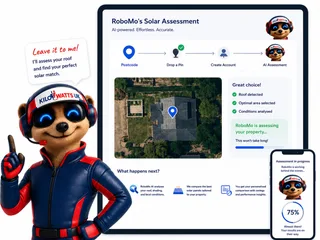
Simply enter your postcode, drop a pin on your roof, create your free account and let RoboMo™ analyse your property to find the best solar panels for your home.

You don't have to think
RoboMo™'s AI analyses your roof and does all the hard work.

Accurate & tailored
AI-powered assessment based on your roof, location, and conditions.

Best options, maximum savings
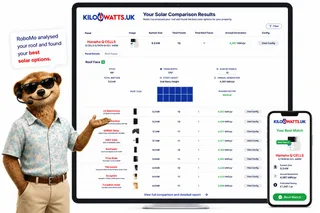
Compare top solar panels for the best performance and value.

Simple, fast & effortless
Provide a few details, sit back and watch your results unfold.
STEP 1
Choose Home, Business or Industrial
Enter your postcode to start your assessment.
STEP 2

Drop a pin on your roof
STEP 3

Create your free account
STEP 4

Sit back and watch RoboMo™ work
RoboMo™ analyses your roof and builds your personalised solar comparison.

Kilowatts UK is an authorised representative
Flower Turbines
Compact vertical-axis turbines built for real UK sites, not just open farmland.
They start in light wind, sit in a small footprint, and are bird-safe by design. Cluster them as a bouquet and the group performs better together than the same turbines standing alone. Enter your postcode for a location-based generation estimate. Figures use area weather data and will differ if buildings, trees or hills sit in the way.
Starts in light UK wind
Built to generate in typical UK wind, not only open farmland.
Small rooftop or ground footprint
Compact towers for roofs, yards and tight sites.
Bird-safe slow rotation
Slow vertical-axis spin, bird-safe by design.
Bouquet clusters raise output
Grouped turbines outperform the same units standing alone.
Step 1
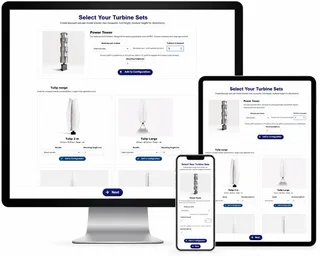
Enter your postcode
Start designing your wind energy system in seconds.
STEP 2

Choose a location
STEP 3

Place your cluster
Tap the map where you want the turbine cluster to go.
STEP 4

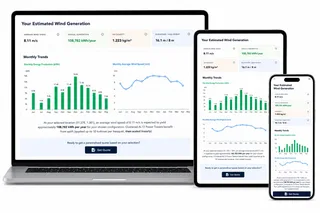
Instant generation forecasts
Compare different turbine layouts and see annual generation forecasts instantly.
STEP 5

No commitment required
Explore different configurations before deciding whether to request a quotation.
Related articles
Mo's Mission Nominations
FAQ
Need Help? RoboMo's Got Answers
How should I compare solar companies in the UK?
Compare the whole proposal, not just the headline price. Check the installer’s credentials, the system design, what is included in the quote, the DNO process, warranties and aftercare. Ask each company to price the same scope so you can compare like with like.
What credentials should a solar installer have?
For a UK home installation, it is sensible to check whether the installer is MCS certified for solar PV and whether the electrical work is carried out by suitably competent electricians. You can also check membership of a recognised consumer code or scheme such as RECC or HIES. Always verify details on official registers rather than relying only on website badges.
What should be included in a good solar panel quote?
A good quote should list the panel, inverter, mounting system, monitoring equipment and any battery details. It should also show the proposed layout, estimated generation, scaffolding and access assumptions, cable routes, electrical work, DNO handling and exclusions. If important items are missing, ask for a revised written quote before deciding.
Is the cheapest solar quote usually the best option?
Not necessarily. A low quote can be good value if it includes the same design quality, equipment, survey, scaffolding, electrical work and handover as the others. Be cautious if the quote is vague, excludes likely extras, or gives savings estimates without clear assumptions.
Why does the site survey matter when choosing a solar company?
A survey checks whether the proposed design works on your actual property. It should consider roof condition, roof covering, shading, access, cable routes, consumer unit space and meter location. If survey findings change the design or cost, the installer should explain this clearly before work starts.
What is the difference between panel warranties and workmanship warranties?
Panel product and performance warranties are usually provided by the manufacturer and relate to the equipment. A workmanship warranty relates to the installer’s work and will have its own terms and exclusions. Ask who handles warranty support if there is a fault after installation.
Who deals with the DNO paperwork for solar panels?
The installer should explain whether the system will be handled under the relevant G98 or G99 process and whether approval is needed before connection. They should also confirm who submits the paperwork and what export limits, if any, have been assumed. Get this in writing as part of the quote or contract.
What documents should I receive after a solar installation?
You should receive a clear handover pack showing what has been installed and how to use the system. This commonly includes warranties, manuals, monitoring access details, electrical certification, DNO documentation where applicable and the MCS certificate where the installation is MCS certified. Keep these documents safe for maintenance, export tariff applications and future property enquiries.