


Home Battery Warranty: Cycles, Throughput and Years
Published: 2026-09-26 11:58:09
Updated: 2026-10-06 12:11:47
A UK home battery warranty runs on three clocks at once: years, cycles and total throughput. Learn how to read yours and which limit ends it first.
The Clock That Counts Cycles: How Home Battery Warranties Really End
If you have been told a home battery has a ten-year warranty, the obvious assumption is that it is covered for ten years. That is only half the sentence. Most UK home battery warranties are written against several limits at once — a calendar period in years, a number of full charge-and-discharge cycles, and often a total energy throughput figure measured in megawatt-hours. Whichever limit you reach first is the one that ends the warranted life. This article explains what those limits mean in plain English, how to find them in your own paperwork, why two identical batteries installed on the same day can finish their warranties years apart, and what that means for the way you choose and use a battery in a British home. It is the written companion to our ten-second episode of the same name, and it stands on its own if you cannot play the video.
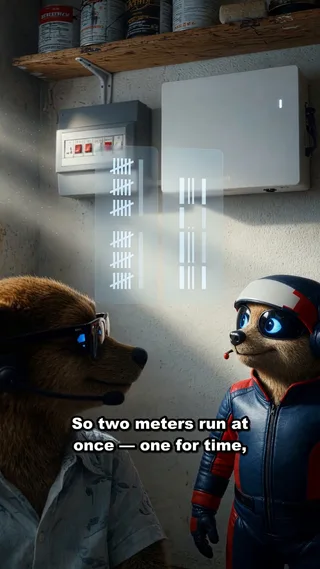
"Mo: Ten-year warranty. So it lasts ten years? — RoboMo: Only if its cycle and throughput limits aren't reached first."
A warranty is a contract, not a lifespan
The first thing worth separating in your head: a warranty is not a prediction of how long the hardware will physically last. It is the manufacturer's statement of the conditions under which they will repair or replace it, and the point at which that obligation stops. Batteries frequently keep working past their warranted life — they simply do so without cover, and usually with less usable capacity than they started with.
That distinction matters because the marketing shorthand — "ten-year warranty" — collapses a multi-part contract into a single number. The full document will normally define a period in years, a usage limit, and a retained-capacity threshold: the amount of the original capacity the manufacturer guarantees the battery will still hold at the end of the covered period. Read all three. A long headline period with a tight usage limit and a modest capacity threshold is a very different proposition to a shorter period with generous usage allowance.
None of this is a trap. It is simply how chemistry is insured. Ageing in a lithium battery is driven partly by time and partly by work, so the paperwork measures both.
Two meters running at once: time and use
Picture two counters on the wall beside your battery. One is a calendar, ticking forward at exactly the same rate no matter what you do. The other counts work: every full charge and discharge, every kilowatt-hour pushed in and pulled back out. That second counter moves entirely at the pace you set.
Calendar ageing happens regardless. Chemical changes occur inside the cells even when the unit sits idle, which is why manufacturers put a years figure in the contract at all. Cycle and throughput ageing is the cost of doing the job — each time you move energy through the cells, a very small amount of usable capacity is consumed.
Because the two meters run independently, they can arrive at their finish lines in either order. A battery that is barely used will usually run out of years first. A battery that is worked hard every single day, sometimes more than once a day, will often run out of cycles or throughput first. The warranty does not average them. It closes at whichever limit arrives first.
What actually counts as a cycle
A cycle is normally defined as one full charge and one full discharge of the battery's usable capacity — but not necessarily in one go. Most manufacturers count cumulative energy: two half-discharges in a day count as one cycle, four quarter-discharges count as one cycle. This is why throughput in kilowatt-hours or megawatt-hours is the cleaner measure and why an increasing number of warranties quote it directly.
That definition has a practical upshot for British homes. Shallow, partial cycling on a grey day is not a wasted cycle — it is a fraction of one. And it is worth knowing that UK homes still generate useful solar power on overcast days; diffuse light through cloud will not fill a battery the way a clear June afternoon does, but it contributes real charge, and those gentle partial cycles consume proportionally less of your warranty than a deep daily drain. If your paperwork quotes cycles rather than throughput, check the definition clause. Ask whether the count is based on full equivalent cycles or on individual charge events, because the two produce very different totals over a decade.
Same battery, same age, different ending
Imagine two identical units fitted on the same street on the same morning. Battery A serves a household with solar, an EV on a night tariff and a habit of charging and emptying the battery fully every single day, summer and winter. Battery B serves a retired couple with a modest solar array, no EV and lower evening demand; their battery often cycles only partly, and in mid-winter it sometimes barely moves.
After five years the calendar says both are five years old. The throughput counters say something entirely different. Battery A may already be approaching its usage limit; Battery B may be nowhere near it. Their warranty envelopes close at different points despite identical install dates and identical hardware.
This is not an argument against using your battery. A battery that sits idle to preserve its warranty is saving nothing and earning nothing — throughput is how a battery pays for itself. It is an argument for matching the battery's warranted usage allowance to the way you genuinely intend to use it, and for being sceptical of any comparison that treats "ten-year warranty" as a like-for-like figure between products.
How UK habits and tariffs change your throughput
Your throughput is mostly decided by three things: how much solar you generate, how much electricity you use in the evening and overnight, and whether you charge the battery from the grid on a time-of-use tariff.
A solar-only battery in a typical UK home tends to cycle deeply in summer and lightly in winter, which spreads the usage across the year fairly gently. Add grid charging on a cheap overnight rate and the picture changes: the battery may now fill and empty fully in December as well as June, roughly doubling the annual throughput compared with a solar-only pattern. Add an EV that sometimes draws from the house battery and you push harder again.
None of those strategies is wrong. Each of them is a decision to trade warranted life for savings, and provided the savings are real, that is usually a sensible trade. The mistake is making the trade unknowingly — sizing a battery for aggressive daily arbitrage while assuming the ten-year figure on the brochure will still apply in year nine. Estimate your likely annual throughput first, then check it against the allowance in the contract.
A practical checklist before you sign
Work through these with any installer or manufacturer document in front of you. Every item has a factual answer written down somewhere.
- What are all the limits? Years, cycles, throughput — write down each figure that appears, not just the headline one. 2. How is a cycle defined? Full equivalent cycles, or counted charge events? Find the clause. 3. What retained capacity is guaranteed at the end? The percentage of original usable capacity the manufacturer commits to, and how it will be measured if you ever need to claim. 4. What is my expected annual throughput? Roughly: your daily energy through the battery multiplied by 365. Divide the warranty's total throughput allowance by that number to see which clock finishes first for you. 5. Does grid charging affect cover? Some warranties treat solar-only and grid-charged operation differently. Ask directly. 6. What voids it? Ambient temperature range, minimum firmware or monitoring connection, installation conditions, and who is permitted to service the unit. 7. Who honours the claim? The manufacturer, the importer, or the installer — and what happens if any of them is no longer trading. 8. Is the warranty transferable if you sell the house? If an answer cannot be found in writing, treat it as unconfirmed rather than assumed in your favour.

Follow-up questions people usually ask next
Does the battery stop working when the warranty ends? No. It carries on; it simply does so without cover, and with whatever capacity it has left. Many owners run batteries well beyond the warranted period.
Should I deliberately under-use my battery to make the warranty last? Generally no. An unused battery earns nothing and still ages on the calendar. The goal is to use it enough to justify it, with a warranted allowance that comfortably covers that usage.
Is a bigger battery cycled more gently? Often, yes. A larger unit meeting the same household demand does so with shallower cycles, which spreads throughput over more cells. That has to be weighed against the higher upfront cost. Why do some products quote throughput and others quote cycles? Throughput is the more precise measure because it is indifferent to how the energy was moved. Cycle counts are easier to communicate. Some manufacturers quote both, and the first to be reached applies. Does cold weather hurt the battery? Batteries have specified operating temperature ranges and an unheated garage in a British winter is worth checking against them. Panels, incidentally, behave the other way round — solar modules generate more efficiently in cold weather than in hot.
Video transcript
Mo: Ten-year warranty. So it lasts ten years? RoboMo: Only if its cycle and throughput limits aren't reached first.
Mo: So two meters run at once — one for time, one for use? RoboMo: Correct. Whichever limit arrives first ends the warranted life.
Mo: Same battery, same age — different ending? RoboMo: Yes. Cycled hard daily it reaches its limit years before the lightly used one. Mo: Ten-year warranty. So it lasts ten years? RoboMo: Only if its cycle and throughput limits aren't reached first. / Mo: So two meters run at once — one for time, one for use? RoboMo: Correct. Whichever limit arrives first ends the warranted life. / Mo: Same battery, same age — different ending? RoboMo: Yes. Cycled hard daily it reaches its limit years before the lightly used one.
Wrapping up
A home battery warranty is not one clock, it is several running side by side — and the one that reaches its limit first decides when cover ends. That is not a catch, it is an honest reflection of how batteries age: partly with time, partly with work. Once you know both numbers, comparing products becomes far more meaningful. A ten-year period with a generous throughput allowance and a solid retained-capacity guarantee is a stronger promise than a ten-year period with a tight cycle cap, even though both are sold with the same headline. Ask for the figures in writing, estimate your own annual throughput honestly, and check which clock finishes first in your household rather than in the brochure's.
Next step
If you are weighing up a battery and want to see how the warranty limits stack up against your actual usage, our team is happy to talk it through without any obligation. You can compare typical residential system options or arrange a survey whenever you are ready — no pressure, just the numbers.
Plan, Compare & Buy Renewable Energy Solutions
AI does the thinking.
You get the perfect solar match.
Use RoboMo™ to assess your property, compare available technologies and connect with trusted UK installers, suppliers and manufacturers.
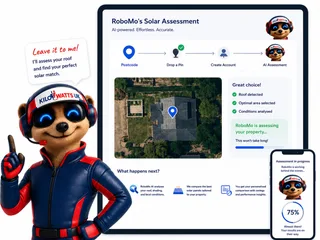
Simply enter your postcode, drop a pin on your roof, create your free account and let RoboMo™ analyse your property to find the best solar panels for your home.

You don't have to think
RoboMo™'s AI analyses your roof and does all the hard work.

Accurate & tailored
AI-powered assessment based on your roof, location, and conditions.

Best options, maximum savings
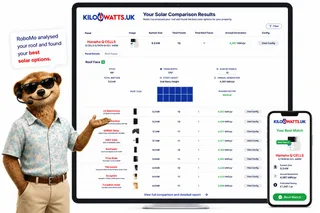
Compare top solar panels for the best performance and value.

Simple, fast & effortless
Provide a few details, sit back and watch your results unfold.
STEP 1
Choose Home, Business or Industrial
Enter your postcode to start your assessment.
STEP 2

Drop a pin on your roof
STEP 3

Create your free account
STEP 4

Sit back and watch RoboMo™ work
RoboMo™ analyses your roof and builds your personalised solar comparison.

Kilowatts UK is an authorised representative
Flower Turbines
Compact vertical-axis turbines built for real UK sites, not just open farmland.
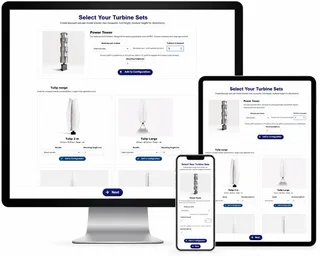
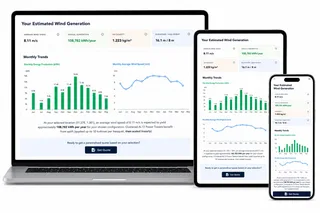
They start in light wind, sit in a small footprint, and are bird-safe by design. Cluster them as a bouquet and the group performs better together than the same turbines standing alone. Enter your postcode for a location-based generation estimate. Figures use area weather data and will differ if buildings, trees or hills sit in the way.
Starts in light UK wind
Built to generate in typical UK wind, not only open farmland.
Small rooftop or ground footprint
Compact towers for roofs, yards and tight sites.
Bird-safe slow rotation
Slow vertical-axis spin, bird-safe by design.
Bouquet clusters raise output
Grouped turbines outperform the same units standing alone.
Step 1
Enter your postcode
Start designing your wind energy system in seconds.
STEP 2

Choose a location
STEP 3

Place your cluster
Tap the map where you want the turbine cluster to go.
STEP 4

Instant generation forecasts
Compare different turbine layouts and see annual generation forecasts instantly.
STEP 5

No commitment required
Explore different configurations before deciding whether to request a quotation.
FAQ
Need Help? RoboMo's Got Answers
Does a ten-year home battery warranty always last ten years?
Not necessarily. Many home battery warranties have several limits, such as years, cycle count and total energy throughput. Cover usually ends when the first of those limits is reached, even if the calendar period has not finished.
What is the difference between cycles and throughput?
A cycle is usually one full charge and discharge of the battery’s usable capacity, although the exact definition depends on the manufacturer. Throughput is the total amount of energy moved through the battery, normally measured in kilowatt-hours or megawatt-hours. Throughput is often the clearer figure because it reflects real use, including partial charges and discharges.
Do partial charges and discharges count as full cycles?
Usually they count as fractions of a cycle rather than full cycles. For example, two half discharges may be treated as one full equivalent cycle, depending on the warranty wording. Always check the manufacturer’s definition, because some documents use cycle counts differently.
Will my battery stop working when the warranty ends?
No. The end of the warranty does not mean the battery immediately stops working. It means the manufacturer’s cover has ended, and the battery may continue operating with reduced usable capacity.
What does retained capacity mean in a battery warranty?
Retained capacity is the amount of usable capacity the manufacturer says the battery should still have at a stated point, subject to the warranty conditions. For example, a warranty may guarantee that the battery will retain a certain percentage of its original usable capacity. Check how that capacity is measured and what evidence is needed if you ever make a claim.
Can charging from the grid affect my battery warranty?
It can, depending on the manufacturer’s terms. Some warranties distinguish between solar charging, grid charging and high-throughput use such as regular tariff arbitrage. If you plan to charge overnight on a time-of-use tariff, ask for written confirmation that this use is covered.
How can I compare two battery warranties fairly?
Do not compare only the headline number of years. Look at the calendar period, cycle limit, throughput allowance, retained-capacity guarantee and any exclusions. A ten-year warranty with a generous throughput allowance may be stronger than a ten-year warranty that is likely to reach its usage limit much sooner.
What should I check before relying on a home battery warranty?
Check who is responsible for honouring the warranty, whether it is transferable if you sell the home, and what could void the cover. Pay particular attention to installation requirements, operating temperature ranges, firmware or monitoring requirements, and servicing rules. If something is not confirmed in writing, do not assume it is included.