


Where Does Your Solar Power Actually Go?
Published: 2026-08-14 22:28:05
Updated: 2026-08-23 10:08:27
This episode of Solar, Clearly, Mo and RoboMo explore where your solar power actually goes. Learn how your electricity is constantly choosing where to go.
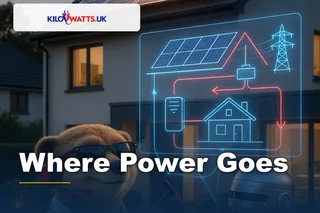
Where Does Your Solar Power Actually Go? | Kilowatts UK
In this episode of Solar, Clearly, Mo and RoboMo explore where your solar power actually goes. Learn how your electricity is constantly choosing where to go.
Solar power generation is often misunderstood. In this episode, we're shining a light on where your solar energy actually goes.
It's Not Just About Powering Your House
Your solar panels don't just power your house. Instead, they generate electricity that can go to various places depending on the system configuration.
In this episode of Solar, Clearly, we've shown you where your solar power actually goes. Whether it's powering your home, charging your car, or feeding back into the grid, every watt counts.
Take our energy survey to see how much solar power you could generate
Plan, Compare & Buy Renewable Energy Solutions
AI does the thinking.
You get the perfect solar match.
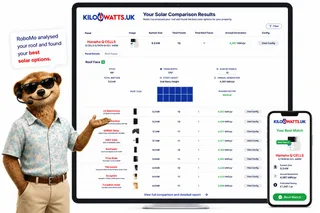
Use RoboMo™ to assess your property, compare available technologies and connect with trusted UK installers, suppliers and manufacturers.
Simply enter your postcode, drop a pin on your roof, create your free account and let RoboMo™ analyse your property to find the best solar panels for your home.
You don't have to think
RoboMo™'s AI analyses your roof and does all the hard work.

Accurate & tailored
AI-powered assessment based on your roof, location, and conditions.

Best options, maximum savings
Compare top solar panels for the best performance and value.

Simple, fast & effortless
Provide a few details, sit back and watch your results unfold.
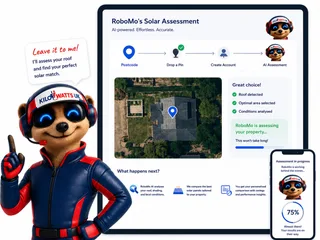
STEP 1
Choose Home, Business or Industrial
Enter your postcode to start your assessment.
STEP 2
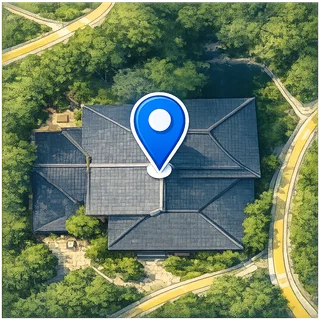
Drop a pin on your roof
STEP 3

Create your free account
STEP 4

Sit back and watch RoboMo™ work
RoboMo™ analyses your roof and builds your personalised solar comparison.
Kilowatts UK is an authorised representative
Flower Turbines
Compact vertical-axis turbines built for real UK sites, not just open farmland.
They start in light wind, sit in a small footprint, and are bird-safe by design. Cluster them as a bouquet and the group performs better together than the same turbines standing alone. Enter your postcode for a location-based generation estimate. Figures use area weather data and will differ if buildings, trees or hills sit in the way.
Starts in light UK wind
Built to generate in typical UK wind, not only open farmland.
Small rooftop or ground footprint
Compact towers for roofs, yards and tight sites.
Bird-safe slow rotation
Slow vertical-axis spin, bird-safe by design.
Bouquet clusters raise output
Grouped turbines outperform the same units standing alone.
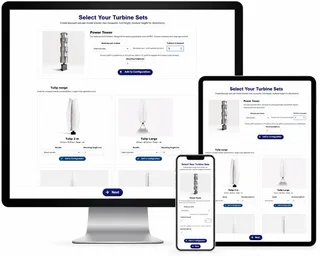
Step 1
Enter your postcode
Start designing your wind energy system in seconds.
STEP 2
Choose a location
STEP 3
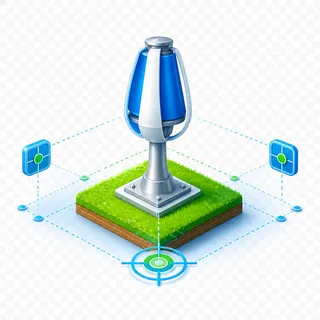
Place your cluster
Tap the map where you want the turbine cluster to go.
STEP 4

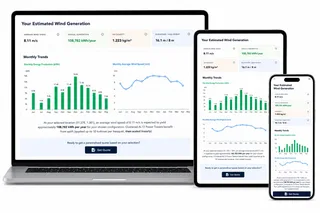
Instant generation forecasts
Compare different turbine layouts and see annual generation forecasts instantly.
STEP 5
No commitment required
Explore different configurations before deciding whether to request a quotation.
FAQ
Need Help? RoboMo's Got Answers
Where does my solar electricity go first?
In most home solar systems, electricity is used by your home first when appliances are running. If your panels are producing more than you are using, the surplus can go to a battery, an electric vehicle charger, or be exported to the grid depending on your setup.
What happens to solar power I do not use at home?
Surplus solar electricity is usually exported to the local electricity network. If you have a battery, some or all of that surplus may be stored for later use instead. Your installer can explain how your system will be configured.
Can I get paid for exporting solar electricity to the grid?
Many UK households can receive export payments through the Smart Export Guarantee or another export tariff offered by an energy supplier. You normally need an eligible meter and a suitable solar installation to measure exported electricity. Rates and terms vary by supplier, so it is worth checking current offers before you choose.
Will solar panels power my home at night?
Solar panels do not generate electricity at night. Your home will use electricity from the grid unless you have a battery with stored solar energy available. A battery can reduce grid use in the evening, but it will not create extra energy.
Can solar panels charge my electric car?
Yes, solar electricity can help charge an electric car if the car is plugged in while your panels are generating. Some EV chargers can be set to prioritise surplus solar power. How much solar charging you get depends on your driving habits, charger settings, system size, and daylight conditions.
Do I still need the grid if I have solar panels?
Most UK homes with solar panels remain connected to the grid. The grid supplies electricity when your panels are not generating enough, such as at night or during high demand. It also provides a route for exporting surplus electricity.
Will my solar panels work during a power cut?
Standard grid-connected solar systems usually shut down during a power cut for safety reasons. This helps protect engineers working on the electricity network. Backup power may be possible with specific battery and inverter equipment, but it must be designed for that purpose.
How can I use more of my own solar power?
You can increase self-use by running appliances during daylight hours, charging an EV when the sun is out, or adding a battery. Smart controls can also help shift suitable loads to times of higher solar generation. The best approach depends on your household routine and electricity use.