


Two Warranties On One Solar Panel: What Each Covers
Published: 2026-10-02 08:29:28
Updated: 2026-10-02 04:12:08
A solar panel has two warranties: one on the hardware, a longer one on output. Here is what each covers in the UK, and what it means when one ends.
The Two Warranties On One Solar Panel — And Why Only One Ends Early
If you have ever read a solar panel datasheet and felt mildly ambushed by the warranty section, there is a simple reason: there are two warranties on the same piece of glass, not one. The first covers the panel as an object — the glass, the frame, the junction box, the workmanship that holds it all together. The second covers what the panel does — its electrical output, guaranteed not to fall below a stated minimum by a stated year. They are different promises, with different lengths, and they expire at different times. That is why a panel on a British roof can be past its product warranty and still firmly inside its performance warranty, which sounds like a contradiction until you see the two timelines drawn side by side. This article explains what each warranty really covers, what happens when the shorter one runs out, how a performance claim actually works in practice, and the handful of documents worth keeping so that the longer promise is still usable decades from now. No hype, no scare stories — just the engineering and the paperwork, explained the way we would explain it standing on your driveway.
"Two. One on the hardware, a longer one on output."
Why one panel carries two separate promises
A solar panel is unusual among household products in that it is both a physical object and a generator. Most things you buy are judged on whether they still work. A panel is judged on whether it still works *and* on how much it still produces — and those two questions have genuinely different failure modes.
Hardware faults tend to be discrete events: a delaminating laminate, a cracked frame, a failed junction box, water ingress where there should be none. They either happen or they do not, and they usually happen early if they are going to happen at all. Output, by contrast, declines gradually and predictably. Silicon cells lose a small fraction of their performance each year for perfectly ordinary physical reasons, and a well-made panel does this slowly and consistently across decades.
Because those are two different risks, manufacturers cover them with two different guarantees. The product warranty handles the event. The performance warranty handles the drift. Putting both under one number would mean either under-promising on output or over-promising on hardware, so the industry splits them — and the shorter of the two is almost always the product cover.
What the product warranty actually covers
The product warranty — sometimes called the materials and workmanship warranty — is the one that ends first. As RoboMo puts it in the episode, it is the cover on the panel as a thing: glass, frame, junction box, the bonded layers, the internal connections, the manufacturing quality.
In practice, it is the warranty you would lean on if a panel physically failed: moisture getting into the laminate, a junction box or bypass diode failing, backsheet or frame defects, or a manufacturing fault that stops the panel functioning as a panel. It is not a weather-damage policy and it is not an all-risks insurance — impact damage, storm damage and anything caused by poor installation or later alterations usually sit elsewhere, either with your installer's workmanship guarantee or your home insurance. That distinction matters, because people often assume one document covers everything on the roof. It rarely does.
The exact length of a product warranty varies by manufacturer and by panel model, and it has generally been getting longer as module construction has improved. The only reliable source is the datasheet and warranty terms for the specific product on your roof — not a sales brochure, and not a figure someone quoted you once.
How the performance warranty works — the declining line and the floor
The performance warranty is the longer bar in the episode, and it is a different shape of promise altogether. Instead of saying "this object will not break", it says "this panel will still produce at least a stated percentage of its original rated output in a given year".
Picture it the way the animation draws it: a gently declining curve, starting at full rated output and sloping downward across the decades, with a horizontal floor line beneath it. The manufacturer's commitment is that the curve stays above the floor. Typically there is a slightly larger allowance for first-year settling, then a steady maximum annual decline rate thereafter, with an end-of-term minimum output figure. The precise percentages differ between manufacturers and between product tiers, so treat the numbers on your own datasheet as the only ones that count. The important conceptual point is that gradual decline is not a fault. A panel producing less than it did when new is behaving exactly as designed. The warranty exists to catch panels that decline *faster* than the stated curve, which is a quality problem, rather than panels that age normally, which is physics.
Out of product warranty, still covered: what that means day to day
Here is the situation the episode is built around, and it is a real one on thousands of British roofs. The shorter bar has finished. The longer bar is still running. The panel is simultaneously "out of warranty" in one sense and "covered" in another.
What that means practically is this. If the panel physically fails after the product warranty has expired — a dead junction box, say — you are generally looking at a replacement at your own cost, or at whatever remedy your installer or supplier offers. But if the panel is still intact and functioning while producing measurably less than the guaranteed minimum for its age, the performance warranty may still apply.
It is also why the phrase "is it still under warranty?" is the wrong question to ask about a solar array. The better question is "which warranty, and for what?" One expired promise does not cancel the other, and a panel quietly outperforming its floor line for decades is the normal, boring, successful outcome — which is rather the point of a well-chosen module.
What British weather does to the output curve
There is a useful piece of engineering reality buried in all of this: solar panels generate more efficiently in cold weather than in hot weather. Panel efficiency falls as cell temperature rises, which is why a crisp, bright February afternoon can be a surprisingly flattering day for a UK array, while a still, sweltering July noon is working against its own efficiency curve.
That has two consequences for warranty thinking. First, the UK's temperate climate is comparatively gentle on modules — less brutal thermal cycling than hot, arid regions, which is one reason long performance terms tend to hold up well here. Second, it means a single day's reading tells you almost nothing about whether your panels are meeting their guaranteed minimum. Output on any given day depends on irradiance, temperature, soiling, shading and time of year. UK homes still produce useful power on overcast days, but comparing a damp November morning against a datasheet's lab-condition rating is not a measurement, it is a mood.
A genuine performance claim is assessed against standard test conditions, usually by testing a sample panel or by a properly instrumented comparison — not by squinting at your app in the rain.
A practical checklist for making both warranties usable
A warranty you cannot evidence is a warranty you cannot use. Most difficulties with long-term solar cover are administrative rather than technical, and they are avoidable with about twenty minutes of filing. Worth doing:
- **Record the exact panel make and model**, plus the inverter make and model, and keep the datasheets as PDFs rather than links that may rot. - **Download the full warranty terms** for your specific module, not a summary. You want the product term, the performance term, the annual degradation allowance and the end-of-term minimum output figure. - **Keep the installation paperwork together**: invoice, commissioning documents, handover pack, certification and the system design, including panel serial numbers if your installer recorded them. - **Note who the warranty is with.** Product and performance cover are usually manufacturer obligations; your installation workmanship guarantee is a separate document from a separate company. Know which door to knock on. - **Check whether cover is transferable** if you sell the house, and what the new owner would need to produce. - **Keep a performance baseline.** Save your first full year of monthly generation data. A long-run trend is the only honest way to spot abnormal decline. - **Ask about the claims process before you need it** — who inspects, who pays for testing, and whether a remedy is repair, replacement or a pro-rata settlement. - **Keep the roof sensible.** Avoid later alterations, aerials or shading additions that could complicate a claim, and have any roof work done by someone who understands arrays. If you are comparing quotes, these are more revealing than headline wattage. Two panels with similar ratings can have very different warranty terms and very different degradation allowances.
Follow-up questions people ask
**If my panel is out of product warranty, is it "at risk"?** Not inherently. The expiry of a term is a contractual date, not a prediction about that specific panel. A module that has performed normally for years has already survived the period in which manufacturing faults usually show up.
**Does the performance warranty cover a panel that has stopped completely?** Generally, no — a total failure is a hardware matter, which is the product warranty's territory. The performance guarantee is about the level of output from a working panel.
**Who actually pays for labour and access?** This is one of the most important things to read in the terms. Manufacturer cover is frequently about the module itself; removal, access equipment, re-installation and testing may be treated separately. Clarify it at quotation stage rather than year fifteen. **Does the inverter share these timelines?** No. Inverters, optimisers and batteries each carry their own warranties on their own terms, and they are usually shorter than a panel's performance warranty. Treat each component's paperwork on its own merits. **Does normal decline mean my savings collapse?** No — the decline rates in modern performance warranties are deliberately gradual, which is why they can be guaranteed over such long horizons. The system you install is expected to be a long-lived asset that quietly fades, not a device that stops. **Can I claim just because output looks low?** Only against the warranty's own measurement basis. Low output is far more often explained by shading, soiling, a faulty inverter, a tripped string or seasonal weather than by panel degradation — so diagnosis comes before claims.
Video transcript
Mo: A panel has one warranty... doesn't it? RoboMo: Two. One on the hardware, a longer one on output.
Mo: So what actually ends first? RoboMo: The product cover — glass, frame, junction box. The output promise runs on.
Mo: So it can be out of warranty and still covered? RoboMo: Correct. Same panel. Two promises. One is still running. Mo: A panel has one warranty... doesn't it? RoboMo: Two. One on the hardware, a longer one on output. / Mo: So what actually ends first? RoboMo: The product cover — glass, frame, junction box. The output promise runs on. / Mo: So it can be out of warranty and still covered? RoboMo: Correct. Same panel. Two promises. One is still running.
Wrapping up
Two bars, one panel. The upper one covers the object and finishes earlier; the lower one covers the output and keeps running, with a declining curve that is meant to stay above a guaranteed floor for decades. Understanding that split changes how you read a quote, because it turns "how long is the warranty?" into two much better questions: how long is the hardware covered, and what output is guaranteed in which year? It also changes how you look after the system, because the longer promise is only worth as much as the paperwork and the performance history you can put behind it. Knowledge beats marketing here, as usual — the warranty terms are the engineering talking, and they are freely available on every reputable datasheet. Read them before you sign, file them once, and the panel on your roof can comfortably outlive the first of its two promises while the second carries on doing its job.
Next step
If you would like someone to go through the actual warranty terms of the panels being proposed for your roof — product term, performance curve and who covers what — our team is happy to walk through it with no pressure either way. You can read more about how we approach residential solar, or book a survey when the timing suits you.
Plan, Compare & Buy Renewable Energy Solutions
AI does the thinking.
You get the perfect solar match.
Use RoboMo™ to assess your property, compare available technologies and connect with trusted UK installers, suppliers and manufacturers.
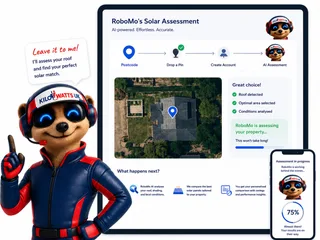
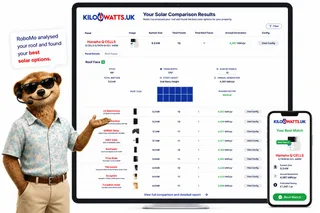
Simply enter your postcode, drop a pin on your roof, create your free account and let RoboMo™ analyse your property to find the best solar panels for your home.

You don't have to think
RoboMo™'s AI analyses your roof and does all the hard work.

Accurate & tailored
AI-powered assessment based on your roof, location, and conditions.

Best options, maximum savings
Compare top solar panels for the best performance and value.

Simple, fast & effortless
Provide a few details, sit back and watch your results unfold.
STEP 1
Choose Home, Business or Industrial
Enter your postcode to start your assessment.
STEP 2
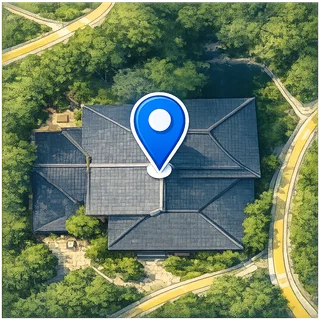
Drop a pin on your roof
STEP 3

Create your free account
STEP 4

Sit back and watch RoboMo™ work
RoboMo™ analyses your roof and builds your personalised solar comparison.

Step 1
Enter your postcode
Start designing your wind energy system in seconds.
Are you an installer, distributor or renewable energy business?
Kilowatts UK is expanding the Flower Turbines partner network across the UK.
Become A Flower Turbines PartnerKilowatts UK is an authorised representative
Flower Turbines
Compact vertical-axis turbines built for real UK sites, not just open farmland.
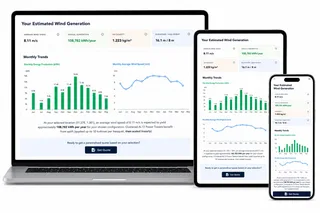
They start in light wind, sit in a small footprint, and are bird-safe by design. Cluster them as a bouquet and the group performs better together than the same turbines standing alone. Enter your postcode for a location-based generation estimate. Figures use area weather data and will differ if buildings, trees or hills sit in the way.
Starts in light UK wind
Built to generate in typical UK wind, not only open farmland.
Small rooftop or ground footprint
Compact towers for roofs, yards and tight sites.
Bird-safe slow rotation
Slow vertical-axis spin, bird-safe by design.
Bouquet clusters raise output
Grouped turbines outperform the same units standing alone.
STEP 2

Choose a location
STEP 3
Place your cluster
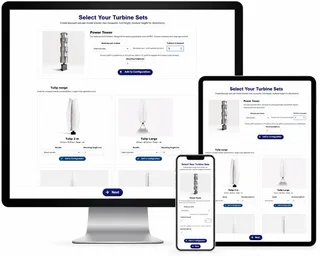
Tap the map where you want the turbine cluster to go.
STEP 4

Instant generation forecasts
Compare different turbine layouts and see annual generation forecasts instantly.
STEP 5

No commitment required
Explore different configurations before deciding whether to request a quotation.
FAQ
Need Help? RoboMo's Got Answers
What are the two warranties on one solar panel?
Most panels carry two separate promises: a product warranty and a performance warranty. The product warranty, sometimes called the materials and workmanship warranty, covers the panel as an object, including the glass, frame, junction box, bonded layers and manufacturing quality, and it is usually the shorter term. It is not a weather or all-risks policy; impact, storm damage and faults caused by poor installation usually sit with home insurance or the installer's workmanship guarantee. The performance warranty is the longer promise that a working panel will not fall below a stated output in a stated year. Lengths and percentages differ by manufacturer and model, so use the datasheet and full terms for your exact product.
If my panel is out of product warranty, is it at risk?
Not inherently. The end of the product warranty is a contractual date, not a prediction that your particular panel will fail. Hardware faults, where they occur, usually show up earlier rather than decades later. A module that has already performed normally for years has passed the period in which manufacturing defects most often appear. The performance warranty can still be running after the product cover has ended.
Does the performance warranty cover a panel that has stopped completely?
Generally, no. A total failure is a hardware matter, which is the product warranty's territory. The performance guarantee is about the output of a panel that is still working, not one that has stopped. If the product term has already expired, replacement is usually at your own cost unless your installer or supplier offers another remedy.
Who pays for labour, access and reinstallation under a panel warranty?
This is one of the most important things to read in the terms before you buy. Manufacturer cover is often limited to the module itself, while removal, scaffolding or other access, testing and reinstallation may be excluded or treated separately. Who pays can differ between the product warranty, the performance warranty and the installer's workmanship guarantee. Ask at quotation stage who inspects, who pays for testing, and whether the remedy is repair, replacement or a pro-rata settlement.
Do inverters, optimisers and batteries share the panel warranty timelines?
No. Inverters, optimisers and batteries each carry their own warranties, on their own terms, from their own manufacturers. Those terms are usually shorter than a panel's performance warranty. Keep each component's paperwork separately, and do not assume the panel dates apply to the rest of the system.
Does normal year-on-year decline mean my savings will collapse?
No. A slow loss of output is expected ageing, not a fault, and modern performance warranties are built around a gradual maximum annual decline. That is why a long performance term can be offered at all. The system is meant to be a long-lived asset that fades quietly, not a device that suddenly stops. The percentages that apply to you are those in your module's warranty terms, not a generic figure.
Can I claim just because my app shows low output?
Not on an app reading alone. Output on any given day depends on irradiance, temperature, soiling, shading and the time of year, so a damp November morning compared with a lab rating is not a valid test. Low output is more often caused by shading, dirt, an inverter fault, a tripped string or seasonal weather than by panels ageing too fast. A performance claim is judged against the warranty's own measurement basis, usually standard test conditions, and only after proper diagnosis.
What paperwork should I keep so both warranties stay usable?
Most long-term difficulties are administrative rather than technical. Keep the panel and inverter make and model, the datasheets, the full warranty terms rather than a summary, the invoice, commissioning and handover documents, any certification supplied, the system design, and serial numbers if your installer recorded them. Note which company holds the product and performance cover and which holds the installation workmanship guarantee, and check whether cover transfers if you sell. Saving the first full year of monthly generation gives you a baseline if output is ever questioned.