


What affects the price of a battery installation?
Published: 2026-07-20 19:01:12
Updated: 2026-07-26 18:36:05
For many homes, the most common installed range is around £5,000 to £10,000.
How much do batteries cost in the UK?
In the UK, a domestic home battery typically costs around £3,000 to £13,000 installed, depending on storage capacity, inverter type, whether it is fitted with new solar panels or retrofitted to an existing system, and whether backup power is included. For many homes, the most common installed range is around £5,000 to £10,000.
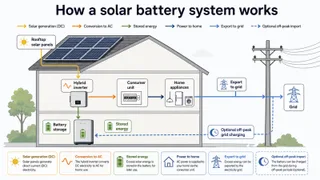
This guide covers home battery storage, not AA batteries, car starter batteries, or large commercial battery systems. A home battery stores electricity for later use. It can store surplus solar electricity, charge from the grid when electricity is cheaper, or do both if the system and tariff allow it.
In simple terms, the price in an advert is rarely the full project cost. A proper quote should include the battery, inverter or battery inverter, electrical work, monitoring hardware, commissioning, VAT treatment, and any Distribution Network Operator paperwork needed for the installation. For trust and safety, always compare quotes from suitably qualified installers. For solar-and-battery work, look for clear evidence of competence, relevant electrical qualifications, insurance, manufacturer training, and, where applicable, MCS certification for the solar PV element. Battery storage is part of your home electrical system, so the quality of design and installation matters as much as the equipment price.
Typical home battery cost ranges
Small home batteries of around 3 kWh to 5 kWh usually cost about £3,000 to £6,500 installed. Medium systems of around 6 kWh to 10 kWh are commonly around £5,000 to £9,500 installed. Larger systems of around 10 kWh to 15 kWh often cost around £8,000 to £13,000 installed, with premium large systems exceeding that.
As a rough installed benchmark, many UK home battery systems work out at around £700 to £1,200 per usable kWh. Smaller systems often cost more per kWh because fixed costs such as labour, commissioning, electrical materials, and inverter work are spread across fewer units of storage.
A battery unit on its own may be advertised at a much lower price, but the installed system can also need:
- A hybrid inverter or AC-coupled battery inverter.
- DC or AC isolators and protective devices.
- Cables, containment, metering, and monitoring equipment.
- Current transformer clamps for energy measurement.
- Consumer unit changes or additional circuits.
- Setup, commissioning, app configuration, and customer handover.
Battery-only equipment costs are often around £2,000 to £8,000, while inverter hardware, electrical materials, and labour can add several thousand pounds. This is why two quotes for “the same size battery” can look very different once the full installation scope is included. DNO notification or application where required.
What affects the price of a battery installation?
The biggest cost driver is capacity, measured in kilowatt-hours, or kWh. A larger battery stores more electricity, but it also costs more and may need a larger inverter or extra battery modules. The right size is not simply the biggest one you can afford. It should match your electricity use, solar generation, tariff, and available installation space.
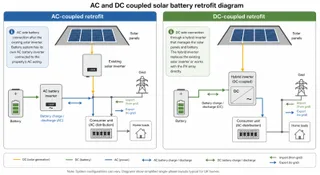
Battery capacity: Larger systems store more electricity and usually cost more overall. Usable capacity: This is the amount you can actually use, which may be lower than the headline capacity. Inverter type: Hybrid inverters, AC-coupled battery inverters, and retrofit designs have different equipment and labour costs. If you are comparing designs, it can help to understand AC vs DC coupled battery storage. New install or retrofit: Adding a battery during a new solar installation is often cheaper than fitting one later. Backup power: Power cut backup needs additional equipment and careful circuit design. Electrical condition: Older consumer units, earthing issues, or awkward cable routes can increase the price.
A low quote is not automatically a good quote. It may exclude VAT, consumer unit work, DNO paperwork, app setup, monitoring hardware, or the limits of backup power. Ask what is included, what is excluded, and what could become an extra cost after the installer has inspected the property. A clear quote should also explain whether the price is for nominal capacity or usable capacity. Nominal capacity is the battery’s headline size. Usable capacity is the amount of stored electricity the system allows you to use in normal operation. For buyers, usable capacity is usually the more helpful figure. Monitoring and controls — Smart meters, current transformer clamps, and app configuration need to be fitted correctly. Location and access — Garages and utility rooms are usually easier than long cable runs through finished rooms. DNO requirements — The installer may need to notify or apply to the local Distribution Network Operator.
New solar and battery versus retrofit battery cost
Adding a battery to a new solar PV installation often adds around £2,500 to £7,000, depending on the battery size and inverter choice. It can be more cost-effective than adding a battery later because the electrician is already on site and a hybrid inverter can be specified from the start.
Retrofitting a battery to an existing solar system often costs around £4,000 to £10,000. Existing solar inverters may not be compatible with the battery you want, so an AC-coupled battery inverter may be needed. Older systems may also need changes to monitoring, generation meters, consumer units, or cable routes. For more detail, see our guide to adding a battery to your existing solar system.
A retrofit can still be worthwhile, especially if you export a lot of solar electricity or can use a smart time-of-use tariff. However, the installer should check the existing inverter, export arrangements, meter location, consumer unit, earthing, cable routes, and Distribution Network Operator position before giving a firm recommendation. If you are replacing an old solar inverter at the same time, a hybrid inverter may be worth considering. If the solar inverter is still relatively new and working well, an AC-coupled battery may be simpler. There is no single best answer for every home; the right design depends on the existing system and how you plan to use the battery.
Battery capacity, power output, and usable storage
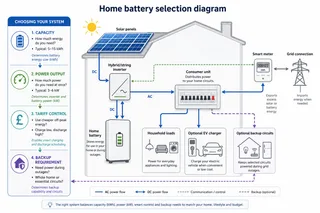
Battery capacity is measured in kWh, while power output is measured in kW. Capacity tells you how much electricity the battery can store. Power output tells you how quickly it can deliver that electricity to your home. Both matter.
A simple way to think about it is this:
- kWh is the size of the tank.
- kW is the speed of the tap.
- How much electricity the household uses in the evening and overnight.
- How much surplus solar electricity is available.
- Whether the battery will also charge from the grid.
- Whether the home has an EV, heat pump, immersion heater, or other large load.
A 10 kWh battery may sound large, but it may not provide 10 kWh of usable electricity if the product has a lower usable depth of discharge. It may also have a discharge limit that stops it from running several high-load appliances at once. Many home batteries discharge at around 2.5 kW to 5 kW, although some larger systems can provide more. This is why a battery can be full but still not cover every appliance. Kettles, ovens, electric showers, heat pumps, tumble dryers, and EV chargers can draw high power. If the home load is higher than the battery inverter output, the grid may still supply the difference. A sensible design starts with: Homes using around 6 kWh per day are unlikely to need the same battery as homes using 20 kWh per day. If you are unsure where to start, our guide to what size battery you need for your home explains the sizing process in more detail. Whether backup power is required during a power cut.
How much can a battery save?
Battery savings depend on the gap between the price of electricity you avoid importing and the export payment or cheap-rate electricity you give up. Batteries do not generate electricity. They move electricity from one time to another, and some energy is lost during charging and discharging.
If your import rate is much higher than your export rate, storing solar for later use can make sense. If your export tariff is generous, exporting solar may sometimes be nearly as valuable as storing it. If you are on a smart tariff, charging the battery overnight and using it during peak-rate periods may improve savings, provided the battery and controls support grid charging.
Round-trip efficiency is often around 85% to 95%, so you do not get back every unit you put in. For example, if a battery stores 10 kWh from the grid or solar panels, it may return around 8.5 kWh to 9.5 kWh for use in the home, depending on the system. A 5 kWh battery cycled once per day could theoretically discharge up to about 1,825 kWh per year before losses. In practice, many UK homes achieve less than one full cycle per day across the year, especially in winter if they rely on solar charging only. Battery payback in the UK is often around 7 to 15 years, but some homes fall outside that range. Payback tends to be faster with high electricity use, regular evening demand, good solar surplus, and smart tariff optimisation. It is usually slower with low usage, limited solar surplus, high export rates, or expensive retrofit electrical work. For a deeper look at the numbers, read Do Home Batteries Save Money in the UK?. Be cautious with very short payback claims. A realistic savings estimate should show: The import tariff used in the calculation. The export tariff or Smart Export Guarantee rate assumed. Whether the battery charges from solar, the grid, or both. Battery losses and usable capacity. Expected annual cycles. Any standing charges or tariff conditions. Whether future battery or inverter replacement has been considered.
VAT, warranties, lifespan, and running costs
Domestic battery storage can qualify for 0% VAT when installed as an energy-saving material. Since 1 February 2024, standalone battery installations have also been included in the UK VAT relief rules, with the relief scheduled to run until 31 March 2027. Quotes should clearly state whether VAT is included and what VAT rate has been applied.
Most UK home batteries are expected to last around 10 to 15 years. Warranties are commonly around 10 years, but the details matter. Some warranties are based on time, some on cycle count, and some on total energy throughput. Many warranties also specify a minimum remaining capacity at the end of the warranty period.
Labour cover
Product warranty and labour warranty are not always the same thing.Transferability
If you sell the home, check whether the warranty transfers to the new owner.Warranty length
Check both the battery module warranty and the inverter warranty.Retained capacity
Confirm what percentage of storage capacity is guaranteed after years of use.Installation conditions
Outdoor use, poor ventilation, unsuitable temperatures, or non-approved installers may affect cover.Cycle or throughput limit
Heavy grid charging can use warranty allowance faster.
Routine running costs are usually low, but future inverter replacement should be considered. Some inverters have shorter warranties than battery modules. Internet monitoring can also be important because tariff controls, firmware updates, and fault alerts may rely on it. Ask the installer to provide the product datasheets and warranty documents before you commit. A strong warranty is only useful if you understand what it covers, who is responsible for making a claim, and whether labour is included. Monitoring requirements — Some warranties may depend on the system being connected to the manufacturer’s monitoring platform.
When a battery is worth considering
A home battery is most likely to suit a property with solar panels, regular evening electricity demand, and a tariff structure that rewards storing or shifting electricity. It can also help homes planning for future electrification, such as a heat pump, provided the battery is sized realistically.
You export a lot of solar electricity during the day. You use a lot of electricity in the evening or overnight. You have access to a suitable time-of-use tariff. You want to reduce peak-rate grid imports. You have safe, practical space for the battery and inverter. You want backup power and accept that it costs extra.
EV households should be careful with expectations. A typical EV battery is much larger than a typical home battery, so a domestic battery will not usually provide meaningful full-car charging. It may still help shift household electricity use or support small amounts of charging, but it should not be sized around the assumption that it will regularly fill an EV. A battery can also be useful if you are trying to reduce peak-time imports rather than achieve the fastest possible payback. Some buyers value energy flexibility, solar self-consumption, and resilience as well as direct financial return. Even then, the numbers should be checked carefully before purchase. You are planning future loads such as a heat pump or EV. You want better visibility of your home energy use through monitoring software.
When a battery may not be suitable
A battery is not right for every home. If electricity use is very low, if most power is already used during the day, or if there is little surplus solar to store, the financial case can be weak. A battery may also be unsuitable if there is no safe location for installation.
- Very low household electricity use.
- Little or no solar surplus.
- Short expected time in the property.
- No suitable dry and accessible installation space.
- Leasehold or rented property without permission.
- Major consumer unit remedial work that makes the project uneconomic.
Lofts are often less suitable because of access, heat, weight, and fire safety considerations. Garages, utility rooms, plant rooms, and suitable external locations are more common, but the manufacturer’s installation guidance must be followed. Batteries should not block escape routes or be exposed to impact damage. If space is tight, do not assume every battery can be installed outside. Some products are outdoor-rated, while others are not. Even outdoor-rated batteries may need protection from direct weather, flooding risk, extreme temperatures, or vehicle impact. Expectation of very fast payback without clear assumptions. A high export rate that makes exporting electricity nearly as valuable as storing it. A tariff that does not support the way you expect to charge and discharge the battery.
Backup power costs extra
Many people assume a battery will automatically keep the house running during a power cut. Standard grid-tied battery systems usually shut down unless backup functionality has been designed and installed. Backup power is a separate design decision, not a default feature.
Partial backup is often more practical than whole-home backup. Selected circuits such as lighting, broadband, refrigeration, or a few sockets may be backed up, while high-load appliances are left off the backup board. Whole-home backup can be more complex and may cost significantly more because it needs additional switching, protection, and electrical design.
If backup matters to you, ask the installer exactly what will work during an outage, how long it might run, which circuits are included, and whether the battery can recharge from solar while isolated from the grid. These details vary by system. You can also read more about whether a home battery can work during a power cut. A good backup design should make the limits clear. For example, a battery may be able to keep lights, Wi-Fi, and a fridge running, but it may not run an electric shower, oven, EV charger, or heat pump for long. The backup output rating and the state of charge at the time of the power cut are just as important as the battery size.
How to compare battery quotes properly
A good battery quote should make the technical assumptions visible. It should state the usable capacity, continuous output, inverter type, installation location, warranty terms, VAT treatment, and whether DNO notification or application is included.
Usable capacity: This is more useful than nominal capacity when comparing storage. Output rating: This determines how much load the battery can support at once. Inverter design: Hybrid and AC-coupled systems suit different installation scenarios. Backup capability: Confirm whether backup is included or simply possible. Grid charging: Check this if tariff shifting is part of the financial case. Consumer unit work: Ask whether any required electrical upgrades are included.
Red flags include payback claims under five years without clear assumptions, no mention of usable capacity, no export tariff assumption, no warranty throughput figure, and no explanation of backup limitations. Also be wary of quotes that show a battery price but not the inverter, electrical materials, or commissioning work. If you are reviewing solar and storage together, it is worth using a tool to compare home solar panel options on a like-for-like basis. When comparing quotes, ask each installer to price the same outcome. For example, “a battery with around 10 kWh usable capacity, grid charging enabled, no backup” is easier to compare than simply asking for “a battery”. If backup is required, specify whether you want partial backup or whole-home backup. DNO paperwork — Confirm who handles notification or application. Savings assumptions — Check import tariff, export tariff, battery losses, and usage profile. Warranty terms — Compare time limits, throughput limits, retained capacity, and labour cover. Monitoring — Confirm whether the monitoring app, metering hardware, and setup are included. VAT — Check whether the quoted price includes VAT and whether 0% VAT has been applied correctly.
How to choose an installer
Choose an installer who treats the battery as part of the whole electrical system, not just as a box on the wall. They should ask about your electricity use, solar generation, tariffs, consumer unit, meter position, backup expectations, and future plans such as heat pumps or EVs.
The site survey matters. The installer should check cable routes, earthing, available space, mounting surfaces, ventilation, network limits, and whether the battery location meets manufacturer guidance. They should also explain whether the system falls under G98 or G99 processes and how any Distribution Network Operator requirements will be handled.
Ask for a quote that separates equipment, labour, electrical upgrades, monitoring, backup options, and VAT. If two quotes are very different, the cheaper one may simply be excluding work that the other installer has allowed for. If you want a property-specific recommendation, you can book a free home energy survey. Before choosing an installer, check for practical trust signals: Clear company details, address, and contact information. Evidence of electrical competence and relevant registrations. Public reviews or testimonials from recent customers. Manufacturer training or approval for the battery brand being installed. Insurance-backed workmanship or clear labour warranty terms. Written handover documents, datasheets, certificates, and warranty information. For solar PV installations, MCS certification is important if you want the solar element to meet recognised UK standards and support export tariff applications. Battery-only work may not always fall under the same certification route, so ask the installer exactly which standards, certificates, and handover documents will apply to your project. A clear complaints process and aftercare route. No pressure-selling or unrealistic savings claims.
Bottom line
For most UK households asking how much batteries cost, a realistic installed budget is usually around £3,000 to £13,000, with many typical domestic projects landing around £5,000 to £10,000. The right price depends on usable capacity, inverter design, retrofit complexity, backup requirements, and the condition of the existing electrical installation.
A battery is most worthwhile when it is sized around real electricity use and paired with a suitable solar or tariff strategy. Before committing, compare usable capacity rather than headline capacity, check the inverter output, understand the warranty, and make sure the savings assumptions reflect your actual import tariff, export tariff, and usage pattern.
The safest buying approach is to ask for a site-specific design, a clear itemised quote, and realistic savings assumptions. A well-designed battery can reduce peak-rate imports and improve solar self-consumption, but it should be bought as a long-term home energy upgrade rather than a quick-return product.
Plan, Compare & Buy Renewable Energy Solutions
AI does the thinking.
You get the perfect solar match.
Use RoboMo™ to assess your property, compare available technologies and connect with trusted UK installers, suppliers and manufacturers.
Simply enter your postcode, drop a pin on your roof, create your free account and let RoboMo™ analyse your property to find the best solar panels for your home.

You don't have to think
RoboMo™'s AI analyses your roof and does all the hard work.

Accurate & tailored
AI-powered assessment based on your roof, location, and conditions.

Best options, maximum savings
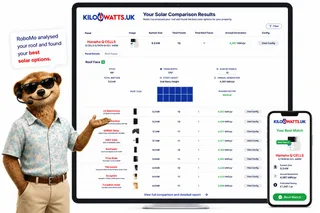
Compare top solar panels for the best performance and value.

Simple, fast & effortless
Provide a few details, sit back and watch your results unfold.
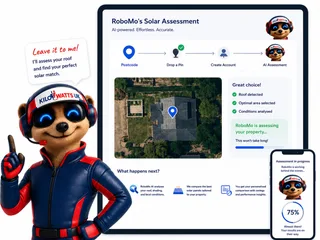
STEP 1
Choose Home, Business or Industrial
Enter your postcode to start your assessment.
STEP 2

Drop a pin on your roof
STEP 3

Create your free account
STEP 4

Sit back and watch RoboMo™ work
RoboMo™ analyses your roof and builds your personalised solar comparison.

Flower Turbines
Design your wind energy system.
Instantly forecast generation.
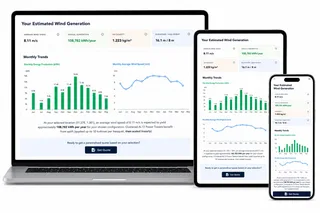
Choose a location, configure your Flower Turbines and instantly see estimated annual generation using location-specific wind data. No account required.

Real location data
Generation forecasts based on the location you select.

Build your own layout
Configure Flower Turbines to suit your available space.

Instant generation forecasts
See estimated annual generation and energy production instantly.

No commitment required
Explore different configurations before deciding whether to request a quotation.

STEP 1
Enter your postcode
Start designing your wind energy system in seconds.
STEP 2
Choose a location
STEP 3
Build your layout
STEP 4
Instant generation forecasts
Compare different turbine layouts and see annual generation forecasts instantly.
STEP 5
No commitment required
Explore different configurations before deciding whether to request a quotation.
Are you an installer, distributor or renewable energy business?
Kilowatts UK is actively expanding the Flower Turbines partner network across the United Kingdom. Contact us to discuss installation, reseller and project partnership opportunities.
Become A Flower Turbines PartnerRelated articles
FAQ
Need Help? RoboMo's Got Answers
How much does a home battery cost in the UK?
A domestic home battery in the UK typically costs around £3,000 to £13,000 installed, with many standard projects falling between £5,000 and £10,000. The final price depends on usable storage capacity, inverter type, whether the battery is installed with new solar panels or retrofitted to an existing system, the condition of your electrics, and whether backup power is included.
How much does a battery cost per kWh?
Many installed UK home battery systems work out at roughly £700 to £1,200 per usable kWh. Smaller batteries often cost more per kWh because fixed costs such as labour, commissioning, electrical materials, monitoring setup, and inverter work are spread across less storage capacity.
What is included in a home battery installation quote?
A proper battery quote should include the battery unit, inverter or battery inverter, electrical protection devices, cabling, metering, monitoring hardware, commissioning, app setup, customer handover, VAT treatment, and any required Distribution Network Operator paperwork. It should also state whether consumer unit upgrades, backup circuits, or additional electrical remedial work are included or priced separately.
Is it cheaper to install a battery with new solar panels?
Yes, adding a battery during a new solar panel installation is often cheaper than retrofitting one later. This is because the installer is already on site, the system can be designed around a suitable hybrid inverter from the start, and some electrical work can be shared across the solar and battery installation.
How much does it cost to add a battery to an existing solar system?
Retrofitting a battery to an existing solar PV system often costs around £4,000 to £10,000, depending on the battery size, inverter compatibility, cable routes, monitoring setup, and the condition of the existing electrical installation. If the current solar inverter is not compatible with the chosen battery, an AC-coupled battery inverter may be needed.
What size home battery do I need?
The right battery size depends on your electricity use, solar generation, evening and overnight demand, tariff, and whether you want to charge from the grid. A home using around 6 kWh per day is unlikely to need the same battery as a home using 20 kWh per day. Usable capacity is more important than headline capacity when comparing systems.
What is the difference between kW and kWh for batteries?
kWh measures how much electricity a battery can store, while kW measures how quickly it can deliver power. For example, a 10 kWh battery may store a useful amount of energy, but if its output is limited to 3 kW it may not run several high-load appliances at the same time without drawing extra power from the grid.
Can a home battery save money?
A home battery can save money by storing surplus solar electricity for later use or by charging from the grid when electricity is cheaper and discharging when rates are higher. Savings depend on your import tariff, export tariff, battery losses, usable capacity, annual cycles, and how well your household demand matches the battery’s operation.
What is the typical payback period for a home battery?
Battery payback in the UK is often around 7 to 15 years, although this varies widely. Payback is usually faster for homes with high electricity use, regular evening demand, good solar surplus, and suitable smart tariffs. It is usually slower where electricity use is low, export rates are high, or retrofit electrical work is expensive.
Do home batteries qualify for 0% VAT?
Domestic battery storage can qualify for 0% VAT when installed as an energy-saving material. Since 1 February 2024, standalone battery installations have also been included in the UK VAT relief rules, with the relief scheduled to run until 31 March 2027. Always check whether your quote includes VAT and what VAT rate has been applied.
How long do home batteries last?
Most UK home batteries are expected to last around 10 to 15 years. Warranties are commonly around 10 years, but the details vary by manufacturer and may include limits based on cycle count, energy throughput, installation conditions, and retained capacity at the end of the warranty period.
Will a home battery work during a power cut?
A standard grid-tied battery will not necessarily work during a power cut. Backup power needs to be specifically designed and installed, often with extra switching equipment, protection devices, and dedicated backup circuits. If backup is important, ask exactly which appliances or circuits will work, how long they may run, and whether the battery can recharge from solar during an outage.
Is whole-home backup worth it?
Whole-home backup can be useful but is usually more complex and expensive than partial backup. Many households choose to back up selected circuits such as lighting, broadband, refrigeration, and a few sockets rather than high-load appliances like electric showers, ovens, EV chargers, or heat pumps.
Can I charge a home battery from the grid?
Many battery systems can charge from the grid, but this depends on the inverter, controls, tariff, and installer configuration. Grid charging can be useful with time-of-use tariffs, where the battery charges during cheaper periods and discharges during peak-rate periods. Check that grid charging is supported before relying on it in savings calculations.
Can a home battery charge an electric car?
A home battery can provide some energy to an EV charger, but it usually will not meaningfully fill an electric car battery. EV batteries are much larger than typical domestic batteries, so home storage is normally better used for household demand, solar self-consumption, and tariff shifting rather than regular full EV charging.
Where can a home battery be installed?
Home batteries are commonly installed in garages, utility rooms, plant rooms, or suitable external locations, depending on the product rating and manufacturer guidance. Lofts are often less suitable due to access, heat, weight, and fire safety considerations. The battery should be accessible, protected from damage, and installed in a location that meets electrical and manufacturer requirements.
What should I compare in battery quotes?
Compare usable capacity, continuous output rating, inverter type, backup capability, grid charging support, warranty terms, VAT treatment, monitoring setup, DNO paperwork, and any consumer unit work. A cheap quote may not be good value if it excludes essential electrical work, commissioning, backup design, or monitoring hardware.
What are common red flags in battery quotes?
Red flags include very short payback claims without clear assumptions, no mention of usable capacity, no export tariff assumption, no warranty throughput figure, unclear VAT treatment, and no explanation of backup limitations. Be cautious if the quote shows only a battery price without the inverter, electrical materials, labour, commissioning, and paperwork.
Do I need DNO approval for a home battery?
Your installer may need to notify or apply to the local Distribution Network Operator, depending on the inverter capacity and system design. The quote should explain whether the installation falls under the relevant G98 or G99 process and who is responsible for submitting the paperwork.
How do I choose a battery installer?
Choose an installer who assesses your whole electrical system, not just the battery size. They should review your electricity use, solar generation, tariff, consumer unit, meter position, cable routes, earthing, installation location, backup expectations, and future plans such as an EV or heat pump. Look for relevant electrical competence, insurance, manufacturer training, clear warranty terms, and realistic savings assumptions.