


Why Your Home Battery Charges Slowly on a Frosty Morning
Published: 2026-10-06 19:09:51
Updated: 2026-10-06 16:15:21
On cold UK mornings a home battery limits its own charge current to protect the cells, warms up first, then charges fully. Here's why that's protection, not a fault.

The Battery That Warms Before It Charges: Why Cold Mornings Slow Home Storage Down
It is a clear, hard-frosted morning. The sun is already on the roof, the generation figure in your app is climbing nicely, and yet the battery is barely taking anything in. The obvious conclusion — something has broken overnight — is almost always wrong. A lithium home battery that is close to freezing will deliberately restrict the charge current it accepts, warm its own cells first, and only open the taps once the stack is up to temperature. The delay is a protective behaviour written into the battery management system, not a fault in your installation. This article explains what is actually happening inside the cabinet on a cold UK morning, where the surplus solar goes while the battery waits, why a few minutes of warming is a genuinely good trade, and how to tell a normal cold-weather delay apart from something that deserves a call to your installer.
"Mo: Frosty morning. Is the battery faulty? RoboMo: No. It warms its cells to protect them, then charges fully."
Why a cold lithium battery refuses full charging power
Lithium cells are chemistry, not plumbing. Charging pushes lithium ions into the negative electrode, and the rate at which that electrode can comfortably absorb them falls as temperature falls. Push hard anyway, at low cell temperatures, and the ions are more likely to deposit on the surface of the electrode rather than settle into it. That deposition is cumulative, it is not undone by a warm afternoon, and it permanently reduces the capacity and safety margin of the cell.
Battery manufacturers know this, so the battery management system (BMS) is given a simple instruction: below a defined cell temperature, cap the accepted charge current. In a well-designed home product the cap is not a blunt on/off switch but a sliding limit — the colder the stack, the lower the current it will accept. Many systems pair that limit with an internal heater that draws a small amount of power to bring the cells into their proper operating window. From the outside, in the app, it looks like a battery sulking in the cold. From the inside, it is a system spending a few watts to protect several thousand pounds of asset.
This is also why the status panel can show strong solar generation and a stubbornly low charge figure at the same time. The inverter is producing. The battery is simply declining to accept it yet. Those are two different numbers doing two different jobs.
Where the sunshine actually goes while the battery warms
Nothing is wasted while the cells come up to temperature, which is the part most people miss. Solar electricity does not queue politely outside a cold battery waiting to be let in. It follows the same priority order it always does.
First, it serves the house. On a frosty morning that is rarely a trivial load — the heating is running its pumps and controls, the kettle is on, the hot water cylinder may be calling, somebody is drying their hair, and if you have a heat pump it is working harder than on any mild day. Every watt the array produces that your home consumes directly is a watt you are not buying from the grid at that moment.
Second, if generation exceeds household demand, the surplus goes out to the grid. Depending on your export arrangement that may earn you something; either way it is doing useful work somewhere. The glowing flow lines in the episode are literal: the energy routes past storage and on to the house and the grid, because storage genuinely cannot take it yet. So the honest accounting on a cold morning is not 'solar lost'. It is 'solar redirected, briefly'. The only real cost is that a slice of morning generation is consumed or exported now, rather than stored for this evening — and on a short winter day that slice is usually small, because the battery normally has the whole afternoon to fill.
The irony: cold weather is good for panels and awkward for batteries
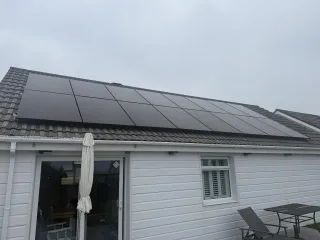
Here is the true energy fact worth carrying away from this episode. Solar panels generate more efficiently in cold weather than in hot weather. Photovoltaic cells lose output as their temperature rises, which is why a crisp, bright February morning can produce a surprisingly healthy instantaneous figure while a baking July afternoon underperforms what the datasheet might suggest.
That creates the exact mismatch the camera pushes in on: the roof is in its element, the battery is not. Two pieces of the same system, with opposite relationships to temperature, sitting a few metres apart. It is one of the quieter reasons that whole-system behaviour is more interesting than any single component's headline number. A panel rating tells you nothing about what your storage will accept at seven in the morning in January. It is also a useful corrective to the belief that UK solar only matters in summer. Cold and bright is a good combination for generation. It is simply a combination that asks your battery to wake up properly first.
Minutes of warming, years of cell life
The economics of the wait are not close. The energy used to warm a cell stack is small and short-lived. The damage avoided is permanent and compounding. A battery charged hard at low temperature does not fail dramatically the next day; it quietly loses usable capacity, year after year, until it no longer carries your household through the evening the way it did when it was new.
Put another way: the battery is optimising for the whole decade, not for the next quarter of an hour. Most of us instinctively judge a system by what it is doing at the moment we happen to look at the app, which is why a low charge figure at 08:12 feels like a problem. By late morning that same battery is usually accepting full power, and by the end of a decent day the state-of-charge bar tells a completely ordinary story.
If you want a single mental model, borrow the one from the episode: the delay is protection, not a fault. A system that charged flat-out regardless of cell temperature would look more impressive on a frosty morning and be worth noticeably less in year eight.
Normal cold behaviour versus something worth reporting
Cold-weather current limiting has a recognisable shape. Knowing it saves an unnecessary support call — and, more importantly, means you notice when something genuinely is off.
Typically normal on a frost morning: charge power starts low and climbs steadily as the morning warms; the battery reaches full accepted current later in the morning and behaves completely normally for the rest of the day; the system may report a low temperature, a charge limit, or a heating state rather than an error; discharging to the house often continues more readily than charging, because cells generally tolerate being drawn from at lower temperatures than they tolerate being pushed into.
Worth investigating with your installer: the battery never reaches full charge power even on mild days; charge current stays capped long after the garage or utility space has warmed up; the system logs a persistent fault code rather than a temperature or state message; the battery is installed somewhere that routinely sits far below its specified operating range; or you see behaviour that does not match what your manufacturer's documentation actually specifies for your model. Always check the figures against your own product manual rather than against a neighbour's different system — minimum charge temperatures, heater behaviour and current limits vary meaningfully between products.
A practical checklist for giving storage an easy winter
Most of what determines cold-morning behaviour is decided on installation day, not in the app.
1. Check the specified operating temperature range for charging, not just the storage or discharge range. They are often different numbers, and the charging one is the one that bites in January. 2. Think hard about location. An unheated detached garage, an exposed external wall or an uninsulated loft will all swing further and colder than an internal utility space, a hallway cupboard or an insulated plant area. The best thermal management is a sensible location. 3. Ask whether the unit has active cell heating, and where that heating energy comes from — stored charge, solar, or the grid. It is a small number either way, but you should know. 4. Ask how charging is scheduled. If you are on a time-of-day tariff and importing cheap overnight units, a battery charging in the small hours is doing so at the coldest point of the night. A good installer will have thought about that interaction. 5. Make sure ventilation and clearances are correct. The same gaps that stop a battery overheating in summer are part of what lets it manage its own temperature sensibly. 6. Keep the manufacturer's documentation somewhere you can find it, so that the next frosty morning you are comparing behaviour against the actual specification. 7. When comparing quotes, compare how each proposal handles siting and temperature, not only capacity in kilowatt-hours. Two identically sized systems in different cupboards will not behave identically.
Follow-up questions people ask after a cold morning
Does this mean my battery is the wrong size? No. Cold-morning current limiting is a temperature behaviour, not a capacity one. Sizing is judged across a full year of consumption and generation, not on one frosted hour.
Should I stop the battery charging overnight in winter? Not as a blanket rule. Overnight charging on a cheaper tariff can still make sense; the system will manage its own limits. If you suspect your schedule is consistently fighting the temperature, that is a conversation for your installer rather than a setting to guess at.
Can I put a heater near the battery? Please do not improvise. Clearances, ventilation and ambient conditions are part of the certified installation. If the location is genuinely too cold for the product, the answer is a better location or a better-suited product, not a plug-in fan heater. Does the same apply to my electric car? EVs manage cell temperature too, which is why rapid charging can be slower when the pack is cold and why some vehicles pre-condition before a planned charge. Different packaging, same underlying chemistry concern. Is the heating energy wasted? It is spent, not wasted. It buys the ability to accept charge at full power for the rest of the day, and it buys cell life across years. Measured against the cost of premature capacity loss, it is one of the cheapest things your system does. Why does my app show solar generating but the battery almost idle? Because they are independent measurements. Generation describes what the array is producing. Charge power describes what the battery is willing to accept. On a frosty morning those two numbers legitimately disagree for a while.
Video transcript
Mo: Frosty morning. Is the battery faulty? RoboMo: No. It warms its cells to protect them, then charges fully.
Mo: So where's all that sunshine going right now? RoboMo: Past the battery. Cold cells cap accepted current, so surplus serves the house and grid.
Mo: So the wait costs nothing in the end? RoboMo: Correct. Minutes of warming buys years of cell life. Protection, not a fault. Mo: Frosty morning. Is the battery faulty? RoboMo: No. It warms its cells to protect them, then charges fully. / Mo: So where's all that sunshine going right now? RoboMo: Past the battery. Cold cells cap accepted current, so surplus serves the house and grid. / Mo: So the wait costs nothing in the end? RoboMo: Correct. Minutes of warming buys years of cell life. Protection, not a fault.
Wrapping up
A home battery that charges slowly at first light on a frosty morning is usually doing exactly what it was engineered to do: protecting its cells from the one condition that causes quiet, permanent damage. Meanwhile the solar it cannot yet accept is not lost — it is running your home and, beyond that, heading out to the grid. By mid-morning the stack is warm, the current limit lifts, and the day proceeds entirely normally. Understanding that sequence changes how you read your own system. Instead of judging it on a single screenshot at eight in the morning, you start judging it across a day, a season and a decade — which is the only timescale on which storage is honestly assessed. Knowledge beats marketing, and in this case it also beats a needless support ticket.
Next step
If you are weighing up solar with storage and want the temperature, siting and sizing thought through properly rather than glossed over, it is worth starting with a survey of your actual property. Have a look at how we approach residential solar, or compare options at your own pace — no pressure, no sales theatre.
Plan, Compare & Buy Renewable Energy Solutions
AI does the thinking.
You get the perfect solar match.
Use RoboMo™ to assess your property, compare available technologies and connect with trusted UK installers, suppliers and manufacturers.
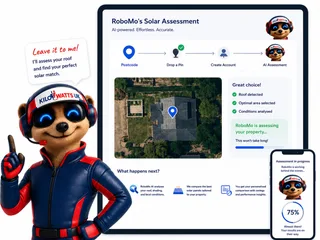
Simply enter your postcode, drop a pin on your roof, create your free account and let RoboMo™ analyse your property to find the best solar panels for your home.

You don't have to think
RoboMo™'s AI analyses your roof and does all the hard work.

Accurate & tailored
AI-powered assessment based on your roof, location, and conditions.

Best options, maximum savings
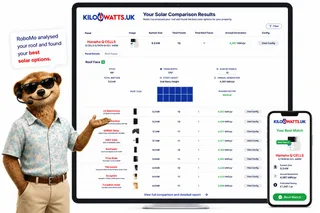
Compare top solar panels for the best performance and value.

Simple, fast & effortless
Provide a few details, sit back and watch your results unfold.
STEP 1
Choose Home, Business or Industrial
Enter your postcode to start your assessment.
STEP 2

Drop a pin on your roof
STEP 3

Create your free account
STEP 4

Sit back and watch RoboMo™ work
RoboMo™ analyses your roof and builds your personalised solar comparison.

Step 1
Enter your postcode
Start designing your wind energy system in seconds.
Are you an installer, distributor or renewable energy business?
Kilowatts UK is expanding the Flower Turbines partner network across the UK.
Become A Flower Turbines PartnerKilowatts UK is an authorised representative
Flower Turbines
Compact vertical-axis turbines built for real UK sites, not just open farmland.
They start in light wind, sit in a small footprint, and are bird-safe by design. Cluster them as a bouquet and the group performs better together than the same turbines standing alone. Enter your postcode for a location-based generation estimate. Figures use area weather data and will differ if buildings, trees or hills sit in the way.
Starts in light UK wind
Built to generate in typical UK wind, not only open farmland.
Small rooftop or ground footprint
Compact towers for roofs, yards and tight sites.
Bird-safe slow rotation
Slow vertical-axis spin, bird-safe by design.
Bouquet clusters raise output
Grouped turbines outperform the same units standing alone.

STEP 2

Choose a location
STEP 3

Place your cluster
Tap the map where you want the turbine cluster to go.
STEP 4

Instant generation forecasts
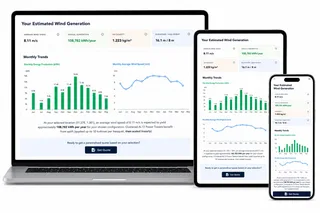
Compare different turbine layouts and see annual generation forecasts instantly.
STEP 5

No commitment required
Explore different configurations before deciding whether to request a quotation.
FAQ
Need Help? RoboMo's Got Answers
Why does my home battery charge slowly on a frosty morning?
A lithium battery close to freezing deliberately limits how much charge current it will accept. Charging hard when the cells are cold can plate lithium on the electrode surface, which permanently reduces capacity and safety margin. The battery management system therefore caps charge power, often while an internal heater warms the stack, then opens up once the cells are in their proper window. That is protective behaviour, not a sign that the installation has failed overnight.
Where does the solar go while the battery is still warming?
Solar does not wait outside a cold battery. It serves the house first, which on a frosty morning often includes heating controls, hot water, kettles and, if you have one, a heat pump working harder than on a mild day. Any surplus beyond household demand is exported to the grid under whatever export arrangement you already have. The energy is redirected for a short time, not lost; on a short winter day the battery usually still has the afternoon to fill.
Is the energy used to warm the cells wasted?
It is spent, not wasted. Warming draws a small amount of power for a short period so the battery can then accept charge at its normal rate and avoid cumulative cold-charge damage. Manufacturers differ on whether that heat comes from stored energy, solar or the grid, so check your own manual. Measured against years of quieter capacity loss, the wait is usually a good trade.
Why can the app show strong solar generation and almost no battery charge at the same time?
Those are two different measurements. Generation is what the array is producing; charge power is what the battery is willing to accept. Cold cells can refuse most of that power even while the inverter is producing normally. Panels also tend to work more efficiently in cold, bright weather than in heat, so a crisp morning can look strong on the roof and cautious in the cabinet at the same time.
How can I tell normal cold-weather behaviour from a fault?
Normal frost-morning behaviour usually starts with low charge power that climbs as the space warms, full accepted current later in the morning, and ordinary behaviour for the rest of the day. The system may show a low temperature, charge limit or heating state rather than an error, and discharge to the house often continues more readily than charging. Ask your installer if charge power stays capped on mild days, a fault code persists, the location routinely falls outside the product’s specified range, or the behaviour does not match your manufacturer’s documentation.
Does slow charging on a cold morning mean the battery is the wrong size?
No. Cold-morning current limiting is a temperature behaviour, not a capacity one. Whether a battery is the right size is judged across a full year of household use and generation, not on one frosted hour. Two systems with the same kilowatt-hour rating can also behave differently if they sit in different cupboards.
Should I change overnight charging in winter, or put a heater near the battery?
Do not treat either as a DIY fix. Overnight charging on a time-of-day tariff can still make sense, because the battery will apply its own limits, but a schedule that consistently charges at the coldest point of the night is something to discuss with your installer rather than guess at in the app. Do not place a plug-in heater beside the unit: clearances, ventilation and ambient conditions are part of the certified installation. If the space is routinely too cold, the proper answer is a better location or a product specified for that range.
What should I check so storage copes better with UK winters?
Look at the specified charging temperature range, which is often stricter than the storage or discharge range. Prefer an internal utility space, hallway cupboard or insulated plant area over an unheated garage, exposed external wall or uninsulated loft. Ask whether the unit has active cell heating, how charging is scheduled against your tariff, and whether ventilation and clearances match the manual. When comparing quotes, compare siting and temperature handling as well as capacity.