


Commercial solar O and M and performance guarantees: UK
Published: 2026-09-28 20:19:00
Updated: 2026-09-29 08:18:38
Commercial solar O&M and performance guarantees are UK contracts, not a statutory kWh promise. Check the meter, weather source, exclusions and export cap.
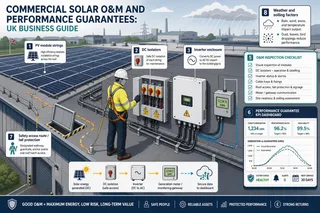
Commercial solar O and M and performance guarantees - UK business guide
UK business guide B Solar O&M contracts and kWh guarantees
What commercial solar O and M and performance guarantees UK contracts actually cover
Commercial solar O and M and performance guarantees that UK firms rely on are negotiated contracts, not a statutory kilowatt-hour promise. Operations and maintenance (O&M) is the work that keeps a plant safe, available and generating. A performance guarantee is a measured outcome, usually availability, weather-adjusted energy or a performance ratio. No UK rule fixes those figures. Scope, settlement meter, weather source, exclusions, roof access and export limits decide whether the promise is enforceable.
The first confusion is treating a monitoring contract as a yield wrap. A portal can flag alarms for years without anyone being obliged to attend, replace an inverter, or pay for lost generation. Those duties exist only where the O&M schedule or the guarantee clause creates them. A manufacturer warranty on modules or inverters does not require the manufacturer to operate the plant.
The second confusion is treating the electricity bill as the test. A healthy array can miss a sales-model saving because on-site load, import price, export terms or a connection cap were wrong. If a guarantee pays at all, it pays against its own metric and its own exclusions. It does not, by itself, warrant a cut in grid electricity cost.
How O&M sits apart from the install, warranties and supply deals
The build contract, the product warranties, the O&M agreement and any supply or power purchase arrangement are separate documents unless a clause joins them. An initial defects or performance period in the installation contract is not the same as an ongoing guarantee in an O&M contract. Durations, exclusions and liability caps are whatever those documents say. A year-one defects period is not a long-term yield wrap unless the wording says so.
Readers still choosing who will design and build the plant should keep that decision separate from long-term upkeep. The commercial solar installation comparison is about installer and design selection. It does not set O&M terms and it is not a kilowatt-hour guarantee. What that build hands over is what a later maintenance contractor can actually honour.
The client should hold as-built diagrams, string layouts, inverter and protection settings, roof-warranty conditions and monitoring logins. If those records stay only with the original installer, a later contractor cannot sensibly stand behind a performance figure. An installer quality mark or a product certificate is not, by itself, a contractual energy guarantee.
What a commercial O&M fee should include and exclude
There is no single statutory UK price for commercial solar O&M. No pounds-per-kilowatt figure should be assumed from a headline availability percentage. Fees move with plant size, roof access, monitoring depth and response times. They also move with whether major parts such as inverters sit inside the fee or remain a call-out. Inverter replacement intervals and spare-part costs are not established as a national norm here. Compare scope, not a bare annual number.
A workable fee usually names monitoring, inspection, fault response, cleaning where soiling justifies it, vegetation or roof-access management, and reporting. Each of those can be hollow. Portal access is not a manned response. An agreed inspection can still be impossible if it ignores the building's working hours, edge protection, or a roof warranty that forbids foot traffic. Cleaning on a fixed marketing schedule can breach a membrane warranty and add little energy on a roof that rain already clears.
Fault response is the clause that changes the quote. Attendance only exists inside the written response time, and repair only exists inside the parts scope. If firmware support, inverter spares or a call to the manufacturer are excluded, the plant can be "under contract" and still sit idle. Reporting should be a dataset the client keeps. A login that disappears when the contractor changes is not an audit trail.
How a weather-adjusted kWh guarantee is settled
A fixed annual kilowatt-hour total copied from a sales proposal does not separate a dull British year from a faulty plant. UK generation varies by location and by year. Commercial guarantees usually adjust expected output for measured or agreed irradiance and, where the contract specifies it, temperature. There is no national typical guaranteed yield for commercial roofs that can be stated here. The settlement method decides whether a claim is workable.
Settlement is a procedure, not a dashboard colour. The contract should name the generation meter, rather than leaving the parties to argue between meter readings and inverter estimates. It should name the weather data source. It should state the degradation allowance used to reduce expected output over time. Without those three, a shortfall discussion becomes a dispute about the model. Specific yield, in kilowatt-hours per kilowatt-peak, and a performance ratio are different tests. They should not be swapped in that clause.
Claim windows and damages caps decide whether a proven shortfall is payable. Common exclusions include grid failure, vandalism, shading the owner caused, roof works and force majeure. A dull year is often adjusted out, so it may not trigger a claim even when the bill looks poor. Energy is measured in kilowatt-hours. Availability is measured in time. An inverter kilowatt nameplate settles neither test.
Availability, energy and performance ratio are not interchangeable
Availability, weather-adjusted energy and performance ratio answer different questions. Contracting the wrong one leaves the real risk unpriced. Availability asks whether the plant can generate for an agreed share of time. A weather-adjusted energy guarantee asks whether measured kilowatt-hours met an expected output after climate is taken into account. Performance ratio asks how efficiently the plant converted the sunlight that arrived, against a stated reference. Availability figures quoted for large ground-mount fleets should not be copied onto a rooftop as a norm. Response times, spare-part logistics and access differ, and this guide does not state a market percentage for UK commercial roofs. Choose the metric that matches the loss you actually carry, then define it tightly enough that a third party could recalculate it.
Overview
A plant can pass an availability test and still miss an energy test if export is capped. It can pass a performance ratio and still disappoint a finance model that assumed unrestricted export and high on-site use. That is a contract-design point, not a reason to stack every metric into one clause without defining each one.
Who carries roof, access and network export risk
Roof, occupancy and network constraints often matter more than the headline percentage. Warehouses, offices and retail units differ in membrane or metal-roof warranties, working hours and edge protection. They also differ in whether cleaning or thermal imaging can happen without stopping operations. A guarantee that assumes regular roof access is empty if the landlord, the tenant or the roof warranty refuses that access.
Connection limits are set by the relevant network operator. Those processes are not identical across Great Britain and Northern Ireland. Larger commercial connections are commonly handled under G99. This article does not state a kilowatt threshold, because that line belongs in the current connection standard, not in a marketing summary. A plant can be available and still deliver fewer kilowatt-hours if export is limited. The contract should say whether guaranteed energy falls if the operator later changes that limit. O&M cannot design the cap away after the event.
Landlord, tenant and funder duties need naming beside the O&M scope. Roof maintenance, solar upkeep, building insurance and any supply contract are separate unless a clause joins them. Lease length, the right to isolate the system, and who may grant access must last as long as the guarantee. Business rates and VAT can change what a kilowatt-hour is worth to the occupier. The treatment is not uniform across England, Wales, Scotland and Northern Ireland. They do not define the technical test, and they should not be guessed from an O&M quote. Office roofs often fail on plant-room space, edge protection and occupied hours before they fail on irradiance. Retail parks and shops add trading hours and landlord controls. A warehouse roof may look simpler to walk, but the roof warranty can still forbid the cleaning method or the foot traffic the fee assumes. Capital cost of the array is a design question. It should not be inferred from a maintenance proposal, and a maintenance proposal should not be inferred from the capital cost.
When a formal guarantee is worth contracting
A formal O&M contract with a performance guarantee suits sites where lost generation has a material cost, a lender or a board expects contracted uptime, or nobody in-house can interpret alarms and string data. Multi-site warehouses, offices and retail portfolios often need one reporting method and a named duty holder. A fault on one unit should not be lost in a generic facilities inbox.
It is a poor fit where the roof cannot be reached safely by the method the fee assumes, or where the roof warranty forbids the visits, cleaning or fixings the contractor needs. Unresolved structural, asbestos or fire-safety issues belong to the building owner before anyone prices a yield wrap. The same is true of an array whose shading, layout or hard export cap means the promised output was never realistic. Strict maintenance cannot recover energy lost to permanent shading, a poor design or a connection ceiling.
Very small plants may not justify a full service-level agreement. There is no universal kilowatt cut-off for that judgement. The practical test is whether the annual fee, the response commitment and the reporting burden are proportionate to the energy at risk. Access rights and the right to isolate the system must last for the whole contract term. If a change of tenant can block the roof, the guarantee will fail at the first visit, not at the first calculation.
What handover and site practice decide whether a claim works
Facilities and finance teams often inherit a portal login and assume the guarantee runs itself. It does not. The settlement method is the contract: which meter, which weather source, which degradation curve, which exclusions, which claim window, and what damages cap applies. The first argument after a poor year is about those definitions, not about whether the modules are still on the roof.
Planned work has to fit the building. Thermal imaging is only useful under enough irradiance and with the array under load. A visit booked for convenience in poor light may produce pictures that cannot support a defect claim. Cleaning should follow soiling evidence rather than a marketing calendar. Work at height and electrical safety duties apply to roof visits. Do not assume every visit is notifiable construction, and do not assume it is casual maintenance either. Name the duty holder before the first attendance.
Module and inverter warranty lengths are product-specific. Modules are often sold with a longer performance warranty and a shorter product warranty. Inverters commonly start with a shorter warranty than modules, sometimes with paid extensions. There is no universal UK term, degradation rate or end-of-warranty output percentage to quote. If those extensions and spare parts sit outside the O&M fee, a headline availability figure can stop at a promise to call the manufacturer while generation is down. Firmware support life can matter more than the percentage on the cover page.
What to lock in before you sign
Treat the guarantee as a measurement clause, not as a slogan on the proposal. Ask the contractor to walk through one shortfall using the weather logic in the draft contract, without inventing a national benchmark yield. If they cannot name the meter, the weather source and the exclusions in that walkthrough, the percentage on the front page is not yet a contract. Some buyers also ask about insurance-backed yield cover. Treat that as a separate product if it is offered at all. Do not assume it sits inside a standard O&M fee.
The points that usually decide a later claim are narrow. They should be written before signature rather than reconstructed after a poor quarter.
Then test the clause against a change of export limit. If the network operator later tightens export, the contract should say whether guaranteed kilowatt-hours fall with it. Ask who may isolate the system, who holds the logins, and what happens if the roof landlord refuses a visit that the response time assumes. Those questions expose more weak contracts than a debate about module brands. A performance guarantee is not a promise that the bill will fall by a stated amount. Bill impact depends on on-site use, import price, any export arrangement, and whether generation is constrained by the connection. Comparing solar with grid electricity is a tariff and load question sitting beside the guarantee. The O&M contractor cannot warrant that comparison unless the contract expressly does so. Where half-hourly import data exists, set it next to generation and next to the proposed exclusions. Compare offers on scope, response and settlement method rather than on an undefined percentage.
Plan, Compare & Buy Renewable Energy Solutions
AI does the thinking.
You get the perfect solar match.
Use RoboMo™ to assess your property, compare available technologies and connect with trusted UK installers, suppliers and manufacturers.
Simply enter your postcode, drop a pin on your roof, create your free account and let RoboMo™ analyse your property to find the best solar panels for your home.

You don't have to think
RoboMo™'s AI analyses your roof and does all the hard work.

Accurate & tailored
AI-powered assessment based on your roof, location, and conditions.

Best options, maximum savings
Compare top solar panels for the best performance and value.

Simple, fast & effortless
Provide a few details, sit back and watch your results unfold.
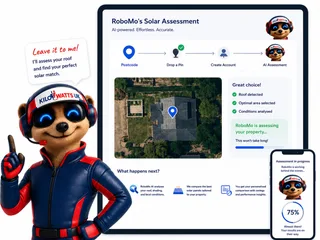
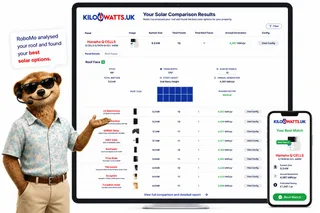
STEP 1
Choose Home, Business or Industrial
Enter your postcode to start your assessment.
STEP 2

Drop a pin on your roof
STEP 3

Create your free account
STEP 4

Sit back and watch RoboMo™ work
RoboMo™ analyses your roof and builds your personalised solar comparison.

Kilowatts UK is an authorised representative
Flower Turbines
Compact vertical-axis turbines built for real UK sites, not just open farmland.
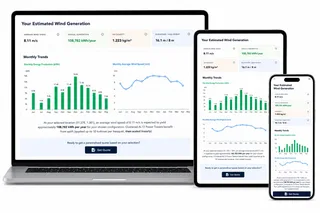
They start in light wind, sit in a small footprint, and are bird-safe by design. Cluster them as a bouquet and the group performs better together than the same turbines standing alone. Enter your postcode for a location-based generation estimate. Figures use area weather data and will differ if buildings, trees or hills sit in the way.
Starts in light UK wind
Built to generate in typical UK wind, not only open farmland.
Small rooftop or ground footprint
Compact towers for roofs, yards and tight sites.
Bird-safe slow rotation
Slow vertical-axis spin, bird-safe by design.
Bouquet clusters raise output
Grouped turbines outperform the same units standing alone.
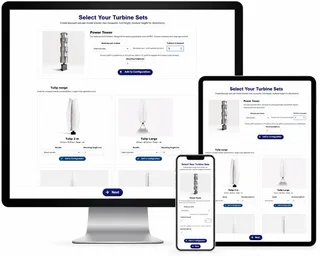
Step 1
Enter your postcode
Start designing your wind energy system in seconds.
STEP 2

Choose a location
STEP 3

Place your cluster
Tap the map where you want the turbine cluster to go.
STEP 4

Instant generation forecasts
Compare different turbine layouts and see annual generation forecasts instantly.
STEP 5

No commitment required
Explore different configurations before deciding whether to request a quotation.
Related articles
Solar panels
Mo's Mission Nominations
FAQ
Need Help? RoboMo's Got Answers
Are commercial solar O&M duties and performance guarantees fixed by UK law?
No. Operations and maintenance duties and performance guarantees are negotiated contracts, not a statutory kilowatt-hour promise. No UK rule fixes availability, weather-adjusted energy or a performance ratio. Whether a promise is enforceable depends on the written scope, the settlement meter, the weather source, the exclusions, roof access and any export limits.
Does a monitoring contract guarantee the plant will keep generating?
No. A portal can flag alarms for years without anyone being obliged to attend, replace an inverter or pay for lost generation. Those duties exist only where the O&M schedule or the guarantee clause creates them. A manufacturer warranty on modules or inverters does not require the manufacturer to operate the plant.
Will a performance guarantee cut the site electricity bill?
Not by itself. A healthy array can miss a sales-model saving if on-site load, import price, export terms or a connection cap were wrong. If a guarantee pays at all, it pays against its own metric and its own exclusions. It does not, by itself, warrant a reduction in grid electricity cost.
Is the installation contract the same as a long-term O&M guarantee?
No. The build contract, product warranties, the O&M agreement and any supply or power purchase arrangement are separate documents unless a clause joins them. A year-one defects period is not a long-term yield wrap unless the wording says so. Durations, exclusions and liability caps are whatever those documents say.
What should a commercial solar O&M fee include?
There is no single statutory UK price, and no pounds-per-kilowatt figure should be assumed from a headline availability percentage. A workable fee usually names monitoring, inspection, fault response, cleaning where soiling justifies it, vegetation or roof-access management, and reporting. Portal access is not a manned response, and repair exists only inside the written response time and parts scope. Compare that scope, not a bare annual number.
How is a weather-adjusted kilowatt-hour guarantee settled?
A fixed annual total copied from a sales proposal does not separate a dull year from a faulty plant. The contract should name the generation meter, the weather data source and the degradation allowance, or a shortfall becomes a dispute about the model. Claim windows, damages caps and stated exclusions, such as grid failure, vandalism, owner-caused shading, roof works and force majeure, decide whether a proven shortfall is payable. There is no national typical guaranteed yield for commercial roofs that can be quoted as a standard.
Are availability, energy and performance ratio the same test?
No. Availability asks whether the plant can generate for an agreed share of time. Weather-adjusted energy asks whether measured kilowatt-hours met an expected output after climate is taken into account. Performance ratio asks how efficiently the plant converted the sunlight that arrived, against a stated reference. A plant can pass one test and still miss another, for example if export is capped while the plant is up.
Who carries roof access and export-limit risk?
Roof, occupancy and network constraints often matter more than the headline percentage. A guarantee that assumes regular roof access is empty if the landlord, the tenant or the roof warranty refuses that access. Connection limits are set by the relevant network operator, and those processes are not identical across Great Britain and Northern Ireland. The contract should say whether guaranteed energy falls if that limit later changes, because maintenance cannot design the cap away after the event.