


How to Get a Safe Battery Installation Without the Sales
Published: 2026-08-27 09:42:28
Updated: 2026-09-01 16:13:34
safety is not a matter of luck. It is the result of choosing quality components, and understanding where and how these systems should be installed.
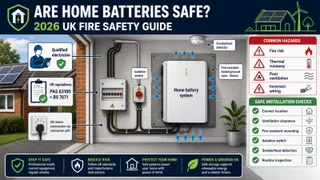
Table of Contents
", you are asking the right question before making a significant investment in your energy future.
Overview
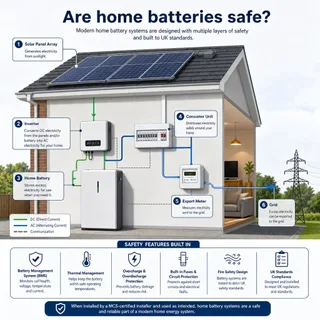
If you are asking "are home batteries safe?", you are asking the right question before making a significant investment in your energy future. The short answer is reassuring, but it comes with important context. Modern home battery systems are engineered to exacting standards, and when installed correctly by qualified professionals, they are statistically very safe. However, safety is not a matter of luck. It is the result of choosing quality components, following strict UK regulations, and understanding where and how these systems should be installed. This guide cuts through the technical noise to give you a clear, jargon-free picture of the real risks, the rules that protect you, and the practical steps you can take to ensure absolute peace of mind.
Yes, They Are Safe—When Done Right
Let us answer the headline question directly. Yes, modern home batteries are safe. The technology has matured significantly over the past decade, and the fear of battery fires, while understandable, is largely overblown when you look at the data. Consider the electric vehicle market as a proxy. According to EV FireSafe, from 2010 to June 2023, there were under 400 verified EV fires globally out of roughly 40 million electric vehicles on the road. That is an extraordinarily low incident rate for a technology that shares the same fundamental lithium-ion chemistry as home battery systems.
The Australian market offers another useful reference point. With approximately 200,000 home batteries installed across the country, and over 41,700 added in 2022 alone, safety issues have been remarkably rare. This is a mature, proven technology, not an experimental one. The key distinction is that these systems are safe when installed correctly. A poorly wired battery in the wrong location is a different story, which is exactly why the UK has introduced specific regulations to remove that risk. The reward is lower energy bills and greater independence from the grid. The risk, when managed properly, is minimal.
The UK Rules: PAS 63100 and BS 7671 Explained
The safety landscape for home batteries in the UK changed significantly in 2024, and if you are installing a system in 2026, these rules are your baseline. The most important standard you need to know about is PAS 63100:2024, which came into force on 31 March 2024. This standard specifically addresses fire safety for battery energy storage systems in dwellings, and it is now the benchmark for compliant installations.
PAS 63100 introduces mandatory warning labels for battery storage units, so you should expect to see clear safety signage on any professionally installed system. More importantly, it specifies prohibited installation locations. In plain English, you cannot install a home battery in a sleeping room, on an unprotected escape route such as a landing, staircase, or corridor, in a protected escape route lobby, in a firefighting lobby or shaft, or in a storage cupboard that opens into a sleeping room. Outdoor installations are restricted to at least one metre away from escape routes, doors, windows, and ventilation ports. Voids, roof spaces, and lofts are explicitly off-limits, as are basements without external access. You also cannot place a battery within two metres of stored flammable materials or fuel tanks.
Alongside PAS 63100, the overarching electrical safety framework is BS 7671:2018 with Amendment 3:2024, commonly known as the IET Wiring Regulations. The IET Code of Practice for Electrical Energy Storage Systems provides additional practical guidance for installers. The important takeaway is that the UK does not currently ban indoor installation outright, but the new standard dictates exactly where that indoor installation can and cannot be. Compliance is not optional if you want a safe, insurable system.
Inside, Garage, or Garden? Choosing the Safest Spot
Location is one of the most common questions homeowners ask, and for good reason. The placement of your battery has a direct impact on both safety and performance. For most UK homes, the practical options are a garage, a utility room, or an external wall. Each has rules attached.
If you are considering an outdoor installation, remember that PAS 63100 requires the unit to be at least one metre away from doors, windows, and ventilation ports. This is to prevent any potential fire from blocking escape routes or entering the home through openings. A garage is a popular choice, but it must not be used for storing flammable materials within two metres of the battery, and the garage should not open directly into a sleeping area without proper separation.
The loft question comes up frequently. Many homeowners want to hide the battery away in the roof space, but PAS 63100 explicitly prohibits this. Lofts and roof spaces present two problems: they are often escape routes in a fire, and they experience extreme temperature swings. Batteries prefer a stable environment, ideally between 10 and 30 degrees Celsius. A cold, damp garage or a scorching loft can degrade the battery faster, which increases long-term risk and shortens the system's useful life. For the average UK home, the safest spot is usually a dedicated, well-ventilated utility room or an external wall away from openings. This keeps the battery within its preferred temperature range while maintaining the required clearances from escape routes and flammable materials. Think of it as giving the battery its own safe, climate-controlled corner of the property.
Battery Chemistry: Why LFP is the Safer Choice (But Not the Only One)
When you start comparing home batteries, you will quickly encounter the chemistry debate. The two main types are Lithium Iron Phosphate, known as LFP, and Nickel Manganese Cobalt, known as NMC. In simple terms, LFP is currently considered the safest common lithium chemistry. It has higher thermal stability, meaning it is less prone to thermal runaway, the chain reaction that can lead to a fire.
However, chemistry is not the whole story. The Tesla Powerwall 2, one of the most widely installed home batteries in the world, uses NMC chemistry and has an excellent safety record. The reason is engineering. Tesla invested heavily in a robust battery management system, or BMS, which monitors temperature, voltage, and current constantly, shutting the system down before any dangerous condition can develop. This shows that design, cell quality, and manufacturing standards matter more than chemistry alone.
The historical recalls of LG Chem and SolaX batteries are worth acknowledging. Both involved LG Chem battery modules produced between March 2017 and September 2018, and very few of the recalled units actually caught fire. The issue was a manufacturing defect, not an inherent flaw in the chemistry. This is why brand reputation and warranty length should be high on your priority list. Do not simply look for "LFP" on the spec sheet and assume you are covered. Look for safer battery options from a manufacturer with a proven track record and a long warranty that demonstrates confidence in their product.
What Could Go Wrong? (And How to Prevent It)
Let us address the "what if" scenario directly. The main risks with home batteries are thermal runaway, electrical faults from poor wiring, and physical damage, such as flooding or impact. Thermal runaway is the most serious, but it is also the rarest when the system is properly designed and installed. Electrical faults are more common and usually stem from poor workmanship, which is why installer accreditation matters so much.
One practical step you can take is to schedule a professional battery inspection every five years. This is the recommended interval for catching degradation, loose connections, or early signs of trouble before they become serious issues. Most batteries come with a 10-year warranty, but that does not mean you should ignore them for a decade. A five-year check-up is a small cost for long-term peace of mind and can help protect the battery's useful life.
a practical checklist for any homeowner considering a battery. First, ensure your installer is accredited, ideally MCS certified, which means they have been independently assessed for competence. Second, check that the battery has a robust battery management system, as this is your first line of defence against thermal issues. Third, never block the ventilation slots on the unit. Batteries need airflow to stay cool, and blocking those slots can cause overheating. There is also an insurance consideration that many homeowners overlook. Most insurers will accept a compliant installation, but you must inform your home insurance provider that you have a battery installed. Failing to do so could invalidate your policy if a claim is ever made. It is a simple phone call that protects you in the long run.
How to Get a Safe Battery Installation (Without the Sales Pressure)
The verdict is clear: home batteries are safe when you buy quality equipment, install it to the 2024 standard, and maintain it properly. The challenge for most homeowners is navigating the technical options and sales pressure without feeling overwhelmed. This is where independent guidance makes a real difference.
Before speaking to any installer, it helps to understand your own property's suitability and energy needs. An AI-powered solar assessment can give you a baseline understanding of whether a battery makes sense for your home, what battery size you might need, and how much you could save. This puts you in a stronger position when comparing quotes, because you are not relying solely on what a salesperson tells you.
When comparing batteries, use comparison tools to filter for the features that matter for safety: LFP chemistry where possible, a long warranty, and a reputable brand with a proven track record. Do not be swayed by the cheapest option. A battery is a long-term investment, and the difference in cost between a budget unit and a quality one is small compared to the peace of mind it buys. Finally, the installer you choose is just as important as the battery itself. Working with vetted installers who are up to date with PAS 63100 compliance ensures the job is done right the first time. A compliant installation is not just about following rules; it is about ensuring your system is safe, insurable, and built to last. If you are already considering solar alongside storage, it is also worth comparing system options before you commit. If you want help understanding the right next step for your property, you can book a free home energy survey.
Quick Answers to Your Burning Questions
Q: Can I put a battery in my loft?
No, PAS 63100 prohibits installation in lofts or roof spaces due to fire escape risks and extreme temperature fluctuations.
Q: Will a battery void my house insurance?
Not if installed correctly, but you must inform your insurer to ensure your policy remains valid. Most insurers accept compliant installations.
Q: Are LFP batteries 100% safe?
No battery is 100% safe, but LFP is highly stable. Safety relies on the whole system, including the battery management system, inverter, and installation quality.
Q: How long does a battery last?
Most come with 10-year warranties, but professional inspections every five years are recommended to ensure long-term safety and performance.
Plan, Compare & Buy Renewable Energy Solutions
AI does the thinking.
You get the perfect solar match.
Use RoboMo™ to assess your property, compare available technologies and connect with trusted UK installers, suppliers and manufacturers.
Simply enter your postcode, drop a pin on your roof, create your free account and let RoboMo™ analyse your property to find the best solar panels for your home.

You don't have to think
RoboMo™'s AI analyses your roof and does all the hard work.

Accurate & tailored
AI-powered assessment based on your roof, location, and conditions.

Best options, maximum savings
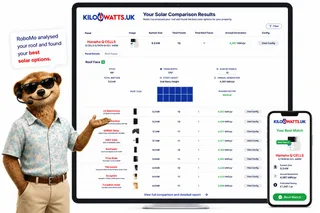
Compare top solar panels for the best performance and value.

Simple, fast & effortless
Provide a few details, sit back and watch your results unfold.
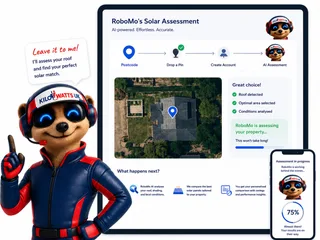
STEP 1
Choose Home, Business or Industrial
Enter your postcode to start your assessment.
STEP 2

Drop a pin on your roof
STEP 3

Create your free account
STEP 4

Sit back and watch RoboMo™ work
RoboMo™ analyses your roof and builds your personalised solar comparison.

Kilowatts UK is an authorised representative
Flower Turbines
Compact vertical-axis turbines built for real UK sites, not just open farmland.
They start in light wind, sit in a small footprint, and are bird-safe by design. Cluster them as a bouquet and the group performs better together than the same turbines standing alone. Enter your postcode for a location-based generation estimate. Figures use area weather data and will differ if buildings, trees or hills sit in the way.
Starts in light UK wind
Built to generate in typical UK wind, not only open farmland.
Small rooftop or ground footprint
Compact towers for roofs, yards and tight sites.
Bird-safe slow rotation
Slow vertical-axis spin, bird-safe by design.
Bouquet clusters raise output
Grouped turbines outperform the same units standing alone.

Step 1
Enter your postcode
Start designing your wind energy system in seconds.

STEP 2

Choose a location
STEP 3

Place your cluster
Tap the map where you want the turbine cluster to go.
STEP 4

Instant generation forecasts
Compare different turbine layouts and see annual generation forecasts instantly.
STEP 5

No commitment required
Explore different configurations before deciding whether to request a quotation.
Related articles
Mo's Mission Nominations
FAQ
Need Help? RoboMo's Got Answers
Are home batteries safe for UK homes?
Yes, modern home batteries are generally safe when they are good-quality products and installed correctly by competent professionals. The main risks, such as overheating, electrical faults and physical damage, are reduced by proper design, a battery management system and safe siting. Safety should be treated as part of the purchase decision, not an afterthought.
Can I put a home battery in my loft?
No, lofts and roof spaces are not suitable locations under PAS 63100:2024 guidance for domestic battery installations. They can be difficult to access, may expose the battery to wide temperature swings, and can create additional fire safety concerns. Ask your installer to propose a safer alternative, such as a suitable utility room, garage or external wall location.
Where is the safest place to install a home battery?
Common suitable locations include a garage, utility room or external wall, provided the required clearances and fire safety considerations are met. The battery should not block escape routes or be placed close to doors, windows, ventilation openings or flammable materials. The best location depends on your property layout, ventilation, access and the manufacturer’s installation instructions.
Are LFP batteries safer than other lithium home batteries?
Lithium iron phosphate, or LFP, is widely regarded as a more thermally stable battery chemistry than some other lithium-ion types. However, chemistry is only one part of safety. A reputable manufacturer, robust battery management system, correct installation and suitable location all matter.
What UK standards should a safe battery installation follow?
For domestic battery storage, PAS 63100:2024 is an important fire safety standard for siting and installation. The wider electrical installation should also be designed and installed in line with the IET Wiring Regulations, BS 7671. A competent installer should be able to explain how their design meets the relevant requirements for your home.
Will a home battery affect my house insurance?
A correctly installed home battery should not automatically prevent you from getting home insurance, but you should tell your insurer. They may ask for details such as the installer, product information and whether the installation follows relevant standards. Not informing your insurer could cause problems if you ever need to make a claim.
How often should a home battery be checked?
Follow the manufacturer’s maintenance instructions and keep the system accessible for inspection. A professional check every few years, and around the five-year mark, can help identify loose connections, damage, blocked ventilation or performance issues. Contact your installer promptly if the system shows faults, unusual smells, swelling, heat or repeated shutdowns.
What should I do if I am worried about a battery fire risk?
Do not try to open, move or repair the battery yourself. If you notice smoke, burning smells, unusual heat or visible damage, keep away from the unit and call the emergency services if there is any immediate danger. For non-emergency faults, switch the system off only if it is safe to do so and contact your installer or the manufacturer for advice.