


How Long Do Batteries Last?
Published: 2026-08-25 12:29:09
Updated: 2026-08-28 06:27:57
A battery is a significant purchase, and you want to know whether it will still be pulling its weight in a decade.
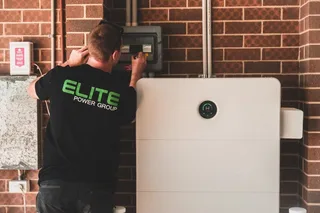
How Long Do Home Batteries Last? UK 2026 Guide
How long do home batteries last in the UK? Most last 10 15 years. Learn what affects lifespan, warranty terms, and how to extend yours.
Overview
If you are weighing up whether to add battery storage to your solar panel system, the question of how long do home batteries last is probably near the top of your list. It is a fair concern. A battery is a significant purchase, and you want to know whether it will still be pulling its weight in a decade. The honest answer is that most modern home batteries last between 10 and 15 years, though some may need replacing after as little as 5 years depending on how they are used. This guide walks you through what that lifespan means in real terms for a UK household, what affects it, and how you can get the most from your investment.
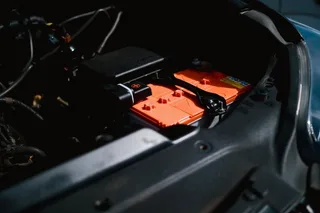
The Short Answer: 10–15 Years Is the Realistic Range
Most modern lithium-ion home batteries last between 10 and 15 years. For the UK market specifically, the realistic average sits around 10 to 12 years. That figure comes from analysis of more than 60 battery models currently available to British homeowners. If you are still comparing system designs, start with home solar panel options.
It helps to understand what "lasting" actually means here. A battery does not simply stop working one day. Instead, it gradually loses its ability to hold a full charge. The industry standard is to consider a battery at the end of its useful life when its capacity drops to 70 to 80 percent of its original level. At that point, it still functions, but it may no longer cover your evening and overnight energy needs as effectively as it once did.
Older lead-acid batteries sit at the bottom of the range, often lasting just 5 to 7 years. Premium lithium iron phosphate (LiFePO4) units can push toward 15 years or beyond under the right conditions. Think of 10 to 15 years as the typical window, not a guarantee.
Why Your Battery Won't Last as Long as Your Solar Panels
a planning reality that catches many homeowners off guard. Your solar panels will almost certainly outlive your battery, and by a wide margin. Solar panels are typically warrantied for 25 years, and good monocrystalline panels can keep producing for 30 to 40 years. If you are planning the whole system over decades, it helps to understand how long panels last.
This is not a reason to avoid battery storage. It is simply a budgeting consideration. Knowing upfront that a replacement will likely be needed around year 12 helps you plan accurately and avoid an unwelcome surprise. A battery that needs replacing after a decade still delivers ten-plus years of reduced energy bills and greater independence from the grid. That is the real value proposition, and it holds up even when you factor in the cost of a future replacement.

What "End of Life" Actually Means
End of life does not mean a dead battery sitting silently in your garage. It means the battery has degraded to the point where it holds only 70 to 80 percent of its original capacity. A 10 kWh battery at end of life might only store 7 to 8 kWh.
This degradation is gradual from day one. You will notice it as a slowly shrinking reserve over several years, not as a sudden failure. One day you realise the battery no longer quite covers your evening usage the way it used to. Even then, a degraded battery can still serve as a backup power source during outages, even if it no longer maximises your daily bill savings. If safety is part of your decision, read more about whether home batteries are safe.
The 5 Factors That Determine How Long Your Battery Lasts
Several variables influence how many years you get from a home battery. Some you can control, and some come down to the technology you choose. Understanding these factors puts you in a stronger position from the start.
1\. Battery Chemistry
The chemistry inside your battery is the single biggest predictor of lifespan. Lithium iron phosphate, often written as LiFePO4, is the current gold standard for residential storage. It offers longer cycle life, better thermal stability, and improved safety compared to older lithium-ion chemistries. Most reputable UK installers now default to LiFePO4 for new installations.
Older lithium-ion batteries using nickel manganese cobalt (NMC) chemistry are still common but typically offer fewer cycles before degradation sets in. Lead-acid batteries, the old guard of home storage, are cheaper but last only 5 to 7 years and require regular maintenance. They are rarely recommended for new solar installations in 2026.
2\. Depth of Discharge (DoD)
Depth of discharge refers to how much of the battery's capacity you use before recharging it. If you drain a 10 kWh battery to 2 kWh remaining, you have used 80 percent of its capacity, so the DoD is 80 percent.
Lithium-ion batteries handle up to 80 percent DoD without significant strain. Lead-acid batteries, by contrast, should only be discharged to 30 to 50 percent of their capacity to avoid premature wear. Most smart battery systems manage DoD automatically, so you rarely need to think about it. If your system allows manual settings, avoid draining the battery to zero on a regular basis.
3\. Usage Patterns and Cycling
A cycle is defined as a full discharge to zero percent followed by a full recharge to 100 percent. Partial cycles count proportionally, so using 50 percent and recharging counts as half a cycle.
Residential batteries are designed to handle roughly 6,000 to 10,000 cycles over their lifetime. At daily cycling, that works out to 16 to 27 years, which comfortably exceeds typical warranty periods. In practice, other factors like temperature and chemistry usually determine lifespan before cycle count becomes the limiting factor.
Daily cycling to maximise bill savings ages a battery differently than backup-only usage, where the battery sits idle most of the time. Both approaches are valid, but they place different stresses on the system.
4\. Installation Environment and Temperature
Heat is the enemy of battery longevity. Batteries installed in hot lofts or poorly ventilated cupboards degrade noticeably faster than those kept cool. The ideal location is a cool, dry space such as a garage, utility room, or purpose-built external enclosure.
British Standards Institution guidelines recommend placing batteries outside or in a garage, and many UK installers follow these as standard practice. Avoid spots that freeze in winter or bake in summer. A stable, moderate temperature is what you are aiming for.
5\. Smart Management and Monitoring
Modern home batteries include software that optimises charging and discharging to reduce strain on the cells. This software learns your household's usage patterns and adjusts behaviour accordingly.
Professional monitoring, offered by most reputable installers, catches issues early and can extend lifespan. Remote diagnostics and automatic software updates keep the system running efficiently without you having to intervene. When comparing batteries, ask whether the system includes these smart features.
What Battery Warranties Actually Cover (and What They Don't)
A typical UK battery warranty runs for 10 years. The terms are often expressed as "10 years or 4,000 cycles" or "10 years or 20 MWh throughput," whichever comes first. In plain English, the manufacturer guarantees the battery will retain at least 70 percent of its original capacity within that period.
Check the warranty conditions carefully before you buy. Some manufacturers require professional installation, annual servicing, or specific usage patterns for the warranty to remain valid. A warranty is a safety net, not a lifespan promise. Many batteries will outlast their warranty period, but the terms tell you what the manufacturer is confident enough to guarantee. It is also worth comparing battery cost assumptions alongside the warranty, because a cheaper unit is not always better value over its full life.
How to Make Your Home Battery Last Longer
You have more control over battery lifespan than you might think. These practical steps make a measurable difference.
Choose the right chemistry from the start. LiFePO4 batteries offer the best longevity-to-cost ratio for UK homes, and the price premium over older chemistries has narrowed considerably in recent years.
Install in a cool, dry space. Avoid garages that freeze in winter or lofts that bake in summer. A utility room or shaded external wall is often ideal. Let the smart software do its job. Do not override automated charge and discharge cycles unless you fully understand the trade-offs. The software is designed to protect the battery. Size your battery correctly. An undersized battery cycles harder and degrades faster. Right-sizing for your household's actual usage is worth the upfront planning effort, so check what size battery makes sense before choosing a model. Work with a trusted installer. Quality installation and ongoing monitoring make a measurable difference to lifespan. A well-installed battery in the right location will consistently outperform a poorly installed one.
What Happens When Your Battery Reaches End of Life?
When your battery drops to 70 to 80 percent capacity, you have options. Replacement is the most common route. UK replacement batteries typically cost between £2,000 and £6,000 installed, depending on capacity and chemistry. This is a planning figure rather than a quote, but it gives you a realistic sense of the future cost.
Batteries at 70 to 80 percent capacity are not waste. Many are repurposed for grid storage, EV charging buffers, or off-grid cabins, where reduced capacity is less of a problem. Modern lithium batteries are also highly recyclable, and UK regulations require approved disposal routes.
Replacing an older battery is also an opportunity. You can move to newer chemistry, larger capacity, or smart features that did not exist when your original battery was installed.
How Kilowatts.uk Helps You Choose a Battery That Lasts
Our AI-powered solar assessment, RoboMo™, models your household's energy usage to recommend a battery sized correctly for your needs. That avoids the premature degradation that comes from undersizing. We also provide side-by-side battery comparisons covering warranty terms, cycle life, and chemistry, so you can see which models genuinely last longer. Our featured installer directory connects you with vetted UK partners who follow best-practice installation standards, including proper placement and monitoring setup. If you are ready to explore options, our free solar and battery assessment with a featured installer gives you a tailored recommendation without sales pressure. You can also compare the wider case for whether a battery is worth it before committing.
Frequently Asked Questions
How much does it cost to replace a home battery in the UK?
Typical replacement costs range from £2,000 to £6,000 including installation, depending on capacity and chemistry.
Do solar batteries need maintenance?
Modern lithium batteries are essentially maintenance-free. Keeping the surrounding area clean and ensuring good ventilation is good practice.
Can a home battery last 20 years?
Under ideal conditions with low cycling, a cool environment, and premium chemistry, some batteries may approach 20 years. Capacity will be significantly reduced by then.
How many cycles does a Tesla Powerwall last?
Tesla warranties the Powerwall for 10 years or 37.8 MWh of throughput, which equates to roughly daily cycling for a decade.
Can solar batteries be recycled?
Yes. Lithium batteries are highly recyclable, and UK regulations require approved disposal routes.
The Bottom Line
Plan for 10 to 15 years, choose quality chemistry, install it properly, and let smart software manage it. That is the formula for getting the most from your battery investment. Battery replacement is a normal part of the solar journey, not a failure. Budget for it, and you will still come out ahead on bills and energy independence. The technology is improving every year, and the next battery you buy will likely last longer than the first.
Plan, Compare & Buy Renewable Energy Solutions
AI does the thinking.
You get the perfect solar match.
Use RoboMo™ to assess your property, compare available technologies and connect with trusted UK installers, suppliers and manufacturers.
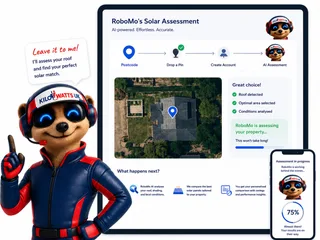
Simply enter your postcode, drop a pin on your roof, create your free account and let RoboMo™ analyse your property to find the best solar panels for your home.

You don't have to think
RoboMo™'s AI analyses your roof and does all the hard work.

Accurate & tailored
AI-powered assessment based on your roof, location, and conditions.

Best options, maximum savings
Compare top solar panels for the best performance and value.

Simple, fast & effortless
Provide a few details, sit back and watch your results unfold.
STEP 1
Choose Home, Business or Industrial
Enter your postcode to start your assessment.
STEP 2

Drop a pin on your roof
STEP 3

Create your free account
STEP 4

Sit back and watch RoboMo™ work
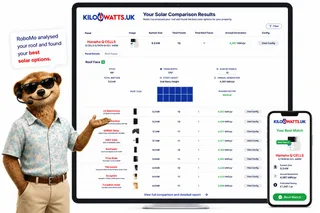
RoboMo™ analyses your roof and builds your personalised solar comparison.

Step 1
Enter your postcode
Start designing your wind energy system in seconds.
Are you an installer, distributor or renewable energy business?
Kilowatts UK is expanding the Flower Turbines partner network across the UK.
Become A Flower Turbines PartnerKilowatts UK is an authorised representative
Flower Turbines
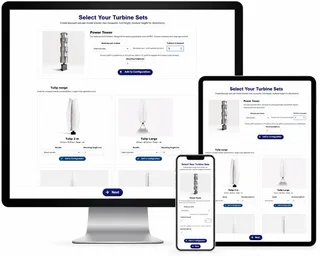
Compact vertical-axis turbines built for real UK sites, not just open farmland.
They start in light wind, sit in a small footprint, and are bird-safe by design. Cluster them as a bouquet and the group performs better together than the same turbines standing alone. Enter your postcode for a location-based generation estimate. Figures use area weather data and will differ if buildings, trees or hills sit in the way.
Starts in light UK wind
Built to generate in typical UK wind, not only open farmland.
Small rooftop or ground footprint
Compact towers for roofs, yards and tight sites.
Bird-safe slow rotation
Slow vertical-axis spin, bird-safe by design.
Bouquet clusters raise output
Grouped turbines outperform the same units standing alone.

STEP 2

Choose a location
STEP 3

Place your cluster
Tap the map where you want the turbine cluster to go.
STEP 4

Instant generation forecasts
Compare different turbine layouts and see annual generation forecasts instantly.
STEP 5

No commitment required
Explore different configurations before deciding whether to request a quotation.
Related articles
Mo's Mission Nominations
FAQ
Need Help? RoboMo's Got Answers
How long does a home battery usually last in the UK?
Most modern lithium home batteries last around 10 to 15 years, with many UK systems realistically sitting closer to 10 to 12 years. Lifespan depends on the battery chemistry, how often it cycles, where it is installed and how well it is managed. Older lead-acid batteries tend to have a shorter life.
What does end of life mean for a home battery?
End of life usually means the battery has fallen to about 70 to 80 percent of its original storage capacity. It may still work, but it will not store as much energy as it did when new. For example, a 10 kWh battery might only hold around 7 to 8 kWh.
How much does it cost to replace a home battery in the UK?
Replacement costs vary by capacity, chemistry, brand, installation requirements and whether other system parts need upgrading. As a planning guide, many replacement batteries may fall in the low thousands of pounds rather than being a minor repair cost. Always get current quotes from qualified installers before budgeting.
Do solar batteries need maintenance?
Modern lithium home batteries are generally low maintenance and do not need regular topping up like older lead-acid batteries. It is still sensible to keep the area around the battery clear, dry and well ventilated. Software updates, monitoring and periodic installer checks can also help spot issues early.
Can a home battery last 20 years?
Some high-quality batteries may approach 20 years in ideal conditions, especially if they are lightly cycled and kept at a stable temperature. However, this should not be treated as the normal expectation. Most homeowners should plan for replacement closer to the 10 to 15 year range.
Will my solar panels last longer than my battery?
Yes, in most cases your solar panels will outlast your home battery. Solar panels are commonly designed to keep producing for several decades, while batteries degrade faster because they charge and discharge daily. It is sensible to include a likely battery replacement in your long-term solar budget.
What does a home battery warranty usually cover?
A typical battery warranty covers a set number of years, cycles or total energy throughput. It often guarantees that the battery will retain a minimum percentage of its original capacity during that period. Check the exact terms, because installation standards, usage patterns and servicing requirements can affect cover.
What happens to an old home battery when it is replaced?
An old battery should not be put in general waste. It should go through an approved disposal or recycling route, usually arranged by the installer or supplier. Some batteries may also be repurposed where reduced capacity is still useful.