


Who owns the panels in a PPA in the UK?
Published: 2026-07-18 20:07:56
Updated: 2026-08-06 10:51:53
Understand who owns solar panels in a ppa in the UK, with clear explanations, examples, and practical next steps.
Who owns the panels in a PPA in the UK?
In a UK solar PPA, the panels are usually owned by the PPA provider, funder, or asset owner, not by the homeowner, tenant, or business using the roof. The customer normally owns or occupies the property and buys the electricity generated on site. The exact answer depends on the contract, especially the ownership clause, roof rights, export income terms, monitoring and maintenance obligations, insurance, early termination rights, and end-of-term options.
A PPA means Power Purchase Agreement. In an on-site solar PPA, a third party pays for, installs, owns, monitors, and usually maintains the solar PV system. The customer avoids the upfront installation cost and pays an agreed price per kWh for the solar electricity they use.
The key point is simple: having panels physically fixed to your roof does not automatically mean you own them. In most PPA structures, the roof owner grants rights for the system to be installed, operated, accessed, repaired, and removed, while the equipment remains the provider’s asset for the contract term.
The short summary.
A UK solar PPA is mainly an electricity purchase arrangement, not a panel purchase arrangement. The customer receives solar electricity, but ownership normally stays with the company that funded the system.
- The PPA provider, funder, or asset owner usually owns the panels.
- The customer usually pays for solar electricity used on site.
- The roof owner usually grants roof rights and access rights.
- The provider usually handles monitoring, planned maintenance, fault diagnosis, repairs, and warranty claims.
- Cleaning, roof works, damage caused by third parties, and temporary removal may have separate rules.
- Export income usually belongs to the system owner unless the contract says otherwise.
- Ownership may transfer at the end, but only if the contract clearly says so.
- Renewal, buyout, removal, and early termination options should be checked before signing.
This is why the contract matters more than the phrase used in sales material. “Free solar”, “rent-a-roof”, “funded solar”, “subscription”, “lease”, and “PPA” can describe different legal and commercial structures.
How ownership works in an on-site solar PPA.
In a typical on-site PPA, the solar company or its funder pays for the system and retains legal ownership of the panels, inverter, mounting kit, cabling, monitoring equipment, generation meters, and other equipment connected to the PPA. The customer allows the system to sit on the roof or land and agrees to buy the electricity generated by it.
The property owner still owns the building, roof, or land, but may grant a lease, licence, easement, wayleave, or access right so the provider can install, operate, inspect, repair, maintain, replace, and remove the system. In commercial projects, these rights can be detailed and may be reviewed by lenders, landlords, freeholders, insurers, and solicitors.
The PPA should state clearly whether the solar equipment remains the provider’s property and whether it is treated as a removable asset rather than becoming part of the building. This matters if the property is sold, refinanced, redeveloped, let to a new tenant, or if either party becomes insolvent. For businesses, the asset owner may be a funder rather than the installer. The installer may design and build the system, while a separate asset company owns the equipment and receives PPA payments. Assignment clauses may also allow the ownership of the system or the benefit of the PPA to be transferred to another funder or operator later.
What the customer owns and pays for.
The customer usually owns or occupies the premises, but does not usually own the solar PV system during the PPA term. Instead, they buy electricity from the system owner under agreed contract terms.
The customer normally pays a PPA tariff for each unit of solar electricity consumed on site. That tariff may be fixed, indexed to inflation, linked to market prices, or subject to another agreed escalation. The customer still needs a grid electricity contract because solar output will not always match demand, especially at night and during low-generation winter periods.
A well-drafted PPA should explain how solar consumption is measured. This can be straightforward on smaller systems, but commercial projects often rely on dedicated generation meters, import and export meters, half-hourly data, and agreed rules for allocating electricity between on-site use and export. The customer should check whether they are paying only for electricity actually used on site, or whether any of the following apply:
- minimum volume commitments;
- take-or-pay obligations;
- deemed generation charges;
- standing or capacity charges;
- charges when the system is available but the customer cannot use the power;
- payment obligations during shutdowns, tenant changes, or operational changes.
These clauses can make a large difference if a business changes shift patterns, reduces daytime demand, sublets the building, installs new equipment, or moves out.
Who monitors the system in a PPA.
In most PPAs, the provider is responsible for system monitoring because the provider owns the asset and earns revenue only when the system generates and sells electricity. Monitoring should not be treated as a vague promise. It should be described in the contract or service schedule.
A properly managed PPA system will often include remote monitoring that tracks generation, inverter performance, faults, communications status, and sometimes export or self-consumption data. The provider may use a monitoring portal, data logger, inverter platform, or third-party operations and maintenance platform to identify underperformance.
- The PPA should make clear:
- who monitors the system;
- whether monitoring is continuous, daily, weekly, or periodic;
- who receives alerts when faults occur;
- what happens if the internet connection, data logger, SIM card, or communications link fails;
- whether the customer must provide broadband, power supply, access, or meter-room access;
- how generation data is used for billing;
- how disputed meter readings are resolved;
- whether performance reports are provided to the customer;
- what response times apply after a fault is detected.
For commercial customers, reporting can be important for finance teams, energy managers, ESG reporting, and landlord or tenant discussions. The contract should say whether the customer receives access to a portal, monthly generation reports, billing statements only, or no live access at all. Monitoring also matters because small faults can reduce output for long periods if nobody is responsible for acting on the data. For example, an inverter fault, tripped isolator, failed communications link, shading issue, or string underperformance may not be obvious from the ground. A good PPA should explain how these issues are identified, investigated, and corrected.
Who maintains the panels in a PPA.
Maintenance is usually the provider’s responsibility because the provider owns the system and needs it to generate electricity. This often includes planned maintenance, fault diagnosis, repairs, inverter replacement, warranty claims, electrical inspections, monitoring equipment checks, and general system performance management.
However, “maintenance included” should not be accepted without checking the scope. The PPA should say what is included, what is excluded, how quickly the provider must respond, and who pays in different situations.
- Provider responsibilities often include:
- remote monitoring and fault alerts;
- arranging engineer visits where needed;
- repairing or replacing faulty inverters, isolators, meters, cabling, connectors, data loggers, and monitoring devices;
- managing manufacturer warranty claims;
- checking mounting integrity where relevant;
- keeping the system electrically safe;
- planned inspections and routine servicing;
- maintaining generation meters used for billing;
- maintaining records needed for billing, export, and compliance.
- Customer responsibilities often include:
- providing safe and reasonable access;
- not shading, moving, altering, disconnecting, or obstructing the system;
- not allowing third-party contractors to interfere with the panels, mounting kit, cabling, isolators, or meters;
- notifying the provider of visible damage, roof leaks, building works, or planned shutdowns;
- keeping agreed communications equipment connected if required;
- following agreed roof access and health and safety procedures.
Cleaning is a common grey area. Many UK rooftop systems are not cleaned frequently because rainfall provides some natural cleaning, but dirt, bird fouling, leaves, dust, coastal deposits, or industrial pollution can reduce performance. Some PPAs include cleaning when technically justified, while others exclude it or only include it if output falls below an agreed threshold. The contract should say who decides, who pays, and whether cleaning must be done by approved contractors. Inverter replacement is another practical detail to check. Panels can last for decades, but inverters often have a shorter working life. A long PPA should say who pays for replacement, what response times apply, and whether the customer receives any credit if the system is unavailable for a prolonged period. The customer should also understand insurance responsibilities. The contract should state who insures the panels, who covers public liability, who covers employer’s liability for maintenance visits, who pays if roof damage occurs during installation, and who is responsible if temporary removal is needed for roof repairs.
Who receives export income and incentives.
Export income usually follows ownership. If the PPA provider owns the system, the provider will normally receive income from exported electricity unless the agreement gives some or all of that benefit to the customer.
For domestic systems, Smart Export Guarantee payments normally go to the eligible generator or nominated recipient. If the householder does not own the PV system, they should not assume they will receive export payments. For older rent-a-roof systems, Feed-in Tariff rights may still sit with the original installation company because that scheme closed to new applicants in 2019 but existing arrangements can continue.
Businesses also need to be careful with environmental claims. Using on-site solar can reduce electricity imported from the grid, but carbon reporting and renewable benefit claims depend on the contract structure and evidence. The PPA should state who owns renewable certificates, export rights, environmental attributes, carbon reporting rights, and any future support mechanism if relevant. If the customer wants to report lower electricity-related emissions, make green electricity claims, or include the project in net-zero reporting, they should check the contract and seek appropriate advice. The right to use on-site solar electricity is not always the same as the right to claim every environmental attribute linked to the generation.
What happens if the roof needs work.
Roof works are one of the most important practical issues in a solar PPA. Because the provider usually owns the panels but the customer or landlord owns the building, the contract must explain what happens if the roof needs repair, replacement, access, inspection, or redevelopment.
- The PPA should address:
- who can request temporary removal;
- how much notice is required;
- who pays for removal, storage, scaffolding, craneage, reinstatement, and recommissioning;
- who pays for lost generation while the system is off;
- whether the customer must compensate the provider for unavailable generation;
- who is responsible if roof works damage the solar equipment;
- who is responsible if the solar installation causes or contributes to roof damage;
- whether approved contractors must be used;
- whether warranties on the roof or solar installation could be affected.
This is especially important for commercial buildings, flat roofs, older roofs, asbestos-containing materials, fragile roofs, and sites where refurbishment is likely within the PPA term. A long PPA on a roof that needs replacement in a few years can create avoidable cost and disruption.
What happens at the end of the PPA.
Ownership at the end of a PPA is not automatic. Some agreements allow the customer to buy the system, some allow renewal, some require removal, and some may transfer ownership at no extra cost. The only reliable answer is in the end-of-term clause.
- Common end-of-term options include:
- Buyout option: The customer may be able to buy the system at a fixed value, fair market value, depreciated value, or a value based on an agreed schedule.
- Renewal option: The parties may agree to continue the PPA on new terms if the system is still useful and the roof remains suitable.
- Removal option: The provider may remove the panels and make good agreed parts of the roof or mounting area.
- Transfer option: The system may transfer to the customer at the end, but this is not guaranteed unless the contract clearly says so.
The wording matters. “May transfer” is not the same as “will transfer”. A customer expecting to own the panels eventually should check when ownership transfers, whether a payment is due, what equipment is included, what condition the system must be in, whether warranties are assigned, and whether the provider remains responsible for any defects after transfer. Many solar panels continue generating beyond the original contract period, so the end-of-term position can be valuable. A system that is fully paid for, still safe, and still producing electricity may have useful life left. The customer should not leave the commercial value of that period unclear.
Renewal and early termination options.
PPA renewal and termination rights deserve careful attention before signing. Solar PPAs can run for many years, and the customer’s building use, ownership, tenant profile, electricity demand, and roof condition may change during that time.
- A renewal clause should explain:
- whether renewal is automatic or optional;
- who can request renewal;
- when renewal must be agreed;
- how the new tariff is set;
- whether the customer can renegotiate maintenance obligations;
- whether the provider must upgrade, replace, or remove old equipment;
- what happens if the parties cannot agree new terms.
- The contract should explain what happens if:
- the customer sells the property;
- a tenant leaves or a lease ends;
- the customer stops trading;
- the building is redeveloped or demolished;
- the roof becomes unsuitable;
- the grid connection changes;
- the system underperforms;
- the provider fails to maintain the system;
- the provider becomes insolvent;
- the customer repeatedly fails to pay;
- either party wants to exit for convenience.
Early termination is often more complex. Because the provider has funded the installation upfront, ending the PPA early may trigger a buyout payment, compensation formula, removal cost, lost revenue calculation, or other termination charge. This is not necessarily unreasonable, but it should be transparent. Some contracts allow assignment to a new property owner, landlord, tenant, or group company. Others require consent from the provider, lender, landlord, or freeholder. If you expect to sell, refinance, restructure, or relocate during the PPA term, this should be reviewed before signing. For homeowners, long-term solar agreements can affect conveyancing because a buyer’s solicitor and mortgage lender may ask who owns the panels, what roof rights exist, and whether the agreement can be transferred or terminated. For businesses, the same issue can arise during property sales, lease renewals, refinancing, mergers, and asset sales.
How a PPA differs from a lease or buying panels outright.
A PPA is often confused with a lease or outright purchase, but the ownership position is different. In a PPA, the customer usually pays for the electricity generated. In a lease, the customer usually pays for the use of the equipment. With outright purchase, the customer buys and owns the solar PV system.
Solar PPA
The provider usually owns the panels and the customer pays for solar electricity used on site.Solar lease
The provider may own the panels while the customer pays a regular amount for use of the equipment.Outright purchase
The homeowner or business owns the panels and usually receives the full benefit of generation and export.Subscription model
The ownership, maintenance, export, and exit position depends on the contract and should be checked carefully.Rent-a-roof arrangement
The solar company may own the panels and receive export or legacy tariff income while the property owner uses some electricity.
Outright purchase usually gives the clearest ownership position, but it requires capital or finance and leaves the owner responsible for future maintenance once warranties and service arrangements are considered. A PPA can reduce upfront cost and shift technical responsibility to a third party, but it also creates a long-term contractual commitment.
When a PPA can make sense.
A PPA can work well where the customer has a suitable roof or land, steady daytime electricity demand, and limited appetite to fund the system directly. This is why commercial solar options are common for warehouses, factories, schools, farms, councils, leisure buildings, cold stores, offices, depots, and public sector sites.
The economics depend heavily on self-consumption. A building that uses electricity during daylight hours can consume more of the solar generation on site. A building with low daytime use may export more power, which can make the arrangement less attractive unless the contract has been priced around that pattern.
Roof condition is just as important as electricity use. Many installers and funders prefer roofs with a long remaining life because removal and reinstatement can be expensive and disruptive. Structural capacity, roof covering, fixings, waterproofing, access, wind loading, and fire safety considerations can all affect suitability. A PPA may be less suitable if you want full ownership, expect to move soon, plan major roof works, have heavy shading, have low daytime electricity use, cannot accept long-term roof rights, or can fund the installation outright and want maximum long-term control.
Practical UK issues that are often missed.
The question of ownership is not only about who has their name on the panels. It affects property sale, refinancing, roof access, insurance, maintenance, export income, environmental claims, and the right to make changes to the building.
If the property is mortgaged, the lender may need to be informed or may need to consent. If it is leasehold, the freeholder or landlord may need to approve the installation. If a commercial occupier is not the building owner, the landlord’s consent will usually be critical.
Solar installations also need grid connection checks. Smaller domestic systems may fall within notification routes when they meet the relevant limits, while larger systems usually need approval before connection. Export limits can affect system size, system design, and the value of exported electricity. Planning permission is often not required for standard rooftop solar where permitted development rules are met, but the detail varies across the UK. Listed buildings, conservation areas, visible commercial rooftops, ground-mounted arrays, and unusual mounting arrangements need more careful review. Roof structure should be checked before installation. Installers consider roof covering, rafter or steelwork condition, wind loading, ballast on flat roofs, fragile materials, access routes, edge distances, cable routes, inverter location, fire access, and maintenance access. These details influence suitability and can affect PPA pricing. Insurance should also be checked early. The building insurer may want details of the installation, ownership, maintenance arrangements, fire safety design, roof penetrations, cable routes, and contractor accreditations. The PPA should not leave gaps between the provider’s asset insurance and the building owner’s property insurance.
Contract checks before signing.
The contract is the decisive document. A good PPA should make ownership, cost, responsibilities, and exit routes clear enough that a future buyer, lender, landlord, freeholder, tenant, insurer, or solicitor can understand them.
- Before signing, check:
- Ownership clause: Confirm who owns the panels, inverters, mounting equipment, meters, cabling, batteries, monitoring devices, data loggers, and replacement parts.
- Roof rights: Check what lease, licence, access, registration, wayleave, or easement rights the provider receives.
- Electricity tariff: Understand the unit price, indexation, standing elements, billing method, VAT treatment, and comparison with your real import tariff.
- Metering and billing: Confirm how consumption is measured, how estimates are calculated, what happens if meters fail, and how disputes are resolved.
- Monitoring: Check who monitors the system, how often, what data is collected, whether you receive reports, and what happens if communications fail.
- Maintenance scope: Check repairs, planned inspections, cleaning, inverter replacement, monitoring equipment, fault response times, warranties, and performance reporting.
- System downtime: Confirm whether any credits, service levels, or remedies apply if the system is unavailable or underperforming.
- Export income: Confirm who receives export payments and who can make environmental or renewable energy claims.
- Insurance: Confirm who insures the equipment, who covers public liability, and how roof damage or third-party damage is handled.
- Roof works: Confirm who pays for temporary removal, reinstatement, scaffolding, lost generation, and damage during roof repairs.
- Property sale: Check what happens if you sell, refinance, change tenant, assign the lease, transfer the business, or restructure ownership.
- Early termination: Understand buyout costs, compensation formulas, notice periods, break rights, default rights, and any deemed generation charges.
- Renewal: Confirm whether renewal is automatic or optional, how the renewed tariff is set, and whether equipment upgrades are required.
- End-of-term options: Confirm whether the panels are removed, bought, renewed, transferred, or left in place under new terms.
- Insolvency and assignment: Check what happens if the provider, funder, installer, landlord, or customer becomes insolvent or transfers its interest.
For larger commercial PPAs, independent legal, technical, and property review is usually sensible. For household agreements, long-term roof rights can still affect saleability and mortgageability, so the documents should be reviewed carefully before signing.
Final answer.
In most UK solar PPAs, the PPA provider, funder, or asset owner owns the solar panels. The customer owns or occupies the property and buys the electricity produced by the system, usually at an agreed rate per kWh. The customer does not automatically own the panels just because they are on the roof.
The most important document is the contract. It should explain who owns the equipment, who monitors and maintains it, who receives export income, who insures it, what happens during roof works, what happens if the property is sold, and whether ownership can transfer at the end.
A PPA can be a useful way to install solar without upfront capital, especially for businesses with large roofs and steady daytime demand. It is not the same as buying solar panels, and it may not suit people who want full ownership, simple property sale terms, or complete control over future roof decisions.
Ready to compare your options?
Get tailored comparisons and connect with trusted installers in under a minute.
Plan, Compare & Buy Renewable Energy Solutions
AI does the thinking.
You get the perfect solar match.
Use RoboMo™ to assess your property, compare available technologies and connect with trusted UK installers, suppliers and manufacturers.
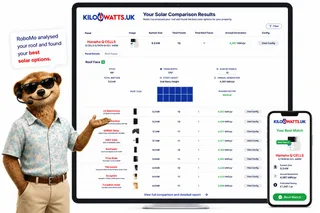
Simply enter your postcode, drop a pin on your roof, create your free account and let RoboMo™ analyse your property to find the best solar panels for your home.

You don't have to think
RoboMo™'s AI analyses your roof and does all the hard work.

Accurate & tailored
AI-powered assessment based on your roof, location, and conditions.

Best options, maximum savings
Compare top solar panels for the best performance and value.

Simple, fast & effortless
Provide a few details, sit back and watch your results unfold.
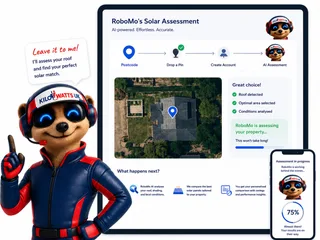
STEP 1
Choose Home, Business or Industrial
Enter your postcode to start your assessment.
STEP 2

Drop a pin on your roof
STEP 3

Create your free account
STEP 4

Sit back and watch RoboMo™ work
RoboMo™ analyses your roof and builds your personalised solar comparison.

Kilowatts UK is an authorised representative
Flower Turbines
Compact vertical-axis turbines built for real UK sites, not just open farmland.
They start in light wind, sit in a small footprint, and are bird-safe by design. Cluster them as a bouquet and the group performs better together than the same turbines standing alone. Enter your postcode for a location-based generation estimate. Figures use area weather data and will differ if buildings, trees or hills sit in the way.
Starts in light UK wind
Built to generate in typical UK wind, not only open farmland.
Small rooftop or ground footprint
Compact towers for roofs, yards and tight sites.
Bird-safe slow rotation
Slow vertical-axis spin, bird-safe by design.
Bouquet clusters raise output
Grouped turbines outperform the same units standing alone.
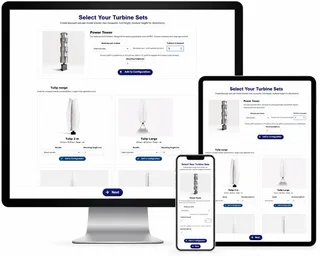
Step 1
Enter your postcode
Start designing your wind energy system in seconds.
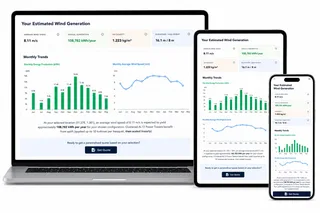
STEP 2

Choose a location
STEP 3
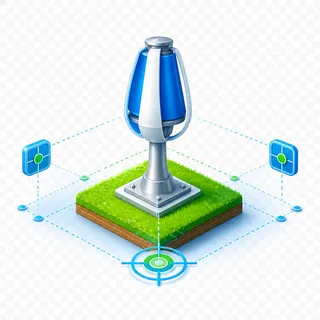
Place your cluster
Tap the map where you want the turbine cluster to go.
STEP 4

Instant generation forecasts
Compare different turbine layouts and see annual generation forecasts instantly.
STEP 5

No commitment required
Explore different configurations before deciding whether to request a quotation.
Related articles
Mo's Mission Nominations
FAQ
Need Help? RoboMo's Got Answers
Who owns solar panels in a UK PPA?
In most UK solar Power Purchase Agreements, the panels are owned by the PPA provider, funder, or asset owner, not by the homeowner, tenant, or business using the electricity. The customer usually owns or occupies the property and agrees to buy the solar electricity generated on site at an agreed price per kWh. The contract should clearly state who owns the panels, inverters, mounting kit, meters, cabling, monitoring equipment, and any replacement parts.
Do I own the panels if they are installed on my roof?
No, not automatically. Solar panels being physically attached to your roof does not usually mean you own them. In a typical PPA, the property owner grants roof rights and access rights so the provider can install, operate, maintain, repair, and remove the system, while the equipment remains the provider’s asset during the contract term.
What does the customer pay for in a solar PPA?
The customer normally pays for the solar electricity they use on site, usually through a pence-per-kWh tariff. The tariff may be fixed, indexed to inflation, linked to market prices, or set by another formula in the agreement. The customer will usually still need a grid electricity contract because solar generation will not cover all demand at all times, especially overnight and during lower-output winter periods.
Who maintains the panels under a PPA?
Maintenance is usually the responsibility of the PPA provider because the provider owns the system and relies on it generating electricity. This often includes monitoring, fault diagnosis, repairs, inverter replacement, warranty claims, electrical checks, and general performance management. The contract should confirm exactly what is included, what is excluded, how quickly faults must be addressed, and who pays for cleaning, roof access, damage, or temporary removal.
Who monitors the solar system in a PPA?
The provider usually monitors the system, especially in commercial PPAs, because generation data is needed for performance management and billing. The agreement should explain how monitoring is carried out, who receives fault alerts, what happens if the communications connection fails, whether the customer receives reports or portal access, and how meter readings are used or disputed.
Who receives export payments from a PPA system?
Export income usually goes to the system owner unless the contract says otherwise. If the PPA provider owns the panels, the provider will normally receive payments for electricity exported to the grid. Customers should not assume they will receive Smart Export Guarantee payments, Feed-in Tariff income, renewable certificates, or environmental benefits unless those rights are clearly given to them in the agreement.
What happens if the roof needs repairs?
The PPA should set out what happens if the roof needs repair, replacement, inspection, or refurbishment during the contract term. It should explain who can request temporary panel removal, how much notice is needed, who pays for scaffolding, storage, removal, reinstatement and recommissioning, and whether the customer must compensate the provider for lost generation while the system is offline.
What happens at the end of a solar PPA?
The end-of-term position depends on the contract. Some PPAs allow the customer to buy the panels, some allow renewal, some require removal, and some may transfer ownership to the customer. Ownership does not automatically transfer unless the agreement clearly says it does. The contract should state whether a payment is due, what equipment is included, what condition it must be in, and whether warranties are transferred.
Can I buy the panels during or after the PPA?
Some PPAs include a buyout option, but it is not guaranteed. The buyout price may be fixed, based on fair market value, linked to a depreciation schedule, or calculated using a compensation formula. Customers should check whether they can buy the system early, at the end of the term, or only with the provider’s consent.
What happens if I sell the property with PPA panels installed?
A property sale can be affected by a solar PPA because the panels may be owned by a third party and supported by roof rights, access rights, or a lease or licence. The buyer, lender, landlord, freeholder, or solicitor may need to review the agreement. The PPA should explain whether it can be assigned to a new owner or occupier, whether consent is required, and whether early termination or buyout charges apply.
Is a solar PPA the same as buying panels?
No. With an outright purchase, the homeowner or business normally owns the solar PV system and receives the main benefits of generation and export, subject to their energy arrangements. With a PPA, the provider usually owns the system and the customer buys electricity from it. A PPA can reduce upfront cost and shift maintenance responsibility to the provider, but it also creates a long-term contract and limits ownership control.
Is a PPA the same as a solar lease?
Not exactly. In a solar PPA, the customer normally pays for the electricity generated and used on site. In a solar lease, the customer may pay a regular fee for use of the equipment. Both can involve third-party ownership, but the payment structure, export rights, maintenance responsibilities, and exit terms can differ significantly, so the contract wording is more important than the label used.
Who insures the panels in a PPA?
The provider usually insures the solar equipment, but the contract should confirm this and explain how it interacts with the building owner’s property insurance. It should also state who covers public liability, roof damage, damage caused by third-party contractors, fire or weather damage, and any loss that occurs during maintenance or temporary removal.
Can the provider access my roof whenever they want?
The provider will usually need access rights for installation, inspection, maintenance, repairs, meter checks, and removal. However, the contract should set limits on how access is arranged, how much notice is required, what happens in emergencies, and what health and safety rules apply. For commercial properties, access arrangements should also fit around site security, working hours, tenant obligations, and roof safety requirements.
What should I check before signing a solar PPA?
You should check the ownership clause, tariff, indexation, metering and billing rules, maintenance scope, monitoring obligations, export income, insurance, roof rights, roof repair process, property sale rules, early termination charges, renewal options, and end-of-term ownership position. For commercial PPAs, independent legal, technical, and property advice is usually sensible because the agreement can affect the building for many years.