


East–West Solar Panels: Why Two MPPT Inputs Matter
Published: 2026-10-08 15:47:56
Updated: 2026-10-08 09:01:14
East and west roof slopes peak at different times. Here's why they need separate MPPT inputs, and why two DC sockets on an inverter isn't the same thing.
East–West Solar Panels - Why Two MPPT Inputs Matter
East and west roof slopes peak at different times. Here's why they need separate MPPT inputs, and why two DC sockets on an inverter isn't the same thing.
East–West Solar Panels: Why Two MPPT Inputs Matter
East–West Solar Panels: Why Two MPPT Inputs Matter
If your roof ridge runs roughly north–south, you have an east face and a west face, and it is tempting to put both on one inverter input and let the inverter sort it out. It will not. Separate MPPT inputs let each face peak on its own. One tracker holds one voltage. Wire both orientations to it and neither face sits on its own peak.
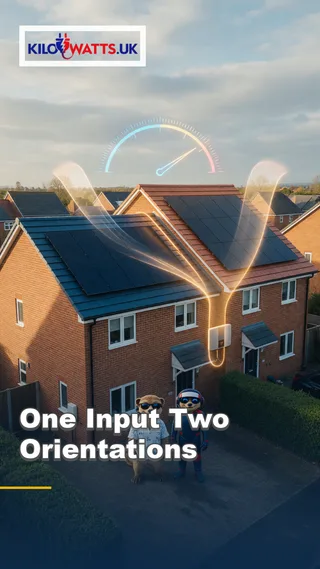
One tracker can only hunt one peak
A solar panel does not have a fixed output. At any moment, depending on the light and how warm the panel is, there is one mix of voltage and current that gives the most watts. Push the voltage higher and the current collapses. Pull it lower and you leave power on the table. That sweet spot is the maximum power point, and an MPPT keeps nudging the voltage, hunting for it as the sky changes.
part that matters. The tracker sets one operating voltage, and everything connected to it has to live at that voltage. Fine when every panel on it sees roughly the same conditions. Not fine when you ask one tracker to serve two roof faces that are never in the same sun at the same time. East wants the morning. West wants the afternoon. One voltage cannot be both answers.
Both faces lose, not just the dim one
When an east–west array underperforms on a single tracker, the panels are not the problem. They can still make what the light on them allows. They are being held at the wrong voltage to do it.
Take a bright mid-morning. The east slope is in full sun and wants one point on its curve. The west slope is in its own shadow, making far less, and its best point sits somewhere else. The tracker picks one voltage. That compromise is not the maximum for either array.
People assume the shaded face simply holds the bright one back. Both lose. The sunlit east array gives up output because it is parked somewhere unhelpful on its curve. The dim west array gives up output for the same reason. After midday the sun crosses the ridge and the bargain flips. Over a full day you get one blunt curve that never quite peaks in either direction. Keep this separate from shading. A chimney or a tree is a light problem. Orientation mismatch is an electrical one: there is plenty of light, just not the same amount on both faces at once. More panels on the same input will not fix that. A second tracker will. On a grey day the penalty shrinks, because diffuse light reaches both faces fairly evenly. UK roofs still make useful power in cloud. It is the bright, clear days — the ones you were counting on — where a shared tracker costs you most.

Two sockets are not two trackers
Count the plugs under the inverter and you may see two DC inputs. That does not mean two trackers. Sometimes those inputs are paralleled inside onto a single MPPT. The inverter takes two strings and still holds one voltage across both of them.
Split east and west across those sockets and the wiring looks tidy. Electrically, nothing has changed. Two strings sharing one tracker do not let either face peak.
Read the datasheet, not the brochure. The line you want is the number of MPP trackers, or independent MPPTs. The number of DC inputs, or strings per MPPT, is a different claim. Two inputs on one tracker is one product. Two inputs on two trackers is another. Ask which you are being quoted, and ask for it in writing.
A split array changes the shape of the day
Give each face its own tracker and you do not only pick up a bit of yield. The day changes shape.
A south array tends to give one tall midday hump. A properly split east–west array gives two gentler peaks, one mid-morning and one late afternoon. Together they fill more of the day than the single flattened compromise ever did. Wider, not just bigger.
For many UK homes that width is the useful part. Morning generation lands while breakfast is happening. Afternoon generation is still there when people get home and start cooking, or when an EV plugs in. Power you use as it is made does more for you than power you export, so a curve that overlaps how you actually live is doing the work. A battery gets a longer, steadier charge rather than a short midday spike. East–west also often lets you use both slopes instead of leaving one empty. That only pays if the electrics respect the two orientations. Extra panels on one shared tracker just scale up the same compromise.
Ask this before anyone drills a bracket
If the panels will sit on more than one face, get these answers before you sign.
Ask for the modelled shape of a day, not only an annual total. One kWh figure hides the flattened curve. Get the MPPT split written on the design drawing, so what you agreed is what gets installed. An east–west roof is not a compromise you have to accept. It rewards being wired honestly. The panels were never the limit. The limit is one tracker trying to find one answer for two faces that are never in the same light. Separate MPPT inputs, and each face peaks on its own schedule. Muddy the sockets up with the trackers, and you can have a neat install that underdelivers on every bright day for years. The question is small: how many independent MPPTs, and which array is on which?
Plan, Compare & Buy Renewable Energy Solutions
AI does the thinking.
You get the perfect solar match.
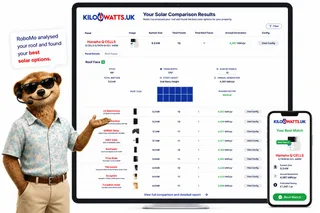
Use RoboMo™ to assess your property, compare available technologies and connect with trusted UK installers, suppliers and manufacturers.
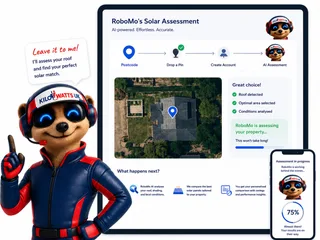
Simply enter your postcode, drop a pin on your roof, create your free account and let RoboMo™ analyse your property to find the best solar panels for your home.

You don't have to think
RoboMo™'s AI analyses your roof and does all the hard work.

Accurate & tailored
AI-powered assessment based on your roof, location, and conditions.

Best options, maximum savings
Compare top solar panels for the best performance and value.

Simple, fast & effortless
Provide a few details, sit back and watch your results unfold.
STEP 1
Choose Home, Business or Industrial
Enter your postcode to start your assessment.
STEP 2

Drop a pin on your roof
STEP 3

Create your free account
STEP 4

Sit back and watch RoboMo™ work
RoboMo™ analyses your roof and builds your personalised solar comparison.

Step 1
Enter your postcode
Start designing your wind energy system in seconds.
Are you an installer, distributor or renewable energy business?
Kilowatts UK is expanding the Flower Turbines partner network across the UK.
Become A Flower Turbines PartnerKilowatts UK is an authorised representative
Flower Turbines
Compact vertical-axis turbines built for real UK sites, not just open farmland.
They start in light wind, sit in a small footprint, and are bird-safe by design. Cluster them as a bouquet and the group performs better together than the same turbines standing alone. Enter your postcode for a location-based generation estimate. Figures use area weather data and will differ if buildings, trees or hills sit in the way.
Starts in light UK wind
Built to generate in typical UK wind, not only open farmland.
Small rooftop or ground footprint
Compact towers for roofs, yards and tight sites.
Bird-safe slow rotation
Slow vertical-axis spin, bird-safe by design.
Bouquet clusters raise output
Grouped turbines outperform the same units standing alone.


STEP 2

Choose a location
STEP 3

Place your cluster
Tap the map where you want the turbine cluster to go.
STEP 4

Instant generation forecasts
Compare different turbine layouts and see annual generation forecasts instantly.
STEP 5

No commitment required
Explore different configurations before deciding whether to request a quotation.
FAQ
Need Help? RoboMo's Got Answers
Why do east–west solar panels need two MPPT inputs?
An MPPT holds one operating voltage for every panel on that tracker. East and west slopes are out of step: one is bright in the morning and the other in the afternoon, so they do not share a best voltage. Separate trackers let each face sit at its own maximum power point. One shared tracker forces a compromise that neither face wants.
What happens if both roof faces share one tracker?
The inverter picks one voltage that is not the peak for either slope. The bright face is pulled off its maximum, and the dim face misses its own peak too. Across the day you get a flattened curve rather than a proper morning peak and afternoon peak. The loss is largest on clear days, when the two faces see very different light.
Are two DC sockets the same as two MPPTs?
No. Some inverters have two pairs of DC terminals that are joined inside onto a single MPPT. In that case east on one socket and west on the other only tidies the wiring; both strings still share one voltage. Check the datasheet for the number of independent MPPTs, not the number of inputs or strings per tracker, and get the split in writing.
Is this the same problem as shading?
No. A chimney, tree or neighbouring roof blocks light. Orientation mismatch is electrical: there is plenty of sun, but not the same amount on both faces at once. Adding more panels to the same input does not fix that. Hard shade on one slope is a separate question, and may need optimisers or microinverters so those panels can track individually.
How does a split east–west array change the shape of the day?
A south-facing array tends to give one tall hump around midday. With each orientation on its own tracker, an east–west array gives two gentler peaks, mid-morning and later afternoon. That wider curve can match kettle, shower, cooking and evening EV charging better than one short midday surge. Energy you use as it is made is generally more valuable to you than energy you export.
Does a shared tracker matter less on cloudy days?
On grey days, diffuse light reaches both slopes more evenly, so the mismatch penalty shrinks. The cost shows up most on bright, clear days, when one face is strongly lit and the other is not. Those are often the days you were counting on for generation. A second tracker is what stops that mismatch, not extra panels on the same input.
What should I ask before the installer fits the brackets?
Confirm how many independent MPPTs the inverter has, from the manufacturer’s datasheet, and which array is on which tracker. Ask that nothing else, such as a dormer or garage, is paralleled onto a main east or west string. Check that each string length stays inside that tracker’s voltage window, including on a cold morning when panel voltage rises. Ask to see the modelled shape of the day, not only the annual total, and have the MPPT split on the drawing.
Can I use both slopes if the ridge runs roughly north–south?
Yes, east–west often lets you use both slopes instead of leaving one empty. That only works well if the electrical design treats the two orientations separately. Extra panels on one shared tracker give the compromise more to mismanage. Two independent MPPTs, with east on one and west on the other, are what let each face peak on its own.