


Solar Diverters: Turning Surplus Solar Into Hot Water
Published: 2026-08-23 11:56:48
Updated: 2026-10-06 12:49:51
How a solar diverter sends midday surplus into your immersion heater, why tanks heat from the top down, and whether it suits your UK home.

Solar Diverters - Turning Surplus Solar Into Hot Water
How a solar diverter sends midday surplus into your immersion heater, why tanks heat from the top down, and whether it suits your UK home.
Surplus Solar Can Become Hot Water: How Diverters Actually Work
If your solar panels generate more electricity than the house is using at that moment, the excess normally flows out to the grid. That's fine - but it isn't the only option. A solar diverter watches that surplus and sends it into the immersion element of your hot water cylinder instead, converting spare kilowatts into stored heat you can use hours later. It's one of the least glamorous and most quietly sensible pieces of kit in UK home energy: no moving parts on show, no app theatrics, just a small unit on the utility room wall making sure midday sunshine ends up in the bath rather than on the wire. This article explains what a diverter does, why the tank heats from the top down, how long that heat actually lasts, and how to decide whether it's the right addition to your system - or whether a battery, or nothing at all, would serve you better.
Why your solar system produces surplus in the first place
A typical UK household's electricity demand is spiky and low for most of the day. The kettle, the washing machine, the oven - these come in bursts, usually clustered around breakfast and evening. Solar generation is the opposite: a smooth curve that peaks around the middle of the day, precisely when many homes are quiet, empty or running nothing more demanding than a fridge. If you want the wider picture before getting into diverters, it helps to understand how solar works in the UK.
That mismatch creates a gap. On a bright day the generation curve rises well above the flat baseline of household demand, and everything in that gap has to go somewhere. Without storage or diversion, it's exported. Export isn't wasted - it goes to your neighbours and you may be paid for it - but the value you receive for exported units is generally lower than the value of the units you avoid buying. That single asymmetry is the entire economic argument for both batteries and diverters: using your own generation is usually worth more than selling it.
It's also worth knowing that the surplus isn't confined to cloudless July afternoons. UK homes still generate useful solar power on overcast days - diffuse light through cloud is genuinely productive - so a diverter often has something to work with far more often than people expect.
What a solar diverter is and what it does
A solar diverter is a small controller, usually mounted near the consumer unit, with a current sensor clamped around your incoming supply cable. It measures the direction and size of the power flowing at your meter point many times a second. The moment it sees energy leaving the property - export - it opens a proportional path to the immersion element in your hot water cylinder and feeds that surplus into it instead. That fits into the bigger question of where solar power goes once it is generated.
The crucial word is proportional. A diverter doesn't switch the immersion on and off like a timer. It modulates, delivering only the amount of power that would otherwise have been exported. If you have 400 watts spare, it sends roughly 400 watts to the element. If the kettle goes on and the surplus disappears, the diverter backs off within moments so you never end up importing expensive grid electricity to heat water you didn't intend to heat.
That behaviour is what makes it fit-and-forget. There's nothing to schedule, no daily decision to make. The unit simply ensures that spare generation has somewhere useful to go before it leaves the building.

Into the immersion element: why the tank heats from the top down
The destination is an ordinary immersion heater - an electric element inside an insulated hot water cylinder, typically rated around three kilowatts, though the diverter will rarely be pushing it that hard. It behaves like a very large, very slow kettle.
What surprises people is the direction of heating. Hot water is less dense than cold, so it rises. Heat entering the cylinder collects at the top and forms a distinct hot layer, with cooler water sitting beneath it. This is called stratification, and it's genuinely useful: it means even a partial charge gives you usable hot water, because the draw-off point is at the top of the cylinder. You don't need to heat the whole tank to get a hot shower - you need to heat the top of it.
Insulated storage: why it's still hot when the sun has gone
The reason this works at all is that hot water is a genuinely good short-term energy store. A modern factory-insulated cylinder loses heat slowly - slowly enough that water heated at two in the afternoon is still comfortably hot for washing up at eight in the evening, and often still usefully warm the following morning.
That's the whole trick. You are time-shifting energy without a battery, using a piece of equipment most homes with a cylinder already own. Generation falls to zero at sunset, the graph flatlines, and the heat you banked hours earlier comes out of the tap regardless.
The quality of the insulation matters. An older cylinder with a loose jacket, or long uninsulated pipe runs leaving the top of the tank, will bleed heat far faster than a modern foam-insulated unit. If you're considering solar water heating and your cylinder is elderly, insulating the first metre or two of pipework and checking the jacket is one of the cheapest improvements you can make alongside it.
Diverter or battery? An honest comparison
These are not competing products so much as different tools, and the sensible answer for many homes is one, the other, or both in sequence.
A diverter only ever does one job: it makes hot water. Once the cylinder is at temperature, it stops, and any further surplus exports as normal. It is mechanically simple, sits on an appliance you already have, and its 'storage capacity' is however many litres your cylinder holds.
A battery is far more flexible - it can run lighting, the fridge, the television, the EV charger - but it is a more significant piece of equipment with its own space, siting and commissioning requirements. Its stored energy can also be used to heat water via the immersion if you want it to, though converting stored electricity into heat is a lower-value use than running the rest of the house. For a fuller explanation, start with the home battery basics before comparing it with a diverter. A reasonable rule of thumb: if your home has a hot water cylinder and a meaningful daily hot water demand, a diverter is a low-complexity way to capture surplus. If your surplus regularly exceeds what the cylinder can absorb, or you want resilience and evening load coverage, that's a battery conversation. Where both are present, most systems will prioritise the battery first and divert to hot water once the battery is full - which is usually the correct order of value.
Checklist: is a solar diverter right for your home?
Work through these before you spend anything:
- Do you have a hot water cylinder? If your home runs on a combi boiler with instantaneous hot water and no tank, there is nothing to divert into. This is the single most common disqualifier.
- Does the cylinder have a working immersion element? Many do, sometimes unused for years. It needs to be functional and on its own dedicated circuit.
- Is the cylinder well insulated? Poor insulation turns your store into a radiator. Check the jacket and the pipework leaving the top.
- Do you actually use much hot water? A household of four showering daily will absorb the surplus happily. A single occupant who showers at the gym will fill the tank by Tuesday and export the rest anyway.
- Are you at home during the day? If you are, some of that midday generation is already being consumed by the house, leaving less surplus to divert. Still worth doing - just with more modest expectations.
- Is there a battery in the plan? Decide the priority order now rather than retrofitting logic later.
- Who is doing the work? Electrical work and, in particular, anything involving an unvented hot water cylinder is regulated in the UK and should be carried out by a suitably qualified installer. Don't improvise around a pressurised vessel.
- Have you considered legionella management? Water stored persistently at lukewarm temperatures needs periodic heating to a safe temperature. Most diverters and cylinder controls provide for this; make sure yours does and that it's set up correctly.
Common follow-up questions
Will a diverter stop me being paid for export? Only for the units it uses. Anything genuinely surplus to the cylinder's needs still exports as before. The question is simply whether a unit is worth more to you as hot water than as an exported unit - for most households with a cylinder, it is.
Does it work in winter? Yes, though less dramatically. Generation is lower and demand is higher, so surplus periods are shorter. You may get a partial top-up rather than a full tank, which reduces how hard the boiler has to work rather than replacing it.
Will it ever heat water from the grid by mistake? A correctly installed and configured diverter should not. It responds to measured export, not to a timer. Most units do offer an optional manual boost, which does draw from the grid - that's a deliberate feature, not a fault. Can it work with a heat pump? Homes with heat pumps usually have a cylinder, so an immersion element is often present as backup. Whether diverting to it makes sense depends on the system design, because a heat pump generally produces heat more efficiently than a direct electric element. Ask your installer to model it rather than assuming. Does it need internet or an app? No. The core function is local and hardware-based. Monitoring is a convenience, not a requirement. Is it noisy? No. There's nothing to hear beyond the occasional soft tick of a relay and, eventually, the pipes warming.
Video transcript
Mo: Spare solar just goes to the grid? RoboMo: Not always. A diverter can store it as hot water.
Mo: So where does that spare power actually go? RoboMo: Into the immersion element. The tank heats from the top down.
Mo: And it's still hot when the sun's gone? RoboMo: Yes. Insulated storage holds that heat for hours. Mo: Spare solar just goes to the grid? RoboMo: Not always. A diverter can store it as hot water. / Mo: So where does that spare power actually go? RoboMo: Into the immersion element. The tank heats from the top down. / Mo: And it's still hot when the sun's gone? RoboMo: Yes. Insulated storage holds that heat for hours. A solar diverter isn't a headline product. It won't take your house off-grid and it won't run your kettle at midnight. What it does is close a small, persistent gap in most solar installations: the hours when the roof is producing more than the house needs and there's nowhere obvious for that energy to go. By pushing that surplus into an immersion element, it converts electricity you'd have sold cheaply into heat you'd otherwise have bought - and then stores it in a well-insulated cylinder that quietly holds onto it long after the generation curve has fallen to zero. The engineering is unremarkable, which is rather the point. Whether it's right for you depends almost entirely on one question - do you have a cylinder, and do you use the hot water in it? If the answer is yes to both, it deserves a place on the shortlist alongside, not instead of, storage. If you're weighing up hot water diversion, battery storage or both, it's worth having someone model your actual generation and demand rather than guessing. You can compare home solar options, read more about how we approach residential solar design, or arrange a no-obligation survey when you're ready - there's no rush and no pressure either way.
Plan, Compare & Buy Renewable Energy Solutions
AI does the thinking.
You get the perfect solar match.
Use RoboMo™ to assess your property, compare available technologies and connect with trusted UK installers, suppliers and manufacturers.
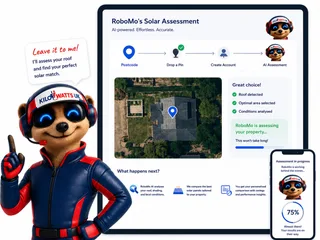
Simply enter your postcode, drop a pin on your roof, create your free account and let RoboMo™ analyse your property to find the best solar panels for your home.

You don't have to think
RoboMo™'s AI analyses your roof and does all the hard work.

Accurate & tailored
AI-powered assessment based on your roof, location, and conditions.

Best options, maximum savings
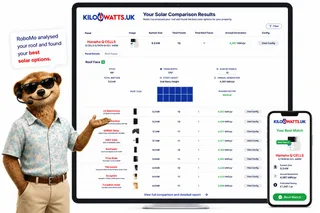
Compare top solar panels for the best performance and value.

Simple, fast & effortless
Provide a few details, sit back and watch your results unfold.
STEP 1
Choose Home, Business or Industrial
Enter your postcode to start your assessment.
STEP 2

Drop a pin on your roof
STEP 3

Create your free account
STEP 4

Sit back and watch RoboMo™ work
RoboMo™ analyses your roof and builds your personalised solar comparison.

Step 1
Enter your postcode
Start designing your wind energy system in seconds.
Are you an installer, distributor or renewable energy business?
Kilowatts UK is expanding the Flower Turbines partner network across the UK.
Become A Flower Turbines PartnerKilowatts UK is an authorised representative
Flower Turbines
Compact vertical-axis turbines built for real UK sites, not just open farmland.
They start in light wind, sit in a small footprint, and are bird-safe by design. Cluster them as a bouquet and the group performs better together than the same turbines standing alone. Enter your postcode for a location-based generation estimate. Figures use area weather data and will differ if buildings, trees or hills sit in the way.
Starts in light UK wind
Built to generate in typical UK wind, not only open farmland.
Small rooftop or ground footprint
Compact towers for roofs, yards and tight sites.
Bird-safe slow rotation
Slow vertical-axis spin, bird-safe by design.
Bouquet clusters raise output
Grouped turbines outperform the same units standing alone.
STEP 2

Choose a location
STEP 3
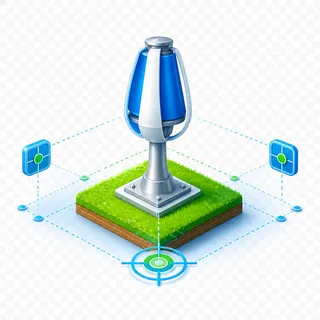
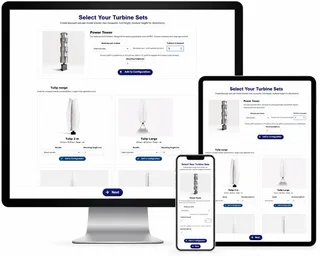
Place your cluster
Tap the map where you want the turbine cluster to go.
STEP 4

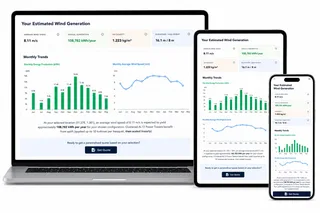
Instant generation forecasts
Compare different turbine layouts and see annual generation forecasts instantly.
STEP 5
No commitment required
Explore different configurations before deciding whether to request a quotation.
FAQ
Need Help? RoboMo's Got Answers
What does a solar diverter do?
A solar diverter sends spare electricity from your solar panels to the immersion heater in your hot water cylinder. It only uses power that would otherwise be exported to the grid. The result is stored hot water for later use, rather than sending all surplus generation away.
Do I need a hot water cylinder for a solar diverter?
Yes. A diverter needs an immersion element in a hot water cylinder to send the surplus electricity into. If you have a combi boiler with no hot water tank, there is usually nowhere for a standard solar diverter to work.
Will a solar diverter stop me being paid for export?
It will reduce export only by the amount of surplus electricity used to heat your water. Any generation left over once the cylinder is hot will still export as normal. The key question is whether that unit of electricity is more useful to you as hot water or as export income.
Does a solar diverter work in winter?
Yes, but usually with less impact than in spring or summer. Winter solar generation is lower and household demand is often higher, so there may be fewer surplus periods. It may still provide useful top-ups and reduce how much your boiler or other heating system has to do.
Can a solar diverter accidentally heat water using grid electricity?
A correctly installed and configured diverter should respond to measured export, not import from the grid. It should back off when household demand rises and surplus disappears. Some units include a manual or timed boost, but that is a deliberate setting and may use grid electricity.
Is a solar diverter better than a home battery?
They do different jobs. A diverter can only store surplus energy as hot water, while a battery can supply electricity to appliances later in the day. If you have a cylinder and use plenty of hot water, a diverter can be a simple option; if you want broader evening electricity use or backup features, a battery may be worth considering.
Can a solar diverter work with a heat pump?
It can sometimes work where there is a compatible cylinder and immersion element. However, a heat pump usually produces heat more efficiently than a direct electric immersion heater. The best setup depends on the system design, so it should be assessed by a competent installer rather than assumed.
Do solar diverters need much maintenance?
The diverter itself is generally a low-maintenance electrical control unit. The important checks are that the immersion heater, cylinder controls and any safety settings are working correctly. Stored hot water systems also need sensible temperature management, including protection against prolonged lukewarm storage.