


Compare leading solar subscription buyout options.?
Published: 2026-10-07 01:27:13
Updated: 2026-10-06 18:27:42
Compare UK solar subscription buyouts by contract path: stay subscribed, buy the kit, commission a new install, or exit without taking ownership.

Compare leading solar subscription buyout options.?
Find out compare leading solar subscription buyout options. in the UK, including costs, what affects price, and how to choose an installer.
Compare solar subscription buyout options by path, not by brand
There is no regulated league of leading solar subscription buyout options, and no single UK lump sum. Compare the live contract and a written price for that property across four paths: stay subscribed, buy the existing kit, commission a separate new install, or exit without taking ownership. The figure, remaining equipment life, roof condition, and what actually transfers decide which path is rational.
A solar subscription usually means a third party owns the panels and related equipment, while the household pays a fee or a rate for the electricity produced. A buyout is a contractual right, or a later negotiated option, to pay a lump sum so ownership transfers and the subscription ends. Marketing names can look alike on a quote and still differ on title, export payments, and the end of the term.
This decision is for people who already have third-party kit on the roof, or a live offer that includes a later buyout. It is not a ranking of solar installation companies. It is a weak starting point if there is no array and no written buyout right. If the search is for a "leading" product, the useful split is by contract family. Formulae, admin fees, and indexation are not standard across the market. This page will not invent a brand order, a national price, or a grant that a buyout somehow creates.
How lease, power purchase and rent-a-roof endings differ
An equipment lease leaves title with the lessor until a purchase is completed. Payments are for use of the kit. A buyout may exist only on option dates, or as a formula in a schedule. At the end of the term the default might be return of the goods, an extension, or a transfer. Only the schedule says which. Earlier rent is not a deposit toward ownership unless the contract says it is.
A power purchase agreement usually charges for measured generation, sometimes with a deemed element. The plant owner often keeps export income while the agreement runs. A buyout can be a scheduled right or only a negotiation. Ending the agreement without a purchase can mean the plant owner removes the system, which is a different bill from the energy charges.
Rent-a-roof arrangements grant roof rights, often for a long term, in exchange for cheap or free electricity or a roof payment. The provider owns the array. Some older agreements contemplated a transfer at the end of the term. Others contemplated removal, or a purchase option that has to be exercised. Marketing from the years when these deals were sold is not evidence of what your deed does. A negotiated price, where the contract has no buyout right, is a fifth and weaker case. The provider may still name a figure, but the offer can be withdrawn. Treat that as a one-off proposal, not as a scheduled option you can compare like for like with someone else's formula.
A buyout is not early exit or a financed purchase
Ending the contract without taking the equipment is a different event. Early termination can still leave removal, roof reinstatement, or outstanding charges, even if the monthly fee stops. A financed purchase is different again. There the customer is already the intended owner, subject to the credit agreement, rather than buying kit that someone else has been operating.
Panels on the roof do not mean the occupier owns them. The household has been paying through fees or a power rate. A buyout is an extra capital cost on top of that history. Earlier payments do not automatically become equity. Many agreements use a remaining-term formula or a fair-market-value figure at the transfer date, so money already paid does not translate one-for-one into a lower lump sum.
Generation after transfer is also not guaranteed to match the provider's original savings illustration. Output depends on the real array, shading, inverter condition, and how the household uses electricity. The label on the original quote does not reset those facts. Buying the hardware may still leave a roof lease, wayleave, or option in place. Ask whether the price includes a release or deed of surrender of the rooftop agreement, or only a bill of sale for the equipment. A battery, meter, or monitoring contract added later may sit outside the equipment schedule. Check each line before treating the lump sum as the whole system.
What a comparable buyout price must include
Ask for the schedule that sets the buyout: the formula, the notice period, any admin fee, and whether the price is fixed, indexed, or described as fair market value. Fair market value without a definition and a worked figure for your system is difficult to compare with anything else. If the provider will not put a figure and a formula in writing, you do not yet have an option to compare.
System size, age, remaining term, inverter condition, degradation, and that formula drive the number. There is no reliable national range to quote here. Ignore generic percentages of original install cost unless those words appear in your own documents. A local solar installation company can report condition. It cannot rewrite the asset owner's formula.
The illustration should show the amount before tax, any tax treatment the provider is applying, and the total payable. Do not copy a VAT treatment from a quote for a new domestic installation. A transfer of equipment already on the roof can be a different supply. This page does not state a rate and cannot confirm relief. It also cannot confirm that a fixed-price window stays open if you miss the notice period written in the schedule. Roof condition, shading, orientation, and usable area still set how much the array can produce. Buying out a poorly producing system can be poor value even when the monthly fee feels high. Someone who uses most of the generation in the home may value ownership differently from someone whose benefit is mainly the subscription tariff structure.
How to test a written figure against remaining life
The method below is an editorial illustration so you can see the arithmetic. The figures are not a market price, not a quotation, and not valid as a price on the date you read them. Replace every input with the numbers in your own letter before you decide anything.
Suppose a written schedule uses a remaining-term method: the buyout equals unpaid subscription charges left on the term, plus a stated admin fee. In this illustration the charge is 50 pounds a month, 36 months remain, and the admin fee is nil. Remaining-term arithmetic is 50 times 36, which is 1,800 pounds, before any VAT the invoice actually applies. That product is a calculator check. It is not evidence that 50 pounds, 36 months, or 1,800 pounds is typical in the UK.
Suppose the same letter, or a second letter, states a fair-market-value figure of 2,200 pounds for the installed equipment as the provider assesses it. Do not average 1,800 and 2,200. Apply the contract. If it says the price is the higher of remaining charges and fair market value, this illustration would point to 2,200 pounds before VAT. If it says the price is the remaining-term figure only, the fair-market-value number is context, not the price. If it says fair market value only, the 1,800 figure is not your discount. A claim that buyouts are "usually" some percentage of install cost is not a method unless that sentence is in your schedule. Then set the written total beside remaining life, still as a method rather than a result. If the inverter is due for replacement and the roof covering is near the end of its life, note those future costs beside the lump sum. The provider's figure will not include your re-roof. A lower lump sum on tired equipment can be worse value than a higher lump sum on a sound roof with a younger inverter. This page cannot tell you which of those is true on your house.
How stay, buyout, new install and exit differ
In practice, the comparison is about outcomes, not slogans. Staying subscribed keeps the current owner's maintenance duties and charging method, but leaves the array encumbered if you sell or remortgage. Buying out can simplify title, yet it can also move performance and repair risk onto you while the kit is already mid-life. A new install is a different project: new design, a new grid application where the equipment or export limit changes, and new equipment life, with its own cost and disruption. Exit without ownership stops the subscription story only if the termination clause actually ends the charges and the roof rights.
Overview
Read any new-install proposal beside the written buyout illustration for the same roof, not beside a national average. If the existing agreement forbids a second array, or reserves the roof, a fresh design is not yet a real alternative. The buyout price is often calculated by the asset owner, not by the original installer.
When buying the existing array is the wrong purchase
Ownership tends to suit someone who can pay the lump sum without straining other bills, expects to stay long enough to use the remaining equipment life, and has clear rights to keep the array. It is less suitable if the roof needs renewal soon, the inverter is near the end of its service life, household use is about to change sharply, or the contract leaves maintenance and performance risk vague after transfer.
A new install can be the cleaner comparison when layout, shading, or a failed inverter means the existing system no longer matches how the building is used. That is a site judgement, not a rule that newer kit is always better. If panels must come off for roof work, the agreement may restrict who may remove and refit them. That cost sits outside the buyout and can be more than a simple electrical visit.
People with no third-party system should compare purchase, finance, and any new subscription on their own terms. They are not buying out kit already commissioned on the roof. A household that needs the fee to stop, but does not want mid-life plant, should price exit and reinstatement properly rather than treating a buyout as the only way off the contract.
What may need reassignment after a transfer
Permission to keep the array can involve a freeholder, mortgage lender, lease, or other title restriction. Selling or remortgaging often needs the buyer or lender to accept an existing rooftop agreement, or a clear plan to remove it. Scotland, England and Wales, and Northern Ireland are not one property or consumer process. Do not treat one UK-wide rule as covering every sale. This page cannot confirm how a particular lender or land registry entry will treat the transfer. Export payments need a separate check from title to the panels. A legacy Feed-in Tariff registration, where one exists, is an existing scheme arrangement with a FIT licensee. It is not the same product as a Smart Export Guarantee contract with an electricity supplier, and a buyout does not automatically convert one into the other. Ask the FIT licensee, or the supplier named on any export contract, what evidence they need before assuming payments continue in a new name on the day of transfer. This page cannot confirm eligibility, meter requirements, or whether a named registration can be assigned. The distribution network operator's record is about the connection, not about who paid for the panels. If inverters, batteries, or export limits change at the same time as the buyout, that can be a different connection question, often discussed under G98 or G99 depending on capacity and that operator's process. A pure change of owner, with the same equipment and the same export limit, should not be described as automatically approved or automatically updated. Ask whoever holds the commissioning pack which operator was notified, and whether the responsible person on that record needs updating. This page cannot confirm that a notification is, or is not, required in every area. Manufacturer warranties and any insurance-backed guarantee are contracts with their own assignment clauses. Some can be assigned with notice. Some stay with the original contracting party, or end on a change of owner. An MCS certificate, where the original job has one, evidences how the system was commissioned. It is not a title deed, and it is not proof that cover has moved. If a building control or competent-person reference exists, keep it with the pack. Absence from the homeowner's file is not the same as absence of a notification, but it should be chased before the lump sum is paid. Nothing in a buyout creates a grant or a regulated tariff entitlement.
What to inspect before you pay
A pre-buyout inspection is worthwhile because transferred kit is in service, not new. The survey should look at remaining roof life, inverter age, isolators, cabling, labelling, and whether monitoring still works. Serial numbers, commissioning sheets, and warranty start dates matter more than the logo on the quote. The surveyor's job is condition. It is not to certify the provider's fair-market-value arithmetic.
After transfer, responsibility can split between the former owner, the manufacturer, and a local installer. Homeowners often find that monitoring access and isolator labelling were never in their name. That is a practical handover issue, not a reason to assume the system is unsafe, but it should be resolved before the lump sum is paid. If the documents do not say who owns the inverter, who may claim export payments, and who attends faults, you do not yet have enough to choose.
Who should compare a buyout, and who should stop
The comparison is for households and landlords already on a subscription, lease, power purchase agreement, or similar third-party array, and for anyone holding a live offer that includes a later buyout. It also matters when selling, if the buyer wants the system unencumbered or the seller needs the cost of clearing the agreement.
It is a poor reason to proceed if the contract has no buyout right and the provider will not issue a written price. Until that schedule is in front of you, any typical buyout cost is guesswork. This page also cannot stand in for the FIT licensee's process, a supplier's export terms, the warranty or guarantee wording you hold, or a distribution network operator's own confirmation.
Next, request the buyout illustration in writing, note the notice period, and book a condition survey that is separate from the asset owner's calculation. Ask a conveyancer or lender early if a sale or remortgage is likely. Compare that written figure with the remaining equipment life, including likely roof and inverter work, and with a fresh design only if the existing contract allows the array to be removed or supplemented. If the letter will not show the formula, the total payable, and what happens to the roof agreement on transfer, stop and treat the offer as incomplete.
Plan, Compare & Buy Renewable Energy Solutions
AI does the thinking.
You get the perfect solar match.
Use RoboMo™ to assess your property, compare available technologies and connect with trusted UK installers, suppliers and manufacturers.
Simply enter your postcode, drop a pin on your roof, create your free account and let RoboMo™ analyse your property to find the best solar panels for your home.

You don't have to think
RoboMo™'s AI analyses your roof and does all the hard work.

Accurate & tailored
AI-powered assessment based on your roof, location, and conditions.

Best options, maximum savings
Compare top solar panels for the best performance and value.

Simple, fast & effortless
Provide a few details, sit back and watch your results unfold.
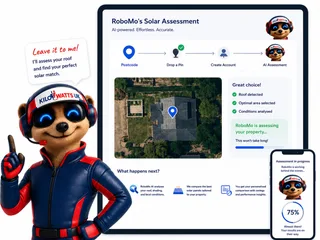
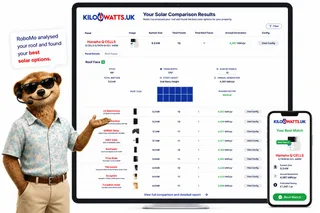
STEP 1
Choose Home, Business or Industrial
Enter your postcode to start your assessment.
STEP 2

Drop a pin on your roof
STEP 3

Create your free account
STEP 4

Sit back and watch RoboMo™ work
RoboMo™ analyses your roof and builds your personalised solar comparison.

Step 1
Enter your postcode
Start designing your wind energy system in seconds.
Are you an installer, distributor or renewable energy business?
Kilowatts UK is expanding the Flower Turbines partner network across the UK.
Become A Flower Turbines PartnerKilowatts UK is an authorised representative
Flower Turbines
Compact vertical-axis turbines built for real UK sites, not just open farmland.
They start in light wind, sit in a small footprint, and are bird-safe by design. Cluster them as a bouquet and the group performs better together than the same turbines standing alone. Enter your postcode for a location-based generation estimate. Figures use area weather data and will differ if buildings, trees or hills sit in the way.
Starts in light UK wind
Built to generate in typical UK wind, not only open farmland.
Small rooftop or ground footprint
Compact towers for roofs, yards and tight sites.
Bird-safe slow rotation
Slow vertical-axis spin, bird-safe by design.
Bouquet clusters raise output
Grouped turbines outperform the same units standing alone.
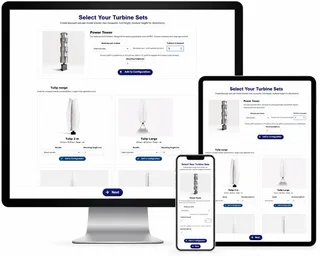
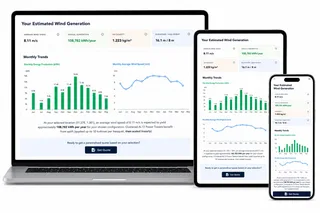
STEP 2

Choose a location
STEP 3

Place your cluster
Tap the map where you want the turbine cluster to go.
STEP 4

Instant generation forecasts
Compare different turbine layouts and see annual generation forecasts instantly.
STEP 5

No commitment required
Explore different configurations before deciding whether to request a quotation.
Related articles


FAQ
Need Help? RoboMo's Got Answers
What is a solar subscription buyout?
A solar subscription usually means a third party owns the panels and related equipment, while the household pays a fee or a rate for the electricity produced. A buyout is a contractual right, or a later negotiated option, to pay a lump sum so ownership transfers and the subscription ends. Marketing names can look similar and still differ on title, export payments, and what happens at the end of the term. Panels on the roof do not, by themselves, mean the occupier owns them.
Is there a leading UK buyout product or a standard lump sum?
There is no regulated league of leading solar subscription buyout options, and no single UK lump sum. Formulae, admin fees, and indexation are not standard across the market. Compare the live contract and a written price for that property, not a brand ranking or a generic percentage of the original install cost. If there is no array and no written buyout right, this comparison is a weak starting point.
How do lease, power purchase and rent-a-roof endings differ?
An equipment lease leaves title with the lessor until a purchase is completed, and a buyout may exist only on option dates or as a formula in a schedule. A power purchase agreement usually charges for measured generation, and the plant owner often keeps export income while the agreement runs. Rent-a-roof deals grant roof rights, often for a long term, while the provider owns the array. Only the deed or schedule says whether the default is return of the goods, removal, an extension, or a transfer. Older marketing is not evidence of what your documents do.
Is a buyout the same as ending the contract early?
No. Ending the contract without taking the equipment is a different event, and early termination can still leave removal, roof reinstatement, or outstanding charges. A financed purchase is different again: the customer is already the intended owner, subject to the credit agreement, rather than buying kit someone else has been operating. Earlier subscription payments are not a deposit toward ownership unless the contract says they are. A negotiated price, where there is no buyout right, can also be withdrawn and should not be treated as a scheduled option.
What should a comparable buyout price include?
Ask for the schedule that sets the price: the formula, the notice period, any admin fee, and whether the figure is fixed, indexed, or described as fair market value. Fair market value without a definition and a worked figure for your system is difficult to compare. The illustration should show the amount before tax, any tax treatment the provider is applying, and the total payable. Do not copy a VAT treatment from a quote for a new domestic installation, because a transfer of equipment already on the roof can be a different supply. If the provider will not put a figure and a formula in writing, you do not yet have an option to compare.
Does the lump sum cover the roof agreement, battery and monitoring?
Not necessarily. Buying the hardware may still leave a roof lease, wayleave, or option in place. Ask whether the price includes a release or deed of surrender of the rooftop agreement, or only a bill of sale for the equipment. A battery, meter, or monitoring contract added later may sit outside the equipment schedule. Check each line before treating the lump sum as the whole system. Roof works, inverter replacement, and any restricted removal and refit sit outside that figure unless the documents say otherwise.
What else may need checking after ownership transfers?
A change of equipment owner does not, by itself, move export payments, warranties, or network records into the household's name. A legacy Feed-in Tariff registration, where one exists, is not the same product as a Smart Export Guarantee contract, and a buyout does not automatically convert one into the other. Ask the FIT licensee or the supplier named on any export contract what evidence they need. Manufacturer warranties and any insurance-backed guarantee have their own assignment clauses, and an MCS certificate, where the original job has one, is evidence of commissioning rather than a title deed. If inverters, batteries, or export limits change, that can also raise a separate connection question with the distribution network operator.
When is buying the existing array the wrong comparison?
Staying subscribed, buying the existing kit, commissioning a separate new install, or exiting without ownership are different outcomes. A buyout can be poor value if the roof needs renewal soon, the inverter is near the end of its service life, or household use is about to change sharply. A new install is not yet a real alternative if the existing agreement forbids a second array or reserves the roof. If you need the fee to stop but do not want mid-life plant, price exit and reinstatement rather than treating a buyout as the only way off the contract. Permission from a freeholder, lender, or leaseholder, and the rules that apply in Scotland, England and Wales, or Northern Ireland, also need checking for that property.