


Choose a ppa provider uk
Published: 2026-09-22 19:36:58
Updated: 2026-09-23 05:14:55
To choose a PPA provider in the UK, compare the full contract and delivery capability, not just the advertised electricity rate.
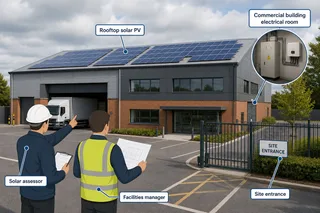
How to choose a ppa provider uk?
Understand how to choose a ppa provider uk in the UK, with clear explanations, examples, and practical next steps.
How to choose a PPA provider in the UK
To choose a PPA provider in the UK, compare the full contract and delivery capability, not just the advertised electricity rate. A credible provider should show clear funding, sound technical design, transparent metering and billing, defined maintenance obligations, sensible exit terms, and a workable plan for grid connection, property rights and environmental claims.
This guide is mainly for UK commercial, industrial, agricultural, education, charity and public-sector site owners or occupiers considering an on-site solar PPA. Domestic and very small-business PPA-style offers can raise different issues, including mortgage lender consent, lease restrictions, consumer protections and future saleability, so they need extra care.
A power purchase agreement is not simply a solar installation quote. It is usually a long-term electricity supply, property access and asset ownership arrangement. The provider should be judged as a funder, operator and contract counterparty as well as a solar installer.
Understand what kind of PPA you are being offered
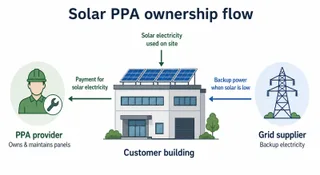
In UK solar, a PPA often means an on-site solar PPA. The provider funds, owns and maintains a solar PV system on your roof or land, and you buy the electricity generated by that system under an agreed pricing mechanism. The asset normally remains owned by the provider, funder or special purpose vehicle unless the contract says otherwise.
There are also off-site or corporate PPAs, where electricity is bought from a separate generator, and export PPAs, where a generator sells exported electricity to an offtaker or licensed supplier. These are different structures with different metering, settlement, supply and legal issues, so they should not be compared as if they are the same product. If you are still at the early research stage, a wider guide to commercial solar PPAs can help you understand the main models before you shortlist providers.
For smaller organisations and homeowners, the language can be confusing because “free solar”, roof lease, third-party ownership and PPA-style offers may be described in similar ways. If another party will own equipment on your property and you will buy electricity from it, read the arrangement as a long-term property and energy contract first, and as a solar offer second.
Check whether your site suits an on-site solar PPA
An on-site solar PPA is usually strongest where the building uses a meaningful amount of electricity during daylight hours. The more solar power you can use on site, the easier it is to justify the project without relying heavily on exported electricity, which may have different commercial value and different contractual treatment.
A serious provider should ask for half-hourly consumption data where available, current electricity import arrangements, roof or land information, site plans, operational hours and likely changes to demand. If the early offer is based only on annual spend and an estimated roof area, the design may not reflect how your building actually uses electricity.
Roof condition is often the first practical constraint. A roof close to replacement, affected by asbestos, lacking structural capacity, under warranty restrictions, or subject to complex landlord permissions can make a funded PPA difficult or uneconomic. For leased properties, landlord consent and alignment with the lease term can be as important as the solar generation forecast.
Compare providers on the contract, not just the tariff
The headline pence-per-kWh rate matters, but it is only one part of the value. You need to know whether the price is fixed, index-linked, periodically reviewed, discounted against grid electricity, subject to minimum purchase volumes, or affected by changes in law, tax, network charges or metering arrangements. Contract length is also central. Funded solar PPAs are commonly long-term arrangements because the provider needs time to recover capital and operating costs. A shorter term may look attractive, but the provider may then need a higher tariff, stricter buyout terms or a different end-of-term position. Use a like-for-like comparison so that every offer is judged against the same areas. The table below gives a practical framework for reviewing UK PPA proposals before legal drafting and board approval create momentum. It is also worth comparing the proposal with other commercial solar finance routes rather than treating a PPA as the only funded option.
Test the provider’s technical and operational capability
A credible PPA provider should be able to explain how the system will be designed, installed, connected, commissioned, monitored and maintained. In practice, the technical assessor should look at roof layout, shading, structural capacity, roof warranty, cable routes, electrical intake, switchgear, metering, fire access, safe maintenance access and future roof works.
UK grid connection requirements should be addressed early. Smaller systems may follow G98 or G99 processes depending on the connection arrangement, while larger commercial projects often need more detailed distribution network operator engagement before installation. The provider should state who manages the DNO application or notification, who pays related costs, and what happens if export is limited or reinforcement is required.
The provider should also be clear about standards, competence and evidence. MCS may be relevant for some smaller solar installations and consumer-facing contexts, but it should not be used as a vague substitute for proper commercial due diligence. For commercial works, ask how the provider manages design responsibility, electrical compliance, CDM duties, insurance, commissioning records, handover information and ongoing health and safety access.
Scrutinise indexation, take-or-pay and other contract red flags
Many PPA problems come from clauses that look routine until the site changes. A low opening tariff can be undermined by aggressive indexation, minimum payment obligations, expensive termination compensation or unclear treatment of roof access costs.
Ask the provider to provide the draft PPA, lease or licence documents early enough for proper review. Commercial teams often compare savings forecasts, while legal and property teams later discover that the risk allocation is more important than the first-year unit rate.
If a provider says a clause is “standard”, ask what it would mean in a real event such as a roof leak, sale of the building, tenant change, insolvency, fire damage, redevelopment or prolonged inverter failure. Good contracts allocate these events clearly rather than leaving them to negotiation during a dispute. Indexation should be checked in detail. Look at the index used, whether increases are capped, whether decreases are allowed, and whether indexation applies to the whole tariff. Minimum purchase commitments also need care, especially if your operations may change or part of the building could become vacant. Termination compensation and buyout clauses should be clear before signing. Ask for the formula, timing and assumptions rather than accepting a vague reference to remaining contract value. Check whether any buyout price is fixed, market-based, depreciated, linked to forecast revenue or determined by the provider. Roof reinstatement, assignment and change of control clauses can be just as important as the tariff. You need to know who pays for temporary removal, reinstallation, roof repairs, weatherproofing and reinstatement at contract end. You should also know whether the provider can sell or assign the PPA, and what happens if your business, landlord, tenant or property owner changes.
Look closely at ownership, exit and property issues
The ownership position should be unambiguous. During the PPA, the provider, funder or asset owner will usually own the system, but you need to know what happens at the end of the term, whether there is a buyout option, and whether ownership transfers automatically, at a pre-agreed price, at market value, or not at all.
Property rights can be a major issue. A provider may need roof access rights, cable routes, inverter and meter locations, rights to maintain or replace equipment, and restrictions on anything that shades, damages or interferes with the system. If the building is leased, your landlord may need to approve both the installation and the long-term rights granted to the PPA owner.
This matters even more if you might sell, refinance, redevelop, sublet or vacate the site. A weak transfer clause can make a future transaction harder because the incoming owner, occupier or lender may need to accept ongoing PPA obligations. Domestic PPA-style offers require particular caution because roof rights, mortgage lender requirements and buyer perceptions can affect saleability.
Clarify environmental claims, REGOs and export arrangements
A solar PPA can support lower-carbon electricity use, but the contract should say exactly what your organisation is allowed to claim. In the UK, environmental claims may depend on metering, supply structure, export arrangements, ownership of environmental attributes, and whether any certificates or reporting instruments are retained by the provider.
For corporate reporting, ask how the arrangement supports Scope 2 electricity reporting and whether the provider’s documentation is consistent with recognised reporting approaches used by your organisation. If Renewable Energy Guarantees of Origin are involved, the contract should state who owns them, whether they are transferred, and whether any claim relies on them. Do not assume that using on-site solar automatically gives you every environmental attribute associated with the generation.
Public sustainability claims should also be reviewed against the CMA Green Claims Code principles, especially if you are using phrases such as “renewable”, “zero carbon”, “carbon neutral” or “powered by solar”. Claims should be specific, evidenced and not misleading. This is particularly important where some generated electricity is exported, where a landlord and tenant both want to claim benefits, or where the provider retains certificates or other attributes.
Compare a PPA with outright purchase and asset finance
A PPA is often attractive because it can reduce or remove upfront capital spend, but that does not make it the best route for every site. If you have available capital, a long-term site and the appetite to own and maintain the system, buying solar outright may provide more control over the asset, export arrangements and future decisions. Asset finance can sit between ownership and a PPA, depending on your organisation’s accounting, tax, procurement and balance sheet position. Those areas need professional advice, so be cautious if a provider gives confident tax or accounting answers without understanding your organisation. If tax treatment is part of the business case, review it separately from the sales proposal and take advice on commercial solar tax relief. The right route depends on how you value capital preservation, control, risk transfer, maintenance responsibility and long-term flexibility. A PPA may be commercially sensible, but it should be tested against realistic alternatives rather than compared only with current grid electricity prices. A structured comparison of PPA against buying can help identify whether the contract is genuinely attractive or simply easier to approve upfront.
Know when a PPA may not be the best route
A PPA can be a poor fit if your electricity demand is low during daylight hours, your occupation is uncertain, your roof needs major work, or your landlord position is unresolved. It can also be difficult where the building is likely to be sold, redeveloped or materially altered during the contract term.
Some public-sector and regulated buyers also need to consider procurement rules, governance approvals and long-term budget treatment before engaging deeply with providers. A proposal that looks simple at site level can become more complex once legal, procurement, finance and estate teams review it.
Avoid using a PPA to avoid difficult asset decisions. If the roof is ageing, the switchgear is constrained, the lease is short or demand is about to change, those issues still matter even if someone else funds the panels. A PPA may need extra scrutiny where there is low daytime consumption, short or uncertain occupation, planned redevelopment, major plant changes or complex multi-tenant metering. It may also be unsuitable if roof replacement is likely during the contract, landlord or lender consent is unresolved, or your internal approval and procurement route is unclear.
Ask the right due diligence questions before signing
Before you narrow the shortlist, ask each provider for a proposal that separates commercial terms, technical design, funding assumptions and contract obligations. This makes it easier to see whether a lower tariff is genuinely better or simply supported by more risk being pushed onto you.
A serious provider should be comfortable with due diligence. If answers are delayed, inconsistent or only provided verbally, treat that as a warning sign. The best time to resolve uncertainty is before surveys, legal review and internal approvals create pressure to proceed.
You should expect the provider to answer both practical and contractual questions in writing. Where the answer depends on survey findings, DNO response or legal review, the provider should say so rather than giving a premature promise. Start with ownership, price and term. Ask who owns the solar PV system during the contract and at the end of the term, how the electricity price is set, indexed, reviewed or discounted over time, and whether there are minimum purchase commitments or take-or-pay obligations. Then move to maintenance, metering and performance. Check who pays for maintenance, inverter replacement, insurance, scaffolding and access equipment. Ask what happens if output drops, metering fails or the monitoring system loses communication, and what commissioning, handover, metering and performance evidence will be provided. Grid, export and environmental rights should be written down. Ask who manages G98 or G99 requirements and wider DNO engagement, what happens if export is limited, curtailed or commercially unattractive, and who receives export income, REGOs and any other environmental attributes. Finally, test the contract against change. Ask what happens if the roof needs repair, the building is sold or the tenant changes. Check how termination compensation is calculated, and whether the provider can assign the contract or sell the asset to another party.
Make a shortlist and get proposals you can compare
A sensible shortlist should include providers able to show relevant experience with sites similar to yours, not only the cheapest indicative rate. A school, warehouse, factory, farm building, leisure centre, retail unit and office estate can all have different demand profiles, roof constraints, access issues and approval routes.
Ask for proposals in a consistent format. Each should show assumed system size, modelling method, self-consumption assumptions, tariff structure, contract length, maintenance scope, export treatment, metering arrangement, grid responsibility, ownership position, exit terms and key legal assumptions. Where assumptions are used, they should be visible.
It is worth involving your legal adviser, landlord, finance team, procurement lead, insurer and facilities manager early rather than at the end. Many PPA problems are not caused by solar technology itself, but by contract terms that do not fit the building, business plan or property ownership structure. If you want a practical next step, you can compare solar providers before committing to a particular procurement route.
A practical final test before choosing
The best PPA provider is not necessarily the one offering the lowest opening electricity price. It is the one whose proposal still makes sense after you understand the contract term, indexation, ownership position, maintenance obligations, export treatment, grid process, property rights and environmental claims.
Before signing, test the agreement against realistic future events. Ask whether it still works if your electricity use falls, the roof needs repairs, the building is sold, a tenant changes, export is constrained, the provider assigns the contract, or a major inverter replacement is needed. If the answer is unclear, the risk has not disappeared; it has not been allocated properly.
For UK organisations, the strongest approach is to compare a PPA against outright purchase, asset finance and delaying the project, then choose the route that fits your site, capital position and long-term plans. A well-structured PPA can be useful, but only where the technical design, contract terms and property commitments are reviewed with the same care as the promised energy savings. Where savings are the main driver, make sure you also test solar payback using realistic consumption, export and operating assumptions.
Plan, Compare & Buy Renewable Energy Solutions
AI does the thinking.
You get the perfect solar match.
Use RoboMo™ to assess your property, compare available technologies and connect with trusted UK installers, suppliers and manufacturers.
Simply enter your postcode, drop a pin on your roof, create your free account and let RoboMo™ analyse your property to find the best solar panels for your home.

You don't have to think
RoboMo™'s AI analyses your roof and does all the hard work.

Accurate & tailored
AI-powered assessment based on your roof, location, and conditions.

Best options, maximum savings
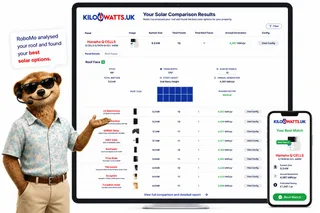
Compare top solar panels for the best performance and value.

Simple, fast & effortless
Provide a few details, sit back and watch your results unfold.
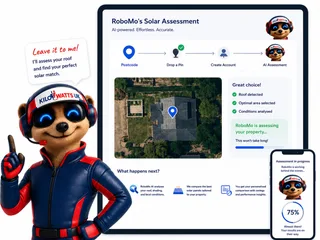
STEP 1
Choose Home, Business or Industrial
Enter your postcode to start your assessment.
STEP 2

Drop a pin on your roof
STEP 3

Create your free account
STEP 4

Sit back and watch RoboMo™ work
RoboMo™ analyses your roof and builds your personalised solar comparison.

Kilowatts UK is an authorised representative
Flower Turbines
Compact vertical-axis turbines built for real UK sites, not just open farmland.
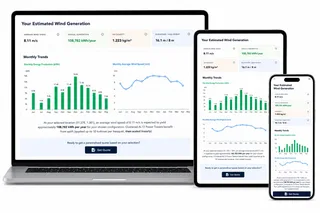
They start in light wind, sit in a small footprint, and are bird-safe by design. Cluster them as a bouquet and the group performs better together than the same turbines standing alone. Enter your postcode for a location-based generation estimate. Figures use area weather data and will differ if buildings, trees or hills sit in the way.
Starts in light UK wind
Built to generate in typical UK wind, not only open farmland.
Small rooftop or ground footprint
Compact towers for roofs, yards and tight sites.
Bird-safe slow rotation
Slow vertical-axis spin, bird-safe by design.
Bouquet clusters raise output
Grouped turbines outperform the same units standing alone.
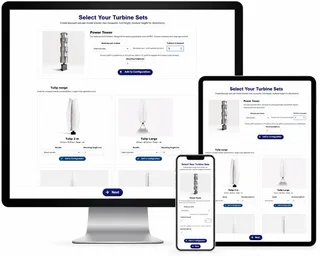
Step 1
Enter your postcode
Start designing your wind energy system in seconds.
STEP 2

Choose a location
STEP 3

Place your cluster
Tap the map where you want the turbine cluster to go.
STEP 4

Instant generation forecasts
Compare different turbine layouts and see annual generation forecasts instantly.
STEP 5

No commitment required
Explore different configurations before deciding whether to request a quotation.
Related articles
Mo's Mission Nominations
FAQ
Need Help? RoboMo's Got Answers
What is a solar PPA in the UK?
A solar power purchase agreement is a long-term arrangement where a provider usually funds, owns and maintains solar panels on your property, and you buy the electricity they generate. It is different from buying the panels outright because another party keeps ownership and needs access rights. The exact terms can vary, so read the contract rather than relying on the headline electricity rate.
How do I compare PPA providers fairly?
Compare the full contract, not just the pence-per-kWh price. Check the tariff structure, indexation, contract length, maintenance duties, metering, billing, exit terms and what happens if you sell or move. A good provider should also explain roof checks, grid connection steps and who owns any environmental benefits.
Is a solar PPA a good idea for a homeowner?
It can work for some households, but domestic PPA-style or “free solar” offers need careful review. You should understand who owns the system, what you must pay, how long the contract lasts, and whether your mortgage lender, landlord or freeholder needs to consent. It is sensible to compare the offer with buying panels outright or using other finance.
What should I check before signing a solar PPA?
Ask for the draft agreement early and look for clear terms on pricing, annual increases, minimum payments, maintenance, insurance, fault response and termination costs. Check who pays if panels need to be removed for roof repairs. Make sure the provider explains what happens at the end of the contract and whether you can buy the system.
Can a PPA affect selling or remortgaging a home?
Yes, it can if another party has long-term rights over the roof or solar equipment. A buyer, conveyancer or mortgage lender may want to review the agreement before proceeding. Before signing, check transfer rules, consent requirements, roof access rights and any costs triggered by a sale or remortgage.
Who is responsible for maintenance and repairs under a PPA?
The provider normally maintains the solar PV system if they own it, but the contract should say this clearly. Check response times, monitoring arrangements, inverter replacement, access requirements and what happens if output falls. Also confirm who is responsible for roof damage, leaks and making good after works.
Do I need to worry about grid connection, MCS or approvals?
The provider should explain the relevant grid connection process and who handles any DNO notification or application. MCS may be relevant for some smaller or consumer-facing installations, but it should not replace proper contract and technical checks. You should also confirm planning, landlord, freeholder or building consent issues where they apply.
Who can claim the environmental benefits from PPA solar power?
Do not assume all renewable or carbon claims belong to you just because the panels are on your property. The contract should say who owns any environmental attributes, export value or Renewable Energy Guarantees of Origin if they are involved. Any public claims should be specific, evidenced and not misleading.