


Solar panel installation in Ramsgate
Published: 2026-10-03 13:13:27
Updated: 2026-10-04 12:03:22
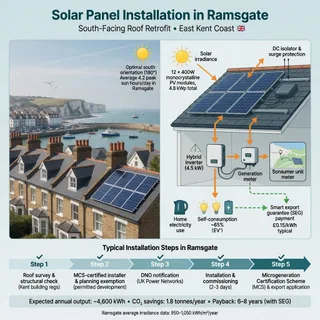
Solar panel installation in Ramsgate starts with Victorian roofs, shade and salt-air fixings, then Thanet planning and export limits. Storage is optional.
Solar panel installation in Ramsgate
Solar panel installation in Ramsgate from Kilowatts.uk in Broadstairs. Costs, roofs, planning and what to do next then compare a local system.
Solar panel installation in Ramsgate
Solar panel installation in Ramsgate means fitting a grid-connected photovoltaic system to a home in the town, usually on a pitched or flat roof, so daylight can supply electricity to the property. The modules are the same class of product used across the UK. What changes the job is the harbour setting, Victorian and later roofs, shade, the right to alter the building, Thanet District Council planning status, and how UK Power Networks will accept the connection. In domestic search, the term solar panels means photovoltaic electricity, not solar thermal water heating, and a battery is optional.
A workable site usually has a sound covering, enough unshaded area and a clear right to carry out the work. Salt air near the harbour does not by itself rule panels out, but it changes fixings, cable entries and how external equipment is specified. Any export limit, listed-building constraint or conservation-area limit should be known before a system size is treated as final.
Output depends more on orientation, pitch, shade and usable area than on the town name. South-facing roofs generally produce more annual energy than east- or west-facing roofs of similar quality. A north-facing slope is often a poor use of the budget unless the array is small and genuinely unshaded. Chimneys, dormers, bay roofs and neighbouring buildings are common on older Thanet streets and can split one roof into several smaller groups of modules. A small shop, flat block or harbour building is a different title, planning and connection case from a house, even when the modules look similar.
Which UK rules apply to a Thanet install
Several frameworks sit around a Ramsgate install, and none of them is settled by the look of the street or by a neighbour’s array. Planning is administered by Thanet District Council. Many ordinary domestic roof mounts are assessed against permitted development rights in the Town and Country Planning (General Permitted Development) (England) Order, often called the GPDO. Those rights are conditional. They can be limited or removed by an Article 4 direction, and they do not replace listed building consent. Conservation-area boundaries and listed status have to be checked for the address.
Building Regulations compliance is separate from planning permission. In practice the points that matter are whether the roof can take the designed load and whether the electrical work is designed, installed and notified through the correct route. That route may be a building-control application or a competent-person notification. Confirm which route this job will use, and who is signing the structural judgement, before the layout is treated as fixed.
An MCS-certified installer is the usual evidence householders look for, because Smart Export Guarantee tariffs commonly require MCS certification, or another scheme the supplier actually accepts. Check the current register rather than a brochure claim. MCS is not a promise of output, and it is not a substitute for a roof that can carry the array. This article does not treat any unnamed equivalent badge as automatically acceptable. UK Power Networks is the distribution network operator for Ramsgate. The smaller notification route is commonly associated with G98, and the fuller application route with G99. The kilowatt threshold between those routes, and any local variation, must be taken from the operator’s present guidance. This guide does not treat a published kilowatt figure as current. Export limitation can still apply when the equipment itself is standard. Payment for exported electricity, where a supplier offers it, is generally through the Smart Export Guarantee rather than a town grant. Eligibility, metering and rates have to be checked with the supplier and with current official rules at the time. No Ramsgate-only grant, tariff or tax treatment is assumed here.
What Victorian and harbour roofs change
The first question on a Ramsgate house is rarely whether the town is sunny enough. It is whether this roof can take a designed array without a prior repair, a planning problem or an access cost that overtakes the panel count. A short guide on how solar panels work is useful background, but it does not settle the roof.
Victorian slate, later tile, ageing felt and flat roofs behave differently under fixings and foot traffic. A covering that already leaks, or a deck that feels soft, should be repaired or replaced before a layout is frozen. Panels can hide a failing roof for years and make the eventual repair more awkward. Shared party walls, leasehold flats and houses with no clear right to the roof often stop a job before sunshine is discussed.
Older Thanet roofs rarely offer one clean rectangle. A bay, a chimney stack or a neighbour’s taller ridge can force two or three small strings. That choice affects whether a straightforward string inverter is enough, or whether module-level electronics are justified by shade. It also decides where cables can enter without cutting through original fabric in a clumsy place. Scaffold on a narrow street, and any restriction beside the harbour, can dominate a job that would look simple on an inland semi. Access, electrical works and roof repairs are separate from the number of modules. A low module price does not describe the installed system.
How salt air and wind should be specified
Coastal solar and salt air in Kent are a materials and maintenance issue, not a reason to dismiss photovoltaic systems near the sea. Salt-laden air can speed corrosion of unprotected steel. Harbour and cliff-edge streets are also windier than much of inland Kent, so the mounting has to match the actual roof structure and exposure, not a generic inland layout. The same checks sit behind wider solar panel installation in Kent.
The module brand does not solve that. Fixings, flashings, external isolators and any steelwork left in the weather need a corrosion specification that fits a marine setting. Cable entries and roof penetrations should be detailed so wind-driven rain is not given a new path into an old loft. The usual mistake is to assume mild-steel brackets from an inland kit list will do, simply because the modules carry a warranty.
Distance from the sea is not a single line an article can draw for every street. A survey should record how exposed the roof is, not only its area. Coastal kit still needs occasional checks of fixings and seals. A loft or external inverter will be harder to replace if the original location was chosen only because it was convenient on install day.
Planning checks, listed streets and the network
Many ordinary domestic roof mounts are treated as permitted development, but that is not a blanket approval for every Ramsgate street. Listed buildings, some conservation-area positions, some flat-roof layouts and designs that are prominent from the street can need consent, or may be a poor fit even when the timbers are strong. Exact boundaries, any Article 4 direction and listed status have to be checked with Thanet District Council for the address. The harbour fringe and the Victorian streets are not one designation. Do not assume a neighbour’s approval, or the absence of a plaque you can see from the pavement, settles it.
A listed harbour house is not automatically impossible, but a visible array often needs consent and can still be a poor candidate. The list description, the principal elevation and the council’s current approach matter more than how fine the roof timbers are. If consent is uncertain, pause the equipment order. A clearer unlisted roof elsewhere in the town can be the better project.
Connecting the system is a notification or an application, depending on size and on local network capacity. Current G98 and G99 guidance should be read from UK Power Networks, not from an older article that quotes a kilowatt figure. A Thanet street can also face an export limit even when the inverter is a standard domestic model. An export limit does not stop the panels supplying the house. It limits what may be sent to the network, which changes the value of a larger array if the household cannot use the surplus. The equipment list and protection settings on the network submission need to match what is actually fitted. Swapping the inverter later, or adding a hybrid battery without telling the network, can turn an accepted proposal into a different one. The party instructing the work should know, before signing, who must notify that change and who pays if the accepted kit is no longer available.
What orientation and shade do to output
A clear south roof is the simplest Ramsgate case, but it is not the only one worth surveying. East- and west-facing roofs can still be suitable if the household expects a lower annual yield than a clear south aspect, and if there is enough area after chimneys and dormers are allowed for. Generation then falls more in the morning or the afternoon. That sometimes lines up with when people are at home, and sometimes does not. An east-west pair can be a rational design on a terrace that has no useful south slope. It is not a reason to copy a south-facing yield estimate. Practical notes on solar panel placement help frame that conversation before a count is treated as final.
Shade is more decisive than a small difference in pitch. A court behind tall harbour buildings, or a terrace where the opposite roof cuts the winter sun, can leave an array working for fewer useful hours than the postcode would suggest. UK systems generate from daylight, not only from hard sun. Coastal Kent is not too cloudy in a way that makes a sound, unshaded roof pointless. The usual limit is the roof, the shade and the connection, not latitude alone.
No Ramsgate yield figure is assumed here. Annual output has to come from a site-specific design, using the real orientation, pitch, shade and module layout. A national rule of thumb will not describe a split array on a Victorian villa, and it will not describe a roof shaded for part of the day by a warehouse or a church. How many modules fit is a layout question, covered in more general terms by how many panels a home needs.
Whether a home battery belongs on the job
A home battery is not required for solar panels to work, in Ramsgate or anywhere else in Thanet. The panels supply the house while they are generating. Surplus can be exported, within whatever limit the network sets, or it can be stored if a battery is added and the tariff makes that timing useful. Adding storage by default, with no daytime and evening usage case, is a common way to complicate a job that did not need it. A Kent example of a smart solar battery system shows why usage has to come before hardware.
A battery changes when electricity is used. It does not automatically pay for itself, and this guide has no verified local price, lifespan or saving to quote. The case depends on daytime use, evening use, any export cap and the tariff on offer at the time. Those change. A sales illustration based on one household’s bills should not be treated as a Thanet average.
The same test applies in Broadstairs or Margate. Storage there is not a different technology from storage in Ramsgate. It is the same decision about usage and tariff, on a roof that still has to pass the structure, planning and connection checks. Adding storage also changes inverter choice, space, ventilation and sometimes the network application. It is cheaper to decide that before the electrical design is closed than to treat it as a casual extra on commissioning day. Lofts in older houses are often hot, tight and poor places to hide a battery or an inverter that will need replacing within the life of the modules. A hallway cupboard, garage or external enclosure may be better, but only if it is secure, ventilated and on a sensible cable run. That practical constraint knocks out more add-a-battery ideas than a brochure comparison does. If the network position changes later, a battery does not by itself remove the need to revisit the connection.
When a Ramsgate house is a good candidate
Solar panels in Thanet are a street-by-street decision. A postcode does not make a roof suitable, and a Victorian house is not automatically unsuitable. Owner-occupiers with a sound covering, manageable shade and the right to alter the building are the usual good fit. East and west roofs can still justify a design if the expected output is explained without a south-facing assumption. The weaker cases are short leases, flats without roof rights, roofs that need major recovering first, and heavily shaded courts. Listed harbour properties, and some conservation-area fronts, may be unsuitable for a visible array even when the timbers are fine. A household that will not accept scaffold, a visible array or a possible export cap should hear that before a layout is drawn. The comparison below is qualitative. It is not a prediction of output, cost or planning outcome.
Overview
Households looking at solar panel installation in Broadstairs, or at a Margate roof, should use those same tests. The harbour may be closer or further away, and the street pattern may differ, but the decision is still roof, title, planning, network and exposure.
What an itemised quote should separate
There is no reliable Ramsgate average price in this guide, and a module-only figure is not the installed cost. Scaffold, roof repairs, electrical upgrades and any export-limit equipment often sit outside a headline panel price. Without those lines, a cheap-looking quote is not comparable with a fuller one. A useful quote names the parts of the job that move independently, so a narrow street or a failing roof is not hidden inside a per-panel number. You can also compare home solar options before treating one headline figure as the whole job.
Ask for each of these as its own item, even if some turn out to be nil. A nil line is still useful, because it shows the installer has looked rather than assumed an inland semi.
Product and performance warranties vary by manufacturer and should be read on the datasheet, not inferred from a general article. Inverter cover is often shorter than the module term that is marketed. If a later substitution is likely because a model is on long lead time, that risk belongs in the quote, not in a surprise after UK Power Networks has accepted a named inverter.
What to verify before you instruct an installer
Start with the building, not a panel brand. Note leaks, slipped slates, soft flat-roof areas and whether you actually have the right to alter the roof. Check the address with Thanet District Council for listed status, conservation-area constraints and any Article 4 direction, rather than guessing from the look of the street. Photograph the roof and the main sources of shade if you can do that safely from the ground. Do not climb an unfamiliar Victorian roof to collect pictures.
Before you instruct, verify the installer’s certification status, commonly MCS where a Smart Export Guarantee tariff is part of the plan. Ask who confirms the roof can take the designed load, whether that person is included in the fee, and what happens if the answer is that a repair must come first. Ask for the equipment list that will be submitted to UK Power Networks, and for a written statement that the inverter, any export-limit device and any battery on that list are the items that will be fitted.
If a substitution becomes necessary, the installer who holds the job should tell you before the change, and should be responsible for updating the network where the accepted proposal no longer matches the site. Do not accept a verbal promise that the network will not mind a different inverter. Ask how salt exposure and wind will be specified, where cables will enter, and whether the array is one rectangle or several strings. Ask whether the connection is likely to be a G98 notification, a G99 application or an export-limited design, and insist that this is confirmed against current UK Power Networks guidance before equipment is ordered.
What the survey should settle, and when to pause
A useful survey records more than roof area and a module count. Covering type, the condition of rafters or deck, chimney and dormer shade, and how marine the site feels should all be on the notes. String layout should be sketched around the real obstructions, because a pretty rectangle that ignores a bay window will not survive the install. Inverter location needs ventilation and a cable route that can be built without damaging original plaster and slate. When those notes are ready, you can book a free home energy survey.
There is no single Ramsgate timetable. The sequence is usually survey, title and planning checks, structural confirmation, then the network notification or application, followed by access, any roof repair, installation and commissioning. A roof the council treats as permitted development, with a straightforward notification and no recover, can move once scaffold and materials are booked. A listed harbour front, an Article 4 street, a soft roof or a fuller network application can add waiting time that should not be hidden inside an install-day promise. Ask which steps are on the critical path for this address.
If the answers on structure, title, planning or connection are weak, pause. A clearer south roof in the same town can still be the wrong roof if the covering has failed or the lease does not allow the work. This guide does not assume a Ramsgate price, a local yield or a town-only grant. Any national support, tariff or tax treatment should be checked against official rules at the time, because those sit outside the roof survey.
Plan, Compare & Buy Renewable Energy Solutions
AI does the thinking.
You get the perfect solar match.
Use RoboMo™ to assess your property, compare available technologies and connect with trusted UK installers, suppliers and manufacturers.
Simply enter your postcode, drop a pin on your roof, create your free account and let RoboMo™ analyse your property to find the best solar panels for your home.

You don't have to think
RoboMo™'s AI analyses your roof and does all the hard work.

Accurate & tailored
AI-powered assessment based on your roof, location, and conditions.

Best options, maximum savings
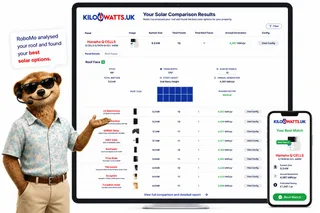
Compare top solar panels for the best performance and value.

Simple, fast & effortless
Provide a few details, sit back and watch your results unfold.
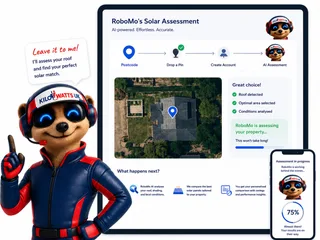
STEP 1
Choose Home, Business or Industrial
Enter your postcode to start your assessment.
STEP 2
Drop a pin on your roof
STEP 3

Create your free account
STEP 4

Sit back and watch RoboMo™ work
RoboMo™ analyses your roof and builds your personalised solar comparison.

BATTERY ROI TOOL
See what a battery saves on your bill
Enter the day rate, off-peak rate and export rate. The calculator ranks batteries in the Kilowatts shop over 10 years.
Home batteries also suit offices and small commercial sites. Industrial batteries are listed on their own calculator.

Step 1
Enter your postcode
Start designing your wind energy system in seconds.
Are you an installer, distributor or renewable energy business?
Kilowatts UK is expanding the Flower Turbines partner network across the UK.
Become A Flower Turbines PartnerKilowatts UK is an authorised representative
Flower Turbines
Compact vertical-axis turbines built for real UK sites, not just open farmland.
They start in light wind, sit in a small footprint, and are bird-safe by design. Cluster them as a bouquet and the group performs better together than the same turbines standing alone. Enter your postcode for a location-based generation estimate. Figures use area weather data and will differ if buildings, trees or hills sit in the way.
Starts in light UK wind
Built to generate in typical UK wind, not only open farmland.
Small rooftop or ground footprint
Compact towers for roofs, yards and tight sites.
Bird-safe slow rotation
Slow vertical-axis spin, bird-safe by design.
Bouquet clusters raise output
Grouped turbines outperform the same units standing alone.
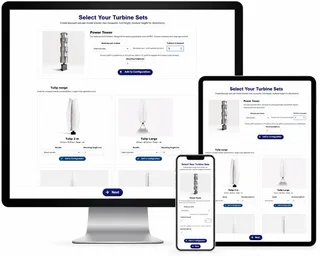
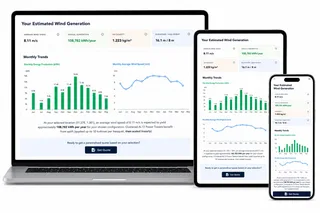
STEP 2

Choose a location
STEP 3

Place your cluster
Tap the map where you want the turbine cluster to go.
STEP 4

Instant generation forecasts
Compare different turbine layouts and see annual generation forecasts instantly.
STEP 5

No commitment required
Explore different configurations before deciding whether to request a quotation.
Related articles
Mo's Mission Nominations
FAQ
Need Help? RoboMo's Got Answers
What does solar panel installation in Ramsgate usually involve?
For a house, it usually means fitting a grid-connected photovoltaic system, often on a pitched or flat roof, so daylight can supply electricity to the property. The modules are the same class of product used elsewhere in the UK. What changes the job is the harbour setting, older roofs, shade, the right to alter the building, Thanet District Council planning status and how UK Power Networks will accept the connection. A battery is optional, and photovoltaic panels are not the same as solar thermal water heating.
Do I need planning permission from Thanet District Council?
Planning is administered by Thanet District Council, and many ordinary domestic roof mounts are assessed against permitted development rights. Those rights are conditional. They can be limited or removed by an Article 4 direction, and they do not replace listed building consent. Conservation-area boundaries, listed status and the particular layout should be checked for the address before a system size is treated as final. A neighbour’s array does not settle your case.
Is building regulations approval separate from planning?
Yes. Building Regulations compliance is separate from planning permission. The practical points are whether the roof can take the designed load and whether the electrical work is designed, installed and notified through the correct route. That route may be a building-control application or a competent-person notification. Confirm which route this job will use, and who is signing the structural judgement, before the layout is fixed.
Why does MCS certification matter, and is there a Ramsgate grant?
An MCS-certified installer is the usual evidence householders look for, because Smart Export Guarantee tariffs commonly require MCS certification, or another scheme the supplier actually accepts. Check the current register rather than a brochure claim. MCS is not a promise of output and does not replace a roof that can carry the array. Payment for exported electricity, where a supplier offers it, is generally through the Smart Export Guarantee. No Ramsgate-only grant, tariff or tax treatment should be assumed, and eligibility and rates must be checked at the time.
How does the network connection work in Ramsgate?
UK Power Networks is the distribution network operator for Ramsgate. Smaller systems are commonly associated with a G98 notification, and larger or more complex connections with a G99 application. The current threshold and any local variation must be taken from the operator’s present guidance, not from an older published kilowatt figure. An export limit can still apply with standard equipment. It does not stop the panels supplying the house, but it limits what may be sent to the network. The equipment on the network submission should match what is actually fitted.
Will salt air near the harbour rule out solar panels?
Salt air does not by itself rule panels out, but it is a materials and maintenance issue. Coastal exposure can speed corrosion of unprotected steel, and harbour or cliff-edge streets can be windier than inland Kent, so fixings, flashings, cable entries and external equipment need a specification that fits the roof and the exposure. A survey should record how exposed the roof is, not only its area. Coastal kit still needs occasional checks of fixings and seals.
Are Victorian and other older Ramsgate roofs suitable?
Suitability depends on the covering, structure, shade, access and the right to carry out the work, not on the age of the house alone. A roof that already leaks, or a deck that feels soft, should be repaired before a layout is frozen, because panels can hide a failing roof and make later repairs harder. Chimneys, dormers, bays and neighbouring buildings often split one roof into smaller groups of modules, which can affect inverter choice. Shared roofs, short leases and flats without roof rights often stop a job before sunshine is discussed. Scaffold on a narrow street can also add cost that is separate from the module count.
Should I add a home battery at the same time?
A battery is not required for the panels to work. The panels supply the house while they are generating, and surplus can be exported within any network limit or stored if a battery and tariff make that useful. Storage does not automatically pay for itself, and there is no verified local price, lifespan or saving to quote here. The case depends on daytime and evening use, any export cap and the tariff on offer. It also changes inverter choice, space, ventilation and sometimes the network application, so it is better decided before the electrical design is closed.