


Commercial solar leasing vs outright purchase: UK business
Published: 2026-09-29 01:28:04
Updated: 2026-10-01 07:52:00
Commercial solar leasing vs outright purchase hinges on who owns the UK plant, how long you stay, and if daytime load, roof and connection can support it.
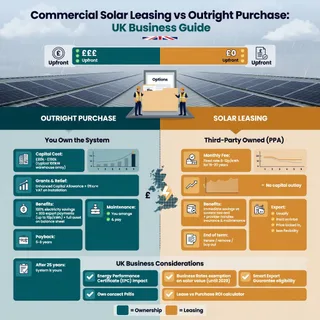
Commercial solar leasing vs outright purchase - UK business guide
UK business guide B Solar lease vs buy
Commercial solar leasing vs outright purchase UK
Outright purchase means your business owns the solar plant and keeps the electricity it produces. An operating lease or an on-site power purchase agreement means a funder owns the plant and you pay to use it, as rent or as a price per kilowatt-hour. The choice between commercial solar leasing and outright purchase on a UK site is settled by how long you will stay, how much power you use while the site is open, and whether the roof and the local network can support the array. Hire purchase is closer to buying. An off-site corporate PPA does not put panels on your building.
Cash at the start, who repairs and insures the array, and what happens if you sell or leave the building all follow from that ownership line. So does the comparison with the grid import you would otherwise pay. Export income, tax treatment and any claim that the arrangement is off the balance sheet are secondary. Several of them have to be read from the contract and checked against current rules, not assumed from the product name.
Neither route is a default for every UK commercial roof. A short occupational lease, a covering that needs replacement, very low use during generating hours, or a connection the network operator will not offer on acceptable terms can rule out both. Installed cost, lease rentals, on-site PPA unit rates and payback are not stable national figures. This guide explains how to compare offers, not what yours will cost. On a live project the sensible order is site control, load shape and connection, then the finance label. A funder term sheet and a purchase quote can both be rewritten once a structural report or an export limit arrives. Comparing two unit rates before those facts exist is how a business picks a contract it later cannot build.
Who owns the panels under each contract
Under outright purchase the occupier owns the panels, inverters and mounting from commissioning, whether the money came from cash or from the business's own loan. Under an operating lease the funder owns the plant and the occupier pays a rental to use it. Under an on-site PPA the funder owns the plant and charges for electricity generated, usually from a starting price with an escalation clause written into the offer.
Hire purchase and finance leases sit nearer to purchase than to a pure rental. Title may pass at the end, or on a final payment, but the documents vary. Read the title clause rather than assuming the marketing name tells you who owns the asset. The answer matters if you sell the building in year three. A lender's security over your business is not the same thing as a solar funder owning the roof plant.
An off-site corporate PPA, where a supplier sleeves power from a remote solar farm, is a different product. It does not replace a roof survey, landlord consent or a distribution network connection for generation on your own site. Keep a rooftop lease, an on-site PPA and an off-site PPA in separate columns. Mixing them makes both the saving and the risk look cleaner than they are. In practice the ownership line decides the rest of the file. The owner usually wants structural sign-off, a fixing method that the roof warranty can survive, insurance, and a right to leave the plant in place for the asset life. If you are a tenant, you may be the energy user without being the person who can grant that right. That mismatch stops more projects than the choice of inverter.
How the charge compares with grid electricity
The fair test is not whether a PPA looks cheaper than today's import tariff on a single unit. It is whether the rent or the unit rate, on the same generation assumption and the same term, beats owning the system yourself. It also has to beat carrying on importing from the grid. A lease or an on-site PPA is not free solar. The funder's cost of capital, operations and risk sit inside the price you pay.
Commercial solar vs grid electricity for UK businesses is, in most occupied buildings, a question of how many imported units you can avoid while the site is open. A kilowatt-hour used on site displaces an imported kilowatt-hour. A kilowatt-hour exported is a different benefit, and only if you are allowed to export it and a supplier pays for it. Capacity in kilowatts is not the same thing as energy in kilowatt-hours. A larger array is not automatically more valuable if the building cannot use the extra energy and the network will not take it.
A model built only on annual consumption, without the half-hourly shape of the site, will mis-state both a purchase case and a PPA comparison. Check what the PPA actually bills. Some charge for generation and some charge for energy delivered to the building. If you pay for units you cannot use and cannot export, that unit rate is not comparable with an import tariff. An export limit, or a building that is shut, can put you in that position. Indexation and any minimum payment move the later years. A price that looks keen against today's supply contract can drift if it escalates and your import contract does not, or the other way around. Compare both routes over the same term, with inverter replacement visible on the purchase side and escalation visible on the funded side. Do not annualise year one and multiply.
When outright purchase is the stronger fit
Outright purchase tends to fit an owner-occupier that expects to stay, can fund the system, and uses a large share of generation during operating hours. That business is choosing to keep the energy benefit and to hold maintenance, performance and replacement risk itself. What changes the purchase quote is roof condition, connection works, access for maintenance and how much of the yield the building can use. It is not a catalogue price per panel.
It is a weaker fit if cash is needed in the core business, if the site may be vacated soon, or if the roof cannot carry a long installation without major works. Buying does not remove output risk. Yield still moves with weather, shading, downtime and changes in how the building is used. A quiet site after a change of shift pattern produces the same kilowatt-hours and a smaller saving.
A bank loan arranged by the business is still a purchase for this comparison. You own the plant and the energy benefit, and you still need a maintenance plan. What differs from a solar funder's contract is where title, early repayment and security sit. Put those clauses in the comparison before you drop both offers into one column labelled finance.
When a lease or on-site PPA fits better
An operating lease or an on-site PPA tends to fit a business that will not deploy capital and wants operations and performance remedies written into the contract. You still have to satisfy a funder's checks on roof, credit and tenure. It works cleanly when the party that uses the power is the party that pays, or when landlord and tenant already have a clear recharge. Your credit changes whether a funder will offer, and on what terms. It does not change the physics of the roof.
A low unit rate on a roof nobody has surveyed is not an offer. Funders decline sites. A refusal is information about roof life, credit, term or connection, not a reason to force a purchase the business did not want to make. If the funder will not take the risk, ask what they saw before you decide to take that risk yourself.
Neither route is a sensible default where the occupational lease is short, the roof is due for replacement, the covering is structurally inadequate or hazardous, use during generating hours is very low, or the network operator will not connect on acceptable terms. Selling the building without a right to assign the solar contract is a common reason to wait, whether you own the plant or a funder does. Listed buildings and conservation constraints belong in the same group until consents are clear.
Roof life, consent and how long you will stay
Site control often matters more than the finance label. The roof or the ground has to carry the array for the asset life or the contract life. Remaining roof life, fragile or asbestos coverings, shading and safe access for maintenance all constrain the design before anyone should talk about savings. If a competent survey says the covering should be replaced first, both purchase and lease should wait.
Where the occupier is a tenant, landlord consent, the unexpired lease and dilapidations need to match the solar term. A long solar contract on a short occupational lease is a mismatch unless assignment, reinstatement and what happens at a break are already agreed. Landlords also worry about penetrations, the warranty on the covering, and who makes good at the end. Multi-let offices and retail units add a further question: who is the offtaker, and does that party pay the bill the solar is meant to reduce.
On a flat membrane roof, ballast can avoid penetrations, but it adds weight the deck must accept. A structural assessment and a wind design are normal requirements for a funder or an insurer, not optional extras. Fragile roofs and asbestos are common on older UK commercial stock and can stop a scheme that looks simple from the car park. Installing over a roof you expect to strip is how lift-and-reinstall costs appear later, often with no named party to pay them. Planning permission, listed-building consent and conservation-area controls should be checked for the building in front of you. Non-domestic permitted development is not a blanket answer, and a quotation that assumes consent is not consent. If the building is listed or in a sensitive setting, treat both purchase and a funded roof as paused until the planning position is clear.
What a commercial solar G99 connection can change
Larger commercial arrays are often beyond the small-scale notification route and need a distribution network operator application, widely referred to as G99 rather than G98. Exact thresholds, timescales and any reinforcement charges are regional. Take them from the operator for that postcode and from the current engineering recommendations, not from a quotation template or from another site's programme.
Export limits, queue time and connection works can shrink the buildable system or push back the date any saving starts. That hits a purchase case and a PPA case in the same way. No generation means no avoided import. Protection settings and an export limitation scheme are often part of the connection offer. They belong in the design before the financial model is treated as final.
Ask which operator covers the site, whether the proposal is a notification or a full application, and whether export is limited below the array's peak. Also check spare capacity on the existing switchgear, space for generation metering, and whether a landlord's private network sits between you and the public network. Those points change who may apply and when a saving can start. Do not publish a go-live date that assumes a connection you have not got.
Warehouses, offices and retail roofs
There is no single commercial solar panel cost for UK warehouses, offices or shops that you can lift into a business case. Installed cost, lease rental and on-site PPA rates vary with roof, region, system size, connection works and credit. Treat a national pounds-per-kilowatt figure as unknown until a survey prices the roof you actually have. The same caution applies to simple payback.
A warehouse that runs through the day, with a large and relatively clear roof, is often the simplest load shape to set against solar. The case still fails if the covering is fragile, shading from neighbouring yards is severe, or the real demand is at night and the weekend while the array is producing into an empty building. Size against half-hourly import, not against floor area. Annual consumption alone will not show that mismatch.
Commercial rooftop solar for UK offices is more often limited by plant already on the roof, cramped access and a load that falls sharply outside office hours. Solar for UK retail parks and shops adds landlord structures, common-part supplies and trading hours that may not match irradiance. In each case the useful comparison is avoided import during occupied hours, plus any export you are actually allowed to sell. If you are also adding electrified heat or storage, put that load and that connection impact in the same model. Storage can move some solar into later hours, but it does not cancel an export limit. Do not treat stored energy as if nothing were lost in the round trip.
Who maintains the array and replaces the inverters
Under purchase, maintenance, insurance and replacement sit with the business unless an operations contract moves them. Under a lease or an on-site PPA they sit with the funder only where the wording says so. A line in a brochure that says the provider takes care of everything is not the allocation. The schedule and the default clauses are.
Module performance warranties are commonly in the region of 25 years. Inverter warranties are shorter, often around 10 to 15 years, so a purchased system should budget for inverter replacement inside the module warranty life. Those periods are typical warranty practice, not a promise that your array will perform for that long. Lease and on-site PPA terms are often somewhere between 10 and 25 years. The actual term, the indexation and any minimum payment are specific to the offer in front of you.
Annual output per kilowatt-peak is not a single UK number. Irradiance, tilt, orientation, shading and system losses change yield by postcode and by roof. Take yield from a site model, and take degradation from the module warranty, not from a generic percentage on a slide. A funder and a purchaser can use the same yield file. If they do not, you are not comparing like with like.
Also name who monitors, who cleans, who insures the array and who owns any renewable certificates. Current-transformer errors on the meters will undermine both a PPA bill and a performance claim. Metering is part of the commercial terms, not a detail for commissioning week. Inverter location, edge protection and safe access decide whether anyone can maintain the plant for the full term. Grid-tied solar does not, by itself, keep a site running in a power cut. Backup is a separate design. Do not assume it from a purchase quote or from a PPA.
Tax, the balance sheet and export income
Do not assume a lease or a PPA is off the balance sheet, and do not assume purchase unlocks a particular tax result. Companies reporting under IFRS 16 generally recognise leases on the balance sheet. A PPA is not automatically the same thing as a lease, and some contracts contain lease-like terms. Other UK reporting frameworks can differ. An auditor has to classify the document you sign, not the label on the cover.
Capital allowances on company-owned solar, VAT on a commercial supply and install, and business-rates treatment of rooftop plant should be confirmed for your entity against current rules. They are not stable facts to copy from an article, and they can change the cash comparison without changing the engineering. Ask an accountant to review the heads of terms you have been offered. A generic claim that solar is tax efficient is not a calculation.
Export income is often treated as the point of the project. For many occupied commercial buildings the larger figure is imported electricity avoided. The Feed-in Tariff is closed to new applicants and should not appear in a new-project comparison. Smart Export Guarantee eligibility, supplier rates and any clash with your existing supply contract need a current supplier or official source before export revenue goes into the model. No grant is assumed here. A scheme belongs in the case only if a live UK or devolved scheme has been verified for your site. Certifications such as MCS should not be described as always required or never required until the warranty, the contract and any live scheme have been checked.
What to settle before you rely on the saving
Choose purchase when you will stay, you can fund the plant, and you are willing to hold performance and replacement risk in exchange for the energy benefit. Choose a lease or an on-site PPA when you will not deploy that capital, the funder accepts the roof and the tenure, and the contract genuinely moves the risks you do not want. If the roof, the lease or the connection fails, choose neither yet. Payback is not a national figure. It moves with your import price, self-consumption, connection cost and any indexation. Use the same generation assumption, the same term and the same export limit on both sides. A funder price that excludes connection works is not comparable with a purchase price that includes them. A purchase saving that assumes unconstrained export is not comparable with a funded array already cut back to a network limit. Ask for the assumption sheet, not a single headline year.
Overview
Before you treat either saving as real, gather a year of half-hourly import if the supplier can provide it, the unexpired lease, and any roof survey you already hold. Ask the installer or funder for structural sign-off, the fixing method and its effect on the roof warranty, the network application status, the export limit, and named responsibility for inverter replacement, monitoring, cleaning, removal, early termination and assignment. If those items are still open, the finance comparison is early. Signing to hold a price can lock you to a design the roof or the network will not support.
Plan, Compare & Buy Renewable Energy Solutions
AI does the thinking.
You get the perfect solar match.
Use RoboMo™ to assess your property, compare available technologies and connect with trusted UK installers, suppliers and manufacturers.
Simply enter your postcode, drop a pin on your roof, create your free account and let RoboMo™ analyse your property to find the best solar panels for your home.

You don't have to think
RoboMo™'s AI analyses your roof and does all the hard work.

Accurate & tailored
AI-powered assessment based on your roof, location, and conditions.

Best options, maximum savings
Compare top solar panels for the best performance and value.

Simple, fast & effortless
Provide a few details, sit back and watch your results unfold.
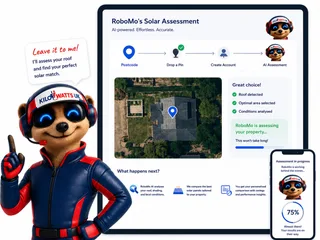
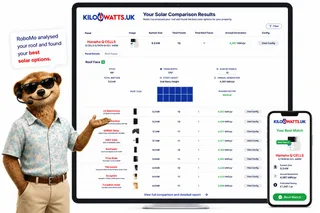
STEP 1
Choose Home, Business or Industrial
Enter your postcode to start your assessment.
STEP 2

Drop a pin on your roof
STEP 3

Create your free account
STEP 4

Sit back and watch RoboMo™ work
RoboMo™ analyses your roof and builds your personalised solar comparison.

Kilowatts UK is an authorised representative
Flower Turbines
Compact vertical-axis turbines built for real UK sites, not just open farmland.
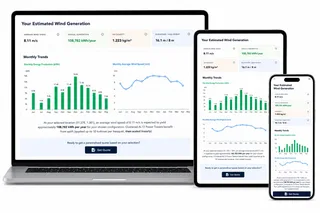
They start in light wind, sit in a small footprint, and are bird-safe by design. Cluster them as a bouquet and the group performs better together than the same turbines standing alone. Enter your postcode for a location-based generation estimate. Figures use area weather data and will differ if buildings, trees or hills sit in the way.
Starts in light UK wind
Built to generate in typical UK wind, not only open farmland.
Small rooftop or ground footprint
Compact towers for roofs, yards and tight sites.
Bird-safe slow rotation
Slow vertical-axis spin, bird-safe by design.
Bouquet clusters raise output
Grouped turbines outperform the same units standing alone.
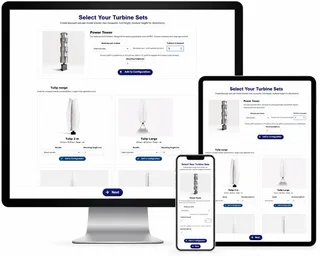
Step 1
Enter your postcode
Start designing your wind energy system in seconds.
STEP 2

Choose a location
STEP 3

Place your cluster
Tap the map where you want the turbine cluster to go.
STEP 4

Instant generation forecasts
Compare different turbine layouts and see annual generation forecasts instantly.
STEP 5

No commitment required
Explore different configurations before deciding whether to request a quotation.
Related articles
Mo's Mission Nominations
FAQ
Need Help? RoboMo's Got Answers
What is the difference between commercial solar leasing and outright purchase?
Outright purchase means your business owns the solar plant and keeps the electricity it produces, whether you pay cash or use your own loan. An operating lease or an on-site power purchase agreement means a funder owns the plant and you pay to use it, as rent or as a price per kilowatt-hour. Hire purchase sits nearer to buying, because title may pass at the end or on a final payment, but the documents vary. An off-site corporate PPA is a different product and does not put panels on your building.
Who owns the solar plant under each contract, and why does that matter?
Under outright purchase the occupier owns the panels, inverters and mounting from commissioning. Under an operating lease or an on-site PPA the funder owns the plant. Read the title clause rather than relying on the marketing name, especially for hire purchase or a finance lease. Ownership decides who needs structural sign-off, insurance and a right to leave the plant in place, and it matters if you sell the building. A tenant may use the energy without being the person who can grant those rights.
How should a lease or on-site PPA be compared with buying solar or staying on the grid?
A lease or an on-site PPA is not free solar. The fair test is whether the rent or unit rate, on the same generation assumption and the same term, beats owning the system and also beats carrying on importing from the grid. A kilowatt-hour used on site displaces an imported kilowatt-hour, while export is a separate benefit and only if you are allowed to export and a supplier pays for it. Check whether the PPA bills for generation or for energy delivered to the building, and compare indexation and any minimum payment over the full term rather than annualising year one.
When is outright purchase usually the stronger fit?
Outright purchase tends to fit an owner-occupier that expects to stay, can fund the system, and uses a large share of generation during operating hours. That business keeps the energy benefit and holds maintenance, performance and replacement risk itself. It is a weaker fit if cash is needed in the core business, the site may be vacated soon, or the roof cannot carry a long installation without major works. A bank loan arranged by the business is still a purchase for this comparison: you own the plant and still need a maintenance plan.
When might an operating lease or an on-site PPA fit better?
These routes tend to fit a business that will not deploy capital and wants operations and performance remedies written into the contract. You still have to satisfy a funder's checks on roof, credit and tenure, and credit can change whether an offer is made and on what terms. It works more cleanly when the party that uses the power is the party that pays, or when landlord and tenant already have a clear recharge. A low unit rate on a roof nobody has surveyed is not an offer, and a funder's refusal is information about the site rather than a reason to force a purchase.
Can roof condition, tenure or planning rule out both routes?
Yes. A short occupational lease, a covering that needs replacement, very low use during generating hours, or a connection the network operator will not offer on acceptable terms can rule out both purchase and a funded roof. If you are a tenant, landlord consent, the unexpired lease and dilapidations need to match the solar term, including assignment, reinstatement and what happens at a break. Planning permission, listed-building consent and conservation-area controls should be checked for the building in front of you. Non-domestic permitted development is not a blanket answer, and a quotation that assumes consent is not consent.
What can a G99 grid connection change for a commercial array?
Larger commercial arrays are often beyond the small-scale notification route and need a distribution network operator application, widely referred to as G99 rather than G98. Exact thresholds, timescales and any reinforcement charges are regional, so take them from the operator for that postcode and from the current engineering recommendations. Export limits, queue time and connection works can shrink the buildable system or delay the date any saving starts, and that affects a purchase case and a PPA case in the same way. Do not treat a financial model or a go-live date as final before the connection position is known.
Who maintains the array and replaces the inverters?
Under purchase, maintenance, insurance and replacement sit with the business unless an operations contract moves them. Under a lease or an on-site PPA they sit with the funder only where the contract says so. A brochure line that the provider takes care of everything is not the allocation. When comparing routes, keep inverter replacement visible on the purchase side and any price escalation visible on the funded side.