


What does solar panel installation in Broadstairs involve?
Published: 2026-10-03 09:52:05
Updated: 2026-10-04 16:13:44
Solar panel installation in Broadstairs depends on roof condition, salt air, planning and export limits. A survey settles the design before any price.
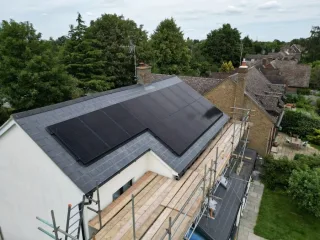
Solar panel installation in Broadstairs
Solar panel installation in Broadstairs from Kilowatts.uk in Broadstairs. Costs, roofs, planning and what to do next then compare a local system.
What does solar panel installation in Broadstairs involve?
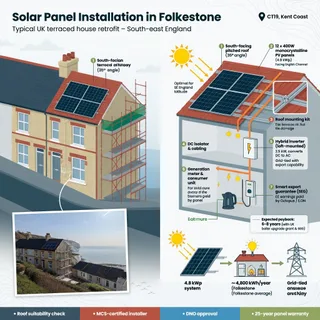
Solar panel installation in Broadstairs means fitting a photovoltaic system to a particular property so daylight can generate electricity for that building, with surplus exported or stored. Whether that is a sensible job depends on usable roof area, shading, the condition of the covering and structure, how the array is fixed in salt air, and whether the local network will accept the export. Planning for that building can change the design again. A town average does not settle any of those points.
Broadstairs is a coastal town in Thanet, east Kent, in the CT10 area, between Margate and Ramsgate. South-east England is, in broad UK terms, a relatively favourable part of the country for solar resource, but that does not make every local roof a good one. A shaded terrace can do poorly. Winter output is still much lower than summer output. Cloud and a sea breeze do not stop panels working. Diffuse light still generates electricity. The usual disappointments are shade, a small or broken-up roof, or treating a bright Broadstairs afternoon as the yearly rate.
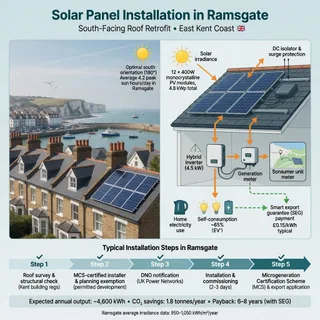
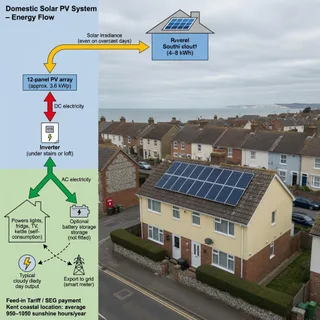
The work is a building and electrical job. The modules are only part of it. A domestic system normally includes the panels, a mounting system fixed into the roof structure, an inverter or microinverters, cabling, isolation and a way to meter generation. A battery can sit alongside that system, either with a hybrid inverter or as a separate unit. It changes when stored electricity is available. It does not create extra generation from the same roof. Older assumptions about a fixed feed-in payment still linger. Any payment for exported electricity depends on the arrangement in force at the time. The Smart Export Guarantee and many export tariffs need an MCS-certified installation. Check that on the current MCS register, and read eligibility from the current scheme rules and from the tariff you can actually obtain. Kilowatts has a Broadstairs base at Carey Building, CT10 2RZ, and can be reached on 0800 009 6058. That is a local place to start a survey conversation. It is not evidence of MCS status or of any other accreditation, and it does not replace checks on planning, the roof or the connection for the house in front of you.
What changes how much a Broadstairs roof will generate?
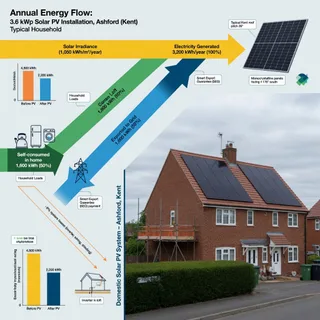
Generation is driven mainly by usable area, orientation, pitch, shading, and how much of the output the household can use or store. A south-facing roof is often the easiest layout to explain, but an unshaded east-west pair can still be the rational choice if that is the roof that is actually clear. A photograph taken at noon will miss chimney, tree or dormer shade that moves across the modules later in the day. Usable area, moving shade, a broken-up roof, winter daylight and occupancy decide output. A bright afternoon does not.
Pitch and covering change both the electrical result and the building work. A very low or very steep roof is not automatically unsuitable, but it changes fixing design and how the array sits in wind. Valleys, rooflights and short runs of tile between chimneys often shrink the usable area well below the figure someone estimates from the street. An outbuilding can sometimes offer a clearer roof than the house, yet a long cable run and a weak or unsuitable covering can cancel that advantage.
Season is the other limit people underweight. Output follows daylight and is higher from spring into summer than in winter. Coastal cloud and short winter days still apply in Thanet. You cannot say how much of that generation a home uses on site without that home's demand and tariff. A house empty all day, or a holiday let used in bursts, will export more of the same array than a home with people in during daylight. That is a usage difference, not a better roof.
What does a roof survey change before anyone prices the job?
A sales image from above is not a survey. On Thanet roofs the visit should decide whether the covering and the structure can accept the array, and whether access or the electrical installation will change the scope before anyone prices it. Jobs that look fine on panel count are often redesigned for the board, the cable route or the scaffold, not for the modules.
The visit is also where quiet problems show up. A tired covering, an older sheet roof, a loft that cannot ventilate an inverter, a full consumer unit, or scaffold that must stand on the pavement will change the job. The checks below are what should be settled on site. They are not a scoring system, and they will not produce a price by themselves.
Terraced streets in Broadstairs often have no useful rear access. Scaffold on the public highway may need permission from the relevant highway authority, which can change the programme. None of this is a reason to avoid a terrace. It is a reason not to price the job as if the lorry can roll up to a detached side passage.
How do salt air and wind change the specification?
A coastal install is not the same specification as an inland one with a different postcode. Salt air, wind uplift and driving rain affect fixings, flashings, cable entries and external electrical equipment. A long panel warranty does not protect brackets, clips and isolators that were reasonable twenty miles inland and poor on an exposed Thanet elevation. There is no single official badge this guide can treat as proof that hardware is fit for salt air. The point is materials and design.
Wind load on exposed and seafront elevations should drive the fixing layout. Spacing and bracket choice are calculated for that roof, not copied from a previous job. Seafront and high, unsheltered gables are the cases where an inland habit is most likely to be wrong. Sheltered streets further back can still see salt, but they are not the same wind case as an open elevation facing the water. A survey that never asks which elevation is exposed has not really specified the array.
External isolators, glands and dissimilar metals are the details that fail quietly. They look acceptable on completion day and corrode or fatigue later. Driving rain makes the flashing and the cable entry as important as the module datasheet. If a proposal cannot explain how the fixings meet the structure, what is specified for a corrosive atmosphere, and how water is kept out at penetrations, it is not yet a coastal design. It is a panel layout.
Does planning permission depend on the street, not the town?
Whether a Broadstairs roof needs a planning application depends on the building and the design, including listing and conservation-area status. It is not a rule that domestic solar never needs permission, and it is not a rule that it always does. Thanet District Council is the planning authority. Street-level heritage status has to come from Thanet District Council's current planning and conservation constraints map and guidance, not from the look of the brickwork or from what was allowed on another street.
This guide does not set out permitted-development tests, conservation-area conditions or any Article 4 direction. Those are source checks against the council's current pages, not things to reconstruct from memory. In historic parts of the town the sensitive question is often the principal elevation facing the road. Sometimes the conditions attached to a consent would make the array impractical even if some form of permission were possible. A neighbouring approval in Margate or Ramsgate does not decide a Broadstairs house.
Listed buildings are a separate constraint. If listing makes consent unlikely, or likely only with a layout that will not generate usefully, the honest outcome may be not to proceed. Leasehold flats raise a similar issue for a different reason. The lease and the freeholder have to allow the work. An owner-occupier of a freehold house is in a simpler position, but the design should still be checked before scaffold is booked. Electrical notification and building-control duties can also apply. Treat those as steps to confirm against current official guidance. MCS status, planning, the network connection and any building-control notification are separate checks. Passing one does not clear the others.
What can the network operator change after a quote?
The connection is to the local distribution network, not to the company that sends the electricity bill. Which operator covers a particular CT10 supply should be confirmed from the connection record or a current who-is-my-network-operator lookup, rather than guessed from the town name. The formal route is often a notification or an application under the G98 and G99 frameworks. Size thresholds and the exact form of paperwork should be taken from that operator's live G98 and G99 pages. They are not restated here, and they are not a Broadstairs rule.
Homeowners often do not realise that the operator can require a different connection approach after a quote has assumed a particular array size. An export limit is one example. It does not mean the roof has failed. It means the network will not take the export that was drawn on the proposal, so inverter settings, battery behaviour and the useful size of the array may all change. That is a design change. It should be explained before anyone treats a remote estimate as an installable system.
Ask two questions of any proposal before you compare prices. If the answers are vague, the quote is not yet comparable with a surveyed one.
Constraint information for Thanet, where it exists, is operator information. It should not be inferred from a busy summer network story or from a job in a different postcode.
What changes the cost of solar panel installation in Broadstairs?
There is no responsible Broadstairs average quote, and this guide will not invent one. A town figure would blend terraces that need pavement scaffold with houses that have side access, and it would hide electrical work and coastal specification inside a panel count. A surveyed price depends on array size, roof covering, access, electrical works and whether storage is included. Those are property facts, not a postcode rate. This page does not state prices, yields, payback or grant amounts.
What changes the figure is the scope that has to be built, not the brightness of the street. Four items commonly separate a complete quote from a panels-only price. Omitting any of them makes two proposals impossible to compare.
A lower panel price that leaves those items out is not a saving until the missing scope is priced. Ask for the surveyed scope in writing before you compare figures.
Is home battery storage in Broadstairs a separate decision?
Home battery storage in Broadstairs is a separate decision from whether the roof is worth an array. It is worth a proper look when daytime use is low, when an export limit would otherwise curtail a larger array, or when the household wants solar available in the evening. It is a weak default if the roof is the real constraint, if there is nowhere safe and serviceable to put the battery, or if the hope is that storage will increase what the panels generate. It will not. Round-trip losses mean some energy is used in storing and releasing electricity. The size of that loss is product-specific and belongs on the manufacturer's data, not in a local rule of thumb.
Usable capacity matters more than the headline size printed on a brochure. Warranty conditions, how the battery is cycled, and where it can be sited all change whether a given unit is appropriate. A hybrid inverter can be a tidy route when the solar is being installed at the same time. Where panels are already in place, storage is usually added as a separate AC-coupled system. Neither route is automatically better. The existing inverter, the consumer unit and the cable routes decide it. A battery fitted to a house in Margate or Ramsgate does not show that the same unit, or any unit, suits a Broadstairs property.
Irregular occupancy changes the case again. A holiday let or second home may export most of a summer day's generation unless something stores it or a guest happens to be in. That can justify looking at storage, or it can show that the array should simply be smaller. What it cannot justify is a claim of higher yield because the house is near the sea. Tariff type also belongs in this conversation. It should be the tariff you can actually obtain, not a hypothetical rate used to make storage look essential.
Do solar panels in Thanet differ between Broadstairs, Margate and Ramsgate?
Solar panel installation in Margate or Ramsgate is not a different technology from a Broadstairs job. The coast, the mix of terraces, bungalows and older brick or rendered houses, and the need for a real survey are shared. Town name alone does not make one Thanet roof more suitable than another. What changes is the property. Which elevation faces the weather, what shades the roof, whether the street allows straightforward scaffold, and what the network will accept at that supply are all decided on site. People comparing the three towns usually want to know whether a local constraint is real. Salt air is real across this coast. A conservation-area or listing constraint is real only where that building is affected, which is a Thanet District Council planning and conservation check, not a town-name rule. A pavement scaffold problem is real on many narrow frontages and irrelevant on a house with clear side access. Reading a neighbour's install, or an array in another Thanet town, as proof that your roof will match it is a mistake. That is what produces disappointing surveys.
Overview
Use that split when you compare quotes. Two proposals for a Thanet house are not comparable if one has priced pavement scaffold, a board change and marine-suitable external equipment, and the other has priced panels only. The town in the address will not explain the difference. The scope will.
When is a Broadstairs install a weak fit?
The clearer fit is an owner-occupier with a sound, largely unshaded freehold roof and the right to alter it. They also need a realistic view of winter output and of disruption while scaffold is up. Homes with daytime electricity use, or owners willing to treat storage and tariff as separate decisions, are in a better position to use what they generate. If those conditions are missing, a larger panel count will not repair them. Some conservation-area cases are a similar pause if conditions would make the array impractical. That is a check of the building, not a town-wide ban.
It is a weak fit when the building, the right to alter it, or the network is the constraint. The cases below are reasons to pause or to redesign. They are not a scoring system. This guide does not state Broadstairs prices, yields, payback or grant amounts, because those figures are not a property. Any support scheme has eligibility rules that must be read from the current official source.
Landlords can still be suitable where they have authority to alter the property and a clear arrangement for who benefits from the generation. A short timetable for recovering the cost is a separate reason to pause, because no town figure on this page can tell you whether that timetable is realistic. The next step is a roof survey of that building, not a larger panel count and not a Broadstairs average quote. The survey should confirm covering, structure, shade, access, electrical space and how exposed the elevation is before anyone treats a panel count as an installation plan.
What should you have ready before a survey visit?
A useful enquiry describes the house rather than asking for a typical Broadstairs system. Note the roof covering if you know it, any history of leaks, and whether trees, chimneys or neighbouring buildings shade the slope you have in mind. A few photographs of the roof, the loft if it is safe to enter, and the consumer unit will save a wasted visit, but they do not replace the survey. Bills that show when you use electricity are more useful than a rough sense that consumption is high.
Before you compare proposals, separate the questions that change the specification from the ones that only change the sales story. The list below is the practical set to have ready. It is not a scoring system, and it will not produce a price.
Ask the installer how fixings and external electrical equipment are specified for salt and wind. Do not stop at which panel is on the drawing. Ask who is checking Thanet District Council's current planning and conservation constraints for that building. Module and inverter warranty years should come from current manufacturer documents. They are not a local standard, and a long module warranty does not cover a poor bracket. Before you appoint an installer, verify MCS status on the current MCS register. The Smart Export Guarantee and many export tariffs need an MCS-certified installation. That check is separate from the CT10 address and the 0800 number. Kilowatts is at Carey Building, CT10 2RZ, on 0800 009 6058, if you want the survey arranged from the town. Take the surveyed scope, including access, electrical work and any storage, and compare that. A panel count from a photograph is not yet an installation plan.
Plan, Compare & Buy Renewable Energy Solutions
AI does the thinking.
You get the perfect solar match.
Use RoboMo™ to assess your property, compare available technologies and connect with trusted UK installers, suppliers and manufacturers.
Simply enter your postcode, drop a pin on your roof, create your free account and let RoboMo™ analyse your property to find the best solar panels for your home.

You don't have to think
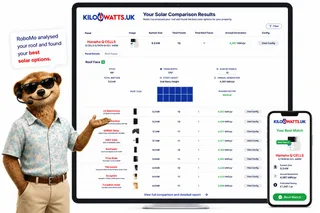
RoboMo™'s AI analyses your roof and does all the hard work.

Accurate & tailored
AI-powered assessment based on your roof, location, and conditions.

Best options, maximum savings
Compare top solar panels for the best performance and value.

Simple, fast & effortless
Provide a few details, sit back and watch your results unfold.
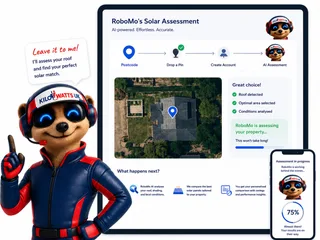
STEP 1
Choose Home, Business or Industrial
Enter your postcode to start your assessment.
STEP 2
Drop a pin on your roof
STEP 3

Create your free account
STEP 4

Sit back and watch RoboMo™ work
RoboMo™ analyses your roof and builds your personalised solar comparison.

BATTERY ROI TOOL
See what a battery saves on your bill
Enter the day rate, off-peak rate and export rate. The calculator ranks batteries in the Kilowatts shop over 10 years.
Home batteries also suit offices and small commercial sites. Industrial batteries are listed on their own calculator.

Step 1
Enter your postcode
Start designing your wind energy system in seconds.
Are you an installer, distributor or renewable energy business?
Kilowatts UK is expanding the Flower Turbines partner network across the UK.
Become A Flower Turbines PartnerKilowatts UK is an authorised representative
Flower Turbines
Compact vertical-axis turbines built for real UK sites, not just open farmland.
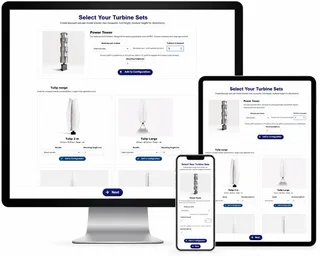
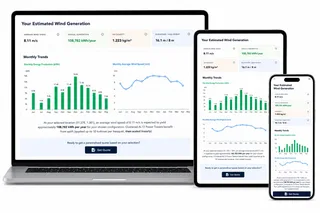
They start in light wind, sit in a small footprint, and are bird-safe by design. Cluster them as a bouquet and the group performs better together than the same turbines standing alone. Enter your postcode for a location-based generation estimate. Figures use area weather data and will differ if buildings, trees or hills sit in the way.
Starts in light UK wind
Built to generate in typical UK wind, not only open farmland.
Small rooftop or ground footprint
Compact towers for roofs, yards and tight sites.
Bird-safe slow rotation
Slow vertical-axis spin, bird-safe by design.
Bouquet clusters raise output
Grouped turbines outperform the same units standing alone.
STEP 2

Choose a location
STEP 3

Place your cluster
Tap the map where you want the turbine cluster to go.
STEP 4

Instant generation forecasts
Compare different turbine layouts and see annual generation forecasts instantly.
STEP 5

No commitment required
Explore different configurations before deciding whether to request a quotation.
Related articles
Mo's Mission Nominations
FAQ
Need Help? RoboMo's Got Answers
What does solar panel installation in Broadstairs involve?
It means fitting a photovoltaic system to a particular property so daylight can generate electricity for that building, with surplus exported or stored. A domestic system normally includes the panels, a mounting system fixed into the roof structure, an inverter or microinverters, cabling, isolation and a way to meter generation. A battery can sit alongside that system, but it changes when stored electricity is available rather than creating extra generation from the same roof. Whether the job is sensible depends on usable roof area, shading, the covering and structure, how the array is fixed in salt air, planning for that building, and whether the local network will accept the export. Any payment for exported electricity depends on the arrangement in force at the time, and the Smart Export Guarantee and many export tariffs need an MCS-certified installation, which should be checked on the current MCS register and against the tariff you can actually obtain.
Will cloudy coastal weather stop solar panels working in Broadstairs?
No. Cloud and a sea breeze do not stop panels working, because diffuse light still generates electricity. South-east England is, in broad UK terms, a relatively favourable part of the country for solar resource, but that does not make every local roof a good one. Winter output is still much lower than summer output. The usual disappointments are shade, a small or broken-up roof, or treating a bright Broadstairs afternoon as the yearly rate.
What changes how much electricity a Broadstairs roof will generate?
Generation is driven mainly by usable area, orientation, pitch, shading, and how much of the output the household can use or store. A south-facing roof is often the easiest layout to explain, but an unshaded east-west pair can still be the rational choice if that is the roof that is actually clear. Valleys, rooflights and short runs of tile can shrink usable area well below a street estimate, and a noon photograph can miss chimney, tree or dormer shade that moves later in the day. A house empty all day, or a holiday let used in bursts, will export more of the same array than a home with people in during daylight. That is a usage difference, not a better roof.
What should a roof survey check before anyone prices the job?
A sales image from above is not a survey. The visit should decide whether the covering and structure can accept the array, and whether access or the electrical installation will change the scope. Checks include tile or slate condition and leaks, whether fixings can reach the structure, asbestos cement sheet rather than a modern tile, a ventilated and serviceable inverter position, spare ways, board condition, earthing, cable route, and whether the supply is single-phase or three-phase. Terraced streets in Broadstairs often have no useful rear access, and scaffold on the public highway may need permission from the relevant highway authority, which can change the programme.
How do salt air and wind change the specification?
A coastal install is not the same specification as an inland one with a different postcode. Salt air, wind uplift and driving rain affect fixings, flashings, cable entries and external electrical equipment, and a long panel warranty does not protect brackets, clips and isolators chosen for a milder site. Wind load on exposed and seafront elevations should drive the fixing layout for that roof, not a copy of a previous job. There is no single official badge this guide can treat as proof that hardware is fit for salt air. If a proposal cannot explain how the fixings meet the structure, what is specified for a corrosive atmosphere, and how water is kept out at penetrations, it is not yet a coastal design.
Do I need planning permission for solar panels in Broadstairs?
It depends on the building and the design, including listing and conservation-area status. It is not a town-wide rule that domestic solar never needs permission, and it is not a rule that it always does. Thanet District Council is the planning authority, and street-level heritage status has to come from its current planning and conservation constraints map and guidance, not from what was allowed on another street. Listed buildings are a separate constraint, and a leasehold flat also needs the lease and the freeholder to allow the work. Planning, MCS status, the network connection and any building-control notification are separate checks, and passing one does not clear the others.
Can the network operator change the system after a quote?
The connection is to the local distribution network, not to the company that sends the electricity bill. Which operator covers a particular CT10 supply should be confirmed from the connection record or a current lookup, rather than guessed from the town name. The formal route is often a notification or an application under the G98 and G99 frameworks, but size thresholds and paperwork should be taken from that operator's live pages, not treated as a Broadstairs rule. The operator can require a different connection approach after a quote has assumed a particular array size. An export limit does not mean the roof has failed, but inverter settings, battery behaviour and the useful size of the array may all change, so ask what export case the price assumed and what happens if export is limited.
What changes the cost, and is a home battery a separate decision?
There is no responsible Broadstairs average quote, and this page does not state prices, yields, payback or grant amounts. A surveyed price depends on array size, roof covering, access, electrical works and whether storage is included. Pavement scaffold permission, consumer-unit work, marine-rated external equipment and a redesign if export is limited commonly separate a complete quote from a panels-only price. Home battery storage is a separate decision from whether the roof is worth an array, and it does not increase what the panels generate. It is worth a proper look when daytime use is low, when an export limit would otherwise curtail a larger array, or when the household wants solar available in the evening, provided there is a safe and serviceable place to put it.