


solar panel vertical vs horizontal: UK comparison guide
Published: 2026-11-26 03:27:53
Updated: 2026-11-25 19:28:40
Compare vertical and horizontal solar panels for your UK home. See how roof fit, shade and mounting angle affect output and what to check in quotes.
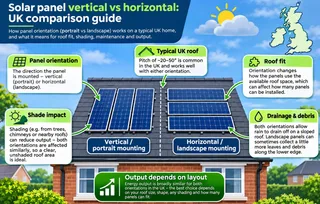
Solar panel vertical vs horizontal in the UK
On a pitched roof, choose the layout that gives you the most useful generating capacity at a sensible installed cost. In portrait, the panel’s long edge runs up the slope. In landscape, it runs across. On the same roof face, rotating a panel keeps its tilt, compass direction and rated power the same. Roof shape, shading and fixing positions can still affect how much electricity the array produces. If you’re comparing a vertical wall mount with flat or low-tilt panels, the mounting angle itself affects annual and seasonal generation.
When portrait or landscape fits better
Landscape is worth comparing on a wide roof with little space between the eaves and ridge. Portrait may fit better on a tall, narrow roof face. On a hipped roof or around a dormer, rooflight or chimney, mixing the two layouts can sometimes make room for an extra panel. Ask for a dimensioned drawing that shows the exact panel model, gaps between panels, roof-edge clearances and space around obstructions. A drawing based on panel dimensions alone can overstate what will fit. Use the guide to comparing modules when reviewing the panel options for each layout.
Check where the extra panel would sit. A chimney can cast a narrow shadow that moves across the array, and rotating a panel can change which groups of cells the shadow crosses. The effect depends on the panel’s internal wiring and the path of the shadow. Ask the installer to model both layouts and show the difference in annual generation, including any effect the shaded panel has on others in its string.
The fixing layout can determine which option is feasible. Rotating a panel can change the rail direction, where the rails can attach to the roof structure and how much hardware the job needs. Ask the installer to check the clamp positions and allowable loads against the manual for the exact panel in the quote. The manufacturer may specify different fixing arrangements for different loads.
How wall-mounted and flat-mounted solar compare
A vertical wall-mounted panel sits at 90° from horizontal. A flat-mounted panel sits at 0°, and frames on a flat roof can hold panels at an angle between the two. Compare monthly and annual generation for your location using the proposed tilt and the direction each array faces. Ask how the forecast accounts for nearby shade and, on a flat roof, shadows cast by one row onto the next.
Overview
A south-facing wall can catch direct sunlight at a favourable angle when the winter sun is low. Nearby buildings and trees can also cast longer shadows in winter. If winter output matters to you, compare the monthly forecasts with those shadows factored in.
On a flat roof, steeper frames may improve output per panel. The wider spacing needed to limit shade between rows may reduce how many panels fit. Compare generation for the whole array after allowing for roof drains and maintenance routes. Ask who will check the roof structure and the design of the fixings or ballast.
What affects the cost of vertical versus horizontal solar panels?
On the same pitched roof, the number of panels, rails and brackets can affect the price, along with the labour needed for the fixings and the cost of access. For a wall or flat-roof installation, the quote may also need to cover a structural assessment, specialist fixings, ballast or protection for the roof membrane. If the roof is likely to need repairs soon, weigh the cost of doing the work before installation against the cost of removing and refitting the array later.
Ask for a dimensioned layout and an itemised price for each viable option. Compare quotes based on the same panel model and inverter specification where possible, and ask the installer to explain any differences. Check whether each quote includes scaffolding or other access equipment, electrical work and making good. The guide to solar costs and savings can help you put the quotes in context.
How an extra panel can raise output and lower yield per kWp
Annual generation in kilowatt-hours (kWh) is the amount of electricity the whole array is forecast to produce. Annual yield in kWh per kilowatt-peak (kWp) is that figure divided by the combined rated capacity of the panels. Compare both figures using the same weather data and consistent modelling assumptions. Each forecast should account for differences in shading and mounting angle.
Suppose eight 400 W panels in portrait fit on one roof face, giving the array a rated capacity of 3.2 kWp. If the forecast is 3,040 kWh a year, the yield is 950 kWh per kWp. A mixed layout on the same roof face fits nine of the same panels, giving 3.6 kWp. If that layout is forecast to produce 3,240 kWh a year, its yield is 900 kWh per kWp. These figures are illustrative.
In this example, the chimney shades the ninth panel for part of the day. The larger array adds 200 kWh a year, while its average yield per kWp falls. To decide whether the extra panel is worth paying for, compare the increase in the installed price with the value of the additional electricity. Ask when that extra generation is likely to occur, how much you could use at home and what you would receive for any electricity you export.
How to choose a solar installation company
Look for an installer who can explain why the layout suits your property. At the survey, ask them to check the roof dimensions and condition, identify suitable fixing points and review the cable route, inverter location and any electrical upgrades. If the proposal mixes portrait and landscape panels or uses multiple roof faces, ask how the panel groups will connect to the inverter and how the design accounts for different directions or shading. You can arrange a home survey to discuss which layouts your property can accommodate.
Before accepting a quote, confirm who will check whether the design qualifies as permitted development or needs planning permission or other consent. If you need advice, show the local planning authority the actual layout, especially for a wall mount, a flat roof, a listed building or a property in a designated area. Start with the guidance for your nation.
Ask the installer to confirm the grid connection route in writing. In Great Britain, eligible G98 installations generally follow a connect-and-notify process. Under G99, an application must go to the distribution network operator (DNO) before connection. The installer should check the inverter, any existing generation and any proposed battery storage for your home, submit the relevant paperwork and explain any export limit that affects the design. In Northern Ireland, ask the installer to confirm the process with NIE Networks. Use Kilowatts UK’s solar installation comparison tool to shortlist installers, then ask each company to price the viable layouts on the same basis. Get the final drawing, equipment schedule, annual generation forecast and total installed price in writing so you can see how much electricity an extra panel could generate and what it would cost.
Solar comparison
Compare solar for your property
Enter your postcode to assess your roof, compare solar options and get quotes from UK installers.
- Free postcode start
- Home, business and industrial
- RoboMo™ maps your roof
See which panels fit your roof
Choose home, business or industrial, then enter your postcode. RoboMo maps the roof and ranks panel brands by fit.
1. Postcode Start the assessment for your property.
2. Pin the roof Mark the array on the map.
3. Compare RoboMo™ builds your options.

Battery ROI tool
See what a battery saves on your bill
Enter the day rate, off-peak rate and export rate. The calculator ranks batteries in the Kilowatts shop over 10 years. Home batteries also suit offices and small commercial sites.
Reading
Sources and further reading
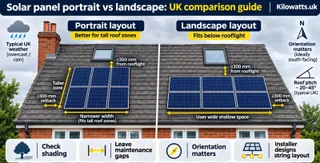
Compare portrait and landscape solar panels for your UK roof. See how panel fit, shading and mounting affect estimated output and installation costs.
Read article
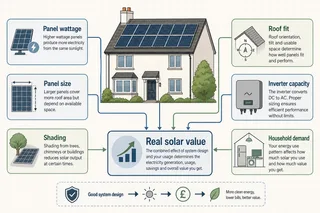
Are larger watt solar panels worth it in the UK? Larger watt solar panels can be worth it in the UK when they increase the total system size that fits.
Read article
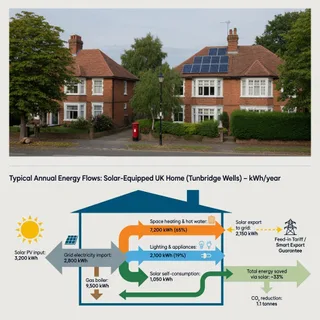
Solar panel installation in Tunbridge Wells turns on High Weald shade, roof condition, borough planning and UK Power Networks. A survey sets the design.
Read article
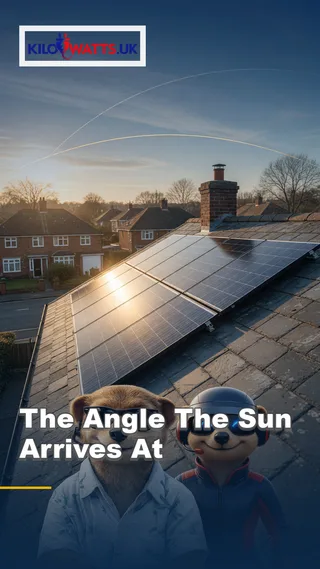
The midwinter sun sits around 47 degrees lower than in midsummer. Here's what that means for UK roof pitch, tilt and when your solar power actually arrives.
Read article
Mo's Solar Mission
Mo's Mission Nominations
Garlinge Primary School and Nursery
Garlinge Primary School and Nursery is a foundation primary school on Westfield Road in Margate, Kent, for children aged 3 to 11. It is m...
St Luke's Church of England Primary SchoolSt Luke's Church of England Primary School is a voluntary controlled Church of England primary school on Jubilee Road in Formby, Merseysi...
Comberbach Nursery and Primary SchoolComberbach Nursery and Primary School is a primary academy on Mather Drive in the village of Comberbach, near Northwich in Cheshire, for...
Locations
Solar installation near you
Write for Kilowatts.uk
Got a trade and something worth saying?
Write it here under your own name. Sign in, put a profile up, and start a guide. Pay only if you want more links from your articles out to your own site.
Register
Create a Kilowatts.uk account, or sign in if you already have one.
Author profile
Put your name, photo and experience on a public author page.
Start creating
Write a guide or a blog. Free authors can put one followed link to their own site in articles each month.
FAQ
Need Help? RoboMo's Got Answers
Do solar panels generate more electricity in portrait or landscape?
Rotating a panel from portrait to landscape on the same roof face leaves its tilt, compass direction and rated power unchanged. The layout can still affect how many panels fit and how shade falls across them. Compare the forecast annual generation for each complete array.
Can I mix portrait and landscape solar panels on the same roof?
Yes, a mixed layout can make better use of space around a dormer, chimney or rooflight if the mounting system supports both orientations. Ask for a dimensioned drawing showing panel gaps, roof-edge clearances and fixing positions. Have the installer confirm the clamp positions allowed for the exact panel model.
Does portrait or landscape work better if my chimney casts a shadow?
It depends on how the shadow moves and how the panel's cells are wired. Rotating the panel can change which groups of cells the shadow crosses. Ask the installer to model both layouts and account for any effect on other panels in the same string.
How do vertical wall-mounted panels compare with panels on a flat roof?
Wall-mounted panels sit vertically, while flat-roof panels can lie flat or be raised on tilted frames. A south-facing wall can catch low winter sun, though shade from nearby buildings or trees can reduce output. Compare monthly and annual forecasts that account for shade, including shadows between rows on a flat roof.
Is it worth adding an extra solar panel if it will be partly shaded?
An extra panel can increase total annual generation even if the array produces fewer kilowatt-hours per kilowatt-peak of installed capacity. Ask for the forecast increase in annual kilowatt-hours and when that extra electricity is likely to be generated. Weigh the extra installed cost against what you could save by using that electricity at home and what you could earn by exporting it.
Does portrait or landscape solar cost more to install?
The cost depends on how many panels fit and what rails, brackets, labour and access each layout requires. Wall and flat-roof systems may also need structural checks, specialist fixings or ballast. Compare itemised quotes for the same panel and inverter specifications where possible, and check whether access equipment and electrical work are included.
What should I check about planning permission and grid connection before accepting a quote?
Ask who will check whether the proposed layout qualifies as permitted development or needs permission or other consent. Use the planning guidance for your UK nation and show the local planning authority the proposed layout if you need advice. Ask the installer to confirm the grid connection process in writing, including who will handle the paperwork and whether an export limit applies.
Live help
Need help right now?
Talk to RoboMo™ and get instant answers.