


Urban wind turbines
Published: 2026-11-26 05:51:15
Updated: 2026-11-25 21:52:19
Assess urban wind turbines for your UK home. Learn how to check wind at rotor height, compare roof and mast mounts, and judge annual output forecasts.
Overview
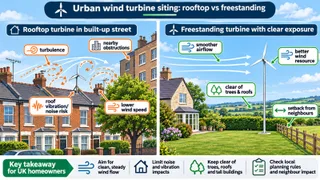
Create a clean, side-on illustration of two UK properties. On the left, show a small rooftop turbine among terraced houses, with taller neighbouring buildings and mature trees. Use uneven arrows to show disturbed airflow around the proposed rotor. On the right, show a freestanding turbine on an open edge-of-town plot, with steadier airflow reaching the rotor above nearby obstructions. Label the wind measurement point at rotor height in both scenes. Use short labels, with no numerical scales, logos or branding.
Are urban wind turbines worth it for UK homes?
Urban wind turbines are worth considering at an unusually exposed UK property with enough space for a mast or a suitable building mount. Most sheltered town and city roofs are poor candidates because nearby buildings and trees slow the wind and create turbulence, even on gusty streets. Before choosing a turbine, check the wind at rotor height, confirm that the mount is suitable, find out which permissions you’ll need and ask for an annual generation forecast. If buildings or trees shelter the rotor and your roof gets good daylight, assess solar PV first. Energy Saving Trust domestic wind guidance
How to tell whether your property has enough wind
Sketch the proposed rotor position and mark the height and location of nearby buildings and trees. Ask the installer which of them lie upwind when the wind blows from its most common directions. Use a postcode wind estimate as a first check, then ask where and for how long the installer will measure wind at the proposed rotor position. If the monitoring period is short, ask how they’ll use longer-term records to account for seasonal variation. You can also read more about Compare home solar panel options.
Rated power in kilowatts (kW) is the output a turbine can deliver at a specified wind speed. Use net annual generation in kilowatt-hours (kWh) to estimate savings. Ask for an independently tested power curve for the exact model and the range and frequency of wind speeds used in the forecast. Check how the estimate accounts for turbulence, downtime and electricity drawn by the controls. A spinning rotor tells you little about how much usable electricity the turbine produces. You can also read more about residential solar panel installation.
The 2007–08 Warwick Wind Trials monitored 26 building-mounted turbines. Average generation was equivalent to 78 kWh per site per year, including periods when turbines were off. Some exposed tower-block installations generated more while running but were switched off for much of the trial after noise complaints. Allow for exposure and downtime in the forecast, and use site measurements and current test data for the proposed model. Encraft Warwick Wind Trials final report
Rooftop, freestanding and vertical wind turbines compared
Rooftop and freestanding describe how the turbine is mounted. Vertical-axis and horizontal-axis describe the orientation of the rotor’s axis. Start by finding where the rotor can reach usable wind. A mast can help on an open plot. For a building mount, ask a structural assessor to check how the building will handle repeated loads and whether vibration could reach occupied rooms. Energy Saving Trust domestic wind guidance
Overview
If a supplier says a flower-style rotor performs well in turbulent air, ask for independent tests of that model. Check whether the test conditions resemble the wind measured at your proposed rotor position. If the supplier cites another installation, ask for its rotor height, monitoring period and metered generation so you can judge how closely it matches your site. You can also read more about renewable energy.
What does a home wind turbine cost, and how much could it save?
Energy Saving Trust gives a figure of around £28,000 for equipment and installation of a 6 kW pole-mounted system. For an urban rooftop project, ask for an itemised quote covering the turbine and controls, structural assessment, mounting, weatherproofing, access equipment, electrical work and commissioning. For a mast, check whether the quote includes foundations, trenching and cabling. Ask what routine servicing involves and whether access equipment costs extra each time. Energy Saving Trust domestic wind guidance
Each kWh you use at home saves you the import unit rate you would otherwise pay. Each kWh you export earns the rate your supplier pays. Ask the installer to estimate the split using your consumption data and when the turbine is likely to generate. If your import rate is higher than your export rate, using more of the electricity at home increases its annual value. You can also read more about Compare commercial solar options.
Suppose the turbine generates 1,000 kWh in a year and you use half at home. At illustrative rates of 25p per kWh for imports and 5p per kWh for exports, home use saves £125 and exports earn £25. Allow £100 for annual servicing and that leaves £50 before installation, repairs or component replacement. If a lower-wind year delivers 500 kWh with the same split, rates and servicing allowance, the electricity is worth £75 and servicing costs £25 more than that. Use your own tariff, servicing costs and generation forecast to test your quote. You can also read more about Compare industrial solar options. The Smart Export Guarantee (SEG) pays eligible generators in Great Britain for metered exports. For a wind installation up to 50 kW, ask your chosen export supplier what evidence it accepts for Microgeneration Certification Scheme (MCS) or equivalent certification and what metering it requires. In Northern Ireland, ask your electricity supplier what export terms are available. Ofgem Smart Export Guarantee guidance for generators
Do you need planning permission or grid approval?
In England, permitted development rules for building-mounted turbines cover qualifying detached houses and certain detached buildings within the grounds of a house or block of flats, subject to the other conditions. A turbine fixed to a terraced house or to the block of flats itself falls outside that route. Freestanding turbines have a separate permitted development route. Ask your local planning authority to check the proposed location, height and mounting before you commission a survey. Planning Portal building-mounted wind guidance · Planning Portal freestanding wind guidance
Scotland has separate permitted development routes for qualifying freestanding turbines and roof-mounted turbines on detached houses. For the freestanding route, ask the planning authority whether prior approval is needed before starting work. In Wales, a building-mounted turbine requires a planning application. A freestanding turbine can qualify as permitted development if it meets the conditions. In Northern Ireland, check the proposal with your local council. If you own a leasehold home or share a roof, check who controls the roof and whose consent you need. Check building control requirements separately. Scottish householder planning guidance · Welsh Government wind turbine guidance · Northern Ireland planning guidance
For a grid-connected installation in Great Britain, ask the installer to confirm the G98 or G99 connection route with your distribution network operator (DNO). Make sure they account for any existing solar or battery equipment. Agree who will submit the paperwork and obtain advance approval where required. Ask how any export limit would affect expected export income and how much of the electricity you could use. In Northern Ireland, confirm the connection process with NIE Networks. Energy Networks Association connection guide · NIE Networks microgeneration forms
What to do before paying a deposit
If the property looks exposed enough, ask for a written proposal that links the annual kWh forecast to a specific turbine model, rotor position and set of wind measurements. Check who will assess structural loads, noise and vibration, who will handle the planning and grid paperwork, and how the installer will reach the turbine for servicing. If permissions or connection approval are pending, check the deposit terms. Run the savings calculation again using the lower-wind forecast and the quoted servicing costs. You can also read more about residential.
If buildings or trees shelter the proposed rotor and your roof gets good daylight, use the Kilowatts.uk solar comparison tool to compare residential solar installation quotes. Ask for a forecast that accounts for roof orientation and shading. Compare installed cost, annual generation and expected savings using the same import and export rates for both technologies.
Solar comparison
Compare solar for your property
Enter your postcode to assess your roof, compare solar options and get quotes from UK installers.
- Free postcode start
- Home, business and industrial
- RoboMo™ maps your roof
See which panels fit your roof
Choose home, business or industrial, then enter your postcode. RoboMo maps the roof and ranks panel brands by fit.
1. Postcode Start the assessment for your property.
2. Pin the roof Mark the array on the map.
3. Compare RoboMo™ builds your options.

Battery ROI tool
See what a battery saves on your bill
Enter the day rate, off-peak rate and export rate. The calculator ranks batteries in the Kilowatts shop over 10 years. Home batteries also suit offices and small commercial sites.
Reading
Sources and further reading
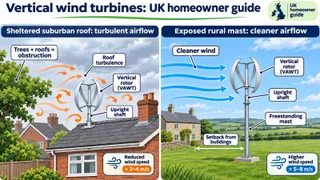
Check how much electricity vertical wind turbines could generate at your UK home, compare roof and mast mounts, and estimate bill savings before buying.
Read article
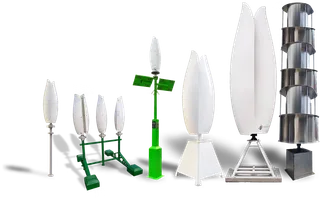
Flower Turbines vs a small HAWT on an urban UK site turns on hub-height wind, not the brochure. Check loads, planning, noise and connection before you buy.
Read article
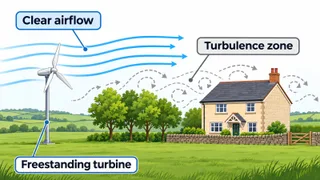
Find out if a home wind turbine is viable for your UK property. Check wind at mast height and weigh forecast electricity output against installation costs.
Read article

Flower Turbines for Kent coastal rooftops are a niche choice, not a default upgrade. Check hub wind, salt air, roof loads and planning before you buy.
Read article



Mo's Solar Mission
Mo's Mission Nominations
Garlinge Primary School and Nursery
Garlinge Primary School and Nursery is a foundation primary school on Westfield Road in Margate, Kent, for children aged 3 to 11. It is m...
St Luke's Church of England Primary SchoolSt Luke's Church of England Primary School is a voluntary controlled Church of England primary school on Jubilee Road in Formby, Merseysi...
Comberbach Nursery and Primary SchoolComberbach Nursery and Primary School is a primary academy on Mather Drive in the village of Comberbach, near Northwich in Cheshire, for...
Locations
Solar installation near you
Write for Kilowatts.uk
Got a trade and something worth saying?
Write it here under your own name. Sign in, put a profile up, and start a guide. Pay only if you want more links from your articles out to your own site.
Register
Create a Kilowatts.uk account, or sign in if you already have one.
Author profile
Put your name, photo and experience on a public author page.
Start creating
Write a guide or a blog. Free authors can put one followed link to their own site in articles each month.
FAQ
Need Help? RoboMo's Got Answers
Is a small wind turbine worth it for a UK home in a town or city?
It can be worth assessing if your property is unusually exposed and the rotor can reach steady wind. Nearby buildings and trees can slow the wind and create turbulence, even on a street that feels gusty. If the proposed rotor is sheltered and your roof gets good daylight, assess solar panels first.
How can I tell whether my home is windy enough for a turbine?
Use a postcode wind estimate as an initial check, then ask for measurements at the proposed rotor position and height. Ask how nearby buildings and trees affect the site in the prevailing wind directions. If monitoring is brief, ask how the installer will use longer-term records to account for seasonal variation.
How much electricity could a home wind turbine generate?
Ask for a forecast of net annual generation in kilowatt-hours (kWh), using wind measurements from your site and an independently tested power curve for the exact model. Rated power in kilowatts (kW) describes output at a specified wind speed. Check how the forecast accounts for turbulence, downtime and electricity used by the turbine’s controls.
Should I choose a rooftop, mast-mounted or vertical-axis turbine?
A freestanding mast may give the rotor access to steadier wind on an open plot. For a roof or wall mount, ask a structural assessor to check repeated loads and how vibration could travel into occupied rooms. If a supplier claims a vertical-axis or flower-style model performs well in turbulent air, ask for independent test data and metered output from a comparable site.
What should I include when working out the cost and savings?
Get an itemised quote that covers assessments, mounting or foundations, electrical work and access for installation and servicing. Ask how much of the forecast generation you’re likely to use at home and how much you could export. Value those amounts at your import and export rates respectively, then allow for servicing, repairs and component replacement. Repeat the calculation using a lower-wind forecast.
Do I need planning permission for a home wind turbine?
Ask your local planning authority to check the proposed height, location and mounting. Permitted development rules vary across the UK and depend on how the turbine is installed. Check building control requirements separately, and confirm whose consent you need if your home is leasehold or the roof is shared.
Can I connect a home wind turbine to the grid and get paid for exports?
Ask your installer to confirm the connection process with your local network operator and include any existing solar panels or battery in the assessment. Agree who will submit the paperwork and check whether any export limit would affect your income. In Great Britain, eligible installations can earn Smart Export Guarantee payments for metered exports, so check your chosen supplier’s certification and metering requirements. In Northern Ireland, ask your electricity supplier what export terms are available.
What should I check before paying a deposit?
Get a written proposal that ties the annual generation forecast to the exact turbine model, rotor position and site wind measurements. Confirm who will assess noise, vibration and structural loads, and how the turbine will be accessed for servicing. Check what happens to your deposit if planning permission or grid approval is still pending and the project cannot go ahead.
Live help
Need help right now?
Talk to RoboMo™ and get instant answers.