


vertical wind turbines: UK homeowner guide
Published: 2026-11-26 05:38:51
Updated: 2026-11-26 11:59:15
Check how much electricity vertical wind turbines could generate at your UK home, compare roof and mast mounts, and estimate bill savings before buying.
Are vertical wind turbines worth it for UK homes?
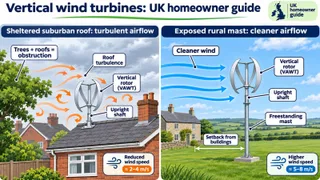
A vertical wind turbine is worth investigating if your home has an exposed spot with clear airflow at the proposed rotor height and room for a mast that can be serviced safely. A sheltered suburban roof is usually a poor candidate. Before paying a deposit, ask for a site-specific annual generation estimate in kilowatt-hours, an itemised quote for installation and servicing, and confirmation of the planning and grid connection routes. If your roof gets good sunlight, compare the turbine with a solar PV quote using the same household electricity data.
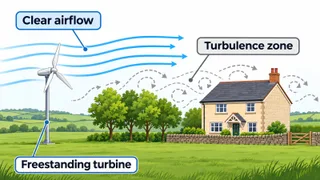
A vertical-axis wind turbine spins around an upright shaft and can take wind from different horizontal directions without turning to face it. Nearby roofs and trees can still slow the wind and create turbulence at the rotor. The UK small-wind field trial found that broad-area estimates tended to overstate wind speeds at sheltered urban and suburban sites. Energy Saving Trust small-wind field trial

Check the wind at the proposed rotor height
Use a postcode wind estimate for an initial check, then ask the installer to mark the rotor’s proposed position and height on a site plan. In the directions the wind usually comes from, look for roof ridges, neighbouring buildings and mature trees. A roof edge can feel gusty during a visit even if the turbine would get little sustained wind over the year.
If you only have a postcode estimate or the findings of a brief visit, ask the installer how they will check the wind before you commit. On a promising site, ask whether they can take measurements at a spot that reflects conditions at the proposed rotor and how they will relate those readings to longer-term local conditions. If planning or structural checks mean lowering the rotor or moving it closer to an obstruction, ask for a revised generation estimate.
Turn the turbine’s power curve into an annual generation estimate
Rated power in kilowatts (kW) is the power a turbine delivers at a stated wind speed. Annual generation in kilowatt-hours (kWh) is the electricity it is expected to produce over a year. A rotor can turn in a light breeze while producing very little usable electricity.
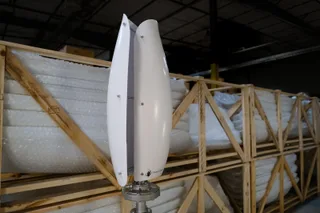
Ask for an independently tested power curve for the exact model. A credible estimate uses the curve to work out how much electricity the turbine would generate in each wind-speed band at the proposed rotor height, then adds up the results across the year. Ask how the estimate allows for losses from the controller, inverter and cables, where applicable, and how much downtime it assumes. If the wind data are uncertain, ask for a lower-yield estimate to see whether the project still makes sense. Apply the same checks to a flower-shaped turbine and ask for measured output from a comparable installation if available. MCS small-wind installation standard
Compare a roof-mounted turbine, a garden mast and solar PV
A freestanding mast is worth pricing if it can put the rotor in clearer airflow and leave enough room for maintenance. For a roof installation, ask for a structural assessment showing how the fixings transfer loads from gusts and repeated vibration into the building. For either mounting option, ask where noise will be assessed and how a technician will reach the rotor.
Overview
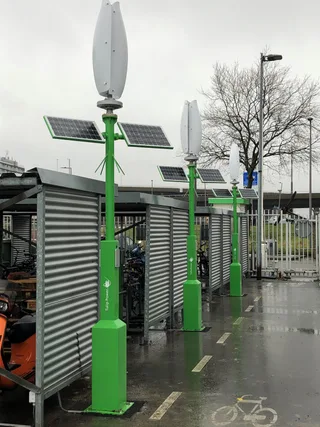
The Warwick Wind Trials reported an annualised average of 78 kWh per site across 26 building-mounted micro-wind installations monitored in 2007–08. That included downtime for faults and maintenance. To assess a current domestic vertical-axis model, use its tested power curve and wind evidence for your proposed site. Warwick Wind Trials final report
What does a vertical wind turbine cost to install and run?
Base your budget on an itemised quote for the exact turbine and site. A mast quote can change once the installer has checked excavation access, the foundation design and the route for the cable trench. On a roof, structural work, weatherproofing and the equipment needed to reach the turbine can affect both installation and repair costs.
Check whether the total covers the wind assessment, structural design, mounting or foundations, cabling, controller, inverter, access equipment and commissioning. Ask how the turbine is isolated for servicing, what routine visits cost and whether the warranty covers labour, travel and access equipment as well as parts. If servicing requires a lift or scaffold, ask for that cost separately.
Estimate bill savings from the electricity you will actually use
Split the annual generation estimate into electricity you expect to use at home and electricity you expect to export. Use the import unit rate you would otherwise pay and an export unit rate you have confirmed you can get. Enter both rates in pounds per kWh.
Annual net savings (£) = (annual self-consumed kWh × import unit rate) + (annual exported kWh × export unit rate) − annual servicing costs.
If you have half-hourly consumption data, ask the installer to compare it with the estimated generation profile. Using your annual consumption total alone can overstate how much turbine electricity you will use if the turbine generates when household demand is low. Repeat the calculation with the lower-yield estimate and compare both results with the upfront cost and any expected component replacements. A battery can store some surplus generation for when the household needs it, although some energy is lost during charging and discharging. If the quote includes home battery storage, ask for the savings with and without it, allowing for any existing solar generation. If the proposal includes backup power, ask which circuits the system can supply and how it works during a power cut.
Check planning, grid connection and export before ordering
In England, permitted development rights cover certain building-mounted turbines on detached homes and certain freestanding installations, subject to conditions. Scotland has separate provisions for freestanding turbines and roof-mounted turbines on detached homes, with prior notification and approval procedures. In Wales, a building-mounted turbine requires a planning application. A freestanding unit can qualify as permitted development if it meets the conditions. Northern Ireland’s guidance says planning approval is required. Give your local planning authority the exact model, overall height, mounting details and proposed position so it can advise on your property. England legislation · Scottish Government guidance · Welsh Government guidance · Northern Ireland guidance
For a grid-connected turbine, ask your installer to include any existing solar or battery inverter when checking the connection route with the distribution network operator. In Great Britain, ask whether G98 or G99 applies, whether you need approval before installation and how any export limit will affect the amount of electricity you can export. The Smart Export Guarantee covers eligible wind installations in Great Britain. Before counting on export income, confirm the tariff with your chosen supplier and ask what metering and installation evidence it requires. In Northern Ireland, check export arrangements directly with suppliers. Energy Networks Association connection guide · Ofgem Smart Export Guarantee guidance
Decide whether to pay for a site survey
If you have a clear, exposed spot, ask a small-wind installer to specify the proposed rotor height, what wind evidence they will collect and what the survey fee covers. Before ordering, get the annual generation estimate and the installation and running costs in writing. Ask the installer to confirm who will handle the planning and grid connection paperwork.
If the survey shows that the site is sheltered or that access for servicing would be costly, use the Kilowatts UK residential solar comparison service to get a quote. Use the same household electricity data for both proposals. Compare how much electricity each system could save you from buying at your import rate and how much you would export.
Solar comparison
Compare solar for your property
Enter your postcode to assess your roof, compare solar options and get quotes from UK installers.
- Free postcode start
- Home, business and industrial
- RoboMo™ maps your roof
See which panels fit your roof
Choose home, business or industrial, then enter your postcode. RoboMo maps the roof and ranks panel brands by fit.
1. Postcode Start the assessment for your property.
2. Pin the roof Mark the array on the map.
3. Compare RoboMo™ builds your options.

Battery ROI tool
See what a battery saves on your bill
Enter the day rate, off-peak rate and export rate. The calculator ranks batteries in the Kilowatts shop over 10 years. Home batteries also suit offices and small commercial sites.
Reading
Sources and further reading
Find out if a home wind turbine is viable for your UK property. Check wind at mast height and weigh forecast electricity output against installation costs.
Read article
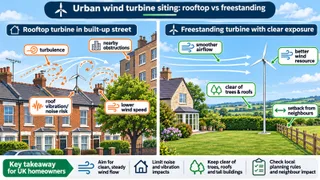
Assess urban wind turbines for your UK home. Learn how to check wind at rotor height, compare roof and mast mounts, and judge annual output forecasts.
Read article
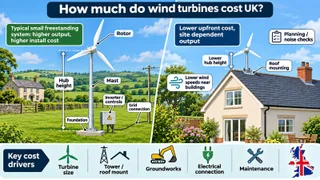
A 6 kW pole-mounted home wind turbine costs about £28,000 installed in the UK. Check what rooftop, farm and factory quotes include before budgeting.
Read article
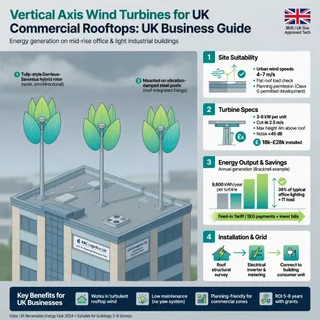
Vertical axis wind turbines suit UK commercial rooftops only where measured hub-height wind, structure, planning and a DNO connection all stack up.
Read article


Mo's Solar Mission
Mo's Mission Nominations
Garlinge Primary School and Nursery
Garlinge Primary School and Nursery is a foundation primary school on Westfield Road in Margate, Kent, for children aged 3 to 11. It is m...
St Luke's Church of England Primary SchoolSt Luke's Church of England Primary School is a voluntary controlled Church of England primary school on Jubilee Road in Formby, Merseysi...
Comberbach Nursery and Primary SchoolComberbach Nursery and Primary School is a primary academy on Mather Drive in the village of Comberbach, near Northwich in Cheshire, for...
Locations
Solar installation near you
Write for Kilowatts.uk
Got a trade and something worth saying?
Write it here under your own name. Sign in, put a profile up, and start a guide. Pay only if you want more links from your articles out to your own site.
Register
Create a Kilowatts.uk account, or sign in if you already have one.
Author profile
Put your name, photo and experience on a public author page.
Start creating
Write a guide or a blog. Free authors can put one followed link to their own site in articles each month.
FAQ
Need Help? RoboMo's Got Answers
Is a vertical wind turbine worth it for my home?
It may be worth investigating if you have an exposed spot with clear airflow at the proposed rotor height and safe access for servicing. A sheltered suburban roof is usually a poor candidate, even if it feels gusty. If your roof gets good sunlight, compare the turbine with a solar PV quote using the same household electricity data.
How much electricity will a vertical wind turbine generate?
Ask for an annual generation estimate in kilowatt-hours (kWh) based on wind conditions at the proposed rotor height and an independently tested power curve for the exact model. The rated power in kilowatts (kW) tells you how much power the turbine delivers at a stated wind speed. Ask how the estimate accounts for electrical losses and downtime, and request a lower-yield estimate if the wind data are uncertain.
Should I mount a vertical turbine on my roof or on a garden mast?
A garden mast is worth pricing if it puts the rotor in clearer airflow and leaves room for maintenance. For a roof mount, ask for a structural assessment that covers wind loads, vibration, fixings and waterproofing. For either option, ask how noise will be assessed and how a technician will reach the turbine.
What should a quote for a home wind turbine include?
Ask for an itemised quote covering the wind assessment, structural design, mounting or foundations, electrical equipment, cabling and commissioning. Check the cost of routine servicing and any lift or scaffold needed for access. Ask whether the warranty covers labour, travel and access equipment as well as parts.
How do I estimate my bill savings from a vertical wind turbine?
Estimate how much of the turbine’s output you would use at home and how much you would export. Value the electricity you use at your import unit rate and any surplus at the export rate you have confirmed, then subtract annual servicing costs. If you have half-hourly consumption data, ask the installer to compare it with the expected generation profile, and repeat the calculation with a lower-yield estimate.
Do I need planning permission for a vertical wind turbine?
That depends on where in the UK you live, how the turbine is mounted and the details of your property. Before ordering, give your local planning authority the model, overall height, mounting details and proposed position. Ask whether you need planning permission, prior approval or any other planning submission.
Can I connect a home wind turbine to the grid and get paid for exports?
Ask your installer to confirm the connection process and any export limit with your distribution network operator, taking account of any existing solar or battery inverter. In Great Britain, check whether your installation is eligible for a Smart Export Guarantee tariff and what metering and installation evidence the supplier needs. In Northern Ireland, check export arrangements directly with electricity suppliers.
Live help
Need help right now?
Talk to RoboMo™ and get instant answers.