


Generation Flow
Published: 2026-11-26 22:00:45
Updated: 2026-11-26 14:08:17
A generation meter fluctuating under moving cloud but never hitting zero;
Watch the video
A generation meter fluctuating under moving cloud but never hitting zero;
A generation meter fluctuating under moving cloud but never hitting zero. This short Kilowatts UK film is a companion to a real design question. The page below restates what the film teaches, then puts it in practical UK-home context so the article still stands if you cannot play the video.
What the film is asking
The episode title is “Generation Flow”. The premise is simple. A generation meter fluctuates under moving cloud but never hits zero in the film. On screen, time accelerates through the seasons while a counter climbs. Two homes can look identical and still need different solar and storage designs if they use electricity at different times of day.
What Mo and RoboMo actually say
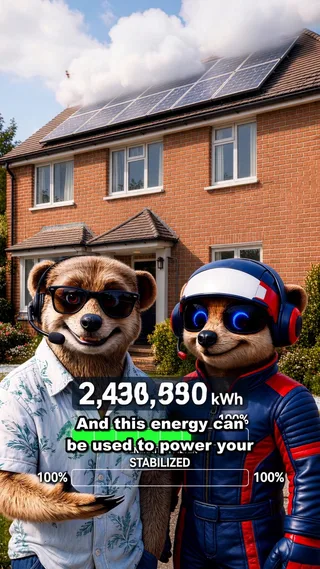
The spoken script is short on purpose. Each line is a design point. Does cloudy weather affect solar panels? RoboMo: Clouds reduce generation, but solar panels still produce electricity. Does this reduce the overall energy output? No, solar panels still generate, just less during cloudy days. And this energy can be used to power your home or business. It's not just a trickle. Does cloudy weather affect solar panels? RoboMo: Clouds reduce generation, but solar panels still produce electricity. Does this reduce the overall energy output? No, solar panels still generate, just less during cloudy days. And this energy can be used to power your home or business. It's not just a trickle. The film is teaching you to size the system around measured demand.
Why identical houses can need different systems
Solar output varies as clouds pass. Solar on the roof makes electricity when there is enough daylight. A home that uses most of its power while the sun is up can consume a lot of that generation directly. A home that stays quiet all day and then uses more electricity in the evening for cooking, heating or EV charging can store surplus daylight energy. Without storage, it may export that surplus and buy electricity from the grid later. So the same roof, the same panels and even the same installer quote can still be the wrong design if the demand curve is different. A home battery lets you use daytime generation later, when the household actually needs it.
How to tell which house you are
Start with your own half-hourly smart meter data to see when the house draws power and how that lines up with daylight. If demand rises with the sun, more of the generation can be used on site. If demand spikes after sunset, storage or a timed overnight charge may be more useful than extra panels. The same applies to an EV in an evening-heavy household. The roof may stay the same size. The battery, or the decision to charge off-peak, is what changes. Use measured demand to guide the design.

A short checklist before you size anything
Pull a year of half-hourly import data if you can. Mark when cooking, heating, laundry and any EV charging actually happen. Note whether those hours sit in daylight or after dark. Ask what happens to surplus midday generation and check how much electricity the house still buys after sunset. When you compare home solar designs, consider panels, storage and timed charging together. The right mix depends on when the household uses electricity. A survey should start there.
Questions the film is answering
Can two identical houses need different solar systems? Yes, if they use electricity at different times. Does an evening-heavy house have more use for a battery than a daytime-heavy house? Often, because it uses less of its solar generation as it is produced. Does adding an EV change the roof? It can change how much electricity you need, when you charge and how much you could use from panels or storage. How do you know which pattern you have? Check your half-hourly smart meter data and use it to guide the design.
Video transcript
Mo: Does cloudy weather affect solar panels? RoboMo: Clouds reduce generation, but solar panels still produce electricity.
Does this reduce the overall energy output? No, solar panels still generate, just less during cloudy days.
And this energy can be used to power your home or business. It's not just a trickle. Mo: Does cloudy weather affect solar panels? RoboMo: Clouds reduce generation, but solar panels still produce electricity. / Does this reduce the overall energy output? No, solar panels still generate, just less during cloudy days. / And this energy can be used to power your home or business. It's not just a trickle. Watch the short, then look at your own half-hourly data before you treat two similar roofs as the same job. If you want a second pair of eyes on that data, book a free survey with Kilowatts UK.
Solar comparison
Compare solar for your property
Enter your postcode to assess your roof, compare solar options and get quotes from UK installers.
- Free postcode start
- Home, business and industrial
- RoboMo™ maps your roof
See which panels fit your roof
Choose home, business or industrial, then enter your postcode. RoboMo maps the roof and ranks panel brands by fit.
1. Postcode Start the assessment for your property.
2. Pin the roof Mark the array on the map.
3. Compare RoboMo™ builds your options.

Battery ROI tool
See what a battery saves on your bill
Enter the day rate, off-peak rate and export rate. The calculator ranks batteries in the Kilowatts shop over 10 years. Home batteries also suit offices and small commercial sites.

Authorised UK partner
Design Flower Turbines and forecast generation
Choose a location, configure Flower Turbines and see estimated annual generation from location-specific wind data. No account required.
- Real location data
- Build your own layout
- Instant generation forecasts
Open the turbine designer
Enter a postcode and lay out Flower Turbines on your site.
1. Postcode Open the designer for your site.
2. Layout Place turbines in the space you have.
3. Forecast See estimated annual generation.
Reading
Sources and further reading
Solar panels
Solar panels
Shop
Shop
Mo's Solar Mission
Mo's Mission Nominations
Locations
Solar installation near you
Write for Kilowatts.uk
Got a trade and something worth saying?
Write it here under your own name. Sign in, put a profile up, and start a guide. Pay only if you want more links from your articles out to your own site.
Register
Create a Kilowatts.uk account, or sign in if you already have one.
Author profile
Put your name, photo and experience on a public author page.
Start creating
Write a guide or a blog. Free authors can put one followed link to their own site in articles each month.
FAQ
Need Help? RoboMo's Got Answers
Do solar panels still generate electricity on cloudy days?
Yes. Solar panels can generate from daylight filtered through clouds, but they usually produce less electricity than under clear skies. Output can fluctuate as clouds pass and falls to zero at night.
How much does solar generation vary between summer and winter in the UK?
Solar panels generally generate less electricity in winter because the days are shorter and the sun is lower in the sky. Ask for a month-by-month generation estimate for your roof so you can compare it with your household’s seasonal electricity use.
Can two identical houses need different solar and battery systems?
Yes. A household that uses most of its electricity during daylight can use more of its solar generation as it happens. A household with higher evening demand may benefit more from storing some daytime generation or shifting flexible tasks into daylight hours.
What smart meter data should I use to plan a solar installation?
Use up to a year of half-hourly electricity import data if it is available. This shows when you draw electricity from the grid and helps capture seasonal changes in use. If you already have solar panels or a battery, share any generation and battery data you have, as grid imports alone do not show your total household use.
What happens to solar electricity I do not use straight away?
Surplus electricity can charge a home battery if one is fitted and has room to charge. Any remaining surplus can flow to the grid if your system is set up to export, subject to any export limit. A battery lets you use some of that daytime generation later.
Is a battery worth considering if I use most of my electricity in the evening?
It can be, especially if you regularly have spare daytime solar generation and buy electricity after sunset. Compare how much surplus you could realistically store with how much electricity you use in the evening. The financial case also depends on battery costs and your import and export rates.
Does getting an electric car mean I need more solar panels?
It depends on how much you drive and when the car is at home. If it is usually plugged in during daylight, you may be able to charge it with surplus solar generation. If you mainly charge overnight, compare the cost of timed grid charging on your tariff with the cost of adding home battery capacity.
Live help
Need help right now?
Talk to RoboMo™ and get instant answers.