


Ammonia-to-Hydrogen Catalyst Runs for 2,000 Hours - But It Still Needs Acid-Wash Regeneration
Published: 2026-11-23 18:26:36
Updated: 2026-11-23 10:27:24
See how acid washes helped an ammonia-to-hydrogen catalyst run for over 2,000 hours in the lab and what UK industrial pilots need to measure.
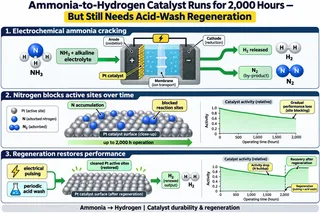
Ammonia-to-hydrogen catalyst runs for over 2,000 hours in a lab with acid-wash regeneration
A team led by the National University of Singapore (NUS) produced hydrogen from ammonia for more than 2,000 hours in a laboratory test at a current density of 10 mA/cm². The team periodically switched the electrical conditions and washed the catalyst with acid to restore its activity. They also replenished the ammonia feed. A separate test at a much higher current density ran for 500 hours. The results show that regeneration can extend laboratory operation. Commercial catalyst life, hydrogen output and plant availability remain open questions. NUS Chemistry research summary
Why the catalyst still needs an acid wash
Electrochemical ammonia cracking uses electricity to release hydrogen from ammonia. The researchers used platinum nanoparticles on a nitrogen-doped carbon support containing individual iron atoms. During operation, nitrogen species can bind to the platinum and block the sites where the reaction takes place. The support helps free some of these sites and reduces platinum oxidation, another cause of declining activity. Study in Nature Synthesis
Periodically changing the electrical conditions helped restore activity, and the acid wash removed accumulated nitrogen from the catalyst. The researchers replenished the ammonia separately to keep the cell supplied. A pilot would need to measure how long it takes to resume delivering gas that meets specification after stopping for a wash. It would also need to establish how to handle the wash liquid and how many regeneration cycles the electrode can withstand before replacement. NUS Chemistry explanation of catalyst regeneration
How the two laboratory durability tests compare
Current density is electrical current per unit of electrode area. At a higher current density, the same electrode area can produce hydrogen faster if a similar share of the current goes into making hydrogen. The longer test measured how long the system ran at the lower current density. The shorter test measured how long it ran under a much higher electrical load per unit area. Published test results in Nature Synthesis
Overview
Buyers need to know how many kilograms of hydrogen the system can deliver each day at the required purity and pressure. To estimate that output, account for the electrode area, the current density, the share of current that produces hydrogen, the gas recovered after purification and the production time lost to regeneration and restart.
What determines the cost and emissions of delivered hydrogen?
The laboratory results are insufficient to estimate UK installation costs. A site-level cost model would need to include delivered ammonia, electricity for the cell and auxiliary equipment, regeneration labour and materials, wash-liquid handling, electrode replacement, purification and compression. Divide total costs by the kilograms of hydrogen delivered to the customer’s specification over the same period. An acid wash can raise the cost per kilogram by adding maintenance expense and reducing output.
The emissions comparison depends on which stages it covers. In their 2024 study *Life cycle assessment of renewable hydrogen transport by ammonia*, Cho and colleagues modelled hydrogen production, ammonia synthesis, marine transport, thermal cracking and purification at the destination. They reported impacts per kilogram of purified hydrogen at 1 bar and excluded compression for final use. The study provides a framework for comparing supply chains. Estimating emissions from the NUS electrochemical process would require its own operating data.
A UK site comparing ammonia cracking with delivered hydrogen or on-site water electrolysis should use the same purity, pressure and delivery point for each option. For the ammonia route, include emissions from making and transporting the ammonia and from electricity used in cracking and regeneration. Account for gas losses and energy use during purification and compression. The comparison can change with the ammonia production route, transport distance and electricity supply at the site. For an example of a different production route, see our guide to hydrogen from seawater.
Where ammonia cracking could fit in the UK
An industrial site that already uses hydrogen and has access to bulk ammonia could host a future electrochemical pilot. The Ammogen project at Tyseley Energy Park in Birmingham demonstrated thermal cracking and illustrates what a site needs around the reactor. Section 3.3 of its report describes ammonia storage and vaporisation, including gas detection and ventilation. The sections on the cracking system and testing explain how the project addressed hydrogen quality. Tyseley Ammogen final project report
Start with hydrogen demand by hour or shift, the required delivery pressure and the maximum residual ammonia the equipment can accept. Engineers can use these figures to size gas treatment and estimate how much buffer storage or backup supply the site would need during a wash and restart. The site assessment also needs to cover tanker access, ammonia storage, ventilation, gas detection and emergency arrangements for toxic ammonia and flammable hydrogen. For an example of how industry might use hydrogen, see our guide to hydrogen hybrid engines.
What this means for homes, balconies and small businesses
This catalyst is at the industrial research stage. Its requirements for ammonia handling, gas treatment and maintenance make homes and balconies unsuitable. For a small business, the first step is to establish whether an existing process needs hydrogen or whether the goal is to reduce electricity or heating costs.
If the goal is lower bills, use meter readings and heating costs to see where savings might come from. Solar PV can supply daytime electricity demand, battery storage can make electricity available later, and a heat pump may suit a building whose heat demand and heating system allow it to run efficiently. Our guide to smart energy controls explains how monitoring can help you understand when you use electricity. If your business uses most of its electricity during daylight hours, you can compare solar options for businesses.
Solar comparison
Compare solar for your property
Enter your postcode to assess your roof, compare solar options and get quotes from UK installers.
- Free postcode start
- Home, business and industrial
- RoboMo™ maps your roof
See which panels fit your roof
Choose home, business or industrial, then enter your postcode. RoboMo maps the roof and ranks panel brands by fit.
1. Postcode Start the assessment for your property.
2. Pin the roof Mark the array on the map.
3. Compare RoboMo™ builds your options.

Battery ROI tool
See what a battery saves on your bill
Enter the day rate, off-peak rate and export rate. The calculator ranks batteries in the Kilowatts shop over 10 years. Home batteries also suit offices and small commercial sites.
Reading
Sources and further reading
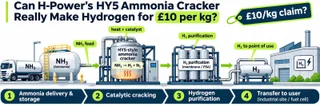
See what H-Power’s HY5 ammonia cracker offer covers and how minimum volumes and compression affect the £10/kg hydrogen price for UK industrial sites.
Read article
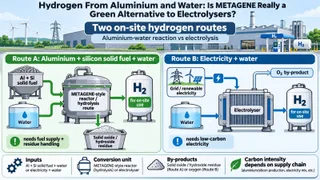
See what METAGENE’s funding covers and what UK sites need to know about costs and emissions before comparing aluminium-based hydrogen with electrolysis.
Read article
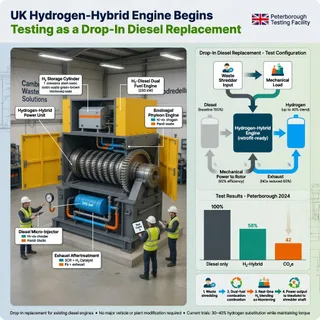
Perkins is fitting a hydrogen-hybrid unit to a UK shredder as a diesel stand-in. It is a trial: tanks, refuelling and results are unpublished.
Read article
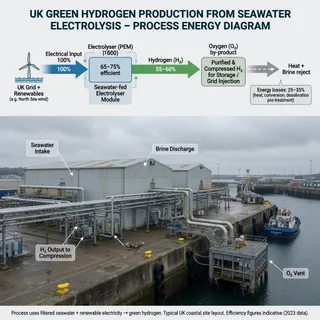
A seawater hydrogen system announced on 5 October 2026 does not push raw seawater through the cell. Waste heat pulls purified water out first.
Read article


Mo's Solar Mission
Mo's Mission Nominations
Garlinge Primary School and Nursery
Garlinge Primary School and Nursery is a foundation primary school on Westfield Road in Margate, Kent, for children aged 3 to 11. It is m...
St Luke's Church of England Primary SchoolSt Luke's Church of England Primary School is a voluntary controlled Church of England primary school on Jubilee Road in Formby, Merseysi...
Comberbach Nursery and Primary SchoolComberbach Nursery and Primary School is a primary academy on Mather Drive in the village of Comberbach, near Northwich in Cheshire, for...
Locations
Solar installation near you
Write for Kilowatts.uk
Got a trade and something worth saying?
Write it here under your own name. Sign in, put a profile up, and start a guide. Pay only if you want more links from your articles out to your own site.
Register
Create a Kilowatts.uk account, or sign in if you already have one.
Author profile
Put your name, photo and experience on a public author page.
Start creating
Write a guide or a blog. Free authors can put one followed link to their own site in articles each month.
FAQ
Need Help? RoboMo's Got Answers
Did the ammonia-to-hydrogen catalyst run for 2,000 hours without maintenance?
The laboratory test exceeded 2,000 hours at 10 mA/cm². During the test, the researchers periodically changed the electrical conditions, washed the catalyst with acid and replenished the ammonia feed. Commercial service life and downtime remain unmeasured.
Why does the catalyst need an acid wash?
Nitrogen species can build up on the platinum and block the sites where the reaction takes place. An acid wash removes accumulated nitrogen and helps restore catalyst activity. A pilot would need to measure the time lost to washing and restarting, and establish how to handle the used wash liquid.
What does the separate 500-hour test tell buyers about hydrogen output?
The separate test ran for 500 hours at 1.5 A/cm², a much higher electrical current per unit of electrode area. A higher current density can increase hydrogen output from the same electrode area if a similar share of the current goes into making hydrogen. Buyers need a figure in kilograms per day at their required purity and pressure, accounting for gas losses and downtime.
Is ammonia cracking suitable for a UK home or balcony?
This catalyst is at the industrial research stage. Ammonia is toxic and hydrogen is flammable, so storage, ventilation and gas detection require specialist design. The gas treatment and maintenance needs also make the system unsuitable for homes and balconies.
What should a UK business check before considering an ammonia-cracking pilot?
Start with how much hydrogen the site needs by hour or shift, the delivery pressure and the maximum residual ammonia the equipment can tolerate. Check whether the site can safely receive and store bulk ammonia. Use the demand figures to estimate how much buffer storage or backup supply would be needed during washing and restart.
How can buyers compare the cost and emissions of ammonia-derived hydrogen?
Compare each option per kilogram of hydrogen delivered at the same purity, pressure and delivery point. For costs, include delivered ammonia, electricity, regeneration, wash-liquid handling, electrode replacement, purification and compression. For emissions, include how the ammonia is made and transported, the electricity used on site and any hydrogen lost before delivery. The laboratory results alone cannot establish a UK price per kilogram.
What should a household or small business look at if the goal is lower energy bills?
Start with meter readings and heating bills to see when and where you use the most energy. Solar PV can meet some daytime electricity demand, and a battery can store surplus generation for later use. If heating is the main cost, assess whether a heat pump suits the building's heat demand and existing heating system.
Live help
Need help right now?
Talk to RoboMo™ and get instant answers.