


Commercial solar for car dealerships in the UK
Published: 2026-07-18 18:55:22
Updated: 2026-08-01 07:19:20
Find out commercial solar for car dealerships in the UK, including costs, what affects price, and how to choose an installer.
Commercial solar for car dealerships in the UK
Commercial solar for car dealerships can be a strong fit because many dealership loads run during daylight hours. Showrooms, workshops, offices, valeting areas, parts departments, compressors, HVAC and EV chargers can all use electricity at the same time that solar panels are generating.
The best projects are not simply the biggest arrays that will fit on the roof. They are sized around real half-hourly electricity use, roof condition, grid capacity, export value, EV charging plans, lease position and operational disruption.
In practice, dealership solar usually means photovoltaic panels on workshop roofs, parts departments, valeting buildings, flat roofs or, where the budget and layout justify it, car park canopies. The system supplies on-site loads first. Any surplus may be exported to the grid if the connection agreement, metering and export arrangement allow it. A practical summary for most UK dealerships is:
Good fit
Sites with high daytime electricity use, workshops, HVAC, valeting equipment, compressors, ramps, lighting and EV chargers.Cost drivers
System size, roof type, access, grid works, carport structures, metering, monitoring and battery storage.Common mistake
Designing around roof space instead of actual half-hourly demand.Best first step
Gather electricity bills, half-hourly data, roof information and EV charging plans before requesting final quotes.Main constraint
Roof condition, available roof area, shading, landlord consent, insurer requirements and DNO export approval.Financial driver
Self-consuming solar electricity is usually worth more than exporting it.
Commercial solar can reduce grid electricity purchases and support carbon reporting, but it is not automatically suitable for every dealership. A site due for redevelopment, a short lease, a weak roof, unmanaged asbestos risk, heavy shading or limited grid capacity may need a smaller system, roof works first, a phased plan or a different approach.
Why car dealerships are well suited to solar
Car dealerships are often better solar candidates than many other commercial premises because their demand profile usually overlaps with solar generation. In simple terms, solar works best when the business can use the electricity as it is produced. Dealerships often can.
Typical daytime electricity loads include:
showroom lighting and displays office equipment and IT air conditioning and ventilation workshop tools and diagnostic equipment compressors and hydraulic ramps MOT equipment The key point is that solar does not need to cover every load to be worthwhile. It needs to replace enough imported electricity at the times the site is using power. A simple way to think about it is: South-facing roofs normally generate the most electricity over a year, but east-facing and west-facing roofs can still work well for dealerships. They spread generation across the working day, which can be useful where the site opens early, has workshop activity through the day, or charges vehicles in the morning and afternoon. For example, a south-facing array may produce the highest annual total, while an east-west system may produce a broader generation curve. The best answer depends on when the dealership actually uses electricity, not only on which roof produces the largest annual kWh figure. valeting equipment parts department operations security systems and customer facilities EV charging for demonstrators, courtesy cars, staff vehicles and customer vehicles
What a dealership solar system can include
A commercial solar installation for a car dealership can be simple or complex depending on the site. The core components are:
- solar panels
- roof or canopy mounting equipment
- inverters
- AC electrical works
- generation metering
- monitoring
Some sites also add batteries, export limitation, EV charging integration, or solar carports. Rooftop solar is usually assessed first because it is normally cheaper and simpler than building new canopy structures. Workshops and parts buildings often provide more practical roof space than highly glazed showroom fronts, especially where showroom roofs are interrupted by plant, skylights, signage or architectural features. A detailed commercial solar installation assessment should look at the roof and the site’s real demand together. Solar carports can be attractive for dealerships because they make productive use of customer parking, staff parking or display bays. They can also support the dealership’s public-facing sustainability message. However, they usually cost more than rooftop solar because the structure itself is part of the project. Foundations, steelwork, drainage, lighting, cable routes, collision protection, planning considerations and parking disruption all need to be considered. Battery storage is optional. It may make sense where the site has high evening demand, restricted export capacity, peak-demand charges or EV charging peaks that do not line up with solar generation. It is not automatically needed where most solar electricity is used by the showroom, workshop and chargers during the day. A useful rule of thumb is: grid protection and connection equipment cable routes and isolation points handover documentation and maintenance plan If the site can use most solar generation during opening hours, start with rooftop solar and good monitoring. If a lot of electricity is exported at low value, consider whether a smaller array, load shifting, EV charging controls or a battery improves the case. If grid capacity is limited, look at export limitation, load management and DNO constraints before assuming the roof can be fully covered.
Typical system sizes, output and costs
UK commercial rooftop solar systems for dealerships commonly range from around 30 kWp to 500 kWp, depending on the scale of the site. Smaller independent dealerships may be closer to 20 kWp to 80 kWp, while larger franchised sites with workshops may be in the 100 kWp to 300 kWp range. Multi-site dealer groups should assess each branch separately because roof condition, electricity use and grid capacity can vary widely.
Two terms are useful:
kWp means the rated size of the solar array under standard test conditions. It is the system’s headline capacity. kWh means units of electricity generated or used over time. This is what appears on electricity bills. a 50 kWp rooftop system at roughly £45,000 to £70,000 before VAT a 100 kWp rooftop system at roughly £70,000 to £120,000 before VAT a 250 kWp rooftop system at roughly £170,000 to £300,000 before VAT import tariff As a broad UK output guide, commercial solar often generates around 750 to 1,000 kWh per kWp per year. Actual output depends on location, roof angle, orientation, shading, system losses and maintenance. Indicative annual generation examples: Southern England generally has higher solar yield than Scotland or Northern England, but roof angle, shading and orientation can be just as important in the final design. A clear, well-orientated roof in the North may outperform a shaded or obstructed roof in the South. Indicative UK commercial rooftop solar costs are often around £700 to £1,200 per kWp, with larger systems usually achieving a lower cost per kWp than smaller projects. As a broad budgeting guide, that can place: These are not fixed prices. Roof access, mounting method, electrical works, metering, DNO requirements, scaffolding, monitoring, fire measures, structural works and programme constraints can all move the final cost. Solar carports usually cost more, often around £1,500 to £2,500 per kWp or more, because the project includes the canopy structure. Batteries vary too widely for a reliable single figure without site data because capacity, power rating, controls, fire design, housing, warranty and grid requirements all affect cost. Payback periods for UK commercial solar are often around 4 to 8 years where self-consumption is high, but they can be longer where export is high and on-site use is low. A reliable payback estimate should clearly state the assumptions for: Be cautious with any proposal that gives a payback figure without showing the electricity price, export price and self-consumption assumptions behind it. standing charges and non-commodity costs where relevant export tariff annual generation self-consumption percentage panel degradation maintenance cost inverter replacement allowance finance cost if funded through borrowing or a lease arrangement VAT and tax treatment assumptions
Government support, tax treatment and export income
There is no universal UK government grant for private commercial rooftop solar. Local authority, devolved administration or regional business schemes may occasionally support low-carbon investment, but availability changes often and is location-specific. It is sensible to check current schemes before committing, but a robust dealership solar case should not depend on a grant that may not be available.
The Feed-in Tariff scheme closed to new UK applicants in 2019. In Great Britain, the Smart Export Guarantee applies to eligible small-scale low-carbon generators up to 5 MW, but suppliers set their own export tariff rates. Eligibility and metering requirements should be checked before relying on export income. Some commercial export arrangements are negotiated outside simple SEG-style tariffs, especially for larger systems.
For most dealerships, avoided import cost is usually more valuable than export income. This is why system sizing should focus on how much solar electricity the site can use during opening hours, not only on annual generation. Tax treatment is an important part of the investment case. Companies may be able to use capital allowances for qualifying solar expenditure, including Annual Investment Allowance or full expensing where the business and expenditure qualify. This should be checked with an accountant before purchase. Commercial solar installations are normally subject to standard-rate VAT, and the domestic zero-rate VAT rules for residential solar do not usually apply to dealership sites. If the dealership is part of a wider group, tax, ownership and funding should be reviewed at group level. The business that owns the system, pays the electricity bill and occupies the site may not always be the same legal entity. Wider finance routes may include ownership, borrowing, lease-style structures or power purchase agreement models, depending on the site and the business case.
Site survey and design checks
A dealership solar proposal should start with the roof, the electrical data and the operational constraints. A low headline price is not useful if it ignores roof warranty, asbestos risk, grid approval, insurer requirements or how the installation will affect trading.
A good site survey should answer three basic questions:
- Can the building safely take the system?
- Can the electrical connection use the system effectively?
- Can the installation be delivered without unacceptable disruption to sales, servicing and customer movement?
- roof structure and remaining roof life
- asbestos information and safe access arrangements
- skylights, vents, plant, flues and maintenance routes
A structural survey is normally needed before installation. The roof should be checked for dead load, wind uplift, fixings, roof covering condition and remaining service life. A roof with less than around 10 years of useful life left may need repair or replacement before solar is installed, otherwise the panels may have to be removed and reinstalled later. Metal profile roofs are common on dealerships and workshops. Standing seam roofs may allow non-penetrative clamps, while trapezoidal metal roofs often use rail systems fixed to the roof sheet or purlins. Flat roofs may use ballasted or mechanically fixed mounting, but waterproofing, drainage and wind loading need careful attention. Key survey issues include: Insurers may request specific fire safety measures, maintenance records, thermal imaging, isolation arrangements or evidence that the system has been designed and installed to recognised good practice. It is better to involve the insurer before installation than to discover conditions after the system has been commissioned. The survey should also consider trading impact. Dealerships often need customer access, demonstrator availability, service reception flow, workshop bays and delivery routes to remain usable. A technically good solar design can still be a poor project if installation blocks key operations at the wrong time. shading from parapets, signs, trees and nearby buildings fire access, cable routes and emergency isolation roof warranty conditions and insurer requirements crane, scaffold and MEWP access customer parking and vehicle movement during works security arrangements for out-of-hours work internal cable routes through workshops, offices or plant rooms shutdown requirements for electrical tie-ins
Grid connection and export constraints
Many dealership solar systems require Distribution Network Operator approval before connection. The DNO is the company responsible for the local electricity network. It is not always the same company as the electricity supplier.
A simple way to think about the grid connection is that the dealership has two limits:
how much power it can import from the grid how much power it is allowed to export back to the grid allow full export allow export up to a set limit require export limitation equipment require network works Very small generation connections may fall under G98, but most dealership-scale systems are likely to need a G99 application. Larger projects may require a grid study before approval. The correct process depends on system size, inverter capacity, site connection and export arrangement. The DNO may: Where export capacity is limited, export limitation equipment can sometimes allow a larger system by preventing export above an agreed threshold. In some cases, a zero-export system may be used, but it must be designed and controlled so electricity does not flow back to the grid. Grid constraints can affect both cost and timing. A site may have enough roof space for a large array but not enough agreed connection capacity to export unused generation. This does not automatically stop the project, but it changes the sizing strategy. The design may need to prioritise self-consumption, load management, commercial solar battery storage, EV charging controls or a smaller array. Half-hourly electricity data is especially valuable because it shows when the dealership actually uses electricity. At least 12 months of data is preferable, along with MPAN details, electricity bills, import capacity, maximum demand data and planned changes such as new EV chargers, heat pumps, workshop expansion or longer opening hours. Without half-hourly data, a proposal is partly estimating how much solar electricity the dealership will use. With it, the design can be matched to real trading patterns. refuse the proposed export level require design changes before connection
EV charging and forecourt considerations
EV charging can improve the case for commercial solar where vehicles charge during daylight hours. Demonstrators, courtesy cars, workshop vehicles and customer charging can absorb solar output that might otherwise be exported at a lower value.
However, solar will not make EV charging free at all times. A bank of chargers can draw more power than the solar array is generating, especially on cloudy days, in winter or during busy periods. The value comes from reducing grid imports across the year, not from guaranteeing that every charge session is solar-powered.
Load management is often important where solar, EV chargers and site demand share a limited grid connection. The system may need to:
- prioritise building loads
- control charger output
- limit export
- coordinate with battery storage
- avoid exceeding agreed import capacity
- schedule charging for demonstrators and courtesy cars where practical
This is especially relevant where a dealership is planning future commercial EV charging upgrades. Dealerships with fuel sales or service station areas need additional care. Electrical equipment should be kept out of classified hazardous zones unless it is specifically suitable for that environment. DSEAR considerations may apply near fuel storage, fuel dispensing or vapour-risk areas, so solar and EV charging design should be coordinated with the site’s hazardous area information. Carports also need operational design, not only electrical design. They can affect parking capacity, display layouts, vehicle movement, lighting, drainage, pedestrian routes, accessibility and collision risk. A good design accounts for customer experience and sales operations as well as generation output. For franchised dealerships, brand standards may also matter. Panel visibility, canopy appearance, signage, lighting levels and customer parking layouts may need approval from the manufacturer or property team.
When commercial solar may not be suitable
Commercial solar is not right for every dealership. A project that works well on one franchised site may be poor value on another site in the same group because the roof, grid connection, ownership and load profile are different.
Solar may be unsuitable or need redesign in these situations:
the site is due for relocation or redevelopment the lease is short and landlord consent is uncertain the roof has poor structural capacity or limited remaining life asbestos information is missing or unmanaged shading is severe across the usable roof area the DNO cannot approve a useful connection size These issues do not always rule out solar completely. They may point towards a smaller system, roof refurbishment first, a carport option, a zero-export design, phased installation, a battery-led design or delaying the project until the site’s future is clearer. A practical decision path is: most electricity use occurs at night installation disruption would seriously affect trading insurer requirements cannot be met at sensible cost the business cannot use enough daytime generation future EV charging plans are uncertain and materially affect sizing the roof warranty would be compromised by the mounting system Check whether the site will be occupied long enough to benefit. Check roof condition, structure and access. Check half-hourly electricity use and future EV charging plans. Check DNO connection and export constraints. Compare rooftop, carport, battery and phased options. Review the financial case using stated assumptions. Confirm landlord, insurer and operational requirements before signing.
How to choose a commercial solar installer for a dealership
A suitable installer should understand commercial roofs, dealership operations, grid applications, metering, monitoring and insurer expectations. The proposal should be specific to the site rather than a generic panel count and payback figure.
Look for evidence that the installer can handle commercial-scale work, not only domestic solar. Relevant indicators may include:
experience with commercial rooftop solar experience on live trading sites ability to manage G99 applications and export limitation competent electrical design and installation under BS 7671 clear health and safety planning structural design input where required MCS certification may be relevant for some smaller systems and export arrangements, but commercial projects should be assessed on the full competence of the designer, electrical contractor, structural input and commissioning process. For larger systems, check exactly which certifications, accreditations and warranties apply to the proposed design and export route. A strong proposal should include: Be cautious with proposals that: It is sensible to compare proposals on design quality, assumptions and risk management, not only on total price. The cheapest quote may become expensive if it excludes scaffolding, grid work, monitoring, structural checks or electrical upgrades that are needed later. After handover, monitoring matters. Unnoticed inverter faults, communications failures or tripped protection can reduce annual yield. The dealership should know who receives alerts, who investigates faults and what response time is included. Annual maintenance normally includes visual inspection, electrical checks, mounting checks, inverter checks, monitoring review and a cleaning assessment. UK rain often cleans tilted panels adequately, but low-tilt panels, dusty sites and pigeon activity can create maintenance issues. suitable insurance levels documented commissioning and handover process monitoring and maintenance capability references or case studies for comparable commercial sites System size — The proposed kWp rating should be justified against roof area, half-hourly demand and grid limits. Panel and inverter specification — The quote should identify the main equipment, warranties and expected degradation. Generation estimate — The forecast should account for orientation, tilt, shading, location and system losses. Self-consumption estimate — The proposal should show how much electricity is expected to be used on site. Export estimate — The design should explain how much may be exported and at what assumed value. Roof layout — The drawing should show access routes, setbacks, obstructions, plant, skylights and fire considerations. Structural assumptions — The proposal should state whether structural checks are included and what information is needed. Grid assumptions — The quote should state whether G98, G99, export limitation or network works are expected. Metering and monitoring — The proposal should explain how generation, consumption and export will be measured. Financial assumptions — The payback should state tariffs, degradation, maintenance and inverter replacement allowance. Operational plan — The installer should explain scaffolding, lifting, parking disruption, safety zones and working hours. Handover pack — The installer should provide commissioning records, drawings, manuals, warranties, certificates and emergency information. Maintenance plan — The proposal should explain inspection frequency, cleaning assumptions, monitoring alerts and fault response. rely on unrealistic self-consumption ignore export limits assume a battery is always required promise a payback without showing tariff assumptions do not mention roof condition or structural checks do not explain DNO approval omit monitoring and maintenance use very high electricity price assumptions without evidence fail to consider trading disruption quote only on the maximum number of panels that fit on the roof
Information to prepare before getting quotes
A dealership can get better quotes by preparing the right information before speaking to installers. This reduces guesswork and helps installers size the system around real consumption rather than rough assumptions.
Prepare the following information where available:
recent electricity bills half-hourly consumption data MPAN details current import capacity maximum demand data electricity supply contract rates For multi-site dealer groups, compare each branch separately. A high-performing site is not always the largest site. It is often the one with the best combination of daytime demand, usable roof, long-term occupation, grid capacity and straightforward access. A simple pre-quote checklist is: site plans and roof drawings roof age and warranty information asbestos records lease or landlord consent position planned EV charger numbers and power ratings future workshop or showroom expansion plans known roof leaks or planned roof works insurer requirements or contact details opening hours and any seasonal trading patterns parking areas that cannot be disrupted preferred installation windows
Practical next step
The best next step is to review electricity data, roof condition and grid capacity before asking for final prices. A good commercial solar design for a car dealership should show how the system will perform during real trading hours, how much electricity will be used on site, what will be exported and what assumptions sit behind the financial case.
For most UK dealerships, the strongest projects are not the biggest possible arrays. They are the systems that fit the building, respect operational constraints, support EV charging plans, satisfy the DNO and insurer, and use as much solar electricity on site as practical.
Plan, Compare & Buy Renewable Energy Solutions
AI does the thinking.
You get the perfect solar match.
Use RoboMo™ to assess your property, compare available technologies and connect with trusted UK installers, suppliers and manufacturers.
Simply enter your postcode, drop a pin on your roof, create your free account and let RoboMo™ analyse your property to find the best solar panels for your home.

You don't have to think
RoboMo™'s AI analyses your roof and does all the hard work.

Accurate & tailored
AI-powered assessment based on your roof, location, and conditions.

Best options, maximum savings
Compare top solar panels for the best performance and value.

Simple, fast & effortless
Provide a few details, sit back and watch your results unfold.
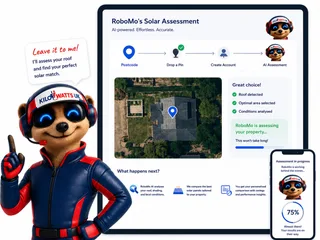
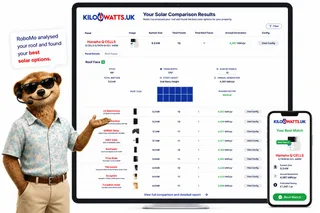
STEP 1
Choose Home, Business or Industrial
Enter your postcode to start your assessment.
STEP 2

Drop a pin on your roof
STEP 3

Create your free account
STEP 4

Sit back and watch RoboMo™ work
RoboMo™ analyses your roof and builds your personalised solar comparison.

Kilowatts UK is an authorised representative
Flower Turbines
Compact vertical-axis turbines built for real UK sites, not just open farmland.
They start in light wind, sit in a small footprint, and are bird-safe by design. Cluster them as a bouquet and the group performs better together than the same turbines standing alone. Enter your postcode for a location-based generation estimate. Figures use area weather data and will differ if buildings, trees or hills sit in the way.
Starts in light UK wind
Built to generate in typical UK wind, not only open farmland.
Small rooftop or ground footprint
Compact towers for roofs, yards and tight sites.
Bird-safe slow rotation
Slow vertical-axis spin, bird-safe by design.
Bouquet clusters raise output
Grouped turbines outperform the same units standing alone.
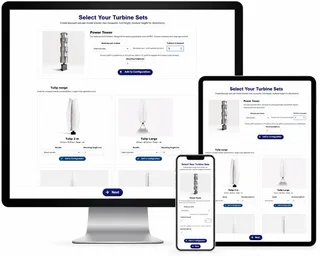
Step 1
Enter your postcode
Start designing your wind energy system in seconds.

STEP 2

Choose a location
STEP 3

Place your cluster
Tap the map where you want the turbine cluster to go.
STEP 4

Instant generation forecasts
Compare different turbine layouts and see annual generation forecasts instantly.
STEP 5

No commitment required
Explore different configurations before deciding whether to request a quotation.
Related articles
Mo's Mission Nominations
FAQ
Need Help? RoboMo's Got Answers
Are solar panels suitable for car dealerships?
Yes, many UK car dealerships are well suited to commercial solar because their electricity use often peaks during daylight hours. Showrooms, workshops, offices, compressors, valeting equipment, HVAC systems and EV chargers can all use solar electricity as it is generated. The best results usually come from sizing the system around real half-hourly electricity data rather than simply filling all available roof space.
What parts of a dealership can use solar electricity?
Solar electricity can supply most normal electrical loads on site, including showroom lighting, office equipment, workshop tools, diagnostic equipment, MOT equipment, compressors, ramps, valeting systems, ventilation, air conditioning and EV charging. The system normally supplies on-site demand first, with any surplus exported to the grid if the connection and metering arrangements allow it.
What size solar system does a car dealership need?
The right size depends on the dealership’s daytime electricity use, roof space, roof condition, grid connection, export limit and future EV charging plans. Smaller independent dealerships may use systems around 20 kWp to 80 kWp, while larger franchised sites with workshops may need 100 kWp to 300 kWp or more. A proper design should use at least 12 months of half-hourly electricity data where available.
How much electricity can commercial solar generate for a dealership?
As a broad UK guide, commercial solar panels often generate around 750 to 1,000 kWh per kWp each year. A 50 kWp system might generate roughly 37,500 to 50,000 kWh annually, while a 100 kWp system might generate around 75,000 to 100,000 kWh. Actual generation depends on location, roof orientation, roof angle, shading, equipment losses and maintenance.
How much does commercial solar cost for a car dealership?
Indicative UK commercial rooftop solar costs are often around £700 to £1,200 per kWp, although site conditions can move the final price. As a broad guide, a 50 kWp system may cost around £45,000 to £70,000 before VAT, while a 100 kWp system may cost around £70,000 to £120,000 before VAT. Solar carports usually cost more because they include the canopy structure, foundations, drainage, lighting and parking-area works.
What is the typical payback period for dealership solar panels?
Commercial solar payback for UK dealerships is often around 4 to 8 years where the site uses a high proportion of the generated electricity. Payback can be longer if much of the electricity is exported at a lower tariff or if the project needs roof works, grid upgrades, carports or battery storage. Any payback estimate should clearly state the assumed import tariff, export tariff, generation, self-consumption, maintenance and finance costs.
Is exporting solar electricity to the grid worthwhile?
Export income can help, but it is usually less valuable than using solar electricity on site to avoid buying electricity from the grid. This is why dealership solar systems should be designed around daytime demand, not just annual generation. Export may also be limited by the Distribution Network Operator, metering setup and export tariff.
Does a dealership need DNO approval for solar panels?
Most dealership-scale solar systems are likely to need approval from the local Distribution Network Operator before connection. Very small systems may fall under G98 rules, but many commercial systems require a G99 application. The DNO may allow full export, set an export limit, require export limitation equipment, request network works or ask for design changes.
Can solar panels support EV charging at a dealership?
Yes, solar panels can support EV charging where vehicles charge during daylight hours, such as demonstrators, courtesy cars, workshop vehicles, staff vehicles or customer charging. Solar will not make EV charging free at all times because charger demand may exceed solar generation, especially in winter or during busy periods. Load management may be needed to coordinate building demand, EV chargers, battery storage and grid capacity.
Are solar batteries necessary for car dealerships?
Not always. A battery may be useful where the dealership has high evening demand, restricted export capacity, peak-demand charges or EV charging peaks that do not match solar generation. If the site can use most solar generation during opening hours, rooftop solar without a battery may provide a stronger return. Battery storage should be assessed using real consumption data rather than treated as a default requirement.
Can a dealership install solar panels on carports?
Yes, solar carports can work well for dealerships because they use parking or display areas to generate electricity and can support a visible sustainability message. They are usually more expensive than rooftop solar because they require steelwork, foundations, drainage, lighting, cable routes, collision protection and careful parking design. They may also need planning review, landlord consent or brand approval.
What roof checks are needed before installing solar panels?
The roof should be checked for structural capacity, remaining service life, wind loading, roof covering condition, fixings, waterproofing and safe access. Asbestos records, skylights, plant, vents, roof warranties, insurer requirements and fire access should also be reviewed. If the roof has limited remaining life, it may be better to repair or replace it before installing solar panels.
Will installing solar panels disrupt dealership operations?
There can be disruption, but a good installation plan should minimise the impact on sales, servicing, customer access and vehicle movement. Scaffolding, cranes, MEWPs, safety zones, cable routes and electrical shutdowns need to be planned around trading requirements. Dealerships should discuss preferred installation windows, parking restrictions, delivery routes and workshop access before signing a contract.
Are there government grants for commercial solar at car dealerships?
There is no universal UK government grant for private commercial rooftop solar. Some local authority, devolved administration or regional business schemes may occasionally support low-carbon investment, but availability changes and depends on location. A sound business case should not rely on a grant unless eligibility and funding are confirmed.
Can dealerships claim tax relief on commercial solar?
Companies may be able to claim capital allowances on qualifying solar expenditure, including Annual Investment Allowance or full expensing where the business and expenditure qualify. Tax treatment depends on the company, ownership structure and current rules, so dealerships should confirm the position with their accountant. Commercial solar installations are normally subject to standard-rate VAT.
What information should a dealership prepare before getting solar quotes?
Useful information includes recent electricity bills, 12 months of half-hourly consumption data, MPAN details, import capacity, maximum demand data, tariff rates, roof drawings, roof age, asbestos records, lease position, landlord consent requirements, EV charging plans, insurer requirements and preferred installation times. This helps installers design around real demand and site constraints rather than rough assumptions.
How should a dealership choose a commercial solar installer?
Choose an installer with experience in commercial rooftop solar, live trading sites, electrical design, grid applications, monitoring, maintenance and insurer requirements. A strong proposal should show the system size, panel and inverter specification, roof layout, generation estimate, self-consumption estimate, export assumptions, DNO route, structural requirements, installation plan and financial assumptions. Avoid quotes that only maximise panel numbers without explaining demand, export limits or operational disruption.
When might solar panels not be suitable for a dealership?
Solar may not be suitable if the site is due for relocation or redevelopment, the lease is too short, landlord consent is uncertain, the roof is weak or near end of life, shading is severe, asbestos risk is unmanaged, grid approval is limited or the dealership cannot use enough daytime electricity. These issues do not always rule solar out, but they may mean a smaller system, roof works first, a phased plan, a carport option or battery storage should be considered.