


Glasgow Laser Process Recovers Solar-Panel Silver With Over 95% Selectivity - What It Still Must Prove
Published: 2026-11-24 03:30:17
Updated: 2026-11-23 19:33:32
See what over 95% silver extraction selectivity means for Glasgow’s laser recycling trial and how to recycle your old solar panels in the UK.
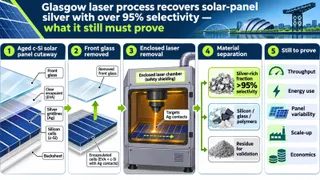
Glasgow’s laser process achieves over 95% silver extraction selectivity on solar panel samples
Researchers led by the University of Glasgow achieved over 95% silver extraction selectivity on samples from two aged crystalline-silicon solar panel models. A laser released the protective film from the cells. The researchers then selectively dissolved silver from the resulting powder. The process yielded a silver-bearing solution. How much saleable silver it could recover from a whole panel remains unknown. Communications Materials study
The University of Glasgow is working with Watt Laser to explore equipment for industrial use. Households, businesses and solar farms retiring panels today can arrange collection through existing waste electrical and electronic equipment (WEEE) routes. University of Glasgow research announcement
How the laser frees material for silver extraction
A clear film of ethylene-vinyl acetate (EVA) bonds the layers of a solar panel and protects the cells outdoors. The researchers removed the front glass with a heated blade, then directed a laser through the film. The silicon absorbed the laser energy, heating the boundary between the two materials and releasing the film. This separation is called delamination. Study methods
Delamination yielded EVA film with traces of metal, metal conductors called busbars, and a silicon-rich powder containing aluminium and silver. The researchers removed aluminium from the powder first, then dissolved the silver in a chloride-based solution, leaving a silicon-rich residue. The paper identifies electrodeposition as one way to obtain metallic silver from the solution. Study methods and results
What silver extraction selectivity tells recyclers
Silver extraction selectivity measures how readily the chemical step dissolves silver relative to the other materials measured in the extract. The study reported selectivity above 99% for REC240PE samples and above 95% for Canadian Solar CS6P-245P samples. Dissolving fewer unwanted materials alongside the silver can simplify refining. Study results, Table 2
Whole-panel recovery yield measures the share of silver in an incoming panel that ends up in a usable product. To calculate it, recyclers need to account for silver left in separated components, residues and process liquids, along with any refining losses. That material balance, together with an assay of the finished product, would help an operator estimate how many grams of saleable silver a line could produce per tonne of panels. Study results and discussion
What the process still needs to prove at commercial scale
The laser experiments included 20 × 20 mm squares of laminate. The researchers cut them after removing the glass to simulate pieces from mechanical pre-treatment. A commercial trial would need to measure how quickly a line can prepare full-size panels and feed the pieces through the laser. It would also need to show how the line handles mixed batches, cracked glass and different encapsulants or backsheets. The study used two aged multicrystalline-silicon panel models. Newer panel designs and thin-film panels need separate testing. Study methods and discussion
For a UK recycler, processing costs depend on preparation and scanning rates, how often the extraction solution can be reused, and the cost of treating spent liquids. A pilot line would need to measure these costs and establish what the silver and silicon would be worth after any further refining. Comparisons of energy use or emissions should cover the same stages for each recycling route, from panel preparation to refining and waste treatment. Study discussion
How to arrange solar panel removal and recycling in the UK
For a home installation, ask whether the installer’s quote covers electrical disconnection, safe access, removal and handover for recycling. Panels can still generate electricity in daylight after the inverter has been disconnected, so agree who will handle electrical safety before removal begins. If the panels are already off the roof, check whether your household recycling centre accepts photovoltaic panels and report any breakage before travelling. GOV.UK WEEE collection code of practice
For a commercial rooftop or solar farm, ask the installer or panel supplier whether they can arrange take-back. If they cannot, contact a specialist WEEE collector that accepts photovoltaic panels. Give the collector the panel count, the models if known, the condition of the panels and details of loading access. Before dismantling starts, agree who will pack and load the panels, check the waste carrier’s registration and confirm that the receiving site is authorised to accept the load. Environment Agency WEEE storage and handling guidance
For producer reporting, GOV.UK guidance classifies photovoltaic panels as Category 14 household electrical and electronic equipment, including panels installed on commercial premises or solar farms. For a business handover, ask the collector to confirm the waste classification. For non-hazardous waste, ask for a copy of the completed waste transfer note or equivalent record. For hazardous waste, confirm which consignment note applies before dispatch. The relevant regulator is the Environment Agency in England, Natural Resources Wales in Wales, the Scottish Environment Protection Agency in Scotland or the Northern Ireland Environment Agency in Northern Ireland. Scotland uses the term ‘special waste consignment note’. GOV.UK equipment classification guidance · GOV.UK consignment note guidance · Scottish and Northern Irish regulator guidance If you are replacing an array, ask each installer to itemise removal, transport and recycling in the quote and name who will handle the waste handover. You can then compare quotes on the same basis and keep a record of who will take the old panels. You can also read more about Compare home solar panel options. You can also read more about Compare commercial solar options. You can also read more about Compare industrial solar options. You can also read more about Book a free home energy survey. You can also read more about solar panel installation introduction. You can also read more about combine solar panels and.
Solar comparison
Compare solar for your property
Enter your postcode to assess your roof, compare solar options and get quotes from UK installers.
- Free postcode start
- Home, business and industrial
- RoboMo™ maps your roof
See which panels fit your roof
Choose home, business or industrial, then enter your postcode. RoboMo maps the roof and ranks panel brands by fit.
1. Postcode Start the assessment for your property.
2. Pin the roof Mark the array on the map.
3. Compare RoboMo™ builds your options.

Battery ROI tool
See what a battery saves on your bill
Enter the day rate, off-peak rate and export rate. The calculator ranks batteries in the Kilowatts shop over 10 years. Home batteries also suit offices and small commercial sites.
Reading
Sources and further reading
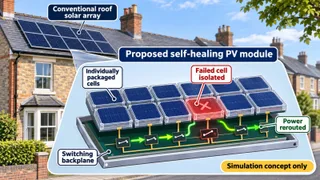
See how self-healing solar panels restored output within 5 ms of switching to a spare cell in simulation, and what UK rooftop trials still need to test.
Read article
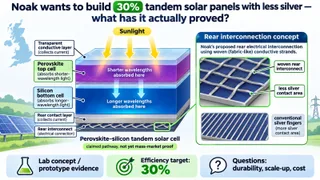
See what Noak’s tandem solar tests reveal, why 30% panel efficiency and silver savings remain unproven, and what UK buyers can compare today.
Read article
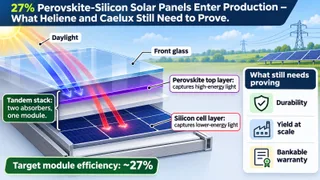
Could Heliene and Caelux’s 27%+ perovskite-silicon tandem panels generate more on UK roofs? See how to compare annual output, durability and cost.
Read article
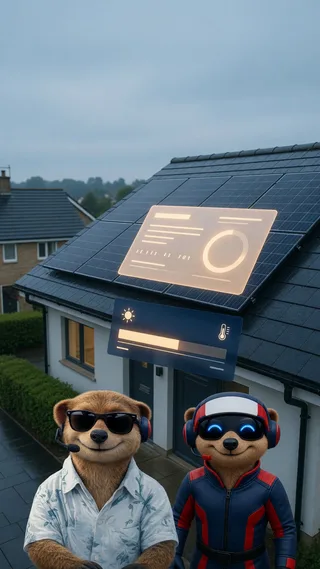
A panel's wattage is a lab rating at 1000 W/m² and 25°C. Here's why UK roofs rarely match it, and why annual kilowatt-hours are the honest measure.
Read article


Mo's Solar Mission
Mo's Mission Nominations
Garlinge Primary School and Nursery
Garlinge Primary School and Nursery is a foundation primary school on Westfield Road in Margate, Kent, for children aged 3 to 11. It is m...
St Luke's Church of England Primary SchoolSt Luke's Church of England Primary School is a voluntary controlled Church of England primary school on Jubilee Road in Formby, Merseysi...
Comberbach Nursery and Primary SchoolComberbach Nursery and Primary School is a primary academy on Mather Drive in the village of Comberbach, near Northwich in Cheshire, for...
Locations
Solar installation near you
Write for Kilowatts.uk
Got a trade and something worth saying?
Write it here under your own name. Sign in, put a profile up, and start a guide. Pay only if you want more links from your articles out to your own site.
Register
Create a Kilowatts.uk account, or sign in if you already have one.
Author profile
Put your name, photo and experience on a public author page.
Start creating
Write a guide or a blog. Free authors can put one followed link to their own site in articles each month.
FAQ
Need Help? RoboMo's Got Answers
Does over 95% silver extraction selectivity mean the process recovers 95% of a panel’s silver?
Selectivity describes how readily the chemical step dissolves silver relative to other measured materials. The tests produced a silver-bearing solution from samples of two older solar panel models. The share of silver from a whole panel that would end up as a saleable product remains unknown.
What does the laser do to the solar panel?
The researchers removed the front glass before using the laser to release the protective film from the silicon cells. A separate chemical step then dissolved silver from the resulting powder. Producing metallic silver from that solution would require further processing.
Will the process work on newer solar panels?
The study tested samples from two older multicrystalline silicon panel models. Newer designs may use different protective films and other materials, so they need separate testing. Thin-film panels would also need to be assessed separately.
What would a commercial trial need to prove?
A trial would need to show how quickly a line can process full-size panels and handle mixed or damaged batches. It would also need to measure how much saleable silver it produces, along with processing costs, energy use and waste treatment. Those figures would help recyclers compare the process with existing methods.
How can I recycle old solar panels in the UK today?
Ask your installer or panel supplier whether they can arrange take-back or collection through a waste electrical and electronic equipment (WEEE) recycling service. If the panels are already off the roof, check whether your local household recycling centre accepts solar panels before you travel. Tell the centre or collector if any panels are broken.
Can I remove rooftop solar panels myself once the inverter is switched off?
Solar panels can still generate electricity in daylight after the inverter has been disconnected. Arrange for a qualified solar installer to handle electrical disconnection and safe rooftop removal. Confirm who will take the panels for recycling before work starts.
What should I look for in a quote when replacing my solar panels?
Ask each installer to itemise safe access, electrical disconnection, removal, transport and recycling of the old panels. Check who will collect them and where they will be taken. This gives you a consistent basis for comparing quotes.
Live help
Need help right now?
Talk to RoboMo™ and get instant answers.