


Energy price cap to rise 26% from 1 January as Ofgem sets typical Direct Debit level at GBP2,166
Published: 2026-11-26 00:24:58
Updated: 2026-11-25 17:51:54
Ofgem confirms the energy price cap rises 26% from 1 January 2027, to GBP2,166 a year for a typical Direct Debit home. Regional rates and what it means.
Ofgem announced on 25 November 2026 that the energy price cap will rise by 26% from 1 January 2027. At typical dual-fuel use on Direct Debit, the annualised cap level goes from GBP1,723 to GBP2,166. The new cap runs from 1 January to 31 March 2027 and applies to households in England, Scotland and Wales on standard variable or default tariffs, whatever their payment method. It does not cover Northern Ireland, customers on fixed deals or business customers.
The figures come from Ofgem's summary letter, dated 25 November 2026, and Ofgem's price cap levels page. The cap limits the unit rates and standing charges suppliers can charge on default tariffs. It is not a maximum bill and it is not a tariff you can sign up to: what you pay still depends on how much energy you use.
Annual cap level by payment type
Ofgem illustrates the cap at typical use: 2,500 kWh of electricity and 9,500 kWh of gas a year, or 3,400 kWh of electricity for multi-register meters such as Economy 7. These are illustrations, not quotes, and real bills depend on usage.
| Payment type | October to December 2026 | January to March 2027 | Change |
|---|---|---|---|
| Direct Debit | GBP1,723 | GBP2,166 | +26% |
| Standard Credit | GBP1,861 | GBP2,328 | +25% |
| Prepayment | GBP1,678 | GBP2,108 | +26% |
| Economy 7 (Direct Debit) | GBP1,046 | GBP1,265 | +21% |
Source: Ofgem's summary letter, rounded by Ofgem to the nearest pound and percent.
Why the cap is rising
Ofgem says the wholesale cost allowance has risen by 50% and now makes up 56% of the cap, up from 47% last quarter. Within that, the gas wholesale allowance rises 59% and the electricity wholesale allowance 39%. Ofgem points to conflict and geopolitical instability in the Middle East, historically low European gas storage going into winter, and risk around liquefied natural gas supply. Allowances that move with the overall cap level, including earnings before interest and tax, headroom and debt-related costs, rise with it.
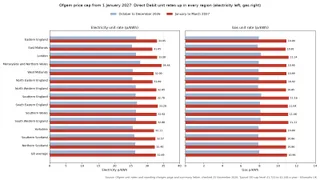
Unit rates and standing charges by region
Direct Debit, single-rate electricity and gas, October to December 2026 to January to March 2027, from Ofgem's unit rates and standing charges page. Figures are Ofgem's published cap rates in pence, rounded to two decimal places.
| Region | Electricity unit rate (p/kWh) | Electricity standing charge (p/day) | Gas unit rate (p/kWh) | Gas standing charge (p/day) |
|---|---|---|---|---|
| Eastern England | 26.61 to 33.05 | 51.84 to 51.76 | 7.91 to 10.90 | 29.34 to 29.28 |
| East Midlands | 25.36 to 31.65 | 51.45 to 51.38 | 7.82 to 10.81 | 29.41 to 29.37 |
| London | 26.60 to 33.08 | 42.92 to 42.88 | 8.15 to 11.14 | 30.20 to 30.19 |
| Merseyside and Northern Wales | 27.86 to 34.44 | 67.66 to 67.59 | 7.91 to 10.90 | 30.08 to 30.06 |
| West Midlands | 25.60 to 32.00 | 57.23 to 57.16 | 7.90 to 10.89 | 29.71 to 29.68 |
| North Eastern England | 25.46 to 31.69 | 61.58 to 61.51 | 7.92 to 10.92 | 29.79 to 29.77 |
| North Western England | 26.49 to 32.85 | 45.68 to 45.62 | 7.86 to 10.85 | 29.81 to 29.78 |
| Southern England | 26.47 to 32.78 | 47.81 to 47.74 | 8.17 to 11.16 | 29.16 to 29.10 |
| South Eastern England | 26.88 to 33.29 | 52.32 to 52.25 | 8.05 to 11.04 | 29.26 to 29.21 |
| Southern Wales | 26.55 to 32.92 | 55.41 to 55.35 | 8.09 to 11.08 | 29.96 to 29.94 |
| South Western England | 26.58 to 32.86 | 55.58 to 55.51 | 8.12 to 11.11 | 29.31 to 29.26 |
| Yorkshire | 25.60 to 32.11 | 61.67 to 61.59 | 7.90 to 10.89 | 29.77 to 29.73 |
| Southern Scotland | 26.11 to 32.57 | 61.41 to 61.33 | 7.87 to 10.86 | 29.89 to 29.86 |
| Northern Scotland | 26.35 to 32.40 | 55.14 to 55.07 | 7.87 to 10.86 | 29.87 to 29.84 |
| Great Britain average (average only) | 26.32 to 32.69 | 54.83 to 54.77 | 7.97 to 10.96 | 29.68 to 29.65 |
Standing charges dip very slightly, by under 0.2p a day, so almost all of the rise is in unit rates. For other payment types, Ofgem's Great Britain averages from 1 January are: prepayment electricity 31.70p/kWh (from 25.52p) and gas 10.60p/kWh (from 7.70p); standard credit electricity 34.52p/kWh (from 27.80p) and gas 11.55p/kWh (from 8.39p). For multi-rate meters such as Economy 7 on Direct Debit, Ofgem publishes one blended unit rate, 31.34p/kWh (from 24.90p), with no separate day and night rates.
What this means for you
For the bigger picture on wholesale gas, standing charges and regional differences, see why UK energy prices are so high. To compare tariffs for your region, use our home energy tariff comparison.
- On a standard variable or default tariff? From 1 January your supplier's rates are limited by the cap for your region and payment method. Your bill still depends on how much you use.
- On a fixed deal? You keep your fixed rates until the deal ends. The cap does not change them.
- Business customers and Northern Ireland: the domestic price cap does not apply.
- Cutting the energy you buy (a general point): because the rise is almost all in unit rates, each kWh you do not buy from the grid now avoids a higher rate. Using your own solar power, storing energy in a battery and moving use to off-peak times all reduce exposure. This is general, not an Ofgem figure, and any saving depends on the home.
Check your supplier's notice for the rates you will pay. If you want to look at solar panels or a home battery, you can ask Kilowatts UK for a quote.
Solar comparison
Compare solar for your property
Enter your postcode to assess your roof, compare solar options and get quotes from UK installers.
- Free postcode start
- Home, business and industrial
- RoboMo™ maps your roof
See which panels fit your roof
Choose home, business or industrial, then enter your postcode. RoboMo maps the roof and ranks panel brands by fit.
1. Postcode Start the assessment for your property.
2. Pin the roof Mark the array on the map.
3. Compare RoboMo™ builds your options.

Battery ROI tool
See what a battery saves on your bill
Enter the day rate, off-peak rate and export rate. The calculator ranks batteries in the Kilowatts shop over 10 years. Home batteries also suit offices and small commercial sites.
Reading
Sources and further reading
Ofgem's January 2027 energy price cap figures, why prices are rising and what households can do.
Read article
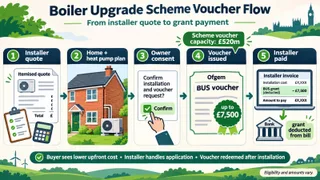
See what the £520m Boiler Upgrade Scheme voucher cap means for heat pump buyers in England and Wales, and check grant rates and application deadlines.
Read article
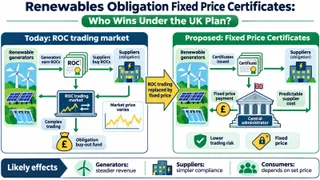
See how UK Renewables Obligation fixed-price certificates would replace ROC trading and what the switch could mean for generator income and bills.
Read article

A UK consultation proposes Fixed Price Certificates for the Renewables Obligation. See the timetable, who is affected and why household savings are uncertain.
Read article
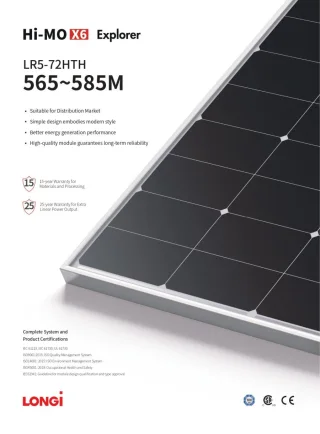

Mo's Solar Mission
Mo's Mission Nominations
Garlinge Primary School and Nursery
Garlinge Primary School and Nursery is a foundation primary school on Westfield Road in Margate, Kent, for children aged 3 to 11. It is m...
St Luke's Church of England Primary SchoolSt Luke's Church of England Primary School is a voluntary controlled Church of England primary school on Jubilee Road in Formby, Merseysi...
Comberbach Nursery and Primary SchoolComberbach Nursery and Primary School is a primary academy on Mather Drive in the village of Comberbach, near Northwich in Cheshire, for...
Locations
Solar installation near you
Write for Kilowatts.uk
Got a trade and something worth saying?
Write it here under your own name. Sign in, put a profile up, and start a guide. Pay only if you want more links from your articles out to your own site.
Register
Create a Kilowatts.uk account, or sign in if you already have one.
Author profile
Put your name, photo and experience on a public author page.
Start creating
Write a guide or a blog. Free authors can put one followed link to their own site in articles each month.
FAQ
Need Help? RoboMo's Got Answers
How much is the energy price cap from 1 January 2027?
GBP2,166 a year for a typical dual fuel home paying by Direct Debit, up 26% from GBP1,723 (Ofgem, 25 November 2026).
How long does the new cap last?
From 1 January to 31 March 2027.
Why is the price cap going up?
Ofgem says the wholesale cost allowance rose 50%, driven by instability in the Middle East, low European gas storage and risk around liquefied natural gas supply.
Does the cap limit my total bill?
No. It limits unit rates and standing charges on default tariffs. Your bill depends on how much energy you use.
Does the cap affect fixed deals?
No. Fixed rates stay the same until your deal ends.
Live help
Need help right now?
Talk to RoboMo™ and get instant answers.