


solar installation company: UK homeowner guide
Published: 2026-08-09 14:20:56
Updated: 2026-08-17 01:33:11
A good UK solar installation company should carry out a proper survey, explain the system design clearly, handle the relevant grid paperwork.
How to choose a solar installation company in the UK
A good UK solar installation company should carry out a proper survey, explain the system design clearly, handle the relevant grid paperwork, and provide an itemised quotation with realistic savings assumptions. Do not choose on headline price alone. The right installer is the one that can justify the design for your roof, electricity use, consumer unit, export plans and future energy needs.
For most homeowners, the decision comes down to confidence in three areas: survey quality, specification transparency and aftercare. A strong proposal should make it clear where the panels, inverter and battery will go, what limitations exist, which paperwork is included, and what documents you will receive after commissioning.
Be cautious of any company that quotes firmly without asking about roof condition, shading, meter position, consumer unit, loft access, cable routes or electricity usage. Some homes are straightforward, but small details can change the design, installation method, scaffolding, DNO route and final cost. If you are still at the early research stage, it can help to start with the solar installation basics before comparing companies.
What a proper solar survey should include
A proper solar survey is more than a quick look at the roof. The installer needs to confirm that the building can physically take the system, that the electrical installation can accept it safely, and that the proposed layout will work in normal UK conditions.
Remote quotations can be useful as an early estimate, but they should not replace a site-specific check before you sign a final contract. Roof pitch, tile type, rafters, dormers, chimneys, soil pipes, neighbouring trees, access restrictions and the route from roof to consumer unit can all affect the final design.
The survey should check the roof condition and flag signs that repairs may be needed before panels are fitted. It should also consider shading from chimneys, trees, nearby buildings and roof features, because this can affect the layout and inverter design. The electrical side matters just as much. The consumer unit, earthing, meter area and spare ways may influence the installation method. A tidy, safe cable route from the roof to the inverter and consumer unit should be planned before installation day. The installer should also choose an inverter location that takes account of heat, ventilation, noise, access and weather protection. Safe access should be discussed early. Scaffolding, awkward side access, extensions and conservatories can affect cost, timing, disruption and whether the job is practical. A good survey should also test whether the proposed system is proportionate to your usage. Oversizing without a sensible export or battery plan can weaken the case for solar, while undersizing may waste roof space that could support future electricity demand from an electric vehicle or heat pump.
How to compare solar installation companies fairly
Comparing solar companies is difficult because every quote may use different panels, inverter sizes, warranties, monitoring platforms and assumptions. The safest approach is to standardise your questions rather than focusing only on the total price. A cheaper quotation may be reasonable if the job is simple and the specification is complete. It becomes risky when important items are missing, because omissions often return later as extras, delays or compromises. A higher quote is not automatically better either; premium equipment should be justified by your roof, usage and future plans. If you want a structured starting point, you can compare home solar quotes before shortlisting installers.
| Decision area | Low-risk sign | Caution sign | What to ask before agreeing |
|---|---|---|---|
| Survey quality | Roof, electrics and access are checked before final design | Quote is based only on a generic roof estimate | What assumptions have been made about the roof and consumer unit? |
| System design | Panel layout, inverter type and export assumptions are explained | The proposal gives a system size but little reasoning | Why is this size right for my usage and roof? |
| Paperwork | DNO route and handover documents are clearly described | Grid connection is barely mentioned | Will this be handled under G98 or G99, and when? |
| Equipment | Main components are named with datasheets available | Equipment is described only as premium or tier one | What exact panels, inverter, battery and mounting system are included? |
| Aftercare | Monitoring, warranties and fault process are explained | The company focuses only on installation day | Who do I contact if the system stops reporting or underperforms? |
| Consumer protection | Memberships, insurance and cancellation terms are provided | Deposit and complaints process are vague | How is my deposit protected and what is the complaints route? |
Overview
Use the table as a conversation tool rather than a scoring exercise. The aim is to find out whether the company understands your property and is willing to explain trade-offs. If answers are vague before you sign, they are unlikely to become clearer once the job is underway.
What a good solar quote should itemise
A good solar quote should let you compare scope, not just price. Two proposals can look similar at first glance while one includes scaffolding, bird protection, monitoring and consumer unit work, and the other excludes them.
Ask the company to separate the core solar PV system from optional extras and enabling works. This makes it easier to see what is essential, what improves the design, and what could be added later.
The quote should name the solar panel model, quantity, mounting location and any relevant product warranty information. It should also identify the inverter model and explain whether it is string, hybrid, microinverter or optimiser-based. If battery storage is included, the quote should state usable capacity, location, warranty terms and whether backup power is included. The mounting system should suit the roof covering and be included in the specification. Scaffolding costs should be clear, especially where extensions, conservatories or poor access make the job more complex. Any known electrical works should also be identified, including consumer unit changes, isolators, earthing issues and meter area work.
Exclusions
Any assumptions about roof repairs, asbestos, loft access, broadband, DNO restrictions or making good should be written down.Monitoring
The quote should explain what data you can see and who helps if the system stops reporting.Optional extras
Bird protection, battery storage, monitoring upgrades and future-ready cabling should be separated from the base system where possible.
A clear quote is also useful if the survey changes the design. For example, brittle tiles, limited loft access, a shaded roof edge, a full consumer unit or an awkward cable route can all change the final scope. A reputable installer should update the design and explain why, rather than quietly changing the specification.
UK solar costs and payback need careful assumptions
UK solar costs vary too much for a single online figure to be reliable. System size, roof complexity, scaffolding, inverter choice, battery storage, cable routes, consumer unit work, monitoring, bird protection and local access can all change the final price. Treat any guide price as indicative until a survey-backed quotation has confirmed the scope, and use UK solar pricing only as a broad comparison point.
Savings are equally dependent on assumptions. The main drivers are how much solar electricity you use in the home, how much you export, your import tariff, your export tariff, whether you have a battery, and whether you can shift flexible loads such as washing, immersion heating, electric vehicle charging or heat pump use into sunny periods.
A trustworthy installer should not promise a guaranteed payback. Instead, they should show the assumptions behind the estimate and make clear what is outside their control, such as future tariffs, household behaviour, shading changes and equipment performance over time.
Export value
Export payments depend on the tariff you arrange and the provider’s requirements.Future demand
Electric vehicles, heat pumps and home working can change how much solar energy you can use.Battery choice
A battery may improve self-consumption but adds cost and should be sized around real usage.Roof complexity
Difficult access, fragile tiles and unusual roof shapes can increase installation work.Self-consumption
Using more generated electricity at home usually improves the financial case.Electrical upgrades
Consumer unit or earthing issues can add necessary work that is not obvious from a satellite image.
If two quotes show very different payback periods, ask for the assumptions side by side. The difference may come from generation estimates, self-consumption assumptions, export rates, battery modelling or omitted costs rather than from the equipment itself.
UK rules and paperwork to expect
A UK solar installation is not only a roofing job. It is also an electrical and grid-connection job. Your installer should explain what notifications, applications and handover documents are needed for your system before work starts.
For small domestic systems, grid connection is commonly handled through G98 notification or G99 application routes, depending on the inverter capacity, export arrangement and local network requirements. The correct route depends on the actual design, so avoid relying on a generic answer.
Planning permission is often not the main obstacle for ordinary domestic roof-mounted solar, but you should not assume every property is automatically simple. Listed buildings, conservation areas, flats, unusual roof structures and ground-mounted arrays may need extra checks. Building Regulations, electrical safety, roof loading and safe working at height still matter even where planning is straightforward, so read up on planning permission for solar if your property has constraints. MCS is worth checking directly if it is relevant to your installation and paperwork. Confirm the installer’s certification status and the company name that will appear on your documents. The installer should also identify your Distribution Network Operator and explain whether approval is needed before installation. Use official planning guidance for property-specific constraints such as listed buildings and conservation areas. If you plan to claim export payments, check Smart Export Guarantee information and the requirements of your chosen export supplier. Ask who is responsible for electrical certification, isolation, testing and compliance documentation, and clarify whether any building control notification or competent person route is relevant to the work. After installation, keep copies of all documents rather than relying only on an installer portal. Export tariff providers may ask for proof of installation, MCS documentation where applicable, meter details and grid connection evidence.
MCS, DNOs and export arrangements in plain English
MCS is a recognised UK certification scheme for low-carbon installations, and many homeowners look for an MCS-certified installer because it supports quality assurance and can be relevant when arranging export payments. Do not rely on a verbal promise. Verify the company details and ask what certificate or documentation you will receive. For more context, see what MCS means for UK solar installations.
The DNO is the Distribution Network Operator responsible for the local electricity network in your area. The installer’s job is to make sure the solar PV system is connected in a way the network can accept. Sometimes this is a notification after installation, and sometimes approval is needed before work proceeds.
Export arrangements are separate from the physical installation. If you want to be paid for surplus electricity, check the requirements of your chosen export tariff provider before installation is completed. Requirements can change, and an installer should not guarantee a specific tariff outcome unless it is clearly within their control. A practical question to ask is whether the proposed system might be export-limited. Export limitation is not automatically a problem, but it should be explained because it can affect savings assumptions, battery sizing and how the inverter is configured.
Consumer protection checks before appointing an installer
Before signing a solar contract, check the commercial protections as carefully as the technical design. A polished proposal does not tell you what happens if the job is delayed, a subcontractor is used, equipment changes, or a fault appears after installation.
Ask for these details in writing before you pay a deposit. Good companies should be comfortable explaining memberships, insurance, warranty responsibilities and complaints routes because they reduce misunderstandings for both sides.
Confirm the legal company name and any MCS certification that will appear on your documents. Ask whether the company is a member of a recognised consumer code such as RECC or HIES and verify it directly. Check how your deposit is protected and what happens if the installation does not proceed. Cancellation rights should be written into the contract where applicable. Ask for evidence of public liability insurance and any relevant employer or contractor cover. You should also know which parts of the work are done by employees and which may be subcontracted. It is also sensible to understand how to approach checking installer reviews without relying on one platform alone.
Equipment changes
Make sure the contract explains what happens if named components are substituted.Complaints process
Ask how complaints are handled and what independent route exists if the issue is not resolved.Workmanship warranty
Check the length, scope and exclusions of the workmanship warranty, not just the panel warranty.
Product warranties and workmanship warranties are different. A long panel warranty is useful, but it does not automatically cover poor cable routing, roof damage, monitoring issues or a workmanship fault. Make sure responsibility is clear.
When a battery is worth discussing with the installer
A battery can make sense when your household exports a large share of daytime solar generation but uses significant electricity in the evening. It can also support homes planning for electric vehicle charging, heat pump use or more flexible tariffs.
However, a battery is not automatically the right choice for every solar PV system. If the household already uses a high proportion of solar generation during the day, the extra cost and embodied complexity may not be justified. The installer should model battery storage around consumption patterns, not just roof size.
Usable battery capacity matters more than headline capacity. The battery also needs to charge and discharge at useful rates for your home. Location matters too, because batteries need a suitable place that considers access, temperature, ventilation and manufacturer requirements.
Backup power
Backup is not standard on every battery and may require extra equipment and circuit design.Warranty terms
Check throughput limits, duration, exclusions and who handles a claim.Future compatibility
If installing solar first, ask whether the inverter choice supports a later battery.
If budget is tight, it can be sensible to install solar first with a battery-ready design, or to add an AC-coupled battery later if the system supports it. The right answer depends on usage, tariffs, available space, future electrification and whether you prefer a single integrated installation or a staged upgrade. If you are weighing up a staged approach, read about adding a battery later.
Red flags before you sign a solar contract
Most solar problems are easier to avoid before the contract is signed than after the system is installed. A reputable solar installation company should welcome sensible questions because they reduce misunderstandings and make the job smoother.
Be especially careful if the company cannot explain how the quote was built. A solar proposal should not feel like a mystery bundle of panels and promises. You should be able to identify the main components, understand where they will be fitted, and know what happens if the survey uncovers a roof or electrical issue.
Watch for high-pressure sales, vague equipment details, missing grid explanations and guaranteed savings claims. Other warning signs include no final survey, unclear aftercare, reluctance to provide written assumptions, unclear deposit or cancellation terms, and no named complaints process. If you are unsure, ask the company to put the answer in writing. Clear installers will usually document assumptions, exclusions and next steps without making the process difficult.
What should happen on installation day and handover
Installation day should not be the first time anyone thinks about cable routes, inverter location or scaffolding access. The installer should arrive with a design that has already been checked against the property, the contract and any DNO requirements.
Common installation-day issues include unexpected roof tile breakages, blocked loft routes, limited space around the consumer unit, poor mobile signal for monitoring, missing Wi-Fi details and access problems caused by parked vehicles or locked side gates. These are usually manageable if the installer communicates clearly and records any agreed changes.
Handover pack
Keep electrical certificates, commissioning documents, warranties, datasheets, MCS paperwork where applicable, DNO evidence and monitoring login details.Before sign-off
Check that monitoring is working, isolators are labelled and you know how to shut the system down if instructed.Aftercare contact
Make sure you know who to contact for monitoring faults, warranty claims, roof concerns and export paperwork queries.Before work starts
Confirm panel layout, inverter location, battery position, cable route and any areas that need access.During the installation
Ask the team to explain any change before it is made, especially if it affects appearance or equipment location.
Do not let paperwork become an afterthought. The handover pack can be essential for export tariffs, future house sales, warranty claims, maintenance and later upgrades such as a battery or EV charger.
What to do next as a homeowner
Start by gathering your annual electricity use, half-hourly smart meter data if available, roof details, photographs of the consumer unit, meter area and loft access, plus any future plans such as an electric vehicle, heat pump or home battery. This gives installers better information and makes quotes easier to compare.
Speak to more than one company and ask each to explain the design rather than simply matching a price. A good proposal should leave you understanding why the system has been sized that way, what paperwork is needed, what assumptions have been used, and what limitations remain.
Choose the installer that gives you the clearest evidence, not the loudest promise. If a company can explain the survey, specification, consumer protections, DNO route, handover pack and aftercare process in plain English, you are in a much stronger position to make a confident decision.
Plan, Compare & Buy Renewable Energy Solutions
AI does the thinking.
You get the perfect solar match.
Use RoboMo™ to assess your property, compare available technologies and connect with trusted UK installers, suppliers and manufacturers.
Simply enter your postcode, drop a pin on your roof, create your free account and let RoboMo™ analyse your property to find the best solar panels for your home.

You don't have to think
RoboMo™'s AI analyses your roof and does all the hard work.

Accurate & tailored
AI-powered assessment based on your roof, location, and conditions.

Best options, maximum savings
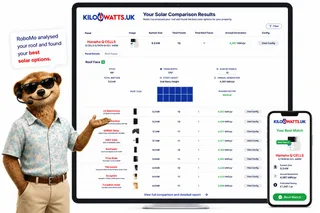
Compare top solar panels for the best performance and value.

Simple, fast & effortless
Provide a few details, sit back and watch your results unfold.
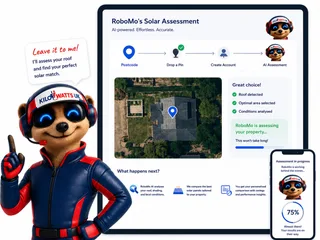
STEP 1
Choose Home, Business or Industrial
Enter your postcode to start your assessment.
STEP 2

Drop a pin on your roof
STEP 3

Create your free account
STEP 4

Sit back and watch RoboMo™ work
RoboMo™ analyses your roof and builds your personalised solar comparison.

Kilowatts UK is an authorised representative
Flower Turbines
Compact vertical-axis turbines built for real UK sites, not just open farmland.
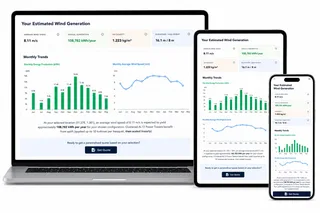
They start in light wind, sit in a small footprint, and are bird-safe by design. Cluster them as a bouquet and the group performs better together than the same turbines standing alone. Enter your postcode for a location-based generation estimate. Figures use area weather data and will differ if buildings, trees or hills sit in the way.
Starts in light UK wind
Built to generate in typical UK wind, not only open farmland.
Small rooftop or ground footprint
Compact towers for roofs, yards and tight sites.
Bird-safe slow rotation
Slow vertical-axis spin, bird-safe by design.
Bouquet clusters raise output
Grouped turbines outperform the same units standing alone.
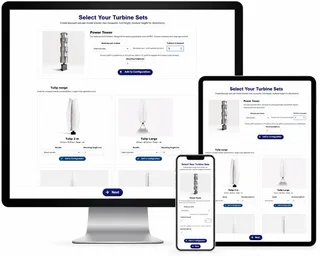
Step 1
Enter your postcode
Start designing your wind energy system in seconds.
STEP 2

Choose a location
STEP 3

Place your cluster
Tap the map where you want the turbine cluster to go.
STEP 4

Instant generation forecasts
Compare different turbine layouts and see annual generation forecasts instantly.
STEP 5

No commitment required
Explore different configurations before deciding whether to request a quotation.
Related articles
Mo's Mission Nominations
FAQ
Need Help? RoboMo's Got Answers
How do I choose a good solar installation company in the UK?
Look for a company that surveys the roof, electrics, access and shading before confirming the final design. They should provide an itemised quote, explain the equipment choices and set out what paperwork they will handle. Avoid choosing on headline price alone if the scope, assumptions or aftercare are unclear.
What should a proper solar survey include?
A proper survey should check roof condition, roof layout, shading, access, cable routes, inverter location and the consumer unit. It should also consider your electricity use and whether the proposed system size is sensible for your home. Remote estimates can be useful early on, but a final contract should be based on property-specific checks.
What should be included in a solar quote?
A good quote should name the panels, inverter, mounting system and any battery, including key warranty information. It should make clear whether scaffolding, monitoring, bird protection, consumer unit work and DNO paperwork are included or excluded. Ask for assumptions and optional extras to be written down so you can compare quotes fairly.
Do I need an MCS-certified solar installer?
Many UK homeowners choose an MCS-certified installer because MCS can be relevant to quality assurance and export tariff requirements. Check the installer’s certification directly and confirm the company name that will appear on your documents. If you want export payments, also check the requirements of your chosen export supplier before you proceed.
What DNO paperwork is needed for a home solar installation?
Your Distribution Network Operator is the company responsible for the local electricity network. Domestic solar installations are commonly handled through G98 notification or G99 application routes, depending on the inverter capacity, export arrangement and network requirements. Your installer should explain which route applies and whether approval is needed before installation.
Do solar panels need planning permission in the UK?
Many ordinary domestic roof-mounted solar installations are straightforward from a planning point of view, but you should not assume every property is exempt from extra checks. Listed buildings, conservation areas, flats, unusual roof structures and ground-mounted systems may need more care. Building Regulations, electrical safety, roof loading and safe access still matter even where planning is not the main issue.
How should I compare solar payback estimates?
Ask each installer to show the assumptions behind their savings estimate, not just the payback figure. Key assumptions include generation, self-consumption, import tariff, export tariff, battery use and any omitted costs. Be cautious of guaranteed payback claims because future tariffs, household behaviour and shading changes are outside an installer’s control.
What aftercare should I expect from a solar installation company?
The installer should explain how monitoring works, who to contact if the system stops reporting and how warranty claims are handled. Ask what documents you will receive after commissioning, including electrical certificates, grid paperwork and any relevant MCS documentation. Keep your own copies rather than relying only on an online portal.