


World’s First Hydrogen-Engine Tanker Completes Voyage—But Was It Really Hydrogen-Only
Published: 2026-10-05 16:47:28
Updated: 2026-10-05 09:48:58
Japan’s Kikomaru tanker completed a short hydrogen-engine voyage, but HVO pilot fuel means it was not hydrogen-only. What UK ports should note.

World’s First Hydrogen-Engine Tanker Completes Voyage—But Was It Really Hydrogen-Only
How renewable energy work, typical output, costs and limits, and whether they have a future for UK homes, balconies and businesses.
Was this hydrogen-engine tanker really hydrogen-only?
No. On the evidence published with the Nippon Foundation announcement of 30 September 2026, hydrogen was the principal energy source for the Kikomaru’s short demonstration, but the voyage was not powered by hydrogen alone. A small quantity of hydrotreated vegetable oil, or HVO, was used to start combustion of the hydrogen-air mixture. That is pilot ignition, not a second main fuel, yet it is enough to stop a literal reading of “hydrogen-only”. The distinction matters for anyone following renewable energy in the UK as well as shipping. A hydrogen engine ship only sits in that picture if the hydrogen itself is low-carbon and if the onboard fuel story is stated accurately. For this trial, three claims should be kept apart. Hydrogen did the bulk of the energy work. HVO still burned in the engine. The carbon intensity of the hydrogen was not disclosed, so well-to-wake performance is unknown. That organiser line is the wording that needs qualifying. “Fitted with a hydrogen-only engine” describes the machinery category the Foundation used. It is not a logbook result showing that no other fuel was consumed on the day.
Which facts are pinned to the 30 September 2026 announcement?
The voyage figures used here come from the Nippon Foundation announcement of 30 September 2026, concerning a run on 25 September 2026 in Osaka Bay. They are organiser-reported facts, not figures this article has re-measured, and not entries copied from a class certificate or a nitrogen-oxides certificate held on file. English-language readers should check the Foundation notice, and the class file if they can obtain it, before treating any of them as independently settled.
As reported in that announcement, the 4,500-tonne Kikomaru ran about 33 kilometres in two hours using a hydrogen-engine generating system. The Foundation called the run the first demonstration voyage by a vessel fitted with a hydrogen-only engine, and it reported an estimated 1.2 tonnes of avoided carbon dioxide against conventional fossil-fuel operation. The same body of reporting describes Japanese classification approval with the wording “Gas Only Engine (Hydrogen)”, and an IMO Tier II nitrogen-oxides certificate. Those approval words are reported descriptions. They are not certificate numbers, survey reports, or a UK flag document reproduced here.
The hydrogen-only line does not survive contact with the pilot-fuel detail in the same story. The announcement material, as relayed in English, supports hydrogen as the principal fuel and HVO as the means of lighting the charge. It does not support a claim that the engine burned hydrogen and nothing else. It also does not disclose how the hydrogen was made, so the 1.2-tonne estimate cannot be read as a well-to-wake result.
What the Osaka Bay demonstration actually achieved
Japan’s Kikomaru tanker completed a physical voyage, not a concept drawing. Two hours in a bay is still a very short one. It does not show range, overnight reliability, crew routine, or what happens when bunkering has to fit a commercial turnaround.
The “world first” wording rests on the Nippon Foundation’s own research in the 30 September 2026 announcement. It should be reported as the organiser’s claim, not as a fact settled by an independent register of every earlier trial. English-language coverage has been thin, and much of it repeats “hydrogen-only” without the pilot-fuel qualification. Readers sorting similar shorthand can start with common renewable energy myths.
The useful reading is narrower. A coastal tanker proved that this packaged generating system could supply an electric drive for a brief, supervised transit. That is a real engineering step. It is not a template for a fleet.
How the generators, batteries and propeller were arranged
The propeller was not turned by a hydrogen engine in the conventional machinery-space sense. Generators and batteries supplied an electric propulsion system. The hydrogen machinery was packaged as containerised equipment on deck, which is a different installation problem from lifting out a main diesel and designing a new engine room around hydrogen.
In practice, that split is what makes the layout interesting for retrofit talk. Fuel conversion sits in deck modules. Electricity is the interface to the drive. Batteries can cover short peaks and smooth generator loading, although the share of propulsion energy that came from the battery on this run was not published. Without that split, it is impossible to say whether the engine was carrying the voyage or merely topping up a battery that had been charged beforehand. Land-side storage is a different job again, covered in guides to home battery storage.
A container on deck still needs structure, weight margin, ventilation, fire protection, cable routes and a bunkering connection. None of those design details were set out in the announcement. The architecture is adaptable in principle. It is not a drop-in cassette until those interfaces are designed for a named hull.
Why the engine still needed HVO pilot fuel
This engine did not rely on hydrogen alone to light the charge. HVO, a biofuel made by treating vegetable oils or similar feedstocks with hydrogen, was injected to initiate combustion of the hydrogen-air mixture. Spark ignition is another way to light a gas engine. Here the designers used a liquid pilot, a familiar pattern on some gas engines that started life close to diesel practice.
The quantity of HVO was not published. “Small” is only a qualitative description, and it has to stay qualitative. A pilot can be a minor share of energy and still wreck a claim of zero exhaust carbon dioxide. Burning HVO releases carbon dioxide at the funnel. Some carbon accounting treats that carbon as biogenic across the fuel’s life cycle, because the feedstock took up carbon as it grew. That is an accounting choice about origins. It is not the same as a smokestack that emits no carbon dioxide.
Two-fuel operation also changes the ship. Crews segregate fuels, maintenance covers two systems, and any emissions report has to say which fuel did what. A reader who stops at “hydrogen engine” will miss the second tank.
What gas-only classification and the NOx certificate permit
The system is reported, in the material issued with the 30 September 2026 announcement, to have Japanese classification approval described as “Gas Only Engine (Hydrogen)”, and an IMO Tier II nitrogen-oxides certificate. Those are meaningful regulatory steps for the trial as described. They are not a UK operating licence, and they do not rewrite the fuel chemistry.
“Gas only” in this class description means the engine is approved to run with hydrogen as its gas fuel, not that the logbook shows zero liquid fuel. Classification language and advertising language travel badly. A surveyor’s category can allow a pilot while a headline treats the same engine as chemically pure.
A Japanese approval and an international NOx tier are evidence that a defined equipment package was reported to have met stated tests. They are not evidence that a British workboat, bunker barge or short-sea tanker could install the same containers and sail. The certificate itself is not reproduced here, so the tier should be read as an organiser-reported compliance claim, not as an independent exhaust test of the Osaka Bay afternoon.
Who would have to approve a similar ship in UK waters?
Nothing in the Japanese trial clears this package for UK waters. A similar installation on a British coastal vessel would be several permissions, not one stamp. The flag administration, the ship’s classification society, the statutory harbour authority at each bunker port, and the insurer would each have a say, and they do not automatically accept another flag’s module approval.
For a UK-flag ship, the Maritime and Coastguard Agency is the flag administration. A surveyor would start from the international gas-fuel framework, centred on the International Code of Safety for Ships Using Gases or Other Low-flashpoint Fuels, the IGF Code, plus any flag guidance that applies to hydrogen specifically. The IGF Code was built around low-flashpoint gas fuels such as liquefied natural gas. Hydrogen combustion, deck storage and a liquid pilot are not a routine LNG package, and interim hydrogen expectations can differ from a Japanese class notation. A foreign-flag ship calling in the UK would still face port-state control and the harbour authority’s directions even if its own flag had accepted the machinery.
Class is a separate gate. The hull may already be classed with a society that did not issue the “Gas Only Engine (Hydrogen)” description. That society would look at structure under the containers, fire boundaries, cable routes, ventilation and the effect on stability, not only at the engine nameplate. The harbour authority controls the berth: exclusion zones, simultaneous cargo work, emergency venting and whether a bunkering operation is allowed in that tide window. None of those bodies has been shown to have accepted this containerised arrangement. Naming the roles is a map of the decision. It is not a statement that the map has been walked.
What the reported 1.2 tonnes of carbon dioxide means
The 1.2 tonnes is an estimate, attributed to the Nippon Foundation in the 30 September 2026 announcement, of carbon dioxide avoided against conventional fossil-fuel operation for this demonstration. It is not a measured life-cycle result. The method was not set out in the English material that has circulated. It may be a tank-to-wake comparison with a diesel-equivalent burn. It may treat HVO differently. That method is not confirmed here, so the figure should stay inside the sentence that reported it. Avoided emissions on one afternoon do not scale to a year by simple multiplication. A 33-kilometre bay run is not a loaded coastal roster with waiting time, hotel load and a return bunkering slot. Hydrogen consumption, system efficiency and storage volume were not published, so nobody can yet convert 1.2 tonnes into grams per kilowatt-hour or per nautical mile with any honesty. The table below is the decision frame, not a scorecard with invented numbers.
Why a NOx certificate is not clean air
Hydrogen combustion does not produce carbon dioxide from the hydrogen itself. It can still form nitrogen oxides, because high flame temperatures fix nitrogen from the air. An IMO Tier II certificate, as reported for this engine, says the engine met a regulatory NOx limit under the test conditions that apply to that tier. It does not say the exhaust was free of air pollutants. It does not say Tier III, which is the tighter standard associated with designated NOx emission control areas for ships that fall under those rules.
That gap is easy to skip when “zero emission shipping” is used as a single phrase. Zero fossil carbon dioxide, zero exhaust carbon dioxide, compliant NOx and low well-to-wake emissions are four different statements. This trial speaks, with qualifications, to the first if the comparison method holds. It fails the second because of HVO. It supports only a reported compliance reading of the third. It is silent on the fourth, because the hydrogen pathway was not disclosed.
Electrolytic hydrogen matched to renewable generation would change the upstream picture. Hydrogen from unabated fossil production would not, even if the funnel looked similar. Until the source is named, both stories remain possible.
What a modular retrofit would ask of a UK coastal tanker
British ports and coastal operators have the same practical problem the demonstration was built around: cut diesel use without giving away range or turnaround time. A containerised generator plus battery is easier to discuss as a module than a new hydrogen ship, especially on an existing hull that still has years of service left. Easier to discuss is not the same as cheaper, safer, or available. This announcement does not establish UK retrofit cost, and inventing a price would mislead.
Consider a hypothetical coastal tanker that already runs a repeat loop between two UK berths, with turnaround measured in hours and a hotel load that continues alongside. The Osaka Bay architecture would be assessed against that hull, not copied across because both ships are tankers. In that kind of survey the first constraints are physical. Deck space may already be taken by manifolds, tank access and sightlines from the bridge. A legacy switchboard may have no spare generator feeder, so the “simple” electrical interface becomes a switchboard job. The duty cycle is a known bunkering window, not an open-ended tramp pattern, which is why a short-route tanker, bunker barge or harbour workboat is a more plausible candidate than a longer passage ship.
A September bay trial does not show hundreds of starts, winter ventilation, or a tired battery after a night alongside. Operators comparing options should ask for numbers the Osaka Bay note does not contain: hydrogen use per hour at the load the vessel actually sails; HVO use per hour, and whether that pilot can be switched off in any mode; the battery share of propulsion energy, and how the battery is charged in port; bunkering time against the vessel’s normal turnaround, including purge and leak checks; space, weight, ventilation and fire-protection changes on the named hull; and which flag, class and harbour authority would have to approve the arrangement. Until those answers exist for the named hull, a container on deck is a discussion piece, not a specification.
What a UK port would need before the fuel was usable
Hydrogen at the berth is the binding constraint. A clever deck module does nothing if the ship cannot take fuel during a normal call, at a pressure and purity the engine accepts, with procedures the harbour master will allow. UK port hydrogen price and bunker availability are not established by this announcement.
Take the same two-berth tanker arriving at a busy estuary port. Availability is more than a tanker of hydrogen somewhere in the country. It is a hose, a trained team, a permitted exclusion zone, and a slot that does not wipe out the time saved by a faster engine. On a working tanker berth that exclusion zone can clash with cargo hoses, passing traffic and the next ship’s window. Storage on the quay and storage on the ship are different hazards. Crew training, emergency venting and how the port isolates a leak all sit outside the engine certificate. Purge and leak checks are part of the turnaround, not a footnote after the commercial case has been written.
There is also a renewable-energy link that shipowners cannot ignore. If the hydrogen is only as clean as the electricity or the fossil plant that made it, the port has built a new fuel chain without cutting fossil emissions that regulators and customers are starting to ask about. Matching production to renewable generation, or being honest that the hydrogen is not yet low-carbon, is part of the project. Until a UK harbour can name a bunkering window and a carbon intensity, a containerised hydrogen generator remains an engineering concept for British coastal craft. The diesel, range and turnaround constraints are real here. The procurement case is not.
Is a UK coastal retrofit ready on this evidence?
No. The Kikomaru note does not make a UK coastal ship ready to copy the installation. The trial shows a short, supervised bay transit with hydrogen as the principal fuel, an HVO pilot, electric drive from generators and batteries, an organiser estimate of avoided fossil carbon dioxide, and reported class and Tier II descriptions. It does not show a UK flag acceptance, a harbour-authority bunkering procedure, a published fuel split, or a hydrogen source.
Readiness would need a named hull, a named port, and a fuel pathway that can be checked. Flag and Maritime and Coastguard Agency expectations, the ship’s own class, and the statutory harbour authority are separate gates, and the IGF Code is only the starting framework, not a rubber stamp for this deck module. A repeat coastal loop is the only duty cycle where the conversation is even coherent. An occasional deep-sea call, or a ship with no spare deck weight, fails before economics begin. Even on a suitable route, two hours in Osaka Bay is not a winter roster.
Readers who need a reason to order a retrofit do not have it yet. Readers who need a precise account of a finished trial do: principal fuel hydrogen, pilot fuel HVO, short bay transit, estimated fossil comparison only, reported NOx compliance rather than clean air, and no published well-to-wake number.
What a longer commercial voyage still has to prove
The next evidence is dull and necessary. A commercial voyage needs published hydrogen consumption, HVO consumption, electrical efficiency from generator to propeller, storage volume, refuelling time and a stated hydrogen source. It needs more than one afternoon, ideally across seasons and including time alongside when auxiliary loads dominate. It needs an independent description of the carbon-dioxide method, including whether HVO exhaust was subtracted from the “avoided” figure, and a class and flag file that a third party can actually read.
Without those, comparisons with batteries, methanol, ammonia or continued diesel-plus-HVO are opinion. Each of those options fails different tests: energy density, toxicity, infrastructure, or onboard carbon dioxide. Hydrogen combustion with a biofuel pilot is one point on that map, not the destination labelled zero-emission shipping.
The sensible next step is to treat the 30 September 2026 Kikomaru announcement as a prompt for better questions: fuel split, bunkering time, approval path, and hydrogen source. It is not a template for a UK coastal fleet. Households weighing a separate onshore choice can compare solar options or book a free survey, using homeowner energy resources rather than this shipping note.
Plan, Compare & Buy Renewable Energy Solutions
AI does the thinking.
You get the perfect solar match.
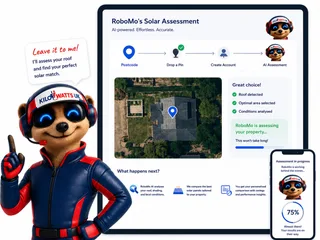
Use RoboMo™ to assess your property, compare available technologies and connect with trusted UK installers, suppliers and manufacturers.
Simply enter your postcode, drop a pin on your roof, create your free account and let RoboMo™ analyse your property to find the best solar panels for your home.

You don't have to think
RoboMo™'s AI analyses your roof and does all the hard work.

Accurate & tailored
AI-powered assessment based on your roof, location, and conditions.

Best options, maximum savings
Compare top solar panels for the best performance and value.

Simple, fast & effortless
Provide a few details, sit back and watch your results unfold.

STEP 1
Choose Home, Business or Industrial
Enter your postcode to start your assessment.
STEP 2

Drop a pin on your roof
STEP 3

Create your free account
STEP 4

Sit back and watch RoboMo™ work
RoboMo™ analyses your roof and builds your personalised solar comparison.

Step 1
Enter your postcode
Start designing your wind energy system in seconds.
Are you an installer, distributor or renewable energy business?
Kilowatts UK is expanding the Flower Turbines partner network across the UK.
Become A Flower Turbines PartnerKilowatts UK is an authorised representative
Flower Turbines
Compact vertical-axis turbines built for real UK sites, not just open farmland.
They start in light wind, sit in a small footprint, and are bird-safe by design. Cluster them as a bouquet and the group performs better together than the same turbines standing alone. Enter your postcode for a location-based generation estimate. Figures use area weather data and will differ if buildings, trees or hills sit in the way.
Starts in light UK wind
Built to generate in typical UK wind, not only open farmland.
Small rooftop or ground footprint
Compact towers for roofs, yards and tight sites.
Bird-safe slow rotation
Slow vertical-axis spin, bird-safe by design.
Bouquet clusters raise output
Grouped turbines outperform the same units standing alone.


STEP 2

Choose a location
STEP 3

Place your cluster
Tap the map where you want the turbine cluster to go.
STEP 4

Instant generation forecasts
Compare different turbine layouts and see annual generation forecasts instantly.
STEP 5

No commitment required
Explore different configurations before deciding whether to request a quotation.
Related articles


FAQ
Need Help? RoboMo's Got Answers
Was the Kikomaru’s voyage really powered by hydrogen only?
No. On the Nippon Foundation announcement of 30 September 2026, hydrogen was the principal energy source for the short Osaka Bay demonstration, but a small quantity of hydrotreated vegetable oil (HVO) was used to start combustion. That is pilot ignition, not a second main fuel, yet it is enough to rule out a literal reading of hydrogen-only. The organiser’s phrase “fitted with a hydrogen-only engine” describes the machinery category, not a logbook showing that no other fuel was burned.
What did the 25 September 2026 demonstration actually show?
As reported by the Nippon Foundation, the 4,500-tonne Kikomaru ran about 33 kilometres in two hours in Osaka Bay using a hydrogen-engine generating system. It was a real, supervised transit, not a drawing, but two hours in a bay does not show range, overnight reliability, crew routine or commercial bunkering. The “world first” wording is the organiser’s claim based on its own research, not a finding settled by an independent register of every earlier trial.
How did the hydrogen system drive the ship?
The propeller was not turned directly by a hydrogen engine in the conventional machinery-space sense. Containerised generators on deck, together with batteries, supplied an electric propulsion system. The share of energy that came from the battery on this run was not published, so it is not clear whether the engine carried the voyage or mainly topped up a battery charged beforehand. Deck modules still need structure, weight margin, ventilation, fire protection, cabling and a bunkering connection, none of which were set out in the announcement.
Why did the engine still need HVO, and does that mean zero carbon dioxide?
HVO, a biofuel made by treating vegetable oils or similar feedstocks with hydrogen, was injected to light the hydrogen-air mixture. The quantity was not published, so “small” has to stay qualitative. Burning HVO still releases carbon dioxide at the funnel. Treating that carbon as biogenic across the fuel’s life cycle is an accounting choice about origins, not the same as a smokestack with no carbon dioxide.
What does the reported 1.2 tonnes of avoided carbon dioxide mean?
The 1.2 tonnes is an organiser estimate, in the 30 September 2026 announcement, of carbon dioxide avoided against conventional fossil-fuel operation for this one demonstration. The calculation method was not set out in the English material that has circulated, and the carbon intensity of the hydrogen was not disclosed, so it is not a well-to-wake result. It also cannot be multiplied into a yearly total: hydrogen use, efficiency and storage volume were not published.
Does a NOx certificate mean the exhaust was clean?
No. Hydrogen combustion does not produce carbon dioxide from the hydrogen itself, but high flame temperatures can still form nitrogen oxides from the air. An IMO Tier II certificate, as reported for this engine, means the engine met that tier’s NOx limit under the relevant test conditions. It does not mean pollutant-free exhaust, and it is not the tighter Tier III standard used in designated NOx emission control areas for ships that fall under those rules.
Would Japanese approval let a similar ship operate in UK waters?
No. Nothing in the Japanese trial clears this package for UK waters. For a UK-flag ship, the Maritime and Coastguard Agency is the flag administration, and a survey would start from the IGF Code for low-flashpoint gas fuels, plus any flag guidance that applies to hydrogen. Classification society, harbour authority and insurer are separate gates, and a foreign-flag ship calling in the UK would still face port-state control and harbour directions. Naming those roles is a map of the decision, not evidence that this containerised arrangement has been accepted.
Does this trial change what UK homeowners should expect from hydrogen or home batteries?
Not in any practical buying sense. The demonstration is a short coastal-shipping trial with an undisclosed hydrogen source, not a domestic heating, solar or battery product. Home battery storage and shipboard batteries solve different jobs, and this announcement does not set UK retrofit cost, availability or safety clearance for either. Claims of hydrogen-only or zero-emission operation should be read against the fuel actually burned and the pathway used to make the hydrogen.