


battery energy storage systems: UK homeowner guide
Published: 2026-11-26 04:22:56
Updated: 2026-11-25 20:24:00
Compare battery energy storage systems for UK homes. Use your electricity readings and tariff to size a battery, estimate savings and check backup options.
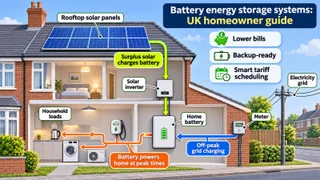
Battery energy storage systems for UK homes
A home battery stores surplus solar electricity or charges from the grid during cheaper tariff hours. It supplies your home later, when solar output falls or grid electricity costs more. Whether it’s worth installing depends on how much electricity you can shift, what it costs to charge, how much solar export income you give up and what you pay for installation. Energy Saving Trust gives around £4,600 for a 5 kWh system as a budgeting guide. If you want power during an outage, specify backup when getting quotes.
What size home battery do you need?
Choose a battery based on how much electricity you can regularly shift between different times of day. If you have solar panels, compare what you export during the day with what you import after generation falls. If you plan to charge from the grid, compare your usage during expensive hours with how much the battery can charge during cheaper hours. Give your installer half-hourly smart meter readings and, if available, solar generation and export records from different seasons. An annual bill can hide a summer surplus and a winter shortfall.
Check the quote for usable capacity and continuous output. Usable capacity is the energy the battery can deliver within its operating limits, measured in kilowatt-hours (kWh). Continuous output is the power it can supply at any one time, measured in kilowatts (kW). If your kettle and oven together draw more power than the battery can supply, the grid can cover the difference even while the battery has charge. Keeping a reserve for power cuts leaves less energy for everyday use.
Ask the installer to model two battery sizes using the same readings and tariff. Compare how much extra energy the larger battery would deliver each year with the extra cost of installing it. If you’re planning to buy an electric vehicle, check whether you can charge it directly during cheaper hours. If you’re planning to fit a heat pump, ask how its expected winter demand affects the estimate when solar output is lower.
Can you add a battery to existing solar or install one without panels?
A standalone battery can charge from the grid if its controls support scheduled charging. If you already have solar, an AC-coupled battery has its own inverter and can often work alongside the existing solar inverter. If you’re fitting solar and storage together or replacing an ageing solar inverter, a compatible hybrid inverter can manage both the panels and a DC-coupled battery.
Overview
For a retrofit, send the installer a photo of the existing inverter’s model label and copies of any network paperwork, export agreement or Feed-in Tariff documents. Ask which equipment you can keep and whether the proposed metering can distinguish solar generation from electricity the battery draws from the grid.
How much does battery storage installation cost?
Energy Saving Trust gives a range of £1,500 to £10,000, with around £4,600 for a 5 kWh system. Your price will depend on usable capacity, inverter choice, cable routing, consumer unit work and backup hardware. If you’re buying solar and storage together, ask for a solar-only quote and a solar-plus-battery quote using the same panel layout. The difference is the installed cost of adding the battery.
Ask for an itemised quote covering installation, commissioning, electrical alterations and any network application charges. Qualifying residential battery installations can receive temporary zero-rate VAT through 31 March 2027, including eligible standalone installations and retrofits. Ask the installer to state the VAT treatment on the quote, especially if the work may cross that date.
Compare warranties alongside price. Check how long the warranty lasts, how much energy can pass through the battery before you reach any warranty limit, the minimum capacity covered at the end of the term and whether the warranty covers labour. If you plan to charge and discharge most days, ask how your expected annual use compares with any limit.
How much can a home battery save?
Savings depend on the price of the electricity each delivered kWh replaces and what it costs to charge the battery. For grid charging, divide the off-peak rate by the round-trip efficiency to find the charging cost per kWh delivered. For solar charging, use the export rate you would otherwise earn in place of the off-peak rate. When comparing quotes, check that the efficiency figures cover equivalent charging and discharging paths.
Suppose your off-peak rate is 10p per kWh, your peak rate is 30p per kWh and round-trip efficiency is 90%. Each kWh the battery delivers costs about 11.1p to charge and avoids 30p of peak imports, saving about 18.9p. If the battery delivers 1,500 kWh a year and every delivered kWh replaces peak imports, you save about £283. At 750 kWh under the same conditions, you save about £142. Both figures are before installation costs, standby consumption and capacity loss over time.
A high export rate can make it more valuable to sell surplus solar electricity. In Great Britain, if you receive Smart Export Guarantee payments and plan to charge from both solar and the grid, ask your supplier what metering or evidence it needs to identify eligible exports. Check the terms of any existing Feed-in Tariff arrangement before changing the system. Ask how many kWh the installer expects the battery to deliver during hours when it will reduce your bill. Check whether the estimate accounts for winter solar output, capacity loss, standby consumption and any charge reserved for outages. If you’re considering an Octopus battery tariff or another tariff, compare what you’d pay for all your household electricity, including any imports at the new peak rate.
Will a home battery keep the power on during a cut?
A home battery can supply selected circuits or the whole home during a power cut if the system has compatible backup equipment and can isolate the circuits it supplies from the grid. Ask which circuits will stay live, how much continuous power the battery can supply in backup mode and whether it can meet the power your equipment needs to start. Even with whole-home backup, the output limit can prevent you from running several high-power appliances at once.
How long backup lasts depends on how much charge the battery has when the power goes off and what you run during the outage. Setting a reserve leaves more energy for a power cut and less for everyday savings. If you have solar, ask whether the panels can recharge the battery while the grid is disconnected. At handover, ask the installer to demonstrate the changeover and show you which sockets stay live. Include the broadband router or fridge in that check if either is a priority.
What grid and siting checks should your installer make?
In Great Britain, your installer should confirm the connection route with the local distribution network operator (DNO) based on the full inverter arrangement, including any existing solar. G98 applies to qualifying installations using fully type-tested equipment up to 16 A per phase, equivalent to 3.68 kW on a nominal 230 V single-phase supply. G99 generally requires approval before connection. If the design uses a G100 export limit, ask what that means for your system and which connection route applies.
In Northern Ireland, ask your installer to follow NIE Networks’ generation connection process and confirm whether they need to apply before connection or notify NIE Networks after commissioning. Existing generation can affect which route applies when you add storage.
During your home energy survey, ask the installer to show you where the battery and inverter would go and how the cable would reach the consumer unit. A short route can reduce installation work. The installer still needs to check the mounting surface, access for maintenance, temperature range and manufacturer’s clearances. PAS 63100:2024 specifies outdoor siting where practicable for installations within its scope. If the installer proposes an indoor location, ask how it meets the applicable requirements for ventilation and fire separation.
What should you compare before accepting a quote?
Give each installer the same usage data, tariff rates and details of existing equipment. Ask each to specify the battery’s usable capacity, continuous output, expected annual energy delivery, equipment location and any backup circuits. Confirm who will handle the grid paperwork and ask how the installer calculated the savings. If quotes give very different figures, compare how many kWh each installer expects the battery to shift over a year before comparing payback.
Agree what you’ll receive at handover, including commissioning records, warranty documents, shutdown instructions and a copy of any network approval or notification that applies to your installation. Ask the installer to show you how to check the charging schedule, backup reserve and any agreed export limit. When you compare solar installation options, weigh the extra cost of adding the battery against the extra annual savings it’s expected to deliver.
Solar comparison
Compare solar for your property
Enter your postcode to assess your roof, compare solar options and get quotes from UK installers.
- Free postcode start
- Home, business and industrial
- RoboMo™ maps your roof
See which panels fit your roof
Choose home, business or industrial, then enter your postcode. RoboMo maps the roof and ranks panel brands by fit.
1. Postcode Start the assessment for your property.
2. Pin the roof Mark the array on the map.
3. Compare RoboMo™ builds your options.

Battery ROI tool
See what a battery saves on your bill
Enter the day rate, off-peak rate and export rate. The calculator ranks batteries in the Kilowatts shop over 10 years. Home batteries also suit offices and small commercial sites.
Reading
Sources and further reading
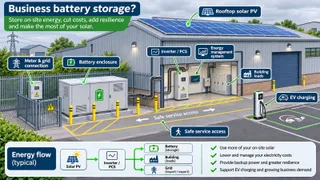
See how tariffs and charging losses affect business battery storage payback, with a worked example and checks for comparing UK installation quotes.
Read article
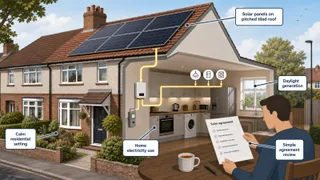
A power purchase agreement solar deal is a long-term contract where a third party funds, owns and usually maintains solar panels on your roof.
Read article
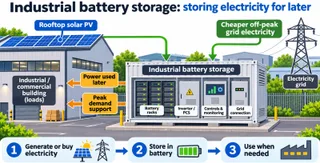
Size industrial battery storage for a UK factory or warehouse, compare installed quotes and see how tariff changes and fewer cycles affect savings.
Read article
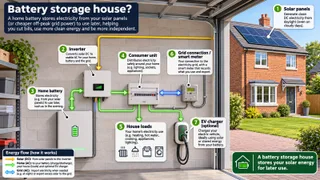
Find the right battery storage for your UK home. Use your tariff and electricity use to weigh up new solar, a battery retrofit or grid charging.
Read article


Mo's Solar Mission
Mo's Mission Nominations
Garlinge Primary School and Nursery
Garlinge Primary School and Nursery is a foundation primary school on Westfield Road in Margate, Kent, for children aged 3 to 11. It is m...
St Luke's Church of England Primary SchoolSt Luke's Church of England Primary School is a voluntary controlled Church of England primary school on Jubilee Road in Formby, Merseysi...
Comberbach Nursery and Primary SchoolComberbach Nursery and Primary School is a primary academy on Mather Drive in the village of Comberbach, near Northwich in Cheshire, for...
Locations
Solar installation near you
Write for Kilowatts.uk
Got a trade and something worth saying?
Write it here under your own name. Sign in, put a profile up, and start a guide. Pay only if you want more links from your articles out to your own site.
Register
Create a Kilowatts.uk account, or sign in if you already have one.
Author profile
Put your name, photo and experience on a public author page.
Start creating
Write a guide or a blog. Free authors can put one followed link to their own site in articles each month.
FAQ
Need Help? RoboMo's Got Answers
What size home battery do I need?
Use half-hourly smart meter readings and any solar export records to see how much electricity you could regularly move from cheaper or sunnier hours to times when you import more. Ask installers to model two sizes using the same data from different seasons. Compare usable capacity in kWh, which tells you how much energy is available, and continuous output in kW, which tells you how much power the battery can supply at once.
Can I add a battery to existing solar panels or install one without solar?
An AC-coupled battery has its own inverter and can often work alongside your existing solar inverter. A standalone battery can charge from the grid, so check that its controls can schedule charging during your tariff’s cheaper hours. If you already have solar, give the installer your inverter model and any export or Feed-in Tariff paperwork so they can check compatibility and metering.
How much does a home battery cost to install?
Energy Saving Trust gives around £4,600 for a 5 kWh system as a budgeting guide. Your quote will depend on the equipment, electrical work, cable route and any backup hardware. If you’re buying solar at the same time, ask for solar-only and solar-plus-battery quotes with the same panel layout so you can see what the battery adds to the installed price.
Will a home battery save me money?
Savings depend on how often stored electricity replaces expensive imports and what it costs to charge the battery. Allow for energy lost during charging and discharging, and count any export income you give up by storing surplus solar electricity. If you’d need to switch tariffs, compare your whole household bill, including electricity you’ll still buy at peak rates.
Will a home battery keep my fridge and Wi-Fi running during a power cut?
It can if the system has compatible backup equipment and supplies the circuits your fridge and router use. Ask the installer which sockets stay live, how much power the battery can supply and whether solar panels can recharge it while the grid is down. Backup duration depends on how much charge is available when the cut starts and what you run.
Can a home battery go in a garage or outside?
Either location may be suitable, depending on the equipment and the proposed installation. Ask your installer to check the mounting surface, temperature range, clearances and access for maintenance. For a garage or other indoor location, ask how the design addresses ventilation and fire separation.
Who handles the grid connection paperwork for a home battery?
Ask your installer who will submit the paperwork and whether the network operator needs to approve the installation before connection or can be notified afterwards. The installer should check the full inverter setup, including any existing solar. In Great Britain this means checking with your local distribution network operator, and in Northern Ireland it means following NIE Networks’ process.
What should I look for in a home battery warranty?
Check the warranty term, any limit on the total energy cycled through the battery and the minimum capacity the warranty covers at the end of the term. Ask whether labour is covered if the battery needs repair or replacement. If you expect to use it most days, ask the installer how your projected use compares with the warranty’s energy limit.
Live help
Need help right now?
Talk to RoboMo™ and get instant answers.