


How much does ev charging installation cost cost in the UK?
Published: 2026-08-23 00:08:43
Updated: 2026-08-23 09:13:03
A typical home EV charger installation in the UK often costs around £800 to £1,500 for a straightforward job.
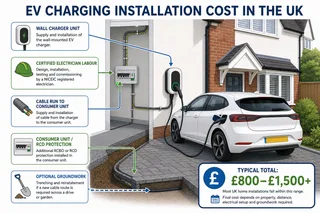
How much does ev charging installation cost cost in the UK?
Find out ev charging installation cost in the UK, including costs, what affects price, and how to choose an installer.
How much does EV charging installation cost in the UK in 2026?
A typical home EV charger installation in the UK often costs around £800 to £1,500 for a straightforward job. That usually includes the charge point, standard labour, basic materials, testing and handover. The final cost depends on the charger model, cable route, consumer unit condition, earthing arrangement, available electrical capacity and whether extra work is needed before the charger can be connected safely. Treat these figures as guide prices, not a guaranteed quote. Some advertised prices show only the charger unit. Others include a tightly defined “standard installation” with exclusions that matter in real homes. If your parking space is far from the consumer unit, the electrics are older, the property has shared access, or the job needs groundworks, the installed cost can be higher.
What a standard EV charger installation normally includes
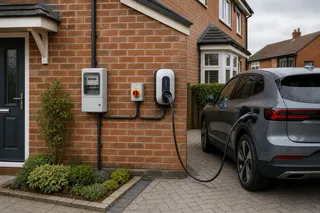
A standard domestic installation usually means a single wall-mounted AC charge point fitted at a property with off-street parking, a practical cable route and no major electrical upgrades. Most UK homes use a single-phase electricity supply, so a charger rated up to 7.4 kW is the normal home option. The vehicle and charger settings also affect the actual charging rate.
The installer’s package should normally include the charge point, suitable cabling, electrical protection, mounting, testing, commissioning and customer handover. It should also include the necessary documentation and any Distribution Network Operator notification or application process that applies to the installation. Installers define this differently, so check the quote wording carefully. For a broader overview, read more about installing a charger at home.
A “standard installation” may still exclude finishing details. Making good, specialist cable containment, concealed cabling, underground ducting, work in outbuildings, consumer unit alterations and long cable routes are often treated as extras.
What is usually excluded from a standard quote
The biggest misunderstanding with EV charger pricing is that “installed from” does not always mean “fully finished for your property”. A low headline price may assume the charger is close to the electrical supply, the consumer unit is suitable, the cable route is simple and the installer does not need extra time for permissions, remedial works or difficult access.
Common exclusions are not necessarily unreasonable, but they should be clear before you agree to the work. A good quote sets out what is included, what is provisional and what would trigger extra cost on the day.
If you are comparing two prices, ask each installer to define the assumed cable length, charger location, route, wall type, consumer unit condition and documentation included. That usually explains why one quote is cheaper than another.
Why quotes vary so much between homes
Two houses on the same street can receive different EV charger quotes because the visible charger is only part of the job. The installer is also pricing the cable route, electrical design, safety checks, access, time on site and the risk that extra work will be needed once the installation is assessed properly.
The shortest cable route is not always the best route. A neat and safe installation may need cable protection, a route through a garage or loft, external containment, or a different charger position to avoid vulnerable areas, damp, awkward drilling or future parking problems.
The survey checks that affect the price
A proper EV charger quote is usually based on photos, a video survey, an online form with evidence, or an in-person visit. The installer will normally want to see the meter area, main fuse, consumer unit, earthing arrangement, proposed charger location, parking position and the likely route between them.
This survey is not just admin. It helps decide whether the job needs dynamic load management, extra protective devices, a different charger position, consumer unit work or a network application before installation. A cheap quote based only on a postcode and charger model can miss important details.
A useful quote should make clear what happens if the installer finds an issue on the day. Ask whether the price includes testing, certification, customer handover and the relevant DNO notification or application process.
Compliance, certification and DNO requirements
EV charge points should be installed by a competent electrician who can design, install, test and certify the work properly. Domestic electrical work may fall under Building Regulations requirements, including Part P in England and Wales. The installation should be designed and tested in line with the relevant edition of BS 7671 and applicable guidance for EV charging equipment.
Modern private charge points must also meet UK smart charge point requirements where they apply. These rules are separate from the physical installation work and affect features such as smart functions and default charging behaviour. The installer should be able to explain whether the selected charger is suitable for the intended use.
DNO involvement is another area to clarify early. Depending on the charger, property supply and local network position, the installer may be able to notify the DNO after installation or may need to apply before work goes ahead. This should be handled as part of the installation process rather than left until the end.
Charger choice also changes the installed cost
The charger itself can make a noticeable difference to the installed price. A simple untethered unit is not the same product as a tethered charger with advanced app controls, solar diversion features, dynamic load management and detailed energy reporting. If you are still choosing a model, it is worth taking time to compare home chargers before you compare installation quotes.
Tethered chargers are convenient because the cable stays attached to the unit, but they can cost more than some untethered options and leave a visible cable on the wall. Untethered units look tidier and can work well where the driver already has a compatible cable, but they add a step each time you charge.
Solar compatibility can be useful if you already have solar PV or plan to add it, but it does not remove the need for a compliant charger installation. It may also affect product choice more than labour cost, because the installer still has to route, protect, test and commission the electrical connection correctly.
Will you need electrical upgrades first?
Some homes can take an EV charger with little extra work. Others need upgrades or design changes before fitting. Older consumer units, limited spare ways, unsuitable protection, unclear earthing arrangements or high existing electrical loads can all change the cost and timescale.
Load assessment matters because a home charger can draw a sustained load for several hours. Where the property also has electric heating, an immersion heater, a hot tub, an electric shower or other large loads, the installer may recommend dynamic load management so the charger reduces output when the house is using more power.
An electrical upgrade is not automatically a sales add-on. In some homes it is the difference between a safe, certifiable installation and a charger fitted around a weak electrical setup.
Example EV charger quote scenarios
Real quotes depend on the property, but example scenarios help show why the same charger can cost different amounts to install. These are not fixed prices and should not be treated as a substitute for a survey. A simple driveway installation is usually the lowest-risk scenario. A more complex job, such as a detached garage or an older consumer unit, adds time, materials and design decisions even if the charger model is identical.
Overview
The lesson is to compare the whole installation, not just the charger on the wall. A higher quote may be more accurate if it includes work that another quote has left as a day-of-installation extra.
Is a 7 kW home charger enough?
For many UK drivers, a 7 kW home charger is enough because the car is parked overnight or for long periods during the day. A charger at this level can commonly add around 25 to 30 miles of range per hour, although the real figure depends on the vehicle’s efficiency, battery state, temperature, charging settings and the car’s onboard AC charging limit.
A 22 kW home charger is not simply a better version of a 7 kW charger. It normally needs a three-phase supply, which most UK houses do not have, and the vehicle must also be able to accept that AC charging rate. For many domestic properties, chasing a higher-power charger adds complexity without delivering much practical benefit.
The more useful question is whether the charger fits your driving routine. If the car usually sits at home for eight or more hours, a well-specified 7 kW charger with sensible tariff scheduling may be more useful than paying for a more complicated supply arrangement.
Flats, rentals and homes without driveways
EV charger installation is most straightforward where you own the property, have off-street parking and can route a cable safely from your own electrical supply to the parking space. It becomes more complicated when the parking space is shared, leased, remote from the meter or controlled by a landlord or managing agent.
For flats and rented homes, permission can be as important as the electrics. The installer may need confirmation from the landlord, freeholder or managing agent before work starts, particularly where cables cross communal areas or equipment is fixed to shared structures. Check the practical issues around permission for a home charger before assuming the job is straightforward.
Homes without off-street parking are harder to deal with. Running a private cable across a public footway is not a simple domestic installation issue, and local rules or permissions may apply. In those cases, workplace charging, public charging, local authority schemes or future kerbside provision may be more realistic than a private wall box.
Grants, official guidance and eligibility
Grant availability and eligibility can change, so check current official GOV.UK and OZEV guidance before assuming support will reduce your installation cost. Some grants have applied only to specific property types, parking arrangements, landlords, tenants or flat owners, and they should not be treated as a universal discount.
It is also worth checking official guidance on DNO processes and electrical safety expectations. The Energy Networks Association and local Distribution Network Operators publish information about connecting low-carbon technologies, while electrical safety requirements sit alongside Building Regulations and BS 7671 installation practice.
Do not rely only on a sales page for grant or compliance information. A trustworthy installer should be able to explain the current process, what evidence is needed, who submits the paperwork and whether the grant, if available, is included in the quoted price or handled separately.
Tariffs, solar panels and running costs
Energy tariffs affect running cost more than installation cost. A smart charger can help schedule charging around suitable tariff periods, but the savings depend on your supplier, tariff terms, mileage, vehicle efficiency and whether you can reliably charge during the lower-cost window.
If you have solar panels or a home battery, charger choice becomes more important. Some chargers can prioritise surplus solar generation or coordinate better with home energy systems, but the benefit depends on how much surplus you actually have and when the car is parked at home. If storage is part of the same plan, compare the likely installation case with home battery costs.
Solar-aware charging is most useful when the car is often at home during generation hours. If the vehicle is usually away during the day, tariff scheduling or battery integration may matter more than surplus solar charging features. It also helps to understand how solar panels work before paying extra for solar-linked charging features.
How to compare EV charger installation quotes
The cheapest quote is not always the best value if it excludes the work that makes the installation safe, neat and reliable. A better comparison is to check the charger model, installation assumptions, cable route, protective devices, load management, documentation and what happens if extra work is needed. You can also use this approach when you compare electrical installers for other home electrical work.
Ask each installer to define “standard installation” in writing. This should include the assumed cable length, surface-mounted or concealed cabling, parking distance, consumer unit requirements and whether any remedial work is excluded.
A good quote should be specific enough that another competent installer could understand the intended design. If the quote is vague, ask for clarification before booking.
When a home EV charger may not be worth it
A dedicated home charger is not automatically the right purchase for every EV driver. If you have very low mileage, reliable workplace charging, frequent access to convenient public charging or no practical off-street parking, the payback and convenience case may be weaker.
It can also be poor value to install a charger in a position that will not suit future parking or property changes. Moving a charger later can mean paying again for cabling, testing and alterations, so the location decision deserves thought before installation.
Where the property’s electrical installation is old or already due for remedial work, it may make sense to address the wider electrical condition first. That can increase the upfront cost, but it avoids designing a charger installation around a weak or unsuitable setup.
What to do before booking an installer
Before asking for prices, gather clear photos of your meter, consumer unit, main fuse area, proposed charger wall, parking space and likely cable route. This helps installers quote accurately and reduces the risk of unexpected extras on installation day.
You should also decide whether you want tethered or untethered charging, whether solar compatibility matters and whether app scheduling is important for your tariff. Those choices influence the charger model and can affect the total installed price.
A good final check is to ask the installer what is included, what is excluded, what would trigger additional cost and what documentation you will receive after the work is complete. That turns the quote from a headline price into a useful installation plan.
Plan, Compare & Buy Renewable Energy Solutions
AI does the thinking.
You get the perfect solar match.
Use RoboMo™ to assess your property, compare available technologies and connect with trusted UK installers, suppliers and manufacturers.
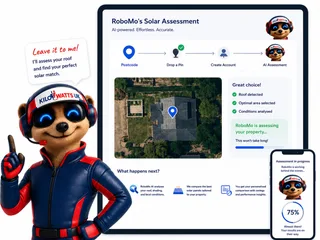
Simply enter your postcode, drop a pin on your roof, create your free account and let RoboMo™ analyse your property to find the best solar panels for your home.

You don't have to think
RoboMo™'s AI analyses your roof and does all the hard work.

Accurate & tailored
AI-powered assessment based on your roof, location, and conditions.

Best options, maximum savings
Compare top solar panels for the best performance and value.

Simple, fast & effortless
Provide a few details, sit back and watch your results unfold.
STEP 1
Choose Home, Business or Industrial
Enter your postcode to start your assessment.
STEP 2

Drop a pin on your roof
STEP 3

Create your free account
STEP 4

Sit back and watch RoboMo™ work
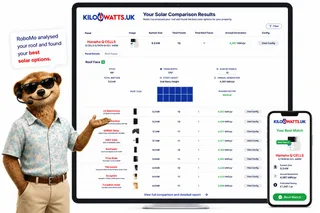
RoboMo™ analyses your roof and builds your personalised solar comparison.

BATTERY ROI TOOL
See what a battery saves on your bill
Enter the day rate, off-peak rate and export rate. The calculator ranks batteries in the Kilowatts shop over 10 years.
Home batteries also suit offices and small commercial sites. Industrial batteries are listed on their own calculator.

Step 1
Enter your postcode
Start designing your wind energy system in seconds.
Are you an installer, distributor or renewable energy business?
Kilowatts UK is expanding the Flower Turbines partner network across the UK.
Become A Flower Turbines PartnerKilowatts UK is an authorised representative
Flower Turbines
Compact vertical-axis turbines built for real UK sites, not just open farmland.
They start in light wind, sit in a small footprint, and are bird-safe by design. Cluster them as a bouquet and the group performs better together than the same turbines standing alone. Enter your postcode for a location-based generation estimate. Figures use area weather data and will differ if buildings, trees or hills sit in the way.
Starts in light UK wind
Built to generate in typical UK wind, not only open farmland.
Small rooftop or ground footprint
Compact towers for roofs, yards and tight sites.
Bird-safe slow rotation
Slow vertical-axis spin, bird-safe by design.
Bouquet clusters raise output
Grouped turbines outperform the same units standing alone.


STEP 2

Choose a location
STEP 3

Place your cluster
Tap the map where you want the turbine cluster to go.
STEP 4

Instant generation forecasts
Compare different turbine layouts and see annual generation forecasts instantly.
STEP 5

No commitment required
Explore different configurations before deciding whether to request a quotation.
Related articles
Mo's Mission Nominations
FAQ
Need Help? RoboMo's Got Answers
How much does a home EV charger installation typically cost in the UK?
A straightforward home EV charger installation in the UK often costs around £800 to £1,500, including the charger, standard labour, basic materials, testing and handover. The final price depends on the charger model, cable route, consumer unit condition, earthing arrangement and whether extra electrical work is needed. Treat online prices as a guide, not a guaranteed quote.
What is usually included in a standard EV charger installation?
A standard installation usually means fitting one wall-mounted AC charge point at a home with off-street parking, a practical cable route and no major electrical upgrades. It should normally include cabling, mounting, suitable protection, testing, commissioning and customer handover. Check whether DNO notification or application handling is included in the quote.
Why can EV charger installation quotes vary so much?
Quotes vary because the charger is only one part of the job. Cable length, wall type, access, consumer unit condition, earthing, supply capacity and the need for load management can all affect the price. A cheaper quote may exclude work that another installer has included.
What extra costs are commonly excluded from an EV charger quote?
Common exclusions include long cable runs, trenching, underground ducting, concealed cabling, decorative making good and work to detached garages or outbuildings. Consumer unit upgrades or remedial electrical work may also be charged separately. Ask the installer to list what is included and what would count as an extra.
Is a 7 kW home charger enough for most UK homes?
For many UK drivers, a 7 kW charger is enough because the car is parked at home overnight or for several hours. It can commonly add around 25 to 30 miles of range per hour, although the real figure depends on the car, battery, temperature and settings. A 22 kW charger usually needs a three-phase supply, which most UK homes do not have.
Do I need permission to install an EV charger at home?
If you own a house with your own off-street parking, permission is often simpler, but the installation still needs to be electrically suitable. Flats, rented homes, leasehold properties and shared parking can require landlord, freeholder or managing agent approval. If cables would cross communal land or a public footway, get advice before assuming the installation is possible.
Are grants available for EV charger installation in the UK?
Grant availability and eligibility can change, so check current GOV.UK and OZEV guidance before budgeting for support. Some schemes have applied only to certain property types, tenants, landlords or flat owners. Do not assume a grant is universal or included unless the quote clearly says so.
Will the installer need to contact the DNO?
Many EV charger installations require the Distribution Network Operator to be notified, and some need an application before work goes ahead. This depends on the charger, property supply and local network conditions. A competent installer should explain the process and handle the relevant paperwork as part of the installation.