


Solar panel installation in Maidstone
Published: 2026-10-06 01:29:53
Updated: 2026-10-05 18:30:19
Solar panel installation in Maidstone is set by the roof, borough or neighbouring planning, and UK Power Networks G98 or G99. A survey decides the layout.
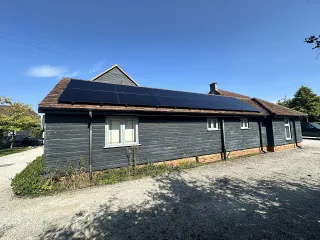
Solar panel installation in Maidstone
Solar panel installation in Maidstone from Kilowatts.uk in Broadstairs. Costs, roofs, planning and what to do next then compare a local system.
Solar panel installation in Maidstone
The roof decides whether the job is worth designing, not the town name. Orientation, tilt, shade, covering and structure come first. Planning constraints and the local network connection can then stop or shrink a layout that looks fine from the street. Savings, yield and any grant cannot be stated until usage, tariff and a site-specific design exist, and until the current scheme rules have been read from the scheme owner.
A search for Maidstone often covers more than the town centre. Maidstone Borough Council is the planning authority for the county town and a wider rural borough of villages and smaller settlements. An address just outside that boundary can sit with a neighbouring authority, such as Tonbridge and Malling, Medway, Swale, Ashford or Tunbridge Wells, so the address has to be checked rather than assumed from the search term. Housing is mixed: older terraces and tighter town streets, suburban estates, and village roofs on narrower lanes. Conservation pockets and listed buildings exist in the town and in villages, but coverage is address-specific. A shared drive, a terrace with no rear access, or a site with nowhere sensible to stand scaffold can change method even when the pitch looks favourable.
What the installation actually includes
A complete job starts with a measured survey and ends with a commissioned system and a handover pack. Satellite imagery is a starting point only. It misses tile condition, sarking or underlay, rafter spacing, loft cable routes, party-wall issues and whether a scaffold can stand on a narrow terrace or a shared drive.
In practice the design fixes module layout, mounting method, inverter or microinverter choice, isolation, labelling, cable routes and metering. The electrical work has to suit the existing consumer unit, earthing and the space available for equipment. Commissioning checks that the system operates as designed and that any export limit is set as agreed. Handover should include the as-built layout, inverter serial numbers, warranty registrations and the distribution network operator reference, not only an app login.
Solar PV produces electricity, not heat. Solar thermal is a different technology and should not be mixed into the same expectation. A battery can be added, but it is not required for the panels to generate. Planning permission, where it is needed, is also a different question from notifying electrical work under the Building Regulations. Those steps are set out below because they are often confused on the same quote.
Roofs that work, and roofs that do not
A Maidstone postcode does not guarantee a good solar roof. Trees, chimneys, neighbouring buildings and valley sites can cut output even when a national map looks favourable. North-facing or heavily shaded roofs are often poor value. A roof that looks large from the pavement can still fail once dormers, rooflights, tile type and set-backs are measured.
The array is a long-term fixing on the building. If the covering is near the end of its life, renewal is usually better before the panels go on, because lifting an array later is disruptive. Flat roofs and some dormer arrangements can be workable, but ballast or fixings, wind loading and the planning position have to be settled in the design, not after scaffold is up. Bird protection and gutter clearance are design choices, not afterthoughts.
Owner-occupiers, or landlords with the right to alter the building, are the realistic clients. Renters without landlord consent should not proceed. Very low electricity users, and anyone on a short lease who cannot get consent to alter the roof, are weak fits even when the pitch looks promising. Structural calculations can also force a smaller array than a sales target. That is a design outcome, not a point to negotiate away.
Planning permission and Building Regulations
Whether planning permission is needed is an address question, not a Maidstone-wide answer. Many domestic roof arrays are treated as permitted development, but that is not a determination for a particular property. The current position should be read from GOV.UK guidance on permitted development for domestic solar equipment, then checked against the address. Listed buildings, conservation areas, Article 4 directions, flat roofs, and arrays on a principal elevation facing a highway can need consent. For sites inside the borough, use Maidstone Borough Council’s planning constraint information for that address. A desk look at a map is not planning permission and it is not a refusal. If the property sits outside the borough boundary, the relevant authority may be a neighbour of Maidstone rather than the borough itself. Conservation and listed-building cases should have the planning position agreed before materials are ordered. Ordering to a sales layout, then discovering a constraint, is a common way to lose time. Building Regulations are separate from that planning question. In England, electrical work on a dwelling is covered by the Building Regulations, and some of that work is notifiable. A new circuit for solar PV is commonly handled through a competent-person scheme, with the installer notifying the work rather than the homeowner applying for planning consent. That notification is a compliance route for the electrical installation. It does not decide permitted development, it does not replace a listed-building consent, and it is not a guarantee of output. Ask which notification route will be used, and keep the answer next to the planning answer so the two are not treated as one approval.
Connecting to the local network
Planning approval, where it is needed, does not connect the system to the grid. The installer has to follow the distribution network operator process in force for that address. In this region, UK Power Networks is the operator to confirm, using its current connection guidance for generation. A postcode, and the name Maidstone, should not be treated as proof of who operates the network or which process applies. The live route is chosen from the inverter rating, the proposed export and the address, not from the town.
Two engineering routes are the ones to ask about by name. G98 is the notification route used for smaller, fully type-tested micro-generation that sits within the published current limit per phase in that document. G99 is the application route used when capacity, equipment or the connection proposal falls outside that simpler path. An export limit is a further control: it can make a roof-sized array acceptable to the network by capping what is sent out at peak, but it does not replace the need to use the correct route. Hybrids, additional inverters and storage can change the assessment even when the panel count looks modest. The installer should state, in writing, whether the proposal is a G98 notification, a G99 application, or an export-limited arrangement, and what would have to be resubmitted if the inverter model changes after the paperwork is in.
Spare ways in the consumer unit, earthing arrangements and a sensible cable route often decide whether a design that fits on the tiles can actually be connected. Expect the network step to sit on the programme alongside scaffold and parts. A fast roof day does not shorten a slow application.
Scaffold, electrics and what sets the programme
What usually sets the calendar is not the day the panels are fixed. Scaffold access on tight Kent streets, any permit or neighbour arrangement for standing scaffold, network responses under the G98 or G99 route in use, and equipment lead times usually matter more. A shared drive or a terrace with no rear access can change both method and what the survey has to prove, even when costs are unknown until that visit.
Electrical design is as important as module count. The inverter needs a location with access, manageable heat and acceptable noise. Isolation and labelling have to be clear for later maintenance and for anyone attending an emergency. Where DC circuits run in the building, the shutdown method should be explained in plain language at handover, not left as a manual in a loft. That explanation sits with the Building Regulations handover, not with the planning drawings.
Monitoring expectations should be stated. UK rain does not clear all soiling, and new extensions or growing trees can add shade after the install. A system sized only to a sales target can fail structure or export limits and has to be reduced.
Bills, batteries and what solar will not do
Panels do not remove the electricity bill, and no installed price is quoted here because a Maidstone-wide figure would be invented. Night-time and winter use still come from the grid unless storage and the household’s pattern line up, and a normal UK design is not an off-grid system. Generation is seasonal and daily. An annual total is not a pot of electricity the home can spend at any hour. Local cost, annual yield and payback depend on the survey, how the home uses electricity, and the tariff. Without those, a postcode saving is not a fact.
A battery is optional. It shifts when generated electricity is used, at extra cost and complexity, and it does not make heating, an electric vehicle and the evening peak automatic. Those loads need to be checked against generation and storage, not assumed. Self-consumption and any export payment depend on the tariff and on behaviour.
The Feed-in Tariff is closed to new applicants and does not describe a new installation. The Smart Export Guarantee is the export-payment framework associated with Ofgem and with licensed suppliers, who publish their own tariffs and eligibility. Whether an MCS-certified installation is required depends on the scheme you actually want, including a supplier’s current SEG terms, so that point has to be read from the scheme owner’s rules at the time rather than from a quote. MCS certification, where it is required, is an eligibility check. It is not a prediction of output on a particular roof. Manufacturer warranties are product terms, often longer for modules than for inverters in published literature, and they are not a yield guarantee. Any current grant or certification rule has to be checked the same way. This article does not state grant values, because those rules and amounts change and are not known from the town name.
What to do before you commission a survey
Start with the building, not a panel count. Note roof age and leaks, obvious shade through the day, whether the property is listed or in a conservation area, and who can consent to the work. A landlord or freeholder refusal ends the job regardless of orientation. If the covering needs renewal, plan that before array fitting. If the address may sit near the borough edge, confirm the planning authority before assuming Maidstone Borough Council is the right council.
Ask for a measured survey rather than a desktop layout presented as a design. Ask how planning will be checked for that address against current GOV.UK permitted-development guidance and the council’s constraint information. Ask which network process applies: G98, G99 or an export-limited arrangement, and what the handover pack contains, including the Building Regulations notification for the electrical work. If the proposal adds a battery or is aimed at heavy new loads, ask for the usage assumption in writing so you can see what was assumed.
Consumer checks are checks, not guarantees. Ask whether MCS certification is required for the export tariff or any named scheme you intend to use, and confirm that against current MCS and supplier or Ofgem SEG rules. Ask whether the firm belongs to a consumer code with a redress scheme, such as the Renewable Energy Consumer Code where that is the code they use, so you know the complaint route. Membership and certification do not promise a planning outcome, a connection offer, or a saving. A surveyed design is the right next step when the roof is sound and consent is realistic. Kilowatts can take that as a residential solar panel installation in Maidstone, with the layout fixed only after the site and the connection position are known.
Plan, Compare & Buy Renewable Energy Solutions
AI does the thinking.
You get the perfect solar match.
Use RoboMo™ to assess your property, compare available technologies and connect with trusted UK installers, suppliers and manufacturers.
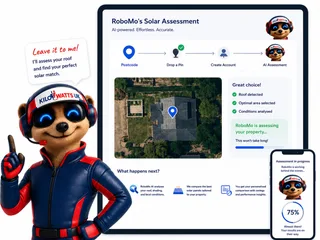
Simply enter your postcode, drop a pin on your roof, create your free account and let RoboMo™ analyse your property to find the best solar panels for your home.

You don't have to think
RoboMo™'s AI analyses your roof and does all the hard work.

Accurate & tailored
AI-powered assessment based on your roof, location, and conditions.

Best options, maximum savings
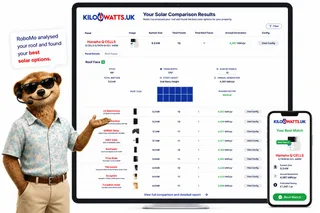
Compare top solar panels for the best performance and value.

Simple, fast & effortless
Provide a few details, sit back and watch your results unfold.
STEP 1
Choose Home, Business or Industrial
Enter your postcode to start your assessment.
STEP 2
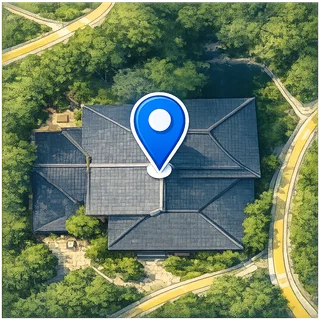
Drop a pin on your roof
STEP 3

Create your free account
STEP 4

Sit back and watch RoboMo™ work
RoboMo™ analyses your roof and builds your personalised solar comparison.

Step 1
Enter your postcode
Start designing your wind energy system in seconds.
Are you an installer, distributor or renewable energy business?
Kilowatts UK is expanding the Flower Turbines partner network across the UK.
Become A Flower Turbines PartnerKilowatts UK is an authorised representative
Flower Turbines
Compact vertical-axis turbines built for real UK sites, not just open farmland.
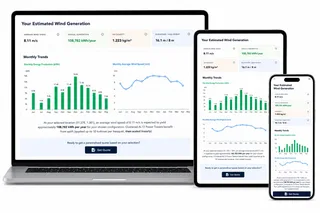
They start in light wind, sit in a small footprint, and are bird-safe by design. Cluster them as a bouquet and the group performs better together than the same turbines standing alone. Enter your postcode for a location-based generation estimate. Figures use area weather data and will differ if buildings, trees or hills sit in the way.
Starts in light UK wind
Built to generate in typical UK wind, not only open farmland.
Small rooftop or ground footprint
Compact towers for roofs, yards and tight sites.
Bird-safe slow rotation
Slow vertical-axis spin, bird-safe by design.
Bouquet clusters raise output
Grouped turbines outperform the same units standing alone.

STEP 2

Choose a location
STEP 3

Place your cluster
Tap the map where you want the turbine cluster to go.
STEP 4

Instant generation forecasts
Compare different turbine layouts and see annual generation forecasts instantly.
STEP 5

No commitment required
Explore different configurations before deciding whether to request a quotation.
Related articles
FAQ
Need Help? RoboMo's Got Answers
What does a solar panel installation in Maidstone actually include?
A complete job starts with a measured survey of the roof, structure, shade, cable routes and scaffold access, not a satellite layout treated as a design. It then covers mounting, electrical work suited to the existing consumer unit and earthing, commissioning, and a handover pack. That pack should include the as-built layout, inverter serial numbers, warranty registrations, the distribution network operator reference and the electrical notification record. Buying panels alone, or relying on a remote drawing, is not the same as an installed, grid-connected system.
Does a Maidstone postcode mean the roof is suitable for solar?
No. Orientation, tilt, shade, covering and structure decide whether a design is worth pursuing, not the town name. Trees, chimneys, neighbouring buildings, dormers and valley sites can cut output even when a national map looks favourable. North-facing or heavily shaded roofs are often poor value. If the covering is near the end of its life, renewal is usually better before panels are fitted, because lifting an array later is disruptive.
Do I need planning permission for solar panels in Maidstone?
That is an address question, not a borough-wide answer. Many domestic roof arrays are treated as permitted development, but that is not a determination for a particular property. Check current GOV.UK guidance, then the constraints for that address, including listing, conservation areas, Article 4 directions, flat roofs and highway-facing elevations. If the property is outside Maidstone Borough, the planning authority may be a neighbour such as Tonbridge and Malling, Medway, Swale, Ashford or Tunbridge Wells, so the address has to be checked.
Is Building Regulations notification the same as planning permission?
No. In England, electrical work on a dwelling is covered by the Building Regulations, and a new circuit for solar PV is commonly notified through a competent-person scheme. That notification is a compliance route for the electrical installation. It does not decide permitted development, replace listed-building consent, or guarantee output. Ask which notification route will be used and keep that answer separate from the planning answer.
How does the system connect to the local electricity network?
Planning approval, where it is needed, does not connect the system to the grid. In this region UK Power Networks is the operator to confirm, using its current connection guidance, but a postcode alone is not proof of the process that applies. G98 is the notification route for smaller, fully type-tested microgeneration within the published limit; G99 is the application route when the proposal falls outside that simpler path. An export limit can cap what is sent out at peak, but it does not replace the correct route. Hybrids, extra inverters and storage can change the assessment.
Will solar panels remove my electricity bill, and can you quote a Maidstone price?
Panels do not remove the electricity bill. Night-time and winter use still come from the grid unless storage and the household’s pattern line up, and a normal UK design is not an off-grid system. An annual total is not electricity the home can use at any hour. Yield, payback and any installed price depend on a site survey, how the home uses electricity and the tariff, so a postcode figure would not be reliable. This article does not state prices or grant amounts.
Do I need a battery, MCS certification or the Feed-in Tariff?
A battery is optional. It can shift when generated electricity is used, at extra cost and complexity, but it does not make heating, an electric vehicle and the evening peak automatic. The Feed-in Tariff is closed to new applicants. Export payments for new systems sit under the Smart Export Guarantee, with tariffs and eligibility set by licensed suppliers. Whether MCS certification is required depends on the scheme you want, including a supplier’s current SEG terms, so that has to be read from the scheme owner rather than assumed from a quote.
Who is a realistic client, and what usually sets the programme?
Owner-occupiers, or landlords with the right to alter the building, are the realistic clients. Renters without consent, very low electricity users, and anyone on a short lease who cannot alter the roof are weak fits. Scaffold access on tight streets, permits or neighbour arrangements, network responses and equipment lead times usually matter more than the day the panels are fixed. Structural limits or an export cap can also force a smaller array than a sales target, and that is a design outcome rather than something to negotiate away.