


What a Victron MultiPlus is for in a UK home.
Published: 2026-08-30 17:56:49
Updated: 2026-08-31 01:33:16
In a UK home, it can sit at the centre of battery storage and backup power, but only when it is matched with suitable batteries, protection equipment.
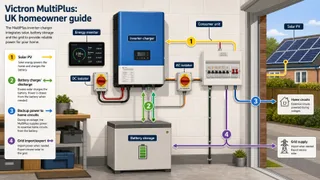
victron multiplus - UK homeowner guide
Learn victron multiplus with UK-specific guidance, including costs, savings, rules, and what to do next.
What a Victron MultiPlus is for in a UK home.
A Victron MultiPlus is an inverter/charger, not a complete home battery system on its own. In a UK home, it can sit at the centre of battery storage and backup power, but only when it is matched with suitable batteries, protection equipment, metering, settings and a suitable grid connection approach. The key question is whether you need its flexibility enough to justify a more detailed installation.
In simple terms, a MultiPlus converts DC electricity from a battery into AC electricity for home use. It can also charge that battery from an AC source such as the grid or an AC-coupled solar installation. The MultiPlus-II range is usually the more relevant family for grid-interactive domestic energy storage, especially where the installer is using Victron’s ESS approach rather than a purely off-grid setup.
The important distinction for homeowners is that Victron is modular. That can suit backup circuits, rural properties, smallholdings, workshops, unusual loads, generator integration or retrofits where a packaged battery does not fit the brief. It can also be too complex for a straightforward grid-connected home where the main aim is to store solar electricity and use a clear consumer app.
Short answer for homeowners comparing options.
A Victron MultiPlus can be a strong choice if you want a tailored battery system, selected-circuit backup, generator integration or a retrofit that needs more flexibility than a standard packaged battery. It is less likely to be the simplest option if you mainly want everyday solar storage, tariff charging and a single manufacturer support route. The main factors are backup expectations, battery compatibility, DNO process, installer competence, existing solar equipment and how much custom design your home needs.
The brand name on the inverter is not the most important issue. A well-designed Victron system can be flexible and dependable. A poorly designed one can import at the wrong time, fail to back up the loads you expected, breach connection assumptions or become difficult to support. For a grid-connected UK home, the electrical design, commissioning and documentation matter as much as the hardware.
A sensible first step is to define the job in plain English. “I want a battery” is too vague. “I want to charge from a cheap-rate tariff, support my broadband, lights, fridge and boiler controls during a power cut, and keep my existing solar inverter” gives an installer a real design brief. If you are still comparing the broader solar route, it can help to compare solar options before deciding whether a Victron-style system is justified.
How it works with solar panels and batteries.
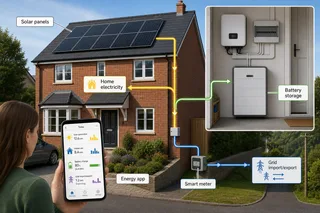
The MultiPlus does not automatically replace every type of solar inverter. It is an inverter/charger that works with the battery side of the system, so solar can be included in several ways depending on whether the design is AC-coupled, DC-coupled or battery-only. This is one reason Victron systems are flexible, but it is also why they need proper design rather than a parts-list approach.
In an AC-coupled retrofit, an existing solar PV inverter may continue to produce AC electricity while the Victron system manages battery charging and discharging around the house load and grid connection. This can suit homes that already have solar and do not want to replace the PV inverter, but the design still needs the same care as any project to add battery storage. In a DC-coupled design, solar charge controllers can feed the battery side more directly, which may suit some resilience-led or off-grid-style designs.
Battery choice is separate from the MultiPlus itself. A matching nominal voltage is not enough. The installer must check communication compatibility, charge and discharge limits, isolation, overcurrent protection, firmware requirements, warranty conditions and the settings needed for safe operation. A 48V battery platform is commonly relevant for larger domestic Victron-style storage, but the correct battery depends on the chosen equipment and design brief.
Common UK homeowner configurations.
The same MultiPlus model can appear in very different home energy systems. Homeowners should be cautious when comparing examples from forums, overseas installations or off-grid cabins. A UK grid-connected retrofit has different practical constraints from a boat, camper, agricultural building or fully off-grid property.
A few common domestic scenarios show where the system design changes. These are not universal templates, but they reflect real decisions an installer has to resolve before quoting.
These examples show why a quote should describe the complete system, not just name the inverter. The same hardware can be configured for very different outcomes, and those outcomes need to be agreed before installation starts.
Can a Victron MultiPlus give backup power during a power cut?
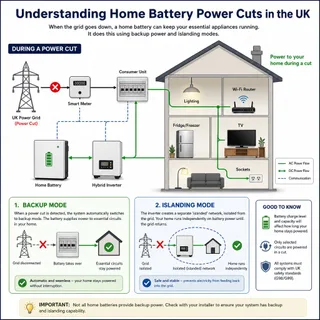
Yes, but only if backup has been designed into the installation. A grid-connected home energy system will not automatically power the whole house during an outage just because a MultiPlus and battery are fitted. In practice, backup normally means selected essential circuits or a carefully engineered wider arrangement within the inverter, battery and protection limits.
High-load appliances are the usual problem. Electric showers, ovens, immersion heaters, heat pumps, EV chargers and some pumps can draw more power than a domestic battery inverter can sensibly support in backup mode. Even where normal running power looks manageable, motor starting currents and several appliances switching on together can cause nuisance trips or shutdowns if the design is too optimistic.
The electrical design also has to remain safe in both grid-connected and islanded operation. Earthing, neutral switching, fault protection, changeover arrangements and circuit separation are competent-person design issues, not homeowner settings to adjust after handover.
A credible backup proposal should be specific. If a quote says “whole-house backup” but does not explain inverter capacity, surge loads, excluded circuits and protective arrangements, ask for the design assumptions in writing. For a wider homeowner primer, read how a battery handles outages.
UK grid connection, DNO and compliance issues.
If a Victron system operates in parallel with the public grid, the installer must consider the UK grid connection process before commissioning. Depending on the total generation and storage arrangement, this usually involves the relevant Engineering Recommendation G98 or G99 route through the local Distribution Network Operator. Export limitation may also be part of the design where the installation must control how much power can flow back to the network.
This is where overseas examples and informal forum advice can mislead homeowners. A configuration that works in an off-grid cabin, vehicle, boat or non-UK home is not automatically acceptable for a grid-connected UK property. The DNO position, inverter settings, declared equipment, export control method and commissioning documents can all affect whether the final system is acceptable.
At a homeowner-safe level, the useful source signals are clear. Victron’s own MultiPlus-II and ESS documentation explains the intended equipment functions and system architecture. UK network connection requirements are based around ENA Engineering Recommendations G98 and G99 and the local DNO’s application or notification process. Electrical installation work in the home must also be designed and installed by competent professionals in line with applicable UK wiring and building-control requirements. The paperwork should not be treated as an afterthought. Ask the installer which connection route applies, what equipment is being submitted, whether export will be limited, what commissioning evidence you will receive and what happens if the design changes after approval or notification. Do not energise a grid-parallel battery system on the assumption that paperwork can simply be tidied up later.
Victron MultiPlus versus an all-in-one home battery system.
The simplest comparison is flexibility versus simplicity. A Victron-based system can be more configurable, especially for selected backup circuits, unusual loads, generator integration and mixed solar arrangements. An all-in-one battery system is often easier to quote, install, monitor and support for a typical grid-connected home. Neither route is automatically better. The right choice depends on what you need the system to do, how much custom design is justified and whether you have access to an installer who understands the chosen equipment properly.
Overview
A common mistake is choosing Victron because it is popular with off-grid and enthusiast users, then expecting it to behave like a sealed consumer appliance. If you want a configurable energy system and are comfortable with a specification-led process, it can make sense. If you want the least complicated route to store solar electricity and charge on a smart tariff, a packaged battery may be easier to live with.
What affects cost, savings and payback.
It is not reliable to quote a single installed cost for a Victron MultiPlus system without a design. The MultiPlus is only one component, and the total project depends on inverter size, battery capacity, solar arrangement, consumer unit work, backup circuits, metering, DNO requirements, cable routes, containment, labour and commissioning time. Two installations using the same inverter can end up with very different scopes.
Savings depend heavily on how the home uses electricity. A battery has more value where there is enough surplus solar, cheap-rate charging opportunity or evening demand to cycle it sensibly. If the battery is too small, it may not support the loads you care about. If it is too large, it may spend too much time unused unless your tariff, solar generation and household demand justify it.
Payback modelling should avoid optimistic assumptions. Half-hourly smart meter data is useful because it shows when electricity is actually being used, not just the annual total. Tariff prices, export rates, standing charges, seasonal solar output, battery cycling limits and household behaviour can change over time, so any payback estimate should be treated as a forecast rather than a guarantee.
Round-trip efficiency, usable capacity and control settings all affect real performance. Datasheets may quote favourable results for defined test conditions, but a home system also has standby consumption, conversion losses and behaviour set by the control strategy. The most useful estimate is based on your actual load profile, realistic operating assumptions and a grounded view of solar battery costs.
What installers should check before specifying one.
A good installer will start with the use case, not the inverter model. They should ask whether the system is for solar self-consumption, cheap-rate tariff charging, backup power, generator integration, future expansion or a mixture of these. Each answer changes the wiring, controls, component choice and commissioning settings.
They should also inspect the consumer unit arrangement, available wall space, cable routes, earthing, main fuse position, metering location and existing solar equipment. Retrofit projects often become more involved when the existing consumer unit is full, the CT clamp location is awkward, the meter tails are constrained or the existing solar inverter is already configured in a way that limits integration options.
The quality of commissioning is especially important. Incorrect meter orientation, CT clamp placement, grid code settings or battery parameters can make an otherwise good installation import at the wrong time, fail to charge as expected or trip unnecessarily. A proper handover should explain normal operating behaviour, alarm conditions and which settings the homeowner should not adjust.
When a Victron MultiPlus is a strong choice.
The MultiPlus is strongest where the home has a real design problem to solve. That might be resilience for a rural property, selected backup for essential circuits, a workshop with unusual loads, an annexe, a smallholding or a system that needs to combine solar, battery and occasional generator charging. In those cases, modular architecture can be an advantage.
It can also suit technically engaged homeowners who want detailed monitoring and a system that can be tuned around how they use energy. That does not mean it should be a DIY shortcut for grid-connected electrical work. The flexibility is useful only when the design, installation and settings are handled properly.
For a typical suburban home with standard rooftop solar and no special backup requirement, the case is less clear. A conventional hybrid inverter and battery package may give a cleaner quote, a simpler app, fewer compatibility questions and easier warranty handling. The right question is not “is Victron good?” but “does this level of configurability solve a real problem in my home?”
When a simpler battery system may be better.
A packaged home battery may be the better choice when the property has a conventional solar PV installation, no complex backup requirement and a homeowner who wants simple operation. This is not because packaged systems are always technically superior, but because they reduce the number of separate design and support interfaces.
The simpler route can also be preferable where the installer has strong experience with a particular domestic battery platform and can provide clear warranty, monitoring and aftercare. A well-installed packaged system is often better than a poorly supported modular one.
There are still design checks with any battery system. Backup claims, DNO paperwork, export settings, battery location, fire considerations, monitoring and handover all matter regardless of brand. Simpler does not mean specification-free.
Questions to ask before you approve a quote.
Before accepting a quote, make sure the proposal describes the complete system rather than only naming the inverter. A useful quotation should make clear what battery is being used, what circuits are backed up, whether existing solar is being retained, what DNO process applies and how the system will be commissioned.
Be cautious if the quote promises whole-house backup without explaining inverter capacity, surge loads and excluded appliances. Be equally cautious if it treats DNO notification, export limitation or battery communication as minor details. These are not small extras; they can change whether the system works properly and safely.
Ask what the MultiPlus will power during a grid outage, which appliances are excluded and which battery is being paired with it. The installer should also explain whether the system is AC-coupled, DC-coupled or battery-only, how import and export will be measured, and what DNO process applies before or after installation. Export limitation, ongoing monitoring, fault support, handover documents, settings records and future changes to tariffs, batteries or solar equipment should also be covered.
A well-specified quote should feel slightly boring because the important details are already resolved. If the proposal relies on vague phrases such as “future-proof”, “whole-house capable” or “compatible with most batteries” without showing the design assumptions, ask for clarification before paying a deposit.
Source signals and homeowner-safe references.
For a homeowner guide, the most useful references are not forum screenshots or isolated installation photos. They are manufacturer documentation, UK grid-connection guidance, DNO application requirements and competent electrical design practice. You do not need to become the designer, but you should know which source categories the installer is relying on.
Victron’s own MultiPlus-II and ESS documentation should be used to confirm the intended operating modes, metering approach, compatible components and commissioning principles. UK grid connection should be checked against the relevant ENA G98 or G99 route and the local DNO process. Domestic wiring, protection, isolation and earthing decisions should be handled by competent professionals using the applicable UK electrical installation framework.
This matters because a Victron system can be configured in many ways. The fact that a setting exists does not mean it is appropriate for a UK grid-connected home. A trustworthy installer should be able to explain which documents and assumptions they used without asking you to rely on guesswork.
What to prepare before asking for advice.
If you are considering a Victron MultiPlus, start by writing down the outcomes you want. Lower grid imports, solar storage, cheap-rate tariff charging, backup power, generator integration and future expansion are different objectives, and they do not all point to the same design. Prioritise what matters most so the installer can make sensible trade-offs.
You should also gather practical information about the property. Good photographs and usage data can reveal constraints before anyone starts recommending equipment. This reduces the risk of receiving a quote that looks attractive but later changes because the electrical layout, metering position or backup requirement was not understood.
Collect your annual electricity consumption from your bill or supplier account, plus half-hourly smart meter data if available. If you already have solar PV, note the system details and inverter model. Current import and export tariff information is also useful, as are any known DNO correspondence or previous connection documents. If you are planning an EV charger, heat pump or extension, say so early.
Once you have this information, ask the installer to explain the battery choice, DNO route, backup arrangement, metering method, operating assumptions and handover support in plain English. If those points cannot be explained clearly before installation, the system may be difficult to support later.
Final verdict for UK homeowners.
A Victron MultiPlus can be an excellent foundation for a UK home battery and backup system where flexibility, resilience and careful integration genuinely matter. It is especially relevant for homes with unusual loads, selected essential-circuit backup, existing solar retrofits, generator requirements or owners who want a more configurable system.
It is not automatically the best choice for every home. For many standard solar-and-battery projects, a packaged hybrid inverter and battery may be simpler to quote, install, monitor and support. That simpler route can be the better decision when the goal is everyday savings rather than a bespoke energy system.
Treat Victron as a specialist design option, not just another box on the wall. If the installer can clearly justify the architecture, battery pairing, DNO route, backup design and aftercare plan, it may be a strong fit. If those details are vague, pause the project until the design is properly explained. If you want help turning those requirements into a practical brief, book a home energy survey.
Plan, Compare & Buy Renewable Energy Solutions
AI does the thinking.
You get the perfect solar match.
Use RoboMo™ to assess your property, compare available technologies and connect with trusted UK installers, suppliers and manufacturers.
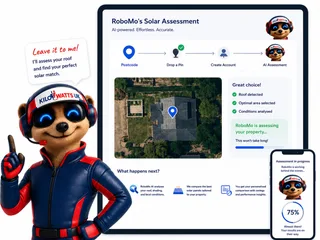
Simply enter your postcode, drop a pin on your roof, create your free account and let RoboMo™ analyse your property to find the best solar panels for your home.

You don't have to think
RoboMo™'s AI analyses your roof and does all the hard work.

Accurate & tailored
AI-powered assessment based on your roof, location, and conditions.

Best options, maximum savings
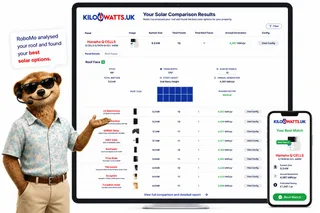
Compare top solar panels for the best performance and value.

Simple, fast & effortless
Provide a few details, sit back and watch your results unfold.
STEP 1
Choose Home, Business or Industrial
Enter your postcode to start your assessment.
STEP 2

Drop a pin on your roof
STEP 3

Create your free account
STEP 4

Sit back and watch RoboMo™ work
RoboMo™ analyses your roof and builds your personalised solar comparison.

Kilowatts UK is an authorised representative
Flower Turbines
Compact vertical-axis turbines built for real UK sites, not just open farmland.
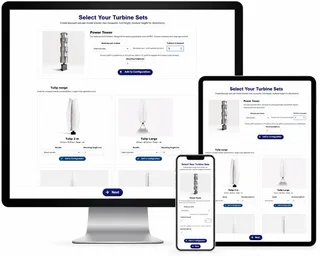
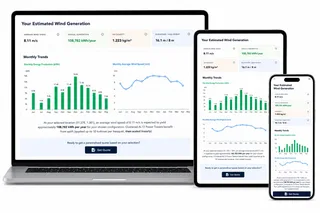
They start in light wind, sit in a small footprint, and are bird-safe by design. Cluster them as a bouquet and the group performs better together than the same turbines standing alone. Enter your postcode for a location-based generation estimate. Figures use area weather data and will differ if buildings, trees or hills sit in the way.
Starts in light UK wind
Built to generate in typical UK wind, not only open farmland.
Small rooftop or ground footprint
Compact towers for roofs, yards and tight sites.
Bird-safe slow rotation
Slow vertical-axis spin, bird-safe by design.
Bouquet clusters raise output
Grouped turbines outperform the same units standing alone.
Step 1
Enter your postcode
Start designing your wind energy system in seconds.
STEP 2

Choose a location
STEP 3

Place your cluster
Tap the map where you want the turbine cluster to go.
STEP 4

Instant generation forecasts
Compare different turbine layouts and see annual generation forecasts instantly.
STEP 5

No commitment required
Explore different configurations before deciding whether to request a quotation.
Related articles

Solar panels
Mo's Mission Nominations
FAQ
Need Help? RoboMo's Got Answers
Is a Victron MultiPlus a complete home battery system?
No. A Victron MultiPlus is an inverter/charger that needs suitable batteries, metering, protection equipment, settings and professional installation to become part of a working home energy system. The final design depends on your solar setup, backup needs, grid connection and chosen battery.
Can a Victron MultiPlus work with my existing solar panels?
Often, yes, but it depends how your current solar PV system is installed. In an AC-coupled retrofit, your existing solar inverter may stay in place while the Victron system manages battery charging and discharging. An installer still needs to check metering, grid connection requirements and whether solar will keep working during a power cut.
Will a Victron MultiPlus power my house during a power cut?
Only if backup power has been designed into the installation. Most domestic systems back up selected essential circuits such as lights, broadband, fridge, freezer or boiler controls, rather than every appliance in the house. High-load items such as electric showers, ovens, immersion heaters, heat pumps and EV chargers are usually excluded unless specifically engineered for.
Do I need DNO approval or notification for a Victron battery system?
If the system operates in parallel with the public grid, the installer must consider the relevant UK grid connection process. Depending on the size and configuration, this is usually handled through the local Distribution Network Operator under the appropriate G98 or G99 route. Ask your installer what will be submitted, whether export limitation is needed and what commissioning paperwork you will receive.
Is a Victron MultiPlus better than an all-in-one home battery?
Not always. Victron can be a strong choice where you need a tailored system, selected backup circuits, generator integration or unusual retrofit arrangements. For a straightforward grid-connected home that mainly wants solar storage and tariff charging, an all-in-one battery may be simpler to quote, install, monitor and support.
What batteries can be used with a Victron MultiPlus?
Battery choice must be checked carefully and should not be based only on voltage. The installer needs to confirm communication compatibility, charge and discharge limits, protection, firmware, warranty conditions and the correct system settings. Using a battery that is not properly supported can create safety, performance and support problems.
How much does a Victron MultiPlus system cost and will it pay back?
There is no reliable single cost without a full design, because the MultiPlus is only one part of the system. The total depends on battery capacity, inverter sizing, solar integration, backup circuits, consumer unit work, metering, cable routes, labour and commissioning. Payback depends on your usage, tariff, export rate, solar generation and how often the battery is actually cycled.
What should I ask an installer before choosing a Victron system?
Ask which circuits will be backed up, which appliances are excluded and what happens when the battery reaches its reserve level. Also ask how the system will connect to your existing solar, which DNO process applies, what export control is being used and what monitoring you will have. A good quote should describe the complete system, not just name the inverter.