


Warm Homes Loans for Solar and Batteries: The True Cost Before You Apply
Published: 2026-10-28 18:50:55
Updated: 2026-11-12 16:19:10
What to check in current Warm Homes Loan information before requesting an itemised solar and battery installation quote.
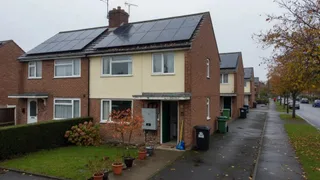
What a Warm Homes Loan will actually cost
A Warm Homes Loan should be checked against the current government scheme publication. This guide does not provide a credit offer, rate or repayment example.
Start with the GOV.UK Warm Homes Loan Scheme guide. The installation you want quoted and any application for borrowing are separate steps.
Read the year, the caps and the lender list from the current Government Warm Homes Loan Scheme factsheet before you treat any summary as current. The 27 October dating in circulation does not, by itself, prove which year's publication you are looking at. If the factsheet has moved on, the factsheet wins over this article.
What the government guide covers
The GOV.UK Warm Homes Loan Scheme guide explains the national scheme. Its eligibility guidance covers property ownership, residential use and approved installations.
Which measures the caps cover
The maximum supported amounts published for the scheme are £15,000 for solar panels and £15,000 for battery storage. Air-to-water heat pumps are capped at £20,000, ground-source heat pumps at £35,000, and other micro-renewable systems at £20,000. Those are ceilings on support, not target prices, and not evidence that a quote under the cap is good value.
Check the exact equipment and installation specification against the current scheme rules. Installation eligibility does not promise approval of an application.
In practice, a quote can sit under the cap and still be a poor use of finance if the array is oversized for the roof, the consumer unit needs costly works, or an export limit cuts the value of generation. Those site issues sit outside the loan cap. They still change what you should borrow. Confirm the current cap table on the factsheet, because a summary should not outlive the document it came from.
Is an MCS installer required?
On the scheme wording used here, yes for the measures that are in scope, apart from heat-network connections. The installation is expected to be completed by an MCS-certified installer. Air-to-air heat pumps are a further special case: the published £10,000 cap applies only once MCS certification for that product route is available. Do not assume every heat-pump type is eligible with every lender from the first day of the scheme.
MCS is an installation rule, not a credit decision and not a promise that the financed price is fair. A certified installer can still oversize the battery, omit electrical works from the headline price, or tie the kit to one lender. Ask whether the product you are offered accepts any eligible MCS installer or only a partner list. That split is not universal.
If certification for a particular technology is not yet in place, a lender may refuse that measure even where a cap has been published for later use. Get that answer in writing against your quote. Do not assume the factsheet list and the lender's credit policy are the same document.
Secured credit, unsecured credit and the home
Before you apply, ask which legal regime the product sits in. An unsecured regulated consumer-credit loan does not, at the outset, take a charge over the home. A secured product, including a second charge, does. Default on a loan secured against the home can put the home at risk. Default on an unsecured loan can still mean arrears, a county court judgment and enforcement, and a charging order is sometimes sought later. 'Unsecured' does not mean consequence-free.
The firm offering the credit, and any broker, should be authorised by the Financial Conduct Authority for that activity. Check the Financial Services Register against the legal name on the illustration, not against a trading name on an installer's leaflet. Authorisation is a starting check. It does not mean the rate is suitable for your roof, battery or term.
For a regulated consumer-credit agreement, the Consumer Credit Act generally gives 14 days to withdraw, usually running from the day after the agreement is made, or later if required information arrives late. Withdrawal is not a free cancellation of the installation contract. If the lender has already paid an installer, you can still owe the credit drawn, plus interest for the days it was outstanding, and you may still owe the installer under a separate contract. A regulated mortgage or second-charge product follows mortgage rules, including a reflection period, not the same 14-day consumer-credit withdrawal. Ask which one you are signing. Regulated consumer credit also carries a statutory right to settle early, with a rebate calculated under the early-settlement rules. Some agreements add a compensation charge within the permitted limits. Ask for a settlement figure before you compare a long term with a shorter one you might clear early. Whether the Government interest subsidy survives early repayment is not a universal rule in the announcement. It has to be in your agreement. If the cheap rate only lasts while the loan runs to term, an early rebate and a subsidised rate can pull in different directions.
How can I check the terms of an offer?
Read the actual agreement and current government guidance. This page does not provide rates, repayment examples or a credit decision.
Whether the loan outlasts the kit
A subsidised solar loan may lower the monthly payment. It can also leave you repaying equipment after an inverter, battery or heat-pump component is outside warranty. That is a common gap when the term is chosen to make the instalment look comfortable rather than to match the component most likely to be replaced.
Panels are often sold with long performance warranties. Inverters and batteries are commonly warranted for far fewer years than 25 or 30. Exact years belong on the quotation, not in a generic assumption. A second inverter or battery during a long loan is usually a new cost, outside the original agreement and outside the original warranty. A heat pump can need parts well before a 25-year credit agreement ends.
Match the term to the component you are most likely to replace, not to the longest term in the scheme description. If the only payment that fits the household budget needs 25 or 30 years, the finance case is weaker than the headline suggests, even at a subsidised rate. Paying cash for part of the job, or borrowing less, can keep the term inside the warranty window.
Can a heat-pump grant be combined with the loan?
Sometimes, but £9,000 is not automatically money off the amount you borrow, and it is not a UK-wide discount. The announcement says heat-pump borrowers may be able to combine this finance with grants of up to £9,000. That sentence does not set eligibility, property rules, tenure rules or how a grant interacts with the loan. A grant mentioned beside a UK-wide loan scheme is not proof that every nation pays the same sum, or that you can subtract it from a gross quote and borrow the rest.
England and Wales heat-pump grants for many owner-occupiers have been handled through the Boiler Upgrade Scheme, with its own property, insulation and installer conditions. Scotland uses Home Energy Scotland grant and loan rules, which are separate and can differ for rural and island homes. Northern Ireland has its own programmes. Do not copy an England assumption into a Scottish or Northern Irish application, and do not treat a historic or headline maximum as your grant. Read the current rules for your nation and property type before you size the loan.
Even where a grant is available, it may be paid to the installer and reduce the invoice, or it may be unavailable to stack with other public support. It does not remove credit checks. If you borrow the gross price and also count a grant as cash in hand, you double-count the help. Ask the lender whether the agreement must be for the net contract after any grant, and ask the grant body whether this loan counts as other subsidy. If you then finance the remainder past the heat-pump warranty, you can still be paying for plant that needs parts or replacement. Air-to-air products should be treated as constrained until MCS certification is available, following the factsheet's own wording. Do not assume every heat-pump type is fundable on day one with every lender.
Installation specification and like-for-like quotes
Compare quotations for the same equipment and work. Check the roof layout, battery capacity, inverter rating and any electrical or access work included in the installation.
What to check before requesting a quote
Gather your installation address, electricity use and existing equipment details. Use the current government guide for scheme information, and request an itemised installation quote through the existing form.
Kilowatts quote enquiries
Finance options may be available through one of our Gold partners, subject to status. Currently available for installations in Manchester and within about 50 miles only.
Solar comparison
Compare solar for your property
Enter your postcode to assess your roof, compare solar options and get quotes from UK installers.
- Free postcode start
- Home, business and industrial
- RoboMo™ maps your roof
See which panels fit your roof
Choose home, business or industrial, then enter your postcode. RoboMo maps the roof and ranks panel brands by fit.
1. Postcode Start the assessment for your property.
2. Pin the roof Mark the array on the map.
3. Compare RoboMo™ builds your options.
Battery ROI tool
See what a battery saves on your bill
Enter the day rate, off-peak rate and export rate. The calculator ranks batteries in the Kilowatts shop over 10 years. Home batteries also suit offices and small commercial sites.
Reading
Sources and further reading
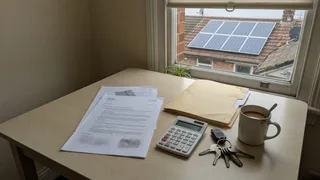
Warm Homes Loan Scheme information for solar, batteries and heating: property eligibility, installation requirements and where to check the current rules.
Read article

Discover the UK Warm Homes Plan 2026. Learn about £15 billion in grants and low-interest loans for solar panels, heat pumps, insulation and batteries.
Read article
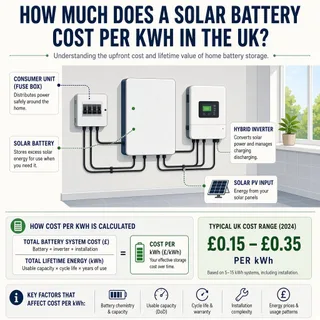
UK solar battery cost per kWh is not a national rate. Divide the surveyed installed total by usable kilowatt-hours, not nameplate or supply-only prices.
Read article
In practice, support comes through targeted retrofit schemes, energy-supplier obligations, local authority routes, devolved nation programmes.
Read article

Mo's Mission Nominations
Write for Kilowatts.uk
Got a trade and something worth saying?
Write it here under your own name. Sign in, put a profile up, and start a guide. Pay only if you want more links from your articles out to your own site.
Register
Create a Kilowatts.uk account, or sign in if you already have one.
Author profile
Put your name, photo and experience on a public author page.
Start creating
Write a guide or a blog. Free authors can put one followed link to their own site in articles each month.
FAQ
Need Help? RoboMo's Got Answers
Is a Warm Homes Loan a single Government loan with one rate?
Use the current GOV.UK scheme guide and the actual product information. This article does not provide rates, repayment examples or a credit offer.
Where can I check the terms of a Warm Homes Loan?
Read the current GOV.UK Warm Homes Loan Scheme guide and the actual agreement for the product being considered.
What are the published technology caps for solar and batteries?
Scheme-announcement figures cited for maximum supported amounts include £15,000 for solar panels and £15,000 for battery storage. Those are ceilings on support, not the price of a system, not a quote and not proof that a price under the cap is good value. A high cap does not create a loan if affordability or credit checks fail. Confirm the current cap table on the factsheet, because announcement figures can be updated.
Do I need an MCS-certified installer?
Check the current government publication for the scheme and the property location. This article does not provide a credit offer or a repayment illustration.
Could the loan be secured on my home?
It depends on the product. An unsecured regulated consumer-credit loan does not take a charge over the home at the outset, while a secured product, including a second charge, does. Default on a loan secured against the home can put the home at risk. Default on an unsecured loan can still lead to arrears, a county court judgment and enforcement, and a charging order is sometimes sought later. Ask each lender which regime applies, and check the firm on the Financial Services Register against the legal name on the illustration.
Can bill savings be guaranteed?
No. System output and bill savings depend on the property, equipment, household use and tariff.
Should I take the longest term the scheme allows?
Not automatically. A longer term usually lowers the instalment and raises total interest, and a term of up to 30 years is only a possibility in the scheme description. Panels may have long performance warranties, but inverters and batteries are often warranted for far fewer years than 25 or 30; exact years belong on your quotation. Replacing kit during the loan is usually a new cost. Match the term to the component you are most likely to replace, and ask for an early-settlement figure before you rely on clearing a long loan early.
Live help
Need help right now?
Talk to RoboMo™ and get instant answers.