


BMW Tests a 'No New Wire' 800V Battery - What Power-Line BMS Communication Changes
Published: 2026-11-23 20:00:24
Updated: 2026-11-23 12:01:19
See how BMW and Lumissil sent battery data over the power lines of a full Gen6 800 V pack and what UK iX3 buyers should check about home charging.
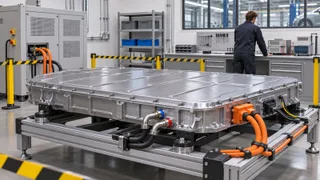
What BMW’s ‘no new wire’ 800 V battery test demonstrated
Lumissil Microsystems reports that it and BMW exchanged battery measurements and control commands over the existing power conductors in a complete Gen6 800 V battery pack. The central battery management system (BMS) controller communicated with multiple cell-monitoring circuits without a dedicated data harness for that link. The test used the Gen6 battery platform introduced in the BMW iX3. Whether UK production iX3s use this design remains unconfirmed. Lumissil’s full-pack test announcement
How battery data travels over the power conductors
Power line communication (PLC) adds a data signal to the conductors that carry battery power. This lets the cell-monitoring circuits send readings to the central controller and receive commands over the same conductors.
The voltages of cell groups connected in series add together. One group can approach its upper voltage limit while others sit at lower voltages, so the total pack voltage can still look normal. The BMS uses individual group readings to decide when to limit charging. PLC changes how those readings reach the controller. The pack still needs cell-sensing connections and protection functions.
Which wires could disappear and what still needs testing?
The design could remove the dedicated communication wires and connectors for the network tested. Fewer harness connections could simplify assembly and cut weight or manufacturing costs. The pack still needs its high-voltage conductors, cell-sensing connections and signalling electronics.
Lumissil, which took part in the test, reports successful transmission at cell and pack level under varying voltage and current conditions and in representative automotive scenarios. The release gives no figures for message error rates, delays or long-term durability. Before using the design in production, engineers would need to check whether critical readings reach the controller on time during electrical interference and how the BMS responds if a monitoring circuit stops reporting.
The demonstration shows that the link worked across a complete pack under the conditions Lumissil described. The announcement gives no measured weight or manufacturing cost savings and leaves open any effect on repair costs or battery life.
What 800 V means for UK charging
The 800 V figure describes the battery’s voltage architecture. Kilowatts (kW) measure how quickly energy is transferred. Kilowatt-hours (kWh) measure how much energy is stored or added. BMW UK quotes a peak DC charging power of 400 kW for the iX3 50 xDrive on suitable equipment. Actual charging power varies with the charger, battery temperature and state of charge. Lumissil tested the data link and reported no charging speed gain. BMW UK iX3 charging specifications
A 7 kW chargepoint is common for UK home charging. On AC, the power the car can draw depends on the property’s supply, the chargepoint and the car’s onboard charger. Before considering a supply upgrade, work out how many kWh you typically need to add and how long the car stays plugged in overnight. When planning a home chargepoint installation, an installer can use those figures to assess the available capacity, plan the cable route and decide whether the chargepoint needs to draw less power when other equipment is running. Energy Saving Trust guide to charging electric vehicles
Can the test tell you whether the iX3 can power a home?
The test showed that data could travel both ways inside the pack. Whether an iX3 can power a home depends on the exact vehicle and the equipment it connects to. Charge scheduling also depends on which features the vehicle and charging equipment support.
Overview
If your aim is to keep essential circuits running during an outage, check home battery backup options while you confirm what the car and chargepoint support.
What UK iX3 buyers and chargepoint installers should check
If you’re buying an iX3, check the exact UK model’s AC and DC charging limits, battery warranty and servicing arrangements. If the communication design matters to you, ask BMW whether it’s fitted to the car you plan to order. For shared parking at a block of flats, establish who controls the bay, where the cable can run and how each user’s electricity will be metered and billed before commissioning a chargepoint design.
If you’re also considering solar to cover some of your charging, you can arrange a home energy survey and bring your expected charging schedule.
For a workplace or fleet, tell the installer when vehicles return, how many will plug in at once and how much energy each needs before departure. Ask whether managed charging can get each vehicle ready on time within the limits of the existing supply. If charging overlaps with other large electrical loads, ask how site energy controls could help manage peak demand. Use that assessment to choose chargepoints and decide whether the site needs extra capacity.
Solar comparison
Compare solar for your property
Enter your postcode to assess your roof, compare solar options and get quotes from UK installers.
- Free postcode start
- Home, business and industrial
- RoboMo™ maps your roof
See which panels fit your roof
Choose home, business or industrial, then enter your postcode. RoboMo maps the roof and ranks panel brands by fit.
1. Postcode Start the assessment for your property.
2. Pin the roof Mark the array on the map.
3. Compare RoboMo™ builds your options.

Battery ROI tool
See what a battery saves on your bill
Enter the day rate, off-peak rate and export rate. The calculator ranks batteries in the Kilowatts shop over 10 years. Home batteries also suit offices and small commercial sites.
Reading
Sources and further reading
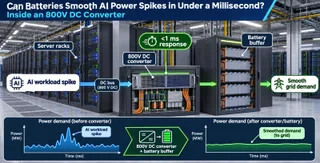
See how Ampt’s 80 kW battery converter could buffer GPU power spikes in UK AI data centres and when it could free up capacity within grid import limits.
Read article
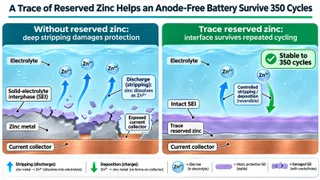
An anode-free zinc pouch cell retained 90.47% of its capacity after 350 lab cycles. See how the zinc reserve helps and what UK solar storage buyers need.
Read article
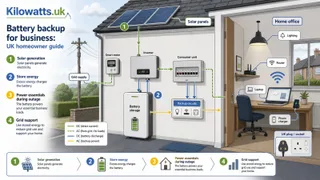
Can a home battery work during a power cut in the UK? A home battery can work during a power cut in the UK, but only if it has the right setup.
Read article
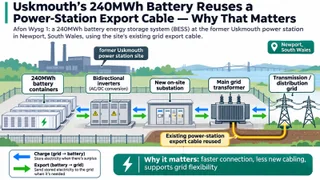
Practical UK guide on Uskmouth's 240MWh Battery Reuses a Power-Station Export Cable - Why That Matters.
Read article




Mo's Solar Mission
Mo's Mission Nominations
Garlinge Primary School and Nursery
Garlinge Primary School and Nursery is a foundation primary school on Westfield Road in Margate, Kent, for children aged 3 to 11. It is m...
St Luke's Church of England Primary SchoolSt Luke's Church of England Primary School is a voluntary controlled Church of England primary school on Jubilee Road in Formby, Merseysi...
Comberbach Nursery and Primary SchoolComberbach Nursery and Primary School is a primary academy on Mather Drive in the village of Comberbach, near Northwich in Cheshire, for...
Locations
Solar installation near you
Write for Kilowatts.uk
Got a trade and something worth saying?
Write it here under your own name. Sign in, put a profile up, and start a guide. Pay only if you want more links from your articles out to your own site.
Register
Create a Kilowatts.uk account, or sign in if you already have one.
Author profile
Put your name, photo and experience on a public author page.
Start creating
Write a guide or a blog. Free authors can put one followed link to their own site in articles each month.
FAQ
Need Help? RoboMo's Got Answers
What did BMW’s ‘no new wire’ battery test demonstrate?
BMW and Lumissil exchanged cell measurements and control commands over the existing power conductors in a complete 800 V battery pack. This could remove the dedicated data wires and connectors for that link. The pack still needs its high-voltage conductors and cell-sensing connections.
Why does the battery management system need readings from individual cell groups?
One cell group can approach its upper voltage limit even when the total pack voltage looks normal. The battery management system uses individual group readings to decide when to limit charging. Power line communication changes how those readings reach the controller.
Does the UK BMW iX3 come with this battery communication system?
The test used the Gen6 battery platform introduced in the BMW iX3. Fitment in UK production cars remains unconfirmed. If it matters to your purchase, ask BMW about the exact model and model year you’re considering.
Could fewer battery wires reduce repair costs or improve battery life?
Fewer dedicated wires and connectors could simplify assembly. The test announcement gave no measured savings or evidence of lower repair costs or longer battery life. UK buyers can check the battery warranty and ask BMW how battery faults are diagnosed and serviced.
Will this battery communication system make rapid charging faster?
The test reported no charging speed gain. BMW UK quotes a peak DC charging power of 400 kW for the iX3 50 xDrive on suitable equipment. The power you get during a session depends on the charger, battery temperature and how full the battery is.
Do I need to upgrade my home electricity supply for an 800 V BMW iX3?
The 800 V figure describes the car’s battery. Home AC charging power depends on your electricity supply, chargepoint and the car’s onboard charger. Tell your installer how much energy you typically need to add and how long the car is plugged in overnight so they can assess whether your existing supply is sufficient.
Can I schedule my iX3 to charge when my electricity is cheaper?
Scheduled charging depends on the features supported by your car and chargepoint. If you want to use an off-peak tariff, check that it works with your setup and confirm which app or device controls the schedule.
Can the BMW iX3 power my home during a power cut?
The test demonstrated two-way data exchange inside the battery pack. For power-cut backup, check whether your exact UK iX3, bidirectional charger and home installation support backup operation. Ask which circuits the setup can power during an outage.
Live help
Need help right now?
Talk to RoboMo™ and get instant answers.