


A Trace of Reserved Zinc Helps an Anode-Free Battery Survive 350 Cycles
Published: 2026-11-23 17:10:41
Updated: 2026-11-23 09:11:40
An anode-free zinc pouch cell retained 90.47% of its capacity after 350 lab cycles. See how the zinc reserve helps and what UK solar storage buyers need.
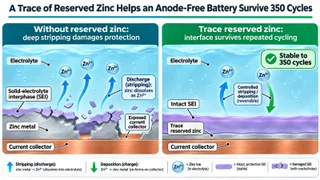
Anode-free zinc pouch cell retains 90.47% capacity after 350 cycles
An anode-free zinc pouch cell retained 90.47% of its initial discharge capacity after 350 cycles in a laboratory test. Guo and colleagues found that leaving a trace of zinc behind during discharge helped preserve a protective layer on the cell’s negative side. In a separate zinc plating and stripping test, they reported 99.96% Coulombic efficiency. Estimating the service life of an installed battery would require further testing. Guo et al., *Nature Sustainability*
Why the battery keeps a little zinc in reserve
An anode-free zinc cell is assembled without a pre-installed zinc-metal negative electrode. During charging, zinc ions form metal on the negative current collector, the conductive surface that connects that side of the cell to the external circuit. This is called plating. During discharge, the metal turns back into ions in a process called stripping.
A thin protective layer called the solid-electrolyte interphase (SEI) forms where the plated zinc meets the electrolyte. As stripping removes zinc, the metal surface beneath the layer recedes. The researchers found that removing too much zinc could cause the layer to collapse. Leaving a thin reserve supported the layer for the next cycle. The trade-off is that some of the charge stored during plating stays in reserve at the end of discharge. Guo et al., *Nature Sustainability*
What 99.96% efficiency and 90.47% capacity retention measure
Coulombic efficiency measures the share of electrical charge used to plate zinc that the researchers recovered during stripping. Capacity retention compares the pouch cell’s discharge capacity at a given cycle with its initial discharge capacity. For a property owner, AC round-trip efficiency measures how much of the electricity supplied to the complete storage system it returns. Guo et al., *Nature Sustainability*
Overview
The pouch cell in figure 5f used a 4 × 4 cm electrode and was cycled between 0.3 and 1.95 V. To estimate service life in years, buyers would also need data on ageing over time and performance at the temperatures, states of charge and charge and discharge rates expected at the installation. Guo et al., figure 5
Could anode-free zinc batteries suit UK homes and businesses?
A battery that stores daytime solar generation for evening use may cycle frequently, making cycle life relevant to stationary storage. For this prototype, UK commercial availability, installed cost, usable capacity in kWh and continuous power in kW remain unverified. A commercial system would need to keep its cells within their operating limits as temperatures and loads change. Buyers would also need performance data for the complete system, a warranty, installation documentation and access to servicing.
If you have a small solar array, such as balcony panels on a flat, work out how much generation is left after daytime use. Shading and panel orientation can reduce the surplus available to charge a battery. If the surplus is small, a larger battery may spend much of the year partly empty. Check the building’s mounting and electrical arrangements and ask where a battery could operate within the manufacturer’s specified conditions. Energy Saving Trust battery storage guidance
How to compare solar storage for your property today
Use half-hourly electricity data, if available, to see how much you use outside the hours your panels generate. For a business or farm, compare working days with weekends and check how demand changes with the seasons. If you plan to charge from surplus solar, compare what you would save on electricity imports with the export payments you would give up. Allow for storage losses when estimating how much of the surplus will reach your appliances or equipment. Energy Saving Trust battery storage guidance
Ask installers to quote usable capacity in kWh and continuous output in kW separately. Usable capacity tells you how much energy the battery can deliver between charges. Continuous output tells you how much equipment it can run at once. For a retrofit, check whether the battery can work with your existing solar inverter or needs a separate battery inverter. If you want power during an outage, ask which circuits the system will supply and whether the quote includes the backup equipment. IET battery storage guidance
Ask the installer to confirm the grid connection process for the whole installation, taking account of existing generation, inverter ratings and any agreed export limit. The GOV.UK registration guidance for homes and small businesses covers England, Scotland and Wales. In Northern Ireland, ask the installer to check the applicable generation connection process with NIE Networks. GOV.UK guidance on registering energy devices Give each installer the same usage and generation figures so you can compare their recommendations. Ask for itemised quotes covering any inverter, switchgear, cabling and backup work. Check that each warranty covers how you expect to use the battery, including how often it will charge and discharge. If you’re considering solar storage for your home, you can request a free home survey.
Solar comparison
Compare solar for your property
Enter your postcode to assess your roof, compare solar options and get quotes from UK installers.
- Free postcode start
- Home, business and industrial
- RoboMo™ maps your roof
See which panels fit your roof
Choose home, business or industrial, then enter your postcode. RoboMo maps the roof and ranks panel brands by fit.
1. Postcode Start the assessment for your property.
2. Pin the roof Mark the array on the map.
3. Compare RoboMo™ builds your options.

Battery ROI tool
See what a battery saves on your bill
Enter the day rate, off-peak rate and export rate. The calculator ranks batteries in the Kilowatts shop over 10 years. Home batteries also suit offices and small commercial sites.
Reading
Sources and further reading
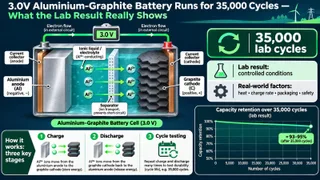
See why 3.0 V is the charge cut-off, how aluminium-graphite battery capacity fell over 35,000 lab cycles and what UK storage buyers still need to know.
Read article
See how soda ash improved a solid-state sodium battery electrolyte, what 850 lab cycles show and what UK buyers should check in battery storage quotes.
Read article
A UK home battery warranty runs on three clocks at once: years, cycles and total throughput. Learn how to read yours and which limit ends it first.
Read article

Unused suitable roof space can represent decades of forgone generation, so system value should be considered over its lifetime.
Read article


Mo's Solar Mission
Mo's Mission Nominations
Garlinge Primary School and Nursery
Garlinge Primary School and Nursery is a foundation primary school on Westfield Road in Margate, Kent, for children aged 3 to 11. It is m...
St Luke's Church of England Primary SchoolSt Luke's Church of England Primary School is a voluntary controlled Church of England primary school on Jubilee Road in Formby, Merseysi...
Comberbach Nursery and Primary SchoolComberbach Nursery and Primary School is a primary academy on Mather Drive in the village of Comberbach, near Northwich in Cheshire, for...
Locations
Solar installation near you
Write for Kilowatts.uk
Got a trade and something worth saying?
Write it here under your own name. Sign in, put a profile up, and start a guide. Pay only if you want more links from your articles out to your own site.
Register
Create a Kilowatts.uk account, or sign in if you already have one.
Author profile
Put your name, photo and experience on a public author page.
Start creating
Write a guide or a blog. Free authors can put one followed link to their own site in articles each month.
FAQ
Need Help? RoboMo's Got Answers
What is an anode-free zinc battery, and why does it keep some zinc in reserve?
The cell is assembled without a zinc-metal negative electrode. Zinc metal forms on a conductive surface during charging, and most of it dissolves during discharge. The researchers left a thin layer of zinc behind to support a protective coating for the next cycle.
What does 90.47% capacity retention after 350 cycles mean for battery lifespan?
After 350 laboratory cycles, the pouch cell could still deliver 90.47% of its initial discharge capacity. Estimating how many years an installed battery would last also requires data on how it ages over time and performs at the temperatures and charging rates expected in use.
Does 99.96% Coulombic efficiency tell me how much electricity a home battery would return?
The 99.96% figure measures how much electrical charge was recovered in a separate test that deposited and removed zinc. For a home battery, compare AC round-trip efficiency, which measures how much of the AC electricity supplied to the complete system it returns.
Can I buy this type of anode-free zinc battery for my home in the UK?
The reported result comes from a laboratory prototype. UK availability, installed cost, usable capacity and continuous output for a home system based on this design remain unverified.
How do I choose a battery size for my solar panels?
Use half-hourly data, if available, to estimate how much solar generation is left after daytime use and how much electricity you use after generation falls. If you have a small or shaded array, check how that surplus changes with the seasons before paying for extra capacity. When estimating savings, allow for storage losses and any export payments you would give up.
What is the difference between usable capacity in kWh and continuous output in kW?
Usable capacity in kWh tells you how much energy the battery can deliver between charges. Continuous output in kW tells you how much power it can supply at once. Ask for both figures so you can compare how long the battery could run your appliances and which ones it could run together.
Can I add a battery to my existing solar panels and use it during a power cut?
Ask your installer whether the battery can work with your existing solar inverter or needs a separate battery inverter. For power cuts, ask which circuits the system would supply, how much power it could provide and whether the quote includes the backup equipment.
Live help
Need help right now?
Talk to RoboMo™ and get instant answers.