


Proteus Seeks GBP 200m to Scale Tidal Turbines in Scotland - What Investors Would Actually Be Funding
Published: 2026-11-24 00:09:53
Updated: 2026-11-23 16:10:43
Find out what Proteus’s £200m-plus tidal funding bid could cover, from preparing the AR3000 for delivery to what Scotland’s MeyGen expansion needs.
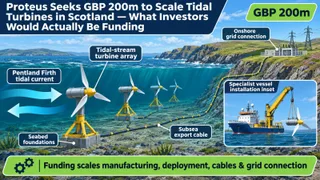
Proteus seeks more than £200m for tidal power as Scotland weighs MeyGen expansion
Proteus Marine Renewables is seeking more than £200 million in corporate and project investment over several years. Its first priority is to raise up to £20 million in corporate equity to prepare its AR3000 tidal turbine for commercial delivery. The wider plan includes Scotland’s MeyGen expansion and a tidal pilot in France. Proteus appointed Corient Merchant Banking to support the raise on 17 November 2026. The announcement gives no figure for committed capital or for Scotland’s share of the target. Proteus fundraising announcement
What would investors actually be funding?
Corporate equity would fund Proteus as a turbine supplier, helping it order components, assemble and test turbines, and deliver them on a developer’s schedule. Project equity would fund a specific development. Proteus identifies the 12 MW NH1 tidal pilot in France as a separate priority for project equity. Proteus fundraising announcement In November 2024, Proteus said it was working towards a MeyGen engineering, procurement and construction contract worth more than £200 million. That figure was the prospective value of the work at MeyGen. Proteus’s 2024 MeyGen announcement
What would it take to build more tidal turbines in Scotland?
MeyGen’s first phase is a 6 MW array in the Inner Sound of the Pentland Firth. In interim results published on 23 September 2026, project owner Ampeak Energy said it was pursuing the next 59 MW of capacity and had secured a long-term offtake contract to sell electricity from the planned expansion. Proteus’s November fundraising announcement gives no firm date for installing turbines in Scotland. European Marine Energy Centre account of the existing array · Ampeak Energy’s September 2026 interim results · Proteus fundraising announcement
An offtake agreement helps the developer forecast revenue. Commercial solar power purchase agreements illustrate how a contract can set terms for future electricity sales. Before committing to construction, the developer also needs financing, grid connection arrangements, the relevant marine licences and consents, and a workable offshore schedule. Turbine deliveries must fit around foundation and cable works and vessel availability. Financial close, a firm turbine order and a confirmed installation schedule would each mark progress. Scottish Government guidance on marine licensing and consenting · European Marine Energy Centre account of MeyGen offshore operations
How much electricity can a tidal turbine generate?
A tidal-stream turbine uses moving seawater to turn a rotor and generate electricity. MeyGen’s first phase comprises four turbines rated at 1.5 MW each, and Proteus rates the AR3000 at 3 MW. Megawatts measure power at a moment in time. Megawatt-hours measure the energy generated over a period. To estimate annual output, you need to know how current speeds vary at the site, how much power the turbine produces at those speeds, and how much generation to allow for electrical losses and downtime. MeyGen environmental screening report · Proteus turbine specifications
Ampeak reported 4.4 GWh of generation and £2.0 million in electricity sales for the first half of 2026, compared with 7.9 GWh and £3.2 million a year earlier. Three turbines operated during the period after offshore work in December 2025 brought one turbine ashore for servicing. To express an array’s output as a household equivalent, divide the electricity it delivers to the grid in a year by a stated figure for annual household electricity use. Ampeak Energy’s September 2026 interim results
What drives the cost of a tidal array?
Seabed conditions shape the foundation design and cable route. The site also determines which vessels can work on the array and how often tides and weather allow a lift. The European Marine Energy Centre observed cable works, turbine recovery and reinstallation at MeyGen. When a turbine needs to come ashore, downtime can include waiting for suitable conditions to recover it, completing the repair and waiting for another opportunity to reinstall it. European Marine Energy Centre account of MeyGen offshore operations
When comparing project estimates, check whether they cover foundations, subsea cables, the onshore connection and installation. Then look at the assumptions for planned servicing, unplanned recovery and lost generation. The financial cost of a fault includes both the vessel hire to recover the turbine and the revenue lost while it is ashore. The fundraising target gives no breakdown for calculating the installed cost or the cost per unit of electricity for a Scottish array. Proteus fundraising announcement · Ampeak Energy’s September 2026 interim results
What could Scottish tidal power mean for UK homes and businesses?
A larger MeyGen array would feed electricity into the grid. Tidal currents follow predictable cycles, so operators can forecast when output will rise and fall. The effect on household and business bills would depend on how much electricity the array delivers, what it costs and how it is sold. Proteus’s announcement gives no basis for estimating that effect. MeyGen environmental screening report · Proteus fundraising announcement
If you’re comparing solar or battery quotes for your property, use your meter data to see when you buy the most electricity. Ask installers to estimate how much your panels would generate during the day and how much energy a battery could store for the hours when you use more. For a home installation, use those estimates to size your battery and compare domestic solar quotes against your own usage.
Solar comparison
Compare solar for your property
Enter your postcode to assess your roof, compare solar options and get quotes from UK installers.
- Free postcode start
- Home, business and industrial
- RoboMo™ maps your roof
See which panels fit your roof
Choose home, business or industrial, then enter your postcode. RoboMo maps the roof and ranks panel brands by fit.
1. Postcode Start the assessment for your property.
2. Pin the roof Mark the array on the map.
3. Compare RoboMo™ builds your options.

Battery ROI tool
See what a battery saves on your bill
Enter the day rate, off-peak rate and export rate. The calculator ranks batteries in the Kilowatts shop over 10 years. Home batteries also suit offices and small commercial sites.
Reading
Sources and further reading
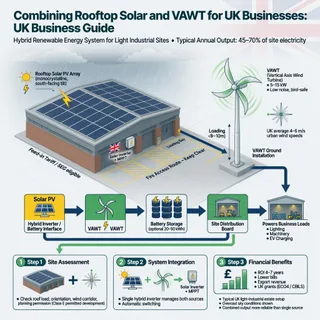
Combining rooftop solar and a VAWT is a UK design question, not a ready-made bundle. Check hub-height wind, structure, consent and the DNO connection.
Read article
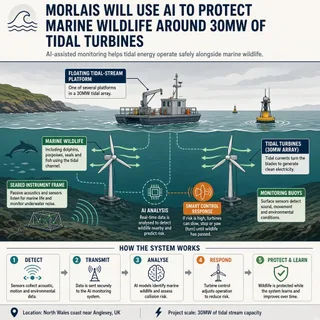
On 27 October 2026, Morlais reported that HydroWing had contracted Anglesey company Ecodetect to monitor a planned 30MW tidal-stream project.
Read article
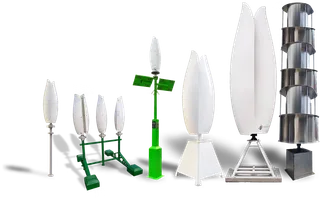
Flower Turbines vs a small HAWT on an urban UK site turns on hub-height wind, not the brochure. Check loads, planning, noise and connection before you buy.
Read article
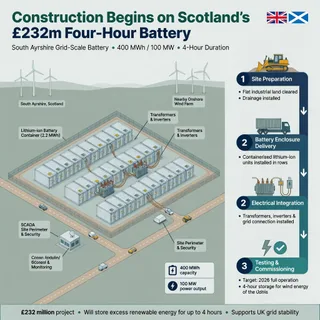
Construction has started on the 350MW Kilmarnock South battery after CIP's investment decision. Four hours is intraday balancing, not a windless week.
Read article



Mo's Solar Mission
Mo's Mission Nominations
Garlinge Primary School and Nursery
Garlinge Primary School and Nursery is a foundation primary school on Westfield Road in Margate, Kent, for children aged 3 to 11. It is m...
St Luke's Church of England Primary SchoolSt Luke's Church of England Primary School is a voluntary controlled Church of England primary school on Jubilee Road in Formby, Merseysi...
Comberbach Nursery and Primary SchoolComberbach Nursery and Primary School is a primary academy on Mather Drive in the village of Comberbach, near Northwich in Cheshire, for...
Locations
Solar installation near you
Write for Kilowatts.uk
Got a trade and something worth saying?
Write it here under your own name. Sign in, put a profile up, and start a guide. Pay only if you want more links from your articles out to your own site.
Register
Create a Kilowatts.uk account, or sign in if you already have one.
Author profile
Put your name, photo and experience on a public author page.
Start creating
Write a guide or a blog. Free authors can put one followed link to their own site in articles each month.
FAQ
Need Help? RoboMo's Got Answers
What would Proteus use the £200 million for?
Proteus is seeking more than £200 million in corporate and project investment over several years. Its first priority is to raise up to £20 million in corporate equity to prepare the AR3000 turbine for commercial delivery. The wider plan includes the MeyGen expansion in Scotland and a tidal pilot in France, and the announcement gives no figure for how much is committed or earmarked for Scotland.
Is the £200 million fundraising target the same as the proposed MeyGen contract?
They are separate figures. The fundraising target covers investment in Proteus and individual projects, while the figure discussed in 2024 was the prospective value of engineering, procurement and construction work at MeyGen. A signed contract with a defined scope and delivery schedule would show that the proposed work had moved forward.
When could more tidal turbines be installed at MeyGen?
MeyGen’s existing first phase has 6 MW of capacity, and its owner is pursuing a further 59 MW. The owner has reported securing a long-term agreement to sell electricity from the planned expansion. The project still needs financing, grid connection arrangements, the relevant marine approvals and an offshore installation schedule. Proteus has given no firm installation date.
How much electricity can a 3 MW tidal turbine generate?
The AR3000’s 3 MW rating describes its power at a given moment. Its annual electricity output, measured in megawatt-hours, depends on tidal current speeds, how the turbine performs at those speeds, electrical losses and time out of service. To estimate how many homes an array’s output could cover, divide its annual electricity delivered to the grid by a stated figure for annual household electricity use.
What makes a tidal array expensive to build and maintain?
The cost includes foundations, subsea cables, the onshore grid connection and specialist vessels for installation. Tides and weather can limit when those vessels can work. If a turbine has to come ashore for repairs, the project can face both vessel hire costs and lost electricity sales.
Would more Scottish tidal power lower my electricity bill?
A larger MeyGen array would supply more electricity to the grid, and predictable tidal cycles would help operators forecast when it would generate. Any effect on household bills would depend on how much electricity the array delivers, what it costs to generate and how it is sold. The fundraising announcement provides no basis for estimating a bill saving.
Should the MeyGen expansion affect my choice of home solar panels or battery?
Base your choice on your property’s electricity use and the generation you can expect from your roof. Use your meter data to see when you use the most electricity, then ask installers to estimate how much solar power you would use as it is generated and how much a battery could store for later. Compare quotes using the same usage figures and check what each installer assumes about your tariff.
Live help
Need help right now?
Talk to RoboMo™ and get instant answers.