


UK Smart Tariff API Rules Finalised: What Changes for EV Chargers and Heat Pumps in 2027
Published: 2026-11-24 13:20:44
Updated: 2026-11-24 05:21:30
See how Great Britain’s smart tariff API can help EV chargers and heat pumps run in cheaper hours, and what to check before buying kit or switching tariff.
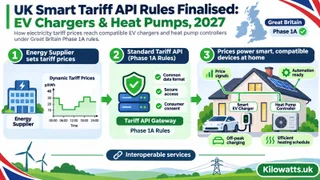
What the UK smart tariff API changes for EV chargers and heat pumps in 2027
Great Britain has finalised the technical rules for Phase 1A of tariff interoperability, with launch planned for 18 February 2027. Electricity suppliers covered by the rules will publish tariff prices in a common format. Compatible EV chargers, heat pump controllers and energy apps can use those prices to schedule some electricity use for cheaper periods. Whether you can use the service depends on your tariff, equipment and software. The rules apply in England, Scotland and Wales. DESNZ Phase 1A decision
The Retail Energy Code changes took effect on 6 November 2026, giving suppliers time to build and test their services against the final specification before the February launch. Charger and heat pump manufacturers and independent app providers have their own integrations to develop. Check when they expect to support your equipment. Retail Energy Code Company implementation timetable
How tariff prices reach a charger or heat pump
An application programming interface, or API, lets one piece of software request data from another in a standard format. In Phase 1A, a compatible app can use the supplier and tariff details you give it to look up public prices. The app or controller then schedules the equipment around the limits you set, such as when the car must be ready or how cool the house can get. If you switch supplier or tariff, check that the app is using the new tariff before relying on its schedule. Phase 1A technical specification government response
Standard Licence Condition 11C applies to licensed electricity suppliers that serve households, including smaller suppliers. A business-only supplier can qualify for an exemption if neither it nor an affiliated supplier has previously been subject to the duty. To qualify, the group must also supply no more than 100,000 qualifying non-domestic meter points, or the supplier’s publication duty would have to cover only deemed or out-of-contract rates. The licence also makes exceptions for certain charges, including bespoke rates for qualifying business premises. If your business has a negotiated contract, ask your supplier and app provider whether they support your tariff. DESNZ licence modification, Condition 11C
On some Economy 7 tariffs, the off-peak hours depend on how the meter is configured. Phase 1A guidance tells suppliers to flag this in the API’s free-text Tariff Comments field. If you use Economy 7, confirm your off-peak hours with your supplier and check that the app’s schedule matches them before enabling automatic charging or heating. Phase 1A technical guidance on meter-dependent tariffs, paragraph 30
Where EV chargers and heat pumps can shift demand
A car plugged in overnight can often wait for electricity prices to drop before it starts charging. A heat pump can move some hot-water production or space heating to cheaper hours if the cylinder or building retains enough heat. How much you can shift depends on when you need the car charged, the water hot or the rooms warm.
Overview
For an EV, check whether the car, wallbox or tariff app controls charging. If two independent timers are active, either can delay the session, so make sure their schedules agree. Test the ready-by setting and the immediate-charge override. Use the charging power you actually get, measured in kilowatts (kW), to work out how much energy, measured in kilowatt-hours (kWh), you can add during the cheaper hours.
For a heat pump, ask how tariff scheduling works alongside weather compensation, which adjusts the heating water temperature as outdoor conditions change. If you have a hot-water cylinder, check when it reheats and how the controller handles any hygiene cycle. Moving too much heating into a short cheap period can leave rooms cooler and mean the system needs a higher water temperature to warm them again. Check room comfort, hot-water availability and electricity use before settling on a schedule.
What to check before buying equipment or switching tariff
Ask the manufacturer or installer to confirm that your controller model, firmware and app support the tariff. For existing equipment, ask whether support will come through a software update or require an extra controller or subscription. For a new installation, ask for the controller model in the quote. At handover, have the installer show you how to change the tariff and override the schedule. Ask what the system does if price data is unavailable.
To estimate the gross saving from shifting EV charging, multiply the kWh you can move by the difference between the two unit rates. When comparing tariffs, include the daily standing charge and the cost of electricity you still use outside the cheaper hours. On a flat-rate tariff, moving the same charging session to another hour leaves the unit cost unchanged.
For a heat pump, compare the unit rates you pay and the total kWh you use. A cheaper period may save less than you expect if reheating the building or cylinder takes more electricity. Compare periods with similar outdoor temperatures and hot-water demand. The Phase 1A rules provide no estimate of savings or upgrade costs for your home, so use your own consumption readings where possible.
What Phase 1B could add in November 2027
Phase 1B is intended to let an authorised service use the Consumer Consent Service to identify the tariff linked to your electricity account with your permission. Under the proposal, the service would use that tariff identifier to look up prices through the Phase 1A API. If you also allow ongoing notifications, the service could be told when relevant account or tariff details change. The planned launch is November 2027. The consultation on the regulatory, technical and implementation arrangements is open until 18 December 2026. RECCo Phase 1B consultation
If you’re deciding whether to switch tariff or buy equipment now, compare tariffs using your own electricity use and ask shortlisted installers which features will work at handover. If you’re weighing up several home energy upgrades, you can book a home energy survey. Check who will set up the schedule, then test that the car finishes charging on time or that your home stays warm on the tariff you plan to use.
Solar comparison
Compare solar for your property
Enter your postcode to assess your roof, compare solar options and get quotes from UK installers.
- Free postcode start
- Home, business and industrial
- RoboMo™ maps your roof
See which panels fit your roof
Choose home, business or industrial, then enter your postcode. RoboMo maps the roof and ranks panel brands by fit.
1. Postcode Start the assessment for your property.
2. Pin the roof Mark the array on the map.
3. Compare RoboMo™ builds your options.

Battery ROI tool
See what a battery saves on your bill
Enter the day rate, off-peak rate and export rate. The calculator ranks batteries in the Kilowatts shop over 10 years. Home batteries also suit offices and small commercial sites.
Reading
Sources and further reading
Great Britain has confirmed Phase 1a tariff API rules. See the November code change, planned February 2027 launch and what appliance owners should check.
Read article
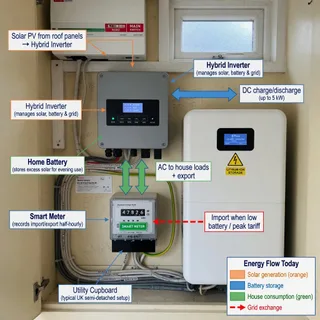
Octopus Flux and Intelligent Octopus Flux are domestic battery storage tariffs that price import and export by time of day, not a free battery.
Read article

Yes - a home battery can fill from cheap off-peak grid electricity, then run your house through the expensive peak. Here's how it works in UK homes.
Read article
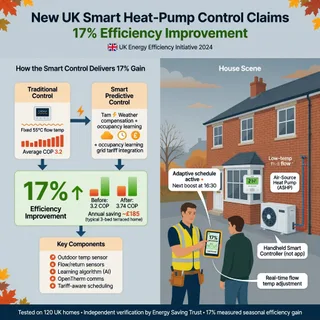
Navien and Passiv's PEM750 package claims a 17% COP gain from smart control. It is not a guaranteed bill cut, and software cannot fix poor commissioning.
Read article


Mo's Solar Mission
Mo's Mission Nominations
Garlinge Primary School and Nursery
Garlinge Primary School and Nursery is a foundation primary school on Westfield Road in Margate, Kent, for children aged 3 to 11. It is m...
St Luke's Church of England Primary SchoolSt Luke's Church of England Primary School is a voluntary controlled Church of England primary school on Jubilee Road in Formby, Merseysi...
Comberbach Nursery and Primary SchoolComberbach Nursery and Primary School is a primary academy on Mather Drive in the village of Comberbach, near Northwich in Cheshire, for...
Locations
Solar installation near you
Write for Kilowatts.uk
Got a trade and something worth saying?
Write it here under your own name. Sign in, put a profile up, and start a guide. Pay only if you want more links from your articles out to your own site.
Register
Create a Kilowatts.uk account, or sign in if you already have one.
Author profile
Put your name, photo and experience on a public author page.
Start creating
Write a guide or a blog. Free authors can put one followed link to their own site in articles each month.
FAQ
Need Help? RoboMo's Got Answers
What changes when the smart tariff API launches in 2027?
Under Phase 1A, electricity suppliers covered by the rules will publish tariff prices in a standard format. Compatible apps and controllers can use those prices to schedule charging or heating for cheaper hours. The launch is planned for 18 February 2027 and covers England, Scotland and Wales.
Will my existing EV charger or heat pump work with the new rules?
It depends on your tariff, controller model, firmware and app. Ask the manufacturer or installer whether your equipment is supported and whether you need a software update, an extra controller or a subscription. If you’re buying new equipment, ask which features will work at handover and how to override the schedule.
How do I make sure my EV is charged when I need it?
Check whether your car, wallbox or tariff app controls charging. If two timers are active, make sure their schedules agree, as either can delay charging. Use the charging power you actually get to check whether the cheaper window is long enough, then test the ready-by setting and immediate-charge override.
Can I run my heat pump in cheaper hours and still keep my home warm?
You may be able to shift some heating or hot-water production if your home retains heat or your cylinder stores enough hot water. Ask how tariff scheduling works alongside weather compensation and any cylinder hygiene cycle. Check room temperatures and hot-water availability in colder weather before relying on the schedule.
Will my app know my Economy 7 off-peak hours?
On some Economy 7 tariffs, the off-peak hours depend on how your meter is configured. The supplier may flag this in the API’s tariff comments. Confirm your hours with your supplier and check that the app’s schedule matches them before enabling automatic charging or heating.
What should I do if I switch supplier or tariff?
Under Phase 1A, the app can look up public prices using the supplier and tariff details you give it. After switching, check which tariff the app is using and update it if needed. Check the new schedule before relying on it to charge your car or heat your home.
How can I tell whether smart scheduling will save me money?
For EV charging, multiply the kilowatt-hours you can shift by the difference between the unit rates to estimate the saving on those units. When comparing tariffs, include the standing charge and the electricity you’ll still use outside cheaper hours. For a heat pump, compare both cost and total electricity use over periods with similar outdoor temperatures and hot-water demand.
Could my app detect tariff changes automatically in future?
Under the Phase 1B proposal, an authorised service could identify the tariff linked to your electricity account with your permission. If you also agree to ongoing notifications, the service could be told when relevant account or tariff details change. The planned launch is November 2027.
Live help
Need help right now?
Talk to RoboMo™ and get instant answers.